
Clearing the UGC NET Public Administration exam requires more than completing the syllabus. Aspirants need the right guidance, structured classes, regular revision, previous year questions (PYQs), mock tests, notes, and continuous practice. The experiences of JRF Adda learners show how these resources can help aspirants improve their preparation and move closer to their UGC NET and Assistant Professor goals.
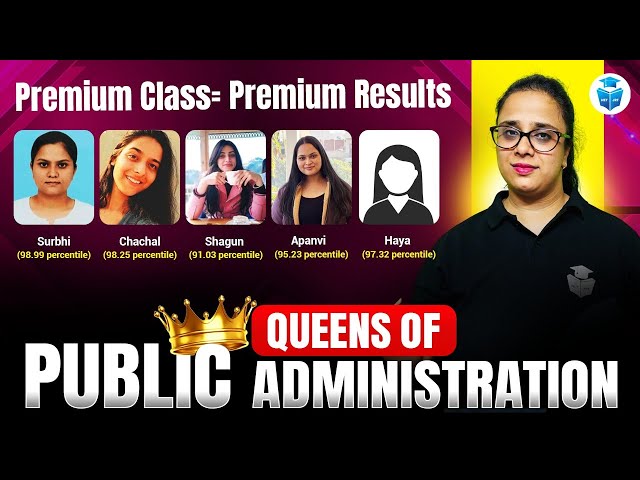
In a special JRF Adda UGC NET Public Administration Toppers Testimonials session, successful learners shared their preparation journeys, the challenges they faced, and how JRF Adda coaching, classes, notes, test series, PYQs, YouTube sessions, and continuous guidance supported their preparation.
The testimonials featured learners including Surbhi, Haya, Chanchal, Shagun, and Apnavi, who discussed their strategies and what worked for them.
“All credit goes to you, especially… there are a lot of sources available on the internet, but you need someone to guide you—what to read, how to do it, and which approach to follow.”
This was one of the key messages from the toppers: resources are available everywhere, but structured guidance and consistent execution can make preparation more focused.
What JRF Adda Public Administration Toppers Say About Their Preparation
Surbhi: From 176 to 238 Marks With Structured Guidance
Surbhi’s journey is particularly notable because she improved her score significantly across attempts. She shared that her first attempt resulted in 176 marks, followed by 186, while her latest performance reached 238 marks.
She explained that she initially depended mainly on free resources but later realised that she needed more specialised guidance:
“I thought that maybe your free classes on YouTube… I will be able to clear it. But I felt that I need special guidance from you especially.”
After joining the structured classes, she focused on making notes, following the classes properly, and implementing the strategies suggested by the educator.
“I made notes, followed proper classes and my score increased.”
For Surbhi, the combination of JRF Adda classes, notes, PYQs, mock tests and continuous guidance helped her create a more systematic preparation strategy.

How JRF Adda Test Series and Handbooks Helped Surbhi
Surbhi also highlighted the importance of regular testing. She used the JRF Adda app’s paid tests, mock tests and test-book resources and analysed her performance after every test.
Her approach was not simply to attempt a test and move on. She analysed:
- Which questions she knew exactly
- Where she had guessed
- Where she used smart elimination
- Where she made blind guesses
- What types of mistakes she repeatedly made
She also specifically mentioned the JRF Adda handbook containing previous-year papers, describing it as highly useful for practice and revision.
“JRF Adda की तरफ से जो handbooks होती हैं, वो बहुत ही actually exceptional साबित होती हैं बच्चों के लिए क्योंकि वहां से काफी ज्यादा सवाल बनते हैं।”
She further explained that the explanations and practice from the book helped her improve her Paper 1 performance significantly.
Haya: From 160 to 220 With Regular Classes and Running Notes
Haya shared that she had already attempted the examination twice during her Master’s but lacked proper guidance and sufficient preparation time.
Her previous attempts had given her a score of around 160, but after completing her Master’s, she decided to join JRF Adda because she already had experience with the educator’s YouTube content.
“Your JRF Adda platform is one where I could put my trust.”
One of the biggest changes in her preparation was maintaining regularity.
She explained that whenever she relied heavily on recorded classes, she tended to watch them at increased speed and miss certain points. Therefore, she preferred attending the live online sessions.
Running Notes Became Haya’s Key Strategy
Haya strongly emphasised running notes during classes.
Instead of waiting for PDFs and then studying them separately, she wrote important points while listening to the class.
“I used to make running notes along with the class… I didn’t need to go through the PDF again.”
According to her, writing information while listening helped her retain concepts and facts better.
This is one of the practical strategies future aspirants can take from the testimonial: don’t simply collect study material—actively process it during the class.
JRF Adda’s Structured Classes and Weekly Tests
Haya also appreciated the structured format of the classes, including lessons followed by DCS sessions and mock tests.
The regular testing helped her build confidence and identify gaps in her preparation.
She also discussed the importance of unit-wise class tests. According to her, these tests were not limited to previous-year questions. They also included questions created around concepts that could potentially be tested.
“Not just questions… the questions that can be made, those were also asked.”
This approach helped learners think beyond memorising previous-year questions and understand how concepts could be converted into new questions.

Chanchal: Revision Made the Difference
Chanchal improved her score from 190 in her first attempt to 226 in her second attempt.
She admitted that she was initially unsure whether she would qualify because of the high cut-off.
Her biggest takeaway was simple:
“Last-minute revision is very important.”
She explained that she took revision more seriously during her second attempt and focused on remembering facts and repeatedly revising the material.
Interestingly, she also said that questions she got wrong during classes often stayed in her memory because the educator would point out the mistake.
This highlights an important role of JRF Adda’s class interaction and feedback: mistakes were not treated merely as wrong answers but as learning opportunities.
Shagun: A JRF Adda YouTube Learner Who Kept Improving
Shagun’s journey demonstrates that JRF Adda’s preparation support is not limited to paid courses.
She first discovered the educator through YouTube, later joined the crash course, and participated in a PYQ-focused batch.
Her academic background was different from Public Administration, as she had completed B.Tech before pursuing a Master’s in Public Administration. She initially struggled with factual content and question-answer practice.
She explained:
“JRF Adda पूरे platform को बहुत ज्यादा thank you… and especially you.”
Shagun said that the PYQ sessions helped her identify gaps in her preparation and understand how to approach the examination.
She also mentioned learning strategies for attempting questions, including the approach to Reading Comprehension (RC), Data Interpretation (DI), and question sequencing.
YouTube + PYQs + Crash Course
Shagun’s preparation included:
- JRF Adda YouTube classes
- PYQ sessions
- Crash course
- Morning classes
- Revision and marathon sessions
- Continuous question practice
- Guidance from the educator
Her testimonial also reinforces that free YouTube content can be useful when followed consistently, while paid courses provide additional structure, classes, testing and learner support.
What Makes JRF Adda’s Public Administration Preparation Different?
The testimonials collectively highlight several JRF Adda resources that learners used during their preparation.
1. Public Administration Coaching
JRF Adda’s Public Administration coaching provides structured subject preparation through classes designed around the examination requirements.
The toppers repeatedly referred to the importance of following classes regularly and implementing the educator’s instructions rather than randomly collecting resources.
2. Premium Classes
For learners who require structured guidance, the Premium Classes provide a more organised preparation route.
Surbhi specifically said that she initially cleared NET without these classes but later realised that she needed special guidance to improve her score further.
Her improvement from 176 to 238 marks became an important part of her preparation journey.
3. JRF Adda Notes
Notes were repeatedly mentioned throughout the testimonials.
Surbhi made notes from the classes, while Haya focused heavily on running notes. The learners explained that properly organised notes helped them revise without repeatedly searching through multiple sources.
The educator also emphasised that important factual and conceptual information was covered in the notes and classes.
4. JRF Adda Handbooks
The JRF Adda handbooks were specifically praised by Surbhi.
She highlighted the handbook containing previous-year papers and its explanations as useful for practice.
For Public Administration aspirants, this kind of resource can help combine PYQ practice, revision and examination-oriented preparation in one place.
5. PYQ Practice
PYQs were one of the strongest common themes across the testimonials.
The toppers repeatedly recommended solving and analysing PYQs rather than simply reading their answers.
PYQs helped them understand:
- Repeated concepts
- Important units
- Question patterns
- Factual areas
- Potential future questions
- Personal weaknesses
Shagun also explained how PYQ sessions helped her identify gaps in her preparation.
6. Mock Tests and Test Series
Regular testing was another major factor.
Surbhi explained that she analysed every mock test instead of only checking her score. She looked at the difference between questions she knew, guessed, solved intelligently, or attempted blindly.
This kind of mock-test analysis can turn a test series into a learning tool rather than just a scorecard.
JRF Adda’s test resources and app-based tests were also part of the learners’ preparation.
7. Class Tests
The testimonials also highlighted unit-wise class tests.
These tests included PYQs as well as concept-based questions prepared around possible examination patterns.
For aspirants, this provides an opportunity to test understanding immediately after completing a topic.
8. YouTube Classes and Free Resources
One of the most important points from the testimonial session was that JRF Adda’s support extends beyond paid courses.
Shagun was a YouTube learner, and the session also included discussion of learners who qualified through consistent use of YouTube sessions.
The educator herself explained that the objective was not simply to promote paid batches but to help learners qualify.
For students who cannot immediately join a paid course, consistent YouTube learning, PYQ practice, revision and self-discipline can still form a useful preparation path.
9. Crash Course and Marathon Sessions
Shagun also discussed the usefulness of the crash course and marathon revision sessions.
She particularly appreciated the point-to-point nature of the marathon sessions, which helped her revise important areas without spending excessive time on unnecessary material.
10. Personal Guidance and Continuous Feedback
Perhaps the most common theme across all testimonials was continuous educator involvement.
Haya explained that the educator was personally involved with learners, while Shagun described the repeated feedback and motivation as a push during preparation.
The testimonials suggest that the relationship was not limited to attending lectures. Learners received feedback on performance, mistakes and preparation strategy.
What Toppers Recommend for UGC NET Public Administration Preparation
The toppers’ rapid-fire responses provide a useful preparation checklist for future aspirants.
Follow the Strategy Consistently
Surbhi’s first recommendation was to follow every important instruction given during preparation.
She specifically mentioned:
- Following revision instructions
- Checking relevant ministry websites
- Revising multiple times
- Attempting mock tests
- Analysing mistakes
- Practising PYQs
- Noting possible future questions
Revise Again and Again
Revision was repeatedly emphasised.
Chanchal’s experience shows how systematic revision can improve performance, while other learners also recommended repeatedly revisiting factual information.
Strengthen Facts
Public Administration can involve a significant amount of factual information.
The toppers recommended strengthening factual knowledge through:
- One-liners
- PYQs
- Notes
- Repeated writing
- Revision
- Practice questions
Do Not Ignore DI and Mathematics in Paper 1
Haya specifically highlighted Data Interpretation (DI) as an area that should not be postponed until the end.
Her advice was to start working on DI and Mathematics from the beginning rather than leaving them for the final stage.
Analyse Every Mock Test
Simply attempting mock tests is not enough.
The learners recommended analysing:
- Wrong answers
- Guessed answers
- Silly mistakes
- Conceptual mistakes
- Time-consuming questions
- Weak topics
This helps identify exactly where marks are being lost.
Apnavi: The Importance of Balancing Paper 1 and Paper 2
Apnavi, another JRF Adda learner and offline student, shared a different lesson from her preparation.
She explained that she spent too much time on Paper 1, revising it around six to seven times, but could not give Paper 2 enough timely revision.
Her advice to future aspirants was therefore to maintain a proper balance between both papers.
She also highlighted the importance of:
- Conceptual understanding
- Facts
- Current affairs
- PYQs
- New current topics
- Understanding which units are more important
Her experience shows that even strong preparation in one paper needs to be balanced with sufficient attention to the other.
What These JRF Adda Toppers Have in Common
Although every learner followed a slightly different strategy, their experiences reveal several common factors:
Structured preparation + regular classes + notes + PYQs + mock tests + revision + feedback + consistency
Surbhi focused strongly on PYQs and mock-test analysis.
Haya focused on regular live classes and running notes.
Chanchal highlighted revision.
Shagun benefited from YouTube, PYQs, crash-course sessions, revision and continuous guidance.
Apnavi highlighted balance between Paper 1 and Paper 2, concepts, facts, current affairs and PYQs.
These differences are important because there is no single preparation strategy that works identically for every aspirant. The key is to identify weaknesses and use the right resources consistently.
JRF Adda Public Administration Courses and Preparation Support
For aspirants preparing for upcoming UGC NET Public Administration examinations, JRF Adda’s platform includes different learning options discussed during the testimonial session, including:
- Public Administration live classes
- Premium courses
- Full Public Administration course
- Updated course content
- PYQ sessions
- Test series and mock tests
- Class tests
- Notes and handbooks
- YouTube classes (www.youtube.com/@jrfadda)
- Crash course and marathon revision sessions
- Online learning support
- Offline learning options
The testimonial session also mentioned an ongoing Public Administration batch, live classes and the RC15 code, along with an updated full-profile Public Administration course.
Aspirants should check the currently available JRF Adda courses and offerings before enrolling because batches, course structures and available resources may change.
JRF Adda UGC NET Public Administration Toppers Testimonials FAQs
JRF Adda toppers highlight structured classes, personalised guidance, notes, PYQs, mock tests, revision and regular practice as important parts of their preparation.
The toppers shared that structured classes helped them understand concepts, follow a planned approach, make notes and prepare consistently for the examination.
Yes. The toppers repeatedly highlighted PYQs as an important preparation resource for understanding question patterns, identifying important topics and improving practice.
Mock tests helped learners practise under exam-like conditions and analyse wrong answers, guesses, mistakes and weak areas.
The testimonials mention JRF Adda notes, handbooks, PYQs, mock tests, test-book resources, class tests and YouTube sessions.
The testimonial session includes learners who used JRF Adda's YouTube classes and PYQ sessions as part of their preparation. Consistency and regular practice were emphasised.
The toppers recommended following classes consistently, making notes, practising PYQs, attempting mock tests, analysing mistakes, strengthening facts and revising repeatedly.