

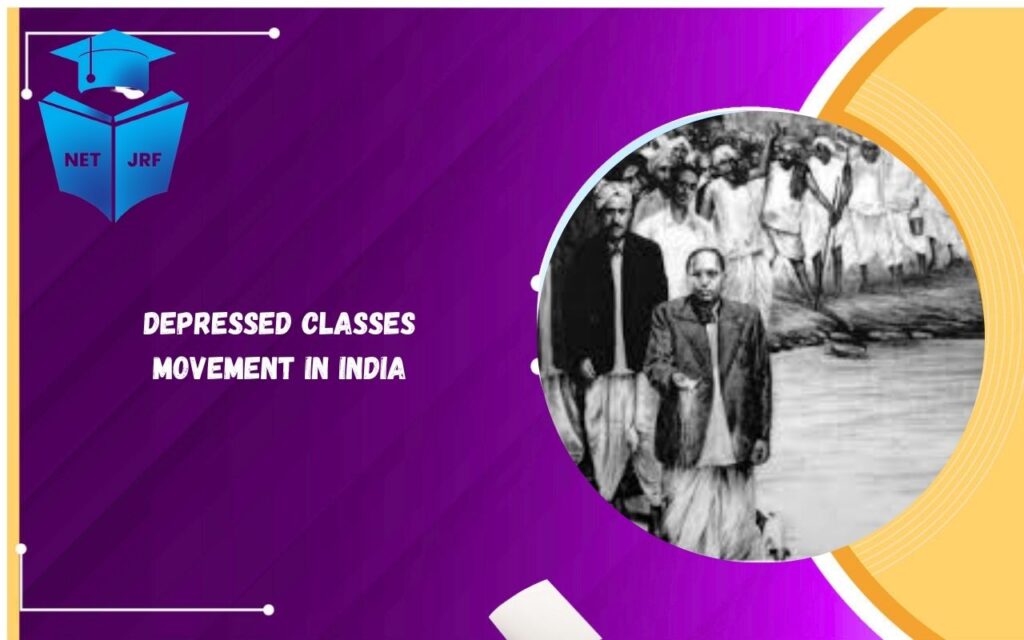
Depressed Classes Movement in India represents a major social reform struggle that aimed to remove caste discrimination and uplift marginalized communities in Indian society. For centuries, several groups faced exclusion from education, temples, public spaces, and social opportunities because of rigid caste practices. Reformers, activists, and political leaders started movements to challenge these injustices. These efforts gradually shaped the Depressed Classes Movement in India into an organized campaign for equality, dignity, and social justice.
The movement gained strength during the nineteenth and twentieth centuries when social reformers began to question traditional caste hierarchies. Activists demanded access to education, political representation, and equal rights in public life.

Historical Background of Social Inequality
Indian society historically followed a hierarchical caste system. Some communities faced severe social restrictions and economic exploitation. They could not enter temples, draw water from common wells, or attend schools.
These communities were often described as Depressed Classes during the colonial period. British administrators used this term to refer to groups that suffered social exclusion and lacked opportunities for development.
Several factors encouraged reform movements:
- Spread of modern education
- Rise of social reform organizations
- Influence of democratic ideas
- Criticism of caste discrimination
These developments encouraged leaders to organize campaigns that later became part of the Depressed Classes Movement in India.
Enroll UGC NET Online Coaching
Early Social Reform Efforts
The earliest attempts to address caste discrimination appeared during the nineteenth century. Reformers believed that social change required education, awareness, and legal reform.
Key reform initiatives included:
- Promotion of education among marginalized communities
- Campaigns against untouchability
- Advocacy for equal access to public facilities
Reformers argued that Indian society could progress only when it removed caste based discrimination. Their efforts laid the foundation for the Depressed Classes Movement in India.
Depressed Classes Movement in India: Major Leaders
Several visionary leaders dedicated their lives to improving the conditions of marginalized communities. Their leadership shaped the development of the Depressed Classes Movement in India.
Dr. B. R. Ambedkar
Dr. Bhimrao Ambedkar played the most significant role in organizing the struggle for equality. Born into a socially disadvantaged community, he faced discrimination during his early life. He later became a highly educated scholar and political leader.
Major contributions include:
- Advocacy for social equality
- Campaigns against untouchability
- Demand for political representation
- Leadership in drafting the Indian Constitution
Ambedkar emphasized education, organization, and political participation as tools to strengthen the Depressed Classes Movement in India.

Jyotirao Phule
Jyotirao Phule was one of the earliest social reformers who criticized caste oppression. He established schools for marginalized communities and promoted education as a path to empowerment.
Key reforms included:
- Opening schools for lower caste children
- Criticism of social hierarchy
- Promotion of social equality
His efforts helped inspire later stages of the Depressed Classes Movement in India.
E. V. Ramasamy Periyar
Periyar strongly opposed caste discrimination and promoted social equality in South India. He launched movements that criticized religious and social practices that justified inequality.
His activism strengthened public support for the Depressed Classes Movement in India.
Social Reform Organizations
Several organizations played important roles in mobilizing marginalized communities. These organizations worked to improve education, employment opportunities, and social status.
Important organizations included:
- Depressed Classes Mission Society
- Self Respect Movement
- Scheduled Castes Federation
These organizations spread awareness and encouraged people to participate in the Depressed Classes Movement in India.
Depressed Classes Movement in India Key Leaders and Contributions
This highlights important leaders who contributed to the Depressed Classes Movement in India.
| Leader | Major Contribution | Reform Focus |
| B. R. Ambedkar | Political rights, constitutional safeguards | Social equality |
| Jyotirao Phule | Education for marginalized communities | Social reform |
| E. V. Ramasamy Periyar | Anti caste campaigns | Social justice |
| M. C. Rajah | Representation of marginalized groups | Political rights |
Major Demands of the Movement
The Depressed Classes Movement in India focused on several key demands aimed at improving social and political conditions.
Important demands included:
- Access to education
- Equal rights in public places
- Political representation in government
- Protection against social discrimination
These demands reflected the broader goals of equality and dignity within the Depressed Classes Movement in India.
Political Developments and Reforms
Political reforms during the colonial period created new opportunities for marginalized communities. Leaders demanded representation in legislative bodies and government institutions.
Key developments included:
- Separate electorates debate
- Political negotiations with British authorities
- Constitutional safeguards for disadvantaged communities
These developments strengthened the political dimension of the Depressed Classes Movement in India.
Enroll UGC NET Coaching in Jaipur
Poona Pact and Its Impact
The Poona Pact of 1932 became a significant moment in the struggle for representation. The agreement was reached between Dr. B. R. Ambedkar and Mahatma Gandhi regarding electoral representation for marginalized communities.
Important outcomes included:
- Reserved seats in legislative assemblies
- Greater political representation
- Recognition of social inequality
The Poona Pact marked an important milestone in the Depressed Classes Movement in India.
Social Change Through Education
Education became a powerful tool for social transformation. Leaders encouraged marginalized communities to pursue education and develop professional skills.
Key initiatives included:
- Establishment of schools for disadvantaged groups
- Scholarship programs
- Promotion of literacy
These efforts helped create a new generation of leaders who strengthened the Depressed Classes Movement in India.
Role in Indian National Politics
The struggle for equality eventually influenced national politics. Political leaders recognized the importance of addressing caste discrimination and social injustice.
Important political developments included:
- Inclusion of equality principles in national debates
- Representation of marginalized communities in political organizations
- Formation of political parties representing disadvantaged groups
These changes expanded the influence of the Depressed Classes Movement in India within the broader freedom struggle.
Constitutional Safeguards After Independence
After India achieved independence in 1947, the Constitution introduced several safeguards to protect marginalized communities.
Key constitutional provisions include:
- Abolition of untouchability
- Equality before law
- Reservation policies in education and employment
These reforms reflected the long term impact of the Depressed Classes Movement in India on modern Indian
Enroll UGC NET Offline Coaching in Jaipur
democracy.
Impact on Indian Society
The movement produced lasting social transformation in India. It helped create awareness about equality and human rights.
Major outcomes include:
- Reduction of social discrimination
- Expansion of educational opportunities
- Greater political representation
These changes demonstrate the historical importance of the Depressed Classes Movement in India.

Conclusion
The Depressed Classes Movement in India represents a powerful struggle against social discrimination and inequality. Reformers, political leaders, and social activists worked together to challenge caste oppression and demand equal rights. Their efforts promoted education, political participation, and social justice.
Depressed Classes Movement in India FAQs

Who led the Depressed Classes Movement in India?
The movement was led by important reformers such as B. R. Ambedkar, Jyotirao Phule, E. V. Ramasamy Periyar who fought for social equality, political representation.
What were the main objectives of the Depressed Classes Movement in India?
The movement demanded equal access to education, political representation, abolition of untouchability, protection from social discrimination.
What was the significance of the Poona Pact in the Depressed Classes Movement?
The Poona Pact of 1932 created reserved seats for marginalized communities in legislative assemblies, increased political representation.
How did education contribute to the Depressed Classes Movement in India?
Education helped marginalized communities gain awareness, employment opportunities, leadership skills that strengthened the equality movement.
Which organizations supported the Depressed Classes Movement in India?
Organizations such as Depressed Classes Mission Society, Scheduled Castes Federation mobilized communities for social reform, political rights.
How did the movement influence Indian politics?
The movement pushed national leaders to address caste discrimination, include equality principles in political debates, expand representation of marginalized groups.
What constitutional safeguards emerged from the Depressed Classes Movement?
The Constitution of India introduced abolition of untouchability, equality before law, reservation policies in education, employment.
Why is the Depressed Classes Movement important in Indian history?
The movement challenged social inequality, promoted human rights, expanded education opportunities for disadvantaged communities.
How did the movement transform Indian society?
It reduced caste discrimination, strengthened political participation of marginalized communities, influenced democratic reforms in modern India.