

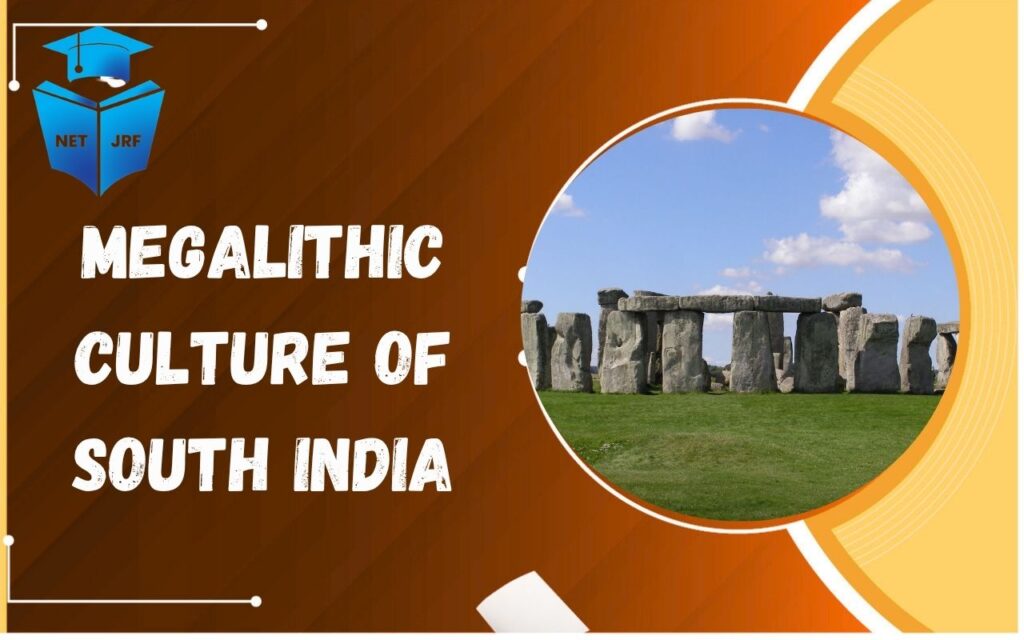
The Megalithic Culture of South India refers to an important archaeological culture that developed in the southern part of the Indian subcontinent roughly between 1200 BCE and 300 BCE. The word megalith means large stone, which describes the huge stone structures used mainly for burial purposes.it provides evidence about early iron age communities, burial practices, social organization, and economic life in ancient South India.
Archaeological excavations across states such as Tamil Nadu, Karnataka, Kerala, Andhra Pradesh, and Telangana reveal a large number of megalithic burial sites and settlements.
Megalithic Culture Historical Background
The megalithic phase developed after the Neolithic and Chalcolithic periods. During this time communities began using iron tools and weapons which greatly influenced agriculture and warfare.
- Archaeologists believe that these societies represented early iron age cultures that later contributed to the rise of historic South Indian kingdoms.
- The Megalithic Culture of South India therefore forms an important link between prehistoric societies and early historic civilizations.
Join UGC NET Offline Coaching in Jaipur
Megalithic Culture Characteristics
The term megalithic refers to large stone monuments used in burial rituals. These structures were built using massive stones placed in different forms such as circles, chambers, or dolmens.
Major Characteristics
- Construction of large stone burial monuments
- Use of iron tools and weapons
- Development of pottery traditions
- Evidence of social differentiation
- Presence of agricultural and pastoral economy
- These features clearly define the Megalithic Culture of South India and distinguish it from earlier prehistoric cultures.
Megalithic Culture of South India
Megalithic Culture of South India developed mainly in the Deccan plateau and peninsular regions. Archaeologists have discovered hundreds of burial sites across the region.
The burial monuments indicate that people believed in life after death and placed objects with the dead.
Key Aspects
- Burial rituals formed an important cultural practice
- Iron technology supported agriculture and warfare
- Communities lived in villages near burial sites
- Trade networks connected different regions
- These characteristics help historians understand the nature of Megalithic Culture of South India.
Types of Megalithic Burials
Archaeological studies show that megalithic burials existed in different forms.
Major Types of Burial Monuments
- Dolmen
Stone chamber formed by large vertical stones with a flat stone on top. - Cist Burial
Stone lined underground burial chamber covered with stone slabs. - Stone Circles
Large circular arrangement of stones marking burial sites. - Menhir
Single upright stone placed as memorial. - Pit Burial
Simple burial pits containing skeletal remains and grave goods. - Each burial type reflects the ritual practices of Megalithic Culture of South India.
Join UGC NET Offline Classes in Jaipur
Megalithic Pottery
Pottery remains provide valuable information about cultural traditions.
Major Pottery Types
- Black and Red Ware (BRW) Pottery:
-
-
- Most common ceramic type linked to Megalithic culture.
- Used for cooking, storage, and ritual purposes.
- Often found in burial sites, alongside iron weapons and ornaments.
-
- Painted Pottery:
-
-
- Decorated with geometric or linear designs.
- Shows an artistic sense and cultural expression of the communities.
-
- Storage Jars and Bowls:
-
-
- Served practical purposes such as storing grains, water, or other essentials.
- Large jars indicate planning for surplus storage and support of settled communities.
-
- Decorative Pottery Objects:
-
- Small vessels or objects made for ornamentation or ritual use.
Iron Technology
The use of iron tools marks an important technological advancement.
Common Iron Objects
Major Iron Objects
- Swords:
-
-
- Used for protection and warfare.
- Indicated the presence of a warrior class and the importance of military skills in society.
-
- Spears and Arrowheads:
-
-
- Essential for hunting and tribal defense.
- Often included in burials, reflecting the status of warriors.
-
- Agricultural Tools:
-
-
- Ploughshares, hoes, and sickles helped expand farmland and improve crop yields.
- Iron tools made farming faster and more efficient, supporting larger populations.
-
- Knives and Utility Tools:
-
- Used in domestic work, food preparation, and craft production.
- Demonstrated the integration of iron technology into everyday life.
Economy of Megalithic Communities
The Megalithic communities of South India had a diverse and adaptable economic system that supported their social structure and cultural practices. Archaeological evidence from sites like Brahmagiri, Adichanallur, and Hallur shows that these communities practiced a mixed economy combining agriculture, pastoralism, hunting, and craft production.
Major Economic Activities
Agriculture:
- Cultivation of rice, millets, and other cereals formed the backbone of food production.
- Small-scale irrigation and fertile river valleys supported farming.
- Agriculture ensured a steady food supply for growing populations.
Cattle Rearing:
- Livestock, particularly cattle, goats, and sheep, provided milk, meat, and labor for farming.
- Cattle also had economic and social importance, reflecting wealth and status within communities.
Hunting and Gathering:
- Hunting wild animals supplemented the diet, while gathering fruits, seeds, and forest resources added to food diversity.
- These activities show adaptation to local environmental conditions.
Craft Production:
- Skilled artisans produced pottery, iron tools, ornaments, and weaving products.
- Craft specialization indicates technological advancement and local trade.
Trade and Exchange:
- Although largely local, exchange of goods such as iron tools, pottery, and ornaments occurred between villages and neighboring regions.
- This trade strengthened social connections and economic stability.
Enroll UGC NET Foundation Course
Trade and Exchange
Archaeological discoveries reveal that megalithic communities maintained trade contacts with other regions.
Evidence of Trade
- Discovery of beads made from semi precious stones
- Metal objects from distant regions
- Similar pottery styles across wide areas
- Trade helped spread cultural practices across the Deccan region.
- These networks strengthened the economic foundation of Megalithic Culture of South India.
Important Megalithic Sites
Archaeologists have discovered many megalithic sites across South India.
Major Sites
- Brahmagiri in Karnataka
- Adichanallur in Tamil Nadu
- Maski in Karnataka
- Hallur in Karnataka
- Paiyampalli in Tamil Nadu
Major Archaeological Sites
Brahmagiri (Karnataka):
- Excavations revealed burials with iron tools, pottery, and ornaments.
- Evidence shows both individual and group graves, indicating hierarchical social structure.
Adichanallur (Tamil Nadu):
- Famous for urn burials containing human remains, pottery, beads, and iron implements.
- Suggests advanced burial rituals and belief in life after death.
Maski (Karnataka):
- Site yielded iron tools and memorial stones.
- Indicates that warriors and skilled individuals held an important place in society.
Hallur (Karnataka):
- Discoveries include pottery, iron objects, and dolmens.
- Shows a community skilled in craft production and iron technology.
Paiyampalli (Tamil Nadu):
- Known for burial monuments and evidence of clan-based settlements.
- Reveals organized social structures and ancestral worship practices.
Enroll UGC NET Foundation Batch Online
Social Life of Megalithic People
The Megalithic culture of South India, which flourished roughly between 1000 BCE and 300 CE, provides fascinating insights into the social and religious life of ancient communities. Archaeological evidence, particularly from burial sites, monuments, and artifacts, reveals that these societies were organised, respected traditions, and had clearly defined social roles.
Social Characteristics
- Existence of a Warrior Class: Many burials include weapons like swords, axes, and spears, suggesting that certain members of society held military or protective roles.
- Use of Ornaments and Jewelry: Both men and women wore ornaments made of beads, bronze, or iron, indicating social status and aesthetic values.
- Burial Goods Indicating Status Differences: Some graves were richly furnished with pottery, tools, and ornaments, while others contained minimal items. This reflects social hierarchy within the community.
- Clan-Based Communities: Settlements and burial practices point to groups organised by kinship or clans, highlighting community cooperation and governance.
These social features show that Megalithic societies were not just simple villages but had structured social systems, with leadership, skilled roles, and distinctions based on status.
Religious Beliefs and Burial Practices
Megalithic people had distinct religious practices, most notably connected to death and the afterlife.
- Belief in Life After Death: Burial rituals suggest that people believed the deceased continued to exist in some form, requiring tools and possessions for the next life.
- Placement of Weapons, Tools, and Pottery: Graves often contained these items, showing respect for the deceased and their social role, especially warriors.
- Construction of Memorial Stones: Large standing stones or dolmens marked graves and acted as memorials, indicating reverence for ancestors and community leaders.
These practices illustrate that religion and cultural traditions were deeply intertwined with daily life, reinforcing social norms and values.
Significance for South Indian Megalithic Culture
The social and religious life of Megalithic people reflects a society that valued hierarchy, ancestry, and warrior traditions. These cultural aspects influenced later communities in South India, shaping settlement patterns, social organization, and local governance.
Conclusion
The Megalithic Culture of South India represents a significant stage in the development of early iron age societies in the Indian subcontinent. Archaeological evidence such as burial monuments pottery iron tools and ornaments provides valuable insight into the life of these communities. These societies practiced agriculture trade craft production and burial rituals that reflect complex cultural traditions. The study of Megalithic Culture of South India therefore helps historians understand the foundations of later South Indian civilizations.
Megalithic Culture of South India FAQs

2. What does the word megalith mean?
The word megalith means large stone. It refers to huge stone structures used in burial rituals by ancient communities.
3. What are the main types of megalithic burials?
Major burial types include dolmen cist burial stone circles menhir and pit burials.
4. What pottery is associated with the megalithic culture?
Black and red ware pottery is the most common ceramic type found in megalithic archaeological sites.
5. What economic activities existed in megalithic society?
Agriculture cattle rearing hunting craft production and local trade formed the economic base.