

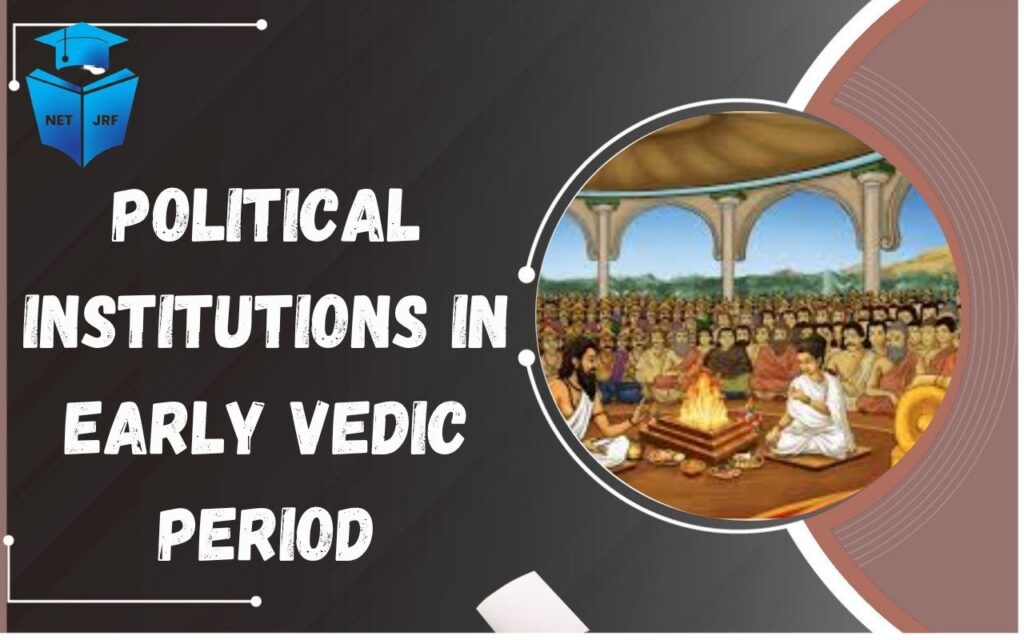

Political institutions during the Early Vedic period (1500–1000 BCE) were closely linked to the tribal and pastoral lifestyle of the Indo-Aryan communities. Unlike later periods with centralized kingdoms, governance was decentralized and primarily managed at the tribal level. Tribes were organized into Janas, led by a Rajan (chief), and guided by councils and assemblies such as the Sabha and Samiti, which played key roles in decision-making.
Join UGC NET Foundation Course
Vedic Political System
The early Vedic period followed the decline of the Indus Valley Civilization. During this phase Indo Aryan tribes settled mainly in the region called Sapta Sindhu, which included Punjab and nearby areas.
The political system was simple and decentralized. Authority depended on tribal loyalty rather than large territorial control.
Understanding Political Institutions in the Early Vedic Period helps historians explain the evolution of governance from tribal leadership to later monarchies in Indian history.
Political Institutions in the Early Vedic Period Nature
Political Institutions in the Early Vedic Period reflected a tribal democratic structure rather than a centralized monarchy. The king acted as leader but assemblies and councils also influenced decisions.
Key Characteristics
- Tribal political organization
- Limited authority of the king
- Role of assemblies in governance
- Participation of elders and warriors
- Collective decision making
These features show that Political Institutions in the Early Vedic Period combined leadership with consultation among members of the tribe.
The King or Rajan
The Rajan was the tribal chief and the most important political authority in early Vedic society.
Role of the Rajan
- Protection of the tribe from enemies
- Leadership during wars
- Distribution of wealth and cattle
- Performance of religious rituals
- Maintenance of law and order
Although the king held an important position, his authority was not absolute. Assemblies and councils influenced political decisions.
The position of the king illustrates the functioning of Political Institutions in the Early Vedic Period where leadership relied on community support.
Selection of the King
Kingship in early Vedic society was not always strictly hereditary. The tribe sometimes selected or approved the leader.
Features of Kingship
- Selection from noble families
- Approval by tribal assemblies
- Support from warriors and priests
- Responsibility to protect tribe and resources
Because the king depended on support from tribal members, political authority remained limited.
This system reflects the consultative nature of Political Institutions in the Early Vedic Period.
Join UGC NET Foundation Batch Online
Sabha Assembly
The Sabha was an important council in early Vedic political life.
Functions of Sabha
- Discussion of important issues
- Settlement of disputes
- Advice to the king
- Participation of elders and influential members
The Sabha usually consisted of respected elders and experienced leaders.
Its existence shows that Political Institutions in the Early Vedic Period involved collective participation in governance.
Samiti Assembly
The Samiti was another important political body during the early Vedic age.
Role of Samiti
- General assembly of the tribe
- Election or approval of the king
- Decision making during major events
- Discussion of war and peace
Compared with the Sabha, the Samiti represented a larger gathering of people.
The presence of the Samiti demonstrates the participatory character of Political Institutions in the Early Vedic Period.
Top UGC NET Offline Classes in Jaipur
Vidatha Gathering
Another important institution mentioned in the Rigveda is the Vidatha.
Functions of Vidatha
- Social and religious gatherings
- Distribution of wealth and resources
- Planning of tribal activities
- Participation in ceremonies and festivals
The Vidatha combined social, religious, and political roles.
Its activities highlight the integrated nature of Political Institutions in the Early Vedic Period, where social and political functions often overlapped.
Important Political Officials
Apart from the king and assemblies, several officials assisted in administration.
Major Officials
- Purohita – chief priest and advisor to the king
- Senani – military commander
- Gramani – head of the village
- Spies and messengers – information gathering
The Purohita played a very influential role because he performed rituals and guided the king in religious matters.
These officials supported the functioning of Political Institutions in the Early Vedic Period.
Political Institutions in the Early Vedic Period Structure
During the Early Vedic period, political life was closely tied to society, family, and tribal organization. There were no large kingdoms yet; instead, communities were organized into tribes or clans, each with its own leadership and council system.
| Institution | Role | Importance |
| Rajan | Tribal chief | Military leadership governance |
| Sabha | Council of elders | Advice dispute resolution |
| Samiti | General tribal assembly | Public participation decision making |
| Vidatha | Social religious gathering | Economic social coordination |
Administration and Governance
Administration during the early Vedic period remained simple because society was not highly centralized.
Administrative Features
- Small tribal territories
- Local governance by clan leaders
- Collective decision making
- Importance of kinship relations
The king relied on cooperation from tribal members rather than bureaucratic administration.
These arrangements formed the foundation of Political Institutions in the Early Vedic Period.
Role of Warfare in Politics
Warfare played an important role in early Vedic political life. Tribes often fought over cattle, land, and resources.
Causes of War
- Cattle raids
- Territorial disputes
- Tribal rivalries
- Control of water and pasture land
The king led the tribe during battles while the Senani commanded the army.
Military leadership strengthened the authority of leaders within Political Institutions in the Early Vedic Period.
Relationship Between Religion and Politics
Religion strongly influenced political authority during the Vedic age.
Religious Influence
- Kings performed sacrifices to gain divine support
- Priests guided political decisions
- Rituals strengthened the legitimacy of rulers
The Purohita often acted as the king’s closest advisor.
This close connection between religion and governance shaped Political Institutions in the Early Vedic Period.
Importance UGC NET History
For students preparing for UGC NET History and UPSC exams, this topic is extremely important.
Important Exam Points
- Role of Rajan in tribal governance
- Functions of Sabha and Samiti
- Significance of Vidatha gatherings
- Influence of priests and warriors
- Evolution of political authority
Understanding Political Institutions in the Early Vedic Period helps students analyze the development of early governance systems in ancient India.
Evolution Towards Later Vedic Political System
Over time Vedic society expanded eastward into the Ganga Yamuna plains. Political structures gradually changed.
Major Changes
- Growth of territorial kingdoms
- Increase in royal authority
- Decline in power of assemblies
- Development of hereditary monarchy
These developments marked the transition from tribal governance to organized states.
Such transformation shows how Political Institutions in the Early Vedic Period gradually evolved into stronger monarchies.
The Political Institutions in the Early Vedic Period reveal a simple but effective system of tribal governance. Leadership rested with the king while assemblies such as Sabha and Samiti ensured community participation in decision making.
These institutions balanced authority with consultation, which helped maintain stability within tribes. Over time these structures evolved and influenced the development of more complex political systems in later periods of Indian history.
Top UGC NET Offline Coaching in Jaipur
Political Institutions in the Early Vedic Period FAQs

2. Who was the Rajan in early Vedic society?
The Rajan was the tribal chief who led the tribe during wars protected people and performed administrative duties.
3. What was the function of Sabha?
Sabha was a council of elders that discussed important issues advised the king and helped resolve disputes.
4. What role did Samiti play in governance?
Samiti acted as a general assembly of tribal members where major political decisions were discussed and approved.
5. What was the Vidatha?6. Who were the important officials in early Vedic administration?
Vidatha was a gathering for social religious and economic activities where community members participated collectively.
6. Who were the important officials in early Vedic administration?
Important officials included the Purohita Senani and Gramani who assisted the king in governance.
7. Why were assemblies important in early Vedic politics?
Assemblies helped maintain collective decision making and limited the authority of the king.
8. How did early Vedic political institutions evolve later?
Over time tribal governance developed into stronger monarchies with larger territories and reduced influence of assemblies.