


Religion and Beliefs in Indus Civilization provide important insight into the spiritual life of the people who lived in the Indus Valley cities such as Harappa and Mohenjo-daro. Archaeologists discovered seals, terracotta figurines, sacred symbols, and ritual objects that help historians understand their religious practices.
Unlike later civilizations, the Indus Valley people did not leave written religious texts that scholars can read today. Their script remains undeciphered. Because of this, historians depend mainly on archaeological evidence to study Religion and Beliefs in Indus Civilization.
Religion and Beliefs in Indus Civilization Overview
The spiritual and religious practices of the Indus Valley Civilization are studied mainly through archaeological sources, as no written texts explaining their beliefs have survived. Excavations at major sites such as Harappa, Mohenjo-Daro, Kalibangan, and Lothal have revealed a wealth of material evidence that helps historians understand the Indus people’s connection to the sacred.
-
Terracotta Figurines
-
-
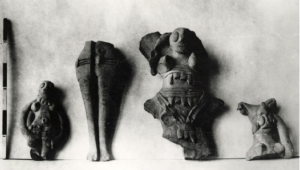
- Terracotta figurines are among the most common finds. Many depict female forms, which some scholars interpret as symbols of fertility and motherhood. Others show animals or humans in ritualistic poses. These figurines likely played a role in household worship or ceremonial practices, reflecting the importance of fertility, nature, and domestic life in spiritual beliefs.
-
-
Stone Seals
-
-
- Stone seals are another key source. They often display animals, mythical creatures, or sacred symbols carved with great precision. Some seals have inscriptions that remain undeciphered, but their imagery suggests religious or ritual significance. Seals may have been used to mark ownership, in trade, or during ceremonial activities, connecting daily life with spiritual symbolism.
-
-
Amulets and Charms
-
-
- Small amulets and charms found at Indus sites indicate a belief in protection and supernatural forces. People likely wore these items to ward off evil, bring good fortune, or ensure safe journeys. The presence of such personal items shows that religious belief was not only public but also deeply personal and intertwined with everyday life.
-
-
Fire Altars
-
-
- Excavations reveal structures interpreted as fire altars, often carefully arranged in citadels or prominent areas of the cities. Fire altars suggest ritual use, possibly for offerings, purification, or ceremonial gatherings. Their careful construction indicates that rituals were an organized and important part of urban life.
-
-
Sacred Symbols
-
-
- Symbols like the swastika, pipal tree motifs, or horned figures appear on pottery, seals, and other artifacts. These repeated motifs suggest shared spiritual ideas across the civilization. They may have represented deities, cosmic principles, or protective powers, and their widespread presence points to a common cultural and religious framework.
-
-
Burial Remains
-
- Burial practices offer significant insight into beliefs about life and death. Bodies were sometimes buried with ornaments, pottery, or tools, suggesting ideas of an afterlife or the importance of personal possessions even after death. The care in arranging graves and including offerings shows reverence for the deceased and possibly an organized religious understanding of mortality.
Enroll UGC NET Coaching in Jaipur
Interpreting Indus Religious Life
While the exact details of rituals and beliefs remain a mystery, these archaeological sources reveal a civilization deeply engaged with spiritual life.
- Household worship, communal rituals, protective amulets, and carefully designed altars suggest that religion permeated both private and public spheres. Animals, fertility symbols, and natural motifs indicate that the Indus people drew inspiration from their environment and everyday life in their spiritual worldview.
- In essence, the study of religious life in the Indus Valley Civilization shows a society where faith, daily activity, and community were closely linked.
- Though texts are missing, the material evidence offers a vivid glimpse into their sacred world, revealing a culture that valued ritual, symbolism, and connection with nature.
Religion and Beliefs in Indus Civilization
Religion and Beliefs in Indus Civilization appear closely connected with nature, fertility, animals, and ritual practices. Many scholars believe that Harappan religious ideas focused on natural forces that influenced agriculture, fertility, and protection.
Enroll UGC NET Offline Coaching in Jaipur
Archaeological evidence suggests that the Harappans practiced various forms of worship, including:
- Mother Goddess worship
- Proto-Shiva worship
- Tree worship
- Animal worship
- Sacred symbols
- Ritual bathing
Each of these practices forms an important part of Religion and Beliefs in Indus Civilization.
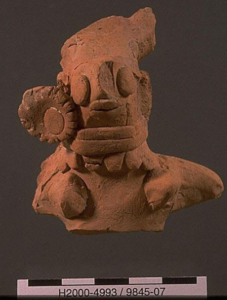
Mother Goddess Worship
One of the most important religious practices in the Indus Valley appears to be the worship of a female deity associated with fertility.
Enroll UGC NET Online Coaching
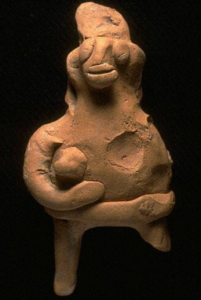
Archaeologists discovered many terracotta female figurines at Harappan sites. These figurines usually show a woman with exaggerated features such as wide hips and decorated headgear.
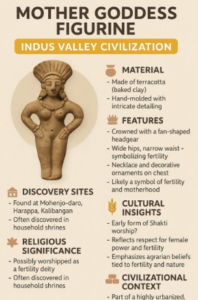
Features of Mother Goddess Figurines
- Made of terracotta clay
- Often found in houses
- Sometimes decorated with ornaments
- Represent fertility and motherhood
Historians believe these figurines symbolized a Mother Goddess who represented fertility, prosperity, and agricultural growth.
This fertility cult forms a central element of Religion and Beliefs in Indus Civilization.
Proto-Shiva or Pashupati Figure
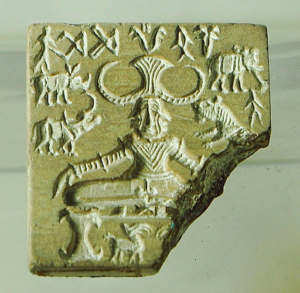
One famous seal discovered at Mohenjo-daro shows a figure seated in a yogic posture surrounded by animals. Scholars often call this figure Pashupati, meaning lord of animals.
The figure displays several unique features:
- Seated in cross-legged posture
- Horned headdress
- Surrounded by animals like elephant, tiger, buffalo, and deer
Many historians suggest that this figure may represent an early form of the Hindu god Shiva. Because of this interpretation, the seal becomes important evidence for Religion and Beliefs in Indus Civilization.
However, some scholars disagree with this interpretation and believe the figure may represent a powerful spiritual leader or deity associated with nature.
Sacred Animals in Harappan Religion
Animals held an important place in Harappan religious symbolism. Many seals and artifacts depict animals that may have had sacred significance.
Important Sacred Animals
- Bull
- Elephant
- Tiger
- Rhinoceros
- Buffalo
The bull appears frequently on seals, suggesting it had strong religious meaning. It may have symbolized strength, fertility, or divine power.
These symbols show that animals played a key role in Religion and Beliefs in Indus Civilization.
Tree Worship
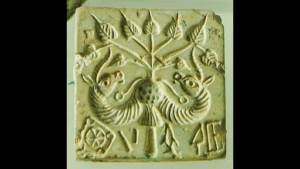
Tree worship was another important element of Harappan religious life. Several seals show figures standing near sacred trees.
- The most commonly depicted tree appears to be the pipal tree. In later Indian religious traditions, the pipal tree became sacred in Hinduism and Buddhism.
- Tree worship likely represented respect for nature and agricultural fertility. This connection with natural forces forms an important part of Religion and Beliefs in Indus Civilization.
Sacred Symbols Used in Religion and Beliefs in Indus Civilization
These symbols help historians reconstruct the structure of Religion and Beliefs in Indus Civilization.
| Symbol | Meaning | Archaeological Evidence |
| Swastika | Good fortune symbol | Found on seals |
| Pipal tree | Sacred nature symbol | Seal engravings |
| Horned deity | Power or fertility | Mohenjo-daro seal |
| Mother Goddess figurines | Fertility worship | Terracotta statues |
| Animal motifs | Sacred animal symbolism | Stone seals |
Ritual Bathing
Ritual bathing appears to have played an important role in Harappan spiritual life. The Great Bath at Mohenjo-daro provides strong evidence of ceremonial bathing practices.
Features of the Great Bath
- Large water tank
- Waterproof brick construction
- Steps leading into the tank
- Rooms surrounding the structure
Historians believe people used the Great Bath for religious purification ceremonies. Ritual bathing later became an important practice in Indian religious traditions.
This connection strengthens the understanding of Religion and Beliefs in Indus Civilization.
Fire Worship
Excavations at Kalibangan and Lothal reveal structures interpreted as fire altars. These altars appear arranged in rows and may have been used for ritual ceremonies.
- Fire worship could have been related to purification rituals or sacrificial practices. Although the exact purpose remains uncertain, these altars provide evidence of organized religious ceremonies.
- These discoveries contribute to the understanding of Religion and Beliefs in Indus Civilization.
Burial Practices
Burial customs also provide information about Harappan spiritual ideas. Archaeologists discovered graves in several Harappan sites.
Types of Burials
- Extended burial where the body lies straight
- Pottery burial where bones are placed inside pots
- Fractional burial where part of the skeleton appears in the grave
Graves often contain pottery, ornaments, and tools. These objects suggest that Harappans believed in some form of life after death.
Burial customs therefore form an important part of Religion and Beliefs in Indus Civilization.
Amulets and Charms
Harappans used amulets and charms for protection against evil forces. Archaeologists found many small objects made from stone, faience, and terracotta that people likely wore as protective charms.
These objects may have served spiritual purposes such as:
- Protection from illness
- Protection from evil spirits
- Blessings for prosperity
Such practices further illustrate the everyday influence of Religion and Beliefs in Indus Civilization.
Religion in Harappan Society Role
Religion influenced many aspects of Harappan life. It shaped social customs, rituals, and cultural practices.
Social Importance
- Promoted unity among communities
- Supported agricultural fertility beliefs
- Influenced artistic designs on seals and pottery
- Encouraged ritual practices
These functions show that Religion and Beliefs in Indus Civilization formed an essential part of social organization.
In conclusion, Religion and Beliefs in Indus Civilization reveal a complex spiritual system centered around fertility, nature, animals, and ritual practices. Archaeological discoveries such as figurines, seals, fire altars, sacred symbols, and burial sites help historians reconstruct Harappan religious life.
Religion and Beliefs in Indus Civilization FAQs
Did Harappans worship a Mother Goddess?
Yes, many terracotta female figurines suggest the existence of a fertility goddess worshipped by Harappan people.
What is the Pashupati seal?
The Pashupati seal from Mohenjo-daro shows a horned figure seated in a yogic posture surrounded by animals. Some historians connect it with early Shiva worship.
Why was the pipal tree important in Harappan religion?
The pipal tree appears on several seals and probably represented fertility, life, and sacred nature.
What role did animals play in Harappan religion?
Animals such as bulls, elephants, and tigers appear on many seals. These animals likely held religious or symbolic meaning.
Did Harappans believe in life after death?
Burial practices with pottery and ornaments suggest that Harappans believed in some form of life after death.
What evidence shows ritual practices in Harappan society?
Structures such as the Great Bath and fire altars indicate ritual activities and purification ceremonies.
What is Religion and Beliefs in Indus Civilization?
Religion and Beliefs in Indus Civilization refers to the spiritual ideas, rituals, sacred symbols, and worship practices followed by the people of the Indus Valley Civilization.