
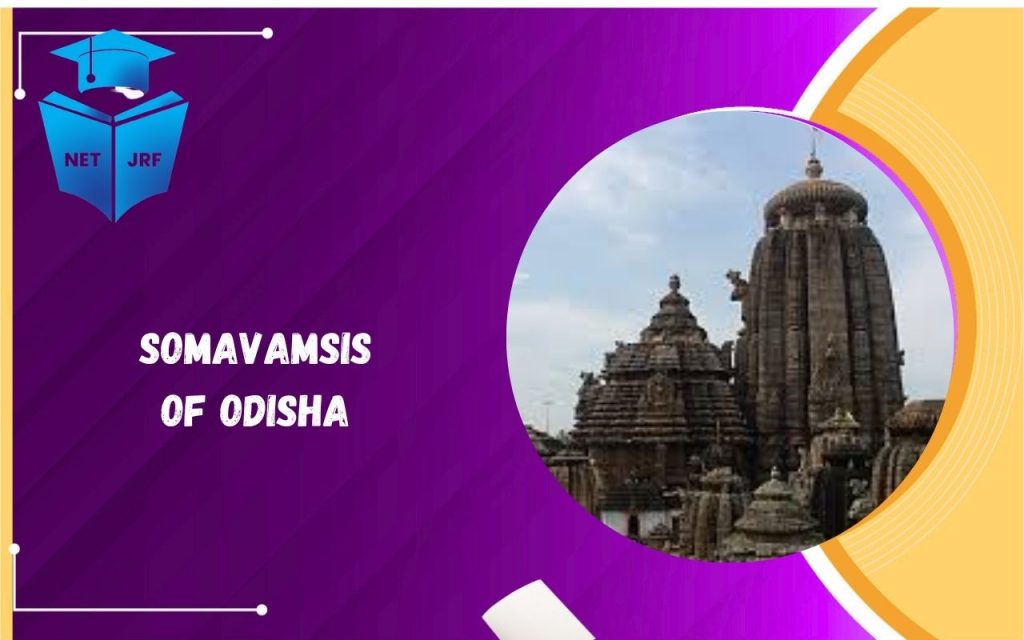

Somavamsis of Odisha who played a crucial role in shaping Orissa’s political and administrative framework. Emerging after the decline of earlier dynasties, they left a lasting imprint on governance, society, and culture of the region.

Somavamsis of Odisha Historical Background
The Somavamsis of Odisha emerged around the 9th century CE. They came to prominence following the decline of the Bhauma-Karas and established their rule primarily in central and northern parts of modern Odisha. Their reign extended approximately from 850 CE to 1120 CE. This dynasty laid the foundation of structured governance and promoted art, culture, and religion in Orissa.
Origins and Lineage
- Claimed descent from the Lunar dynasty, hence named Somavamsi.
- Known for consolidating smaller territories into a centralized kingdom.
- Shifted their capital from Yayatinagara (modern Jajpur) to other strategic locations for administrative efficiency.
Enroll UGC NET Online Test Series
Somavamsis of Odisha Administrative Structure
The central administration of the Somavamsis of Odisha was organized to ensure effective governance across their territories.
- King: Supreme authority controlling political, military, and religious matters.
- Council of Ministers: Assisted the king in policy-making, law, and taxation.
- Royal Secretaries: Managed correspondence and administrative records.
- Military Commanders: Oversaw defense and regional security.
Provincial Administration
- Territory divided into mandalas or provinces, each governed by royal princes or trusted nobles.
- Provincial officers collected taxes, maintained law and order, and implemented royal directives.
- Each province had its own revenue system and local officials under the central control.
Local Governance
- Villages and towns enjoyed semi-autonomy under local headmen.
- Responsibilities included revenue collection, dispute resolution, and local public works.
- Village assemblies played an important role in local administration, ensuring participation of people.
Somavamsis of Odisha Revenue System
The Somavamsis of Odisha maintained a structured economic system to sustain their kingdom.
- Land Revenue: Main source of income; farmers paid taxes on cultivated land.
- Trade Duties: Levies on local and long-distance trade.
- Tributes: Collected from subordinate chiefs and neighboring territories.
- Religious Endowments: Land grants to temples and Brahmins, promoting culture while also ensuring loyalty.
| Revenue Type | Description |
| Land Tax | Paid by peasants based on crop yield |
| Trade Duties | Collected at markets and trade centers |
| Tributes | Paid by vassals and allied chiefs |
| Temple Grants | Land or wealth assigned to religious institutions |
Somavamsis of Odisha Judicial System
The Somavamsis of Odisha emphasized law and order to maintain stability.
- King was the ultimate authority in legal matters.
- Village councils and provincial courts handled minor disputes.
- Punishments were proportional, including fines, corporal punishment, or exile for serious crimes.
- Religious influence guided moral codes and laws.

Somavamsis of Odisha Military Organization
The army had infantry, cavalry, and elephants.
- Regional commanders reported directly to the king.
- Strategic fortifications were constructed in key towns.
- Military campaigns helped consolidate territories and defend against external threats.
Somavamsis of Odisha Social Policies
The Somavamsis of Odisha introduced policies to foster social stability and cultural growth.
- Promotion of Hindu religion, especially Shaivism, alongside patronage of Buddhism and Jainism.
- Social hierarchy respected traditional varna system.
- Brahmins received grants, encouraging education, religious rituals, and administrative support.
- Village communities had autonomy to manage social and economic affairs locally.
Join UGC NET Coaching in Jaipur
Somavamsis of Odisha Religious Patronage
Built major temples like Lingaraj Temple in Bhubaneswar.
- Supported pilgrimage centers, enhancing Orissa’s religious reputation.
- Maintained close relations with Brahmins, monks, and scholars.
- Temple towns also became cultural hubs fostering education, art, and music.
Somavamsis of Odisha Economy and Trade
Agriculture formed the backbone of the economy.
- Main crops included rice, pulses, and oilseeds.
- Trade flourished through riverine and overland routes connecting Orissa to northern and eastern India.
- Market towns were regulated for taxation and quality control.
- Encouraged artisans, metalworkers, and handicrafts as supplementary economic support.
Somavamsis of Odisha Cultural Contributions
Introduced early Kalinga style temples with intricate carvings.
- Literature: Supported Sanskrit and Odia literature development.
- Education: Promoted Vedic learning and temple schools for children of elites.
- Art: Bronze and stone sculpture flourished under royal patronage.
Decline of Dynasty
- By the early 12th century CE, the Somavamsis of Odisha faced internal rebellions and external invasions.
- The Eastern Ganga dynasty gradually replaced them, marking the end of Somavamsi dominance.
- Despite decline, they left lasting political, cultural, and architectural legacies in Orissa.

Legacy
- Consolidated territorial rule and administrative structure in Orissa.
- Developed land revenue and taxation system still influential in later periods.
- Temples and cultural works influenced Eastern Indian architecture.
- Village administration and social policies provided models for future rulers.
- Contribution to education, literature, and religious tolerance was remarkable.
Best UGC NET Coaching in Jaipur