

The Kalinga War was one of the most important events in ancient Indian history. It marked a turning point in the life of Emperor Ashoka and changed the direction of the Mauryan Empire. This war was not just about conquest. It deeply influenced political ideas, moral values, and governance.
The Kalinga War Background
The background of The Kalinga War lies in the expansion policy of the Mauryan Empire.
-
Strategic Importance of Kalinga
-
-
- Kalinga was located on the eastern coast. It had access to sea routes and trade networks. Because of this, The Kalinga War became important for economic and political reasons.
-
-
Independent Nature
-
- Kalinga was not under Mauryan control. Its independence challenged imperial authority. This made The Kalinga War almost unavoidable.
Best UGC NET Offline Classes in Jaipur
Causes of The Kalinga War
There were several reasons behind The Kalinga War.
Political Causes
- Desire to expand the empire
- Control over a powerful region
These political motives played a key role in The Kalinga War.
-
Economic Causes
-
-
- Kalinga had strong trade connections. Controlling it would increase wealth. This economic factor contributed to The Kalinga War.
-
-
Strategic Causes
-
- Kalinga acted as a link between northern and southern India. This strategic position led to The Kalinga War.
Events of The Kalinga War
The actual events of The Kalinga War were intense and destructive.
-
The Battle
-
-
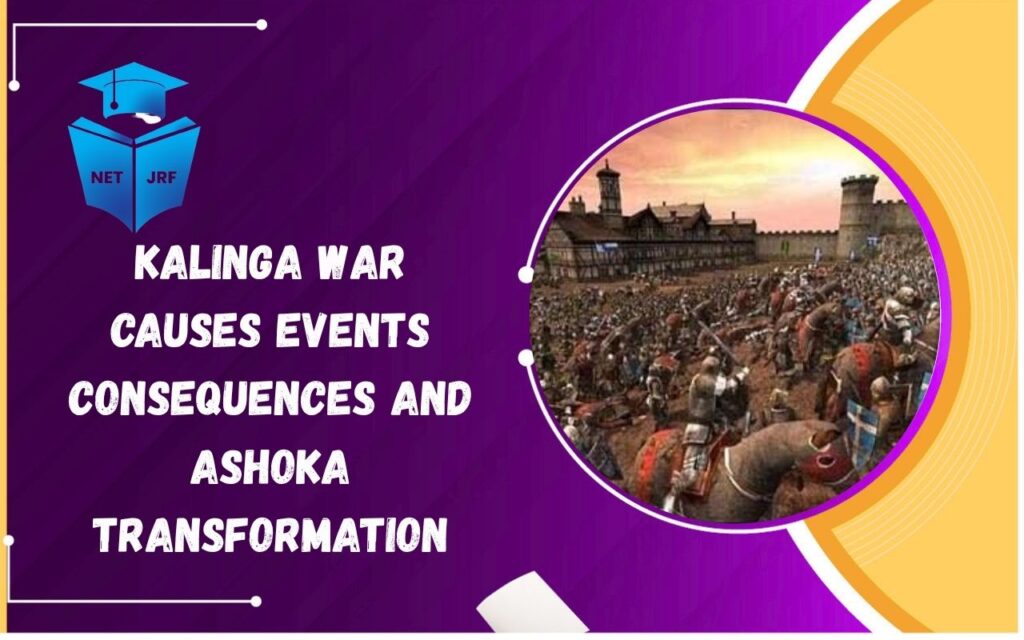
- The war took place around 261 BCE. Ashoka attacked Kalinga with a large army. The fighting in The Kalinga War was fierce and deadly.
-
-
Casualties
-
- Historical records mention massive loss of life. Thousands of soldiers and civilians died. The destruction caused by The Kalinga War was shocking.
The Kalinga War Key Facts
| Aspect | Details |
| Date | Around 261 BCE |
| Location | Kalinga region |
| Ruler | Ashoka |
| Outcome | Mauryan victory |
Consequences of The Kalinga War
The consequences of The Kalinga War were far-reaching.
Impact of the Kalinga War
The Kalinga War was a turning point in the life of Ashoka and in the history of the Maurya Empire. Its consequences were profound, affecting both society and the emperor’s outlook.
Human Suffering
- The war resulted in massive loss of life, with thousands killed, wounded, or displaced.
- Families were destroyed, and entire regions suffered devastation.
- This large-scale tragedy became a defining feature of the Kalinga War.
Moral Transformation
- Witnessing the suffering caused by the war deeply affected Ashoka.
- He experienced remorse and a change of heart, which is reflected in his inscriptions.
- This moral transformation was the most significant outcome of the war, leading him toward the path of Dhamma.
End of Expansion
- After the Kalinga War, Ashoka renounced aggressive warfare and expansion.
- He adopted a policy of peace, non-violence, and welfare of his subjects.
- This marked a new phase in his reign, focused on ethical governance rather than conquest.
Best UGC NET Offline Coaching in Jaipur
Ashoka’s Transformation
The impact of The Kalinga War on Ashoka was profound.
Change in Attitude
- Ashoka transformed from a conqueror to a moral ruler.
- This shift occurred after the Kalinga War, which left a deep impression on him.
- The war’s devastation prompted him to rethink the use of force and adopt a more compassionate approach.
Adoption of Dhamma
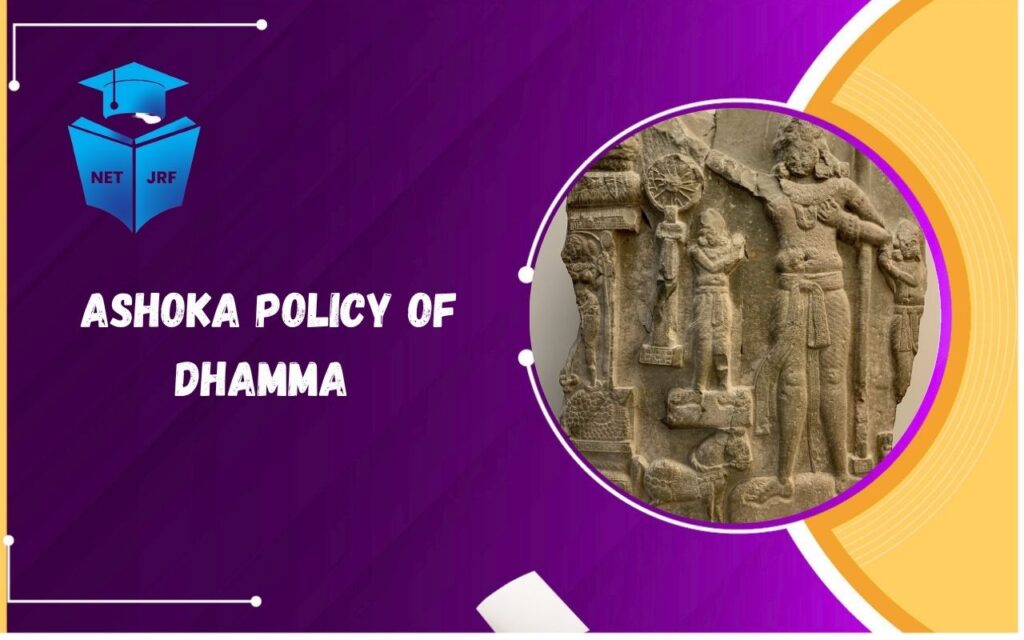
- Ashoka began promoting ethical governance and moral values, known as Dhamma.
- Focus areas included:
- Respect for all life
- Non-violence and tolerance
- Fair treatment of subjects
- Encouraging moral behavior among people
Top UGC NET Online Test Series
Social and Political Impact
The Kalinga War had far-reaching consequences on both society and governance in the Maurya Empire, especially under Ashoka.
Social Impact
- The immense destruction and loss of life made people more aware of the true cost of war.
- It led to a shift in societal values, with greater emphasis on peace, compassion, and non-violence.
- Ashoka’s promotion of Dhamma encouraged ethical living and respect for all beings.
Political Impact
- After the war, the Mauryan state shifted its focus from military expansion to welfare-oriented governance.
- Policies began to emphasize public welfare, justice, and moral administration.
- Ashoka introduced measures such as building roads, hospitals, and rest houses, reflecting a more humane approach to rule.
Role in Ashokan Policy
The Kalinga War played a decisive role in shaping the policies of Ashoka and transforming the governance of the Maurya Empire.
Non-Violence (Ahimsa)
- After witnessing the devastation of the war, Ashoka adopted the principle of non-violence (Ahimsa).
- He renounced aggressive warfare and emphasized peaceful coexistence.
- His inscriptions reflect a commitment to reducing violence and promoting moral values.
Welfare Activities
- Ashoka introduced several public welfare measures aimed at improving the lives of his subjects.
- These included construction of roads, hospitals, wells, rest houses, and planting of trees.
- He also appointed officials (Dhamma Mahamatras) to promote ethical conduct and social welfare.
Limitations of Sources
Our understanding of the Kalinga War is largely based on inscriptions issued by Ashoka, which present certain limitations for historians.
Change in Attitude
- Ashoka transformed from a conqueror to a moral ruler.
- This shift occurred after the Kalinga War, which left a deep impression on him.
- The war’s devastation prompted him to rethink the use of force and adopt a more compassionate approach.
Adoption of Dhamma
- Ashoka began promoting ethical governance and moral values, known as Dhamma.
- Focus areas included:
- Respect for all life
- Non-violence and tolerance
- Fair treatment of subjects
- Encouraging moral behavior among people
Conclusion
The Kalinga War was not just a battle but a major turning point in Indian history. It led to Ashoka’s transformation and the adoption of moral governance.
|
Read UGC Notes |
||
| Unit | Topic | Link |
| Archaeological | Archaeological Sources for UGC NET | Open |
| Archaeological | Exploration in Archaeology | Open |
| Archaeological | Excavation Techniques in Archaeology | Open |
| Archaeological | Dating of Archaeological Sites | Open |
| Archaeological | Epigraphy — Study of Inscriptions | Open |
| Archaeological | Inscriptions in Reconstructing History | Open |
| Archaeological | Numismatics in History | Open |
| Archaeological | Importance of Coins in History | Open |
| Literary Sources | Meaning of Historical Sources | Open |
| Literary Sources | Literary Sources in History | Open |
| Literary Sources | Indigenous Literature | Open |
| Literary Sources | Dating Ancient Literary Sources | Open |
| Literary Sources | Secular Literature as Historical Source | Open |
| Literary Sources | Role of Myths & Legends in Historical Reconstruction | Open |
| Foreign Accounts | Foreign Accounts of India — Overview | Open |
| Foreign Accounts | Greek Accounts on Ancient India | Open |
| Foreign Accounts | Chinese Accounts on India | Open |
| Foreign Accounts | Arabic Accounts on India | Open |
| Neolithic & Chalcolithic | Neolithic and Chalcolithic Phases | Open |
| Neolithic & Chalcolithic | Hunting, Gathering & Food Production | Open |
| Neolithic & Chalcolithic | Neolithic Revolution in India | Open |
| Neolithic & Chalcolithic | Neolithic Settlements in India | Open |
| Neolithic & Chalcolithic | Distribution of Neolithic Cultures in India | Open |
| Neolithic & Chalcolithic | Tools and Technology in Neolithic Period | Open |
| Neolithic & Chalcolithic | Chalcolithic Culture in India | Open |
| Neolithic & Chalcolithic | Settlement Pattern & Economy in Chalcolithic Phase | Open |
| Neolithic & Chalcolithic | Trade & Exchange Networks in Chalcolithic Societies | Open |
| Indus Valley | Indus Valley Civilization — Overview | Open |
| Indus Valley | Major Sites of Indus Civilization | Open |
| Indus Valley | Urban Planning in Harappan Civilization | Open |
| Indus Valley | Architecture and Town Planning | Open |
| Indus Valley | Agriculture and Food Economy | Open |
| Indus Valley | Craft Specialization & Industrial Activities | Open |
| Indus Valley | Internal Trade of Harappan Civilization | Open |
| Indus Valley | Internal and External Trade | Open |
| Indus Valley | Social Structure of Indus Civilization | Open |
| Indus Valley | Political Organization of Harappan Civilization | Open |
| Indus Valley | Religion and Beliefs in Indus Civilization | Open |
| Indus Valley | Decline of Indus Civilization | Open |
| Indus Valley | Indus Civilization as First Urbanization | Open |
| Vedic Period | Vedic and Later Vedic Periods — Overview | Open |
| Vedic Period | Origin of Vedic Civilization | Open |
| Vedic Period | Aryan Debate — Migration, Invasion & Indigenous Theories | Open |
| Vedic Period | Early Vedic Society and Economy | Open |
| Vedic Period | Political Institutions in Early Vedic Period | Open |
| Vedic Period | Social Structure in Early Vedic Period | Open |
| Vedic Period | Later Vedic Society and Economy | Open |
| Vedic Period | Emergence of Varnas and Social Stratification | Open |
| Vedic Period | Emergence of Heterodox Sects in India | Open |
| Vedic Period | Impact of Iron Technology in India | Open |
| Miscellaneous | Megalithic Culture of South India | Open |
| Miscellaneous | Religious and Philosophical Vedic Ideas | Open |
| Miscellaneous | State System in Ancient India | Open |
The Kalinga War FAQs

2. Why did Ashoka fight the Kalinga War?
Ashoka fought the war to expand his empire, gain control over a strategically important region, strengthen political authority, increase economic power through trade routes.
3. What were the main causes of the Kalinga War?
The main causes included political ambition, economic benefits from trade, strategic location of Kalinga, its independent status which challenged Mauryan control.
4. When did the Kalinga War take place?
The Kalinga War took place around 261 BCE during the reign of Ashoka.
5. What happened during the Kalinga War?
The war was intense with heavy fighting between Mauryan forces and Kalinga. It led to large-scale destruction, death of thousands of soldiers and civilians, displacement of people.
6. What were the consequences of the Kalinga War?
The war caused massive human suffering, destruction of society, emotional impact on Ashoka, led to major changes in his policies and governance approach.
7. How did the Kalinga War change Ashoka?
After witnessing destruction, Ashoka felt deep remorse. He transformed from a conqueror into a ruler focused on moral values, peace, welfare of people.
8. What is Dhamma introduced after the Kalinga War?
Dhamma was a policy of ethical governance promoted by Ashoka. It focused on non-violence, tolerance, respect for all beings, moral conduct among people.
9. What was the political impact of the Kalinga War?
The war ended aggressive expansion of Mauryan Empire. Governance shifted towards welfare policies, public works, moral administration under Ashoka.
10. Why is the Kalinga War important in history?
The Kalinga War is important because it transformed Ashoka’s rule, introduced moral governance, influenced political thought, marked shift from conquest to peace.