

Archaeological sources form the strongest foundation for reconstructing ancient and early medieval history. Unlike literary traditions that may contain exaggerations, legends, or religious bias, Archaeological sources provide direct, material, and scientific evidence of past societies. These sources allow historians to rebuild lost civilizations, understand ancient economies, study belief systems, and analyze technological progress.
For UGC NET aspirants, mastering Archaeological sources is essential because the exam frequently asks analytical and concept-based questions rather than simple factual ones. A deep understanding of how Archaeological sources are discovered, classified, interpreted, and dated gives candidates an academic advantage.

Enroll UGC NET Online Coaching
Classification of Archaeological Sources for UGC NET
Scholars classify Archaeological sources into four major categories:
| Category | Description | Historical Value |
| Epigraphic Sources | Inscriptions on stone, metal, seals
|
Political and administrative history |
| Numismatic Sources | Coins and currency
|
Economic and trade history |
| Material Remains | Tools, pottery, and ornaments
|
Social and daily life |
| Architectural Remains | Temples, forts, cities
|
Culture and art history |
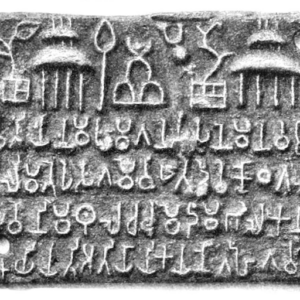
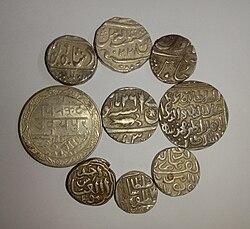
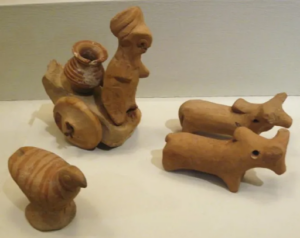
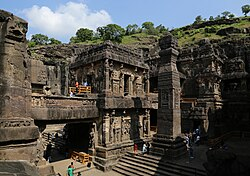
This classification helps researchers systematically analyze Archaeological sources and extract reliable historical conclusions.
These sources help us understand politics, trade, religion, and social practices in history. For instance, tools from the Stone Age reveal early technological innovations, while ancient temples showcase the religious values of different eras.
How Archaeologists Uncover History UGC NET
Archaeologists reconstruct the past through systematic scientific methods that transform buried material remains into meaningful historical evidence. The work of archaeology is not simply about digging objects from the ground; it is a carefully planned, methodical process that combines science, technology, and historical reasoning. Through these processes, archaeologists convert fragments of pottery, tools, bones, buildings, and inscriptions into reliable information about ancient societies, their lifestyles, economies, beliefs, and political systems.

Exploration and Excavation Techniques
Archaeology is all about uncovering history buried beneath the ground. To do this systematically, archaeologists use a range of methods.
Surveying: Mapping Historical Sites
Before digging starts, archaeologists survey the area to map potential sites. This involves studying the surface for signs of ancient settlements, such as pottery fragments or unusual mounds. For example, the surface survey of Lothal helped identify it as a key trading port of the Indus Valley Civilization.
Enroll UGC NET Mock Test Series
Excavation: Digging for Treasures
Excavation is the process of carefully digging through layers of soil to unearth artifacts. There are different ways to excavate:
| Method | Description | Purpose in Archaeology |
| Stratigraphic Excavation | Digging layer by layer to maintain chronological order | Helps determine sequence of occupation and historical timeline |
| Advanced Tools (Drones, GPR) | Use of modern technology to detect buried structures before excavation | Identifies hidden remains and prevents unnecessary digging |
Post-Excavation Analysis Understanding Finds
Once artifacts are found, scientists analyze them to figure out their age and purpose. Techniques like radiocarbon dating help determine the age of organic materials, while microscopic analysis reveals details about pottery or tools.
Epigraphy: Ancient Inscriptions
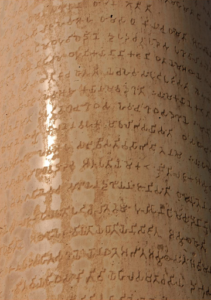
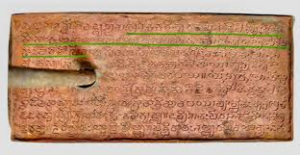
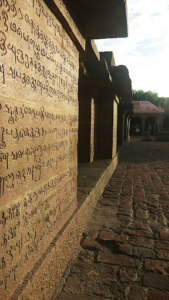
Epigraphy, the study of inscriptions, is a treasure chest for historians. Inscriptions carved on stone, metal, or clay carry valuable information about political events, laws, religion, and administration.
Types of Inscriptions
| Type of Inscription | Material | Purpose |
| Stone Edicts | Rock surfaces | Spread royal orders or religious teachings (e.g., Ashokan edicts).
|
| Copper Plates | Metal | Record land grants or treaties (e.g., Pallava copper plates).
|
| Temple Walls | Brick/stone | Document donations or victories (e.g., inscriptions at Brihadeeswarar Temple).
|
How Inscriptions Help in Historical Reconstruction
Inscriptions provide firsthand accounts of history that cannot be found in oral traditions or legends. For example:
| Historical Aspect | Source Type | What It Reveals |
| Political History | Royal inscriptions | Provide details about administration, governance, and authority of rulers like King Harsha |
| Religion | Temple inscriptions | Show royal patronage, religious donations, and support for different faiths |
| Trade & Economy | Copper plate records | Highlight taxation systems, trade practices, land grants, and economic policies |
Example for Better Understanding
Imagine a 1,000-year-old copper plate being discovered in your area. It states that a king granted the land to a local temple. This one plate tells us about governance, land ownership, and the role of temples in society.
Why Archaeological Sources Matter for UGC NET History
Archaeological sources such as inscriptions, artifacts, coins, and monuments are essential for understanding ancient civilizations because they provide direct and reliable evidence of the past. Unlike literary texts, they are physical remains that can be scientifically examined, dated, and verified. For UGC NET History preparation, these sources are highly important because many questions test conceptual understanding of how historians reconstruct history using material evidence.
Key Reasons
- Authentic Evidence: They offer first-hand proof of historical events, rulers, and cultures.
- Scientific Study: Excavation and dating methods ensure accuracy and chronological clarity.
- Multidimensional History: They reveal political, social, economic, religious, and technological aspects.
- Analytical Questions: Exams often focus on interpretation rather than memorization.
- Epigraphy & Numismatics: Specialized branches help decode administration, trade, and belief systems.
Archaeological Sources Numismatics: History of Coins
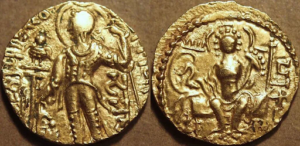
Numismatics, the study of coins, is a fascinating way to explore history. Coins reveal so much about ancient economies, politics, and societies, making them an essential source for historians and UGC NET aspirants. Coins are more than just currency; they are tiny historical records that tell stories of trade, power, and culture. Let’s take a closer look at their historical importance and how they’re studied.
Enroll UGC NET Coaching in Jaipur
Why Numismatics is Important for UGC NET: Coins as Historical Treasure
Coins are like time capsules that preserve the essence of their era. Here’s how they shed light on different aspects of history:
| Aspect | What Coins Reveal | Example |
| Economy | Materials like gold, silver, and copper show a region’s wealth and trade activity. | Gupta dynasty coins made of gold show a rich economy. |
| Politics | Coins with rulers’ names and images confirm their reign and promote their authority. | Shivaji’s coins reflected his independence from the Mughals. |
| Culture and Religion | Images and symbols on coins reveal religious beliefs and festivals of that time. | Chola coins depict Lord Shiva, showing their devotion to Shaivism. |
Coins act as direct evidence of how ancient societies functioned, making them a crucial resource for preparing for UGC NET History.
How Numismatists Study Coins: Key Methods for UGC NET Aspirants
To unlock the secrets hidden in coins, numismatists use a combination of physical analysis, research, and archaeological findings.
Physical Analysis: Studying the Coin’s Features
By examining the size, weight, metal composition, and design, historians can determine:
- Authenticity: Is the coin genuine or a later reproduction?
- Usage: How much the coin circulated based on wear and tear.
- Economic Condition: The type of metal used (precious or common) reflects the region’s prosperity.
For example, the Vijayanagara Empire’s coins were made of gold and copper, showcasing a balance between trade and local transactions.
Historical Context: Understanding the Coin’s Story
Every coin belongs to a specific time and place. By studying the political and trade environment when the coin was minted, historians can understand its purpose. For instance, Indo-Greek coins found in Gujarat show their influence on trade and culture in western India.
Archaeological Correlation: Coins in Excavations
Coins found at archaeological sites help date those sites and identify trade networks. For example, Roman coins discovered in Tamil Nadu prove there were trade relations between ancient South India and Rome.
Methods of Dating Archaeological Sites: A Must-Know for UGC NET
Accurately dating archaeological sites is crucial for understanding historical timelines. There are two main types of dating methods: relative dating and absolute dating.
| Method | How It Works | Example |
| Relative Dating | Determines the sequence of events but not the exact date.
|
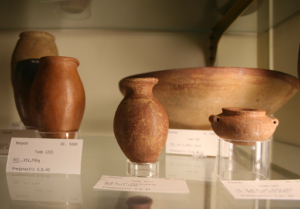
Layers of pottery show changes in design over time. |
| Absolute Dating | Gives an exact age using scientific techniques.
|
Carbon-14 dating of organic materials. |
Relative Dating Techniques
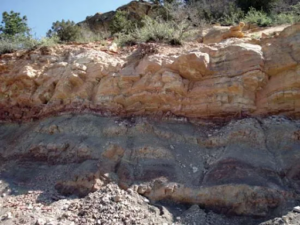
- Stratigraphy: This involves studying the layers of soil or sediment. Older layers are buried deeper, while newer layers are on top.
- Typology: Artifacts are classified based on design changes over time. For instance, changing pottery styles help date a settlement.
| Technique | Meaning | Principle | Historical Use |
| Stratigraphy | Study of soil or sediment layers | Deeper layers are older; upper layers are newer (Law of Superposition) | Helps establish chronological sequence of settlements |
| Typology | Classification of artifacts based on design changes | Styles evolve over time, allowing relative dating | Used to date sites by comparing pottery, tools, and ornaments |
Tip:
Stratigraphy tells when layers formed, while typology suggests which period artifacts belong to.
Absolute Dating Techniques
- Radiocarbon Dating: Used for dating organic materials like wood or bones, effective up to 50,000 years old.
- Dendrochronology: This uses tree-ring patterns to date wooden objects. Each ring represents a year.
- Thermoluminescence: Measures light released from pottery when it is heated, helping date items last used in fire.
| Dating Method | What It Is | Used For | Key Principle | Time Range |
| Radiocarbon Dating | Scientific method that measures carbon-14 decay | Organic materials like wood, bones, charcoal | Radioactive carbon decreases over time | Up to about 50,000 years |
| Dendrochronology | Dating technique based on tree rings | Wooden objects, timber structures | Each ring represents one year of growth | Exact year possible (if reference data exists) |
| Thermoluminescence | Dating method measuring light emitted when heated | Pottery, ceramics, burnt clay | Minerals store radiation energy released as light | Thousands of years |

Why Numismatics and Dating Methods Matter for UGC NET?
Coins and dating techniques are the backbone of archaeological studies. Numismatics helps us understand how people lived, traded, and ruled in the past, while dating methods provide the chronological framework for these discoveries.
Join UGC NET Coaching in Jaipur
Conclusion
Archaeological sources like inscriptions, coins, monuments, and dating techniques offer a comprehensive understanding of ancient societies. They uncover the economic, cultural, and political fabric of the past. For UGC NET aspirants, mastering these topics is essential for both exam success and appreciating the depth of human history.
Archaeological Sources For UGC NET FAQs

2. Why is numismatics important for UGC NET?
Numismatics, the study of coins, reveals information about ancient economies, political systems, and cultures, making it a key area for UGC NET History preparation.
3. What are the key methods of archaeological excavation?
Methods include surveying sites, stratigraphic excavation (layer-by-layer digging), and advanced techniques like ground-penetrating radar for locating artifacts.
4. How do inscriptions help in historical reconstruction?
Inscriptions provide direct evidence of political events, administration, religion, and trade practices, filling gaps left by other historical sources.
5. What is the difference between relative and absolute dating techniques?
Relative dating establishes the sequence of events, while absolute dating determines the exact age of artifacts using scientific methods like radiocarbon dating.