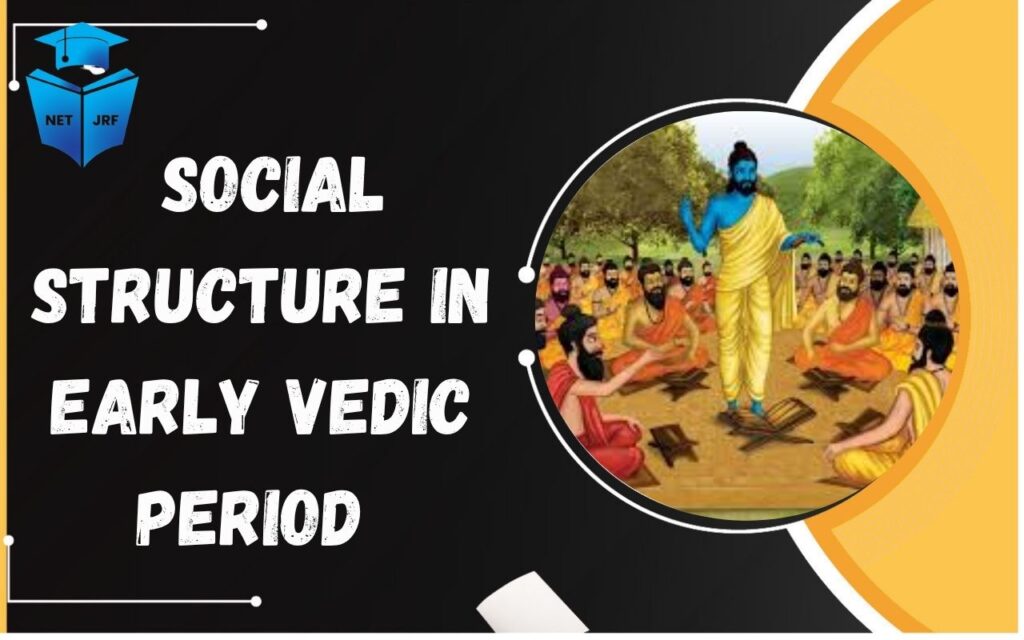

Social Structure in Early Vedic Period formed the foundation of society during the Rig Vedic age between about 1500 BCE and 1000 BCE. During this time Indo Aryan tribes settled mainly in the northwestern region of the Indian subcontinent. Society remained largely tribal pastoral and organized around kinship relations.

Enroll UGC NET Online Coaching
Most information about this period comes from the Rigveda, which provides valuable details about social institutions, family organization, role of women and early occupational divisions.
Early Vedic Society
The early Vedic age developed after the decline of the Indus Valley Civilization. Indo Aryan groups migrated into the northwestern region known as Sapta Sindhu which included Punjab and surrounding areas.
- During this time society did not have large cities or complex states. People lived in small rural settlements and tribal groups.
- Understanding Social Structure in Early Vedic Period helps historians explain how early Indian society evolved from simple tribal communities into later complex social systems.
Social Structure in Early Vedic Period
Social Structure in Early Vedic Period remained flexible and relatively simple compared with later Vedic society. Social relations depended mainly on kinship and occupation rather than rigid caste divisions.
Key Characteristics
- Tribal organization of society
- Importance of family as social unit
- Relatively flexible social divisions
- Respect for elders and community leaders
- Active role of women in social life
These features demonstrate that Social Structure in Early Vedic Period was less hierarchical and more community oriented.
Early Vedic Period Family as the Basic Unit
The family formed the most important institution in early Vedic society. It acted as the center of economic production social education and cultural traditions.
Features of the Family System
- Joint family structure common
- Father served as head of the household
- Property managed collectively within family
- Children trained in traditions rituals and occupations
Family members shared responsibilities in economic activities such as agriculture cattle rearing and household crafts.
The central role of the family highlights the importance of Social Structure in Early Vedic Period in maintaining stability within tribal communities.
Early Vedic Period Clan and Tribal Organization
Beyond the family level society was organized into larger social groups.
Main Social Units
- Kula – family
- Grama – village group
- Vish – clan or group of families
- Jana – tribe
These units created a hierarchical social structure based on kinship relationships.
Such organization formed an essential element of Social Structure in Early Vedic Period because it regulated cooperation defense and economic activities.
Early Vedic Period Varna System in Early Stage
The early Vedic society witnessed the beginning of the varna system, though it remained flexible and not rigid.
Four Varna Categories
- Brahmana – priests and scholars
- Kshatriya – warriors and rulers
- Vaishya – farmers traders and herders
- Shudra – service providers and laborers
During the early Vedic phase these divisions were mainly occupational rather than hereditary.
This early stage of social differentiation illustrates the evolving nature of Social Structure in Early Vedic Period.
Early Vedic Period Role and Status of Women
Women enjoyed a relatively respected position in early Vedic society.
Rights and Status of Women
- Participation in religious rituals
- Access to education and learning
- Freedom in choosing marriage in some cases
- Respect within family and community
Women such as Ghosha, Lopamudra and Apala are mentioned in Vedic literature as scholars and poets.
These examples show that the Social Structure in Early Vedic Period provided women with more freedom compared with later periods.
Early Vedic Period Marriage System
Marriage formed an important social institution that maintained family continuity.
Features of Marriage
- Mostly monogamous unions
- Marriage considered sacred duty
- Women participated in religious ceremonies with husbands
- Widow remarriage allowed in some cases
Various forms of marriage existed but arranged marriage remained common.
Marriage customs formed a key part of Social Structure in Early Vedic Period because they regulated social relations and inheritance.

Early Vedic Period Education and Learning
Education played an important role in preserving Vedic traditions.
Features of Education
- Oral transmission of knowledge
- Importance of memorization of hymns
- Training provided by teachers known as gurus
- Religious and cultural learning emphasized
Young students studied Vedic hymns rituals and moral values.
Educational practices contributed to the stability of Social Structure in Early Vedic Period by passing traditions to the next generation.
Best UGC NET Offline Classes in Jaipur
Early Vedic Period Economic Basis of Society
Economic life strongly influenced social organization. People depended mainly on pastoral and agricultural activities.
Main Economic Activities
- Cattle rearing
- Agriculture
- Craft production
- Hunting and gathering
Cattle served as the main measure of wealth. This economic foundation shaped the Social Structure in Early Vedic Period because status often depended on ownership of cattle and land.
Religious Influence on Society
Religion shaped many aspects of daily life in the Vedic age.
Major Religious Elements
- Worship of natural forces
- Performance of yajna rituals
- Role of priests in ceremonies
- Belief in cosmic order called rita
Religious beliefs influenced social customs and moral values.
The connection between religion and daily life formed an important feature of Social Structure in Early Vedic Period.
Early Vedic Period Social Values and Traditions
Early Vedic society emphasized moral values and community cooperation.
Important Social Values
- Respect for elders
- Loyalty to tribe
- Importance of hospitality
- Courage in warfare
- Generosity in sharing wealth
These values helped maintain unity among tribal groups.
Such ethical principles shaped Social Structure in Early Vedic Period and strengthened social bonds.

Social Change in Later Vedic Period
Over time Vedic society expanded toward the Ganga Yamuna plains. This expansion brought major changes in social organization.
Important Changes
- Agriculture became dominant
- Varna system became rigid
- Kingship became stronger
- Social inequality increased
These developments marked the transition from the flexible system of Social Structure in Early Vedic Period to a more hierarchical society.
The Social Structure in Early Vedic Period represents an early stage of social organization in ancient India. Society was mainly tribal pastoral and based on kinship relations. Family clan tribe and early occupational divisions formed the basis of social order. Women enjoyed relatively higher status and social divisions remained flexible.
Best UGC NET Offline Coaching in Jaipur
Social Structure in Early Vedic Period FAQs

2. What was the basic unit of early Vedic society?
The family known as Kula served as the basic unit of society and played a central role in social and economic life.
3. What were the main social groups in early Vedic society?
The main groups included Kula family Grama village Vish clan and Jana tribe.
4. What was the status of women in early Vedic society?
Women enjoyed relatively high status. They could participate in religious rituals receive education and contribute to social life.
5. Was the caste system rigid in early Vedic society?
No the early varna system was flexible and mainly based on occupation rather than birth.
6. What role did religion play in early Vedic society?
Religion influenced social customs rituals moral values and community traditions.
7. How was education transmitted during the Vedic period?
Education relied on oral transmission of knowledge through teachers known as gurus who taught Vedic hymns and traditions.
8. How did early Vedic social structure change later?
Later Vedic society developed rigid caste divisions stronger kingship and greater social inequality.