

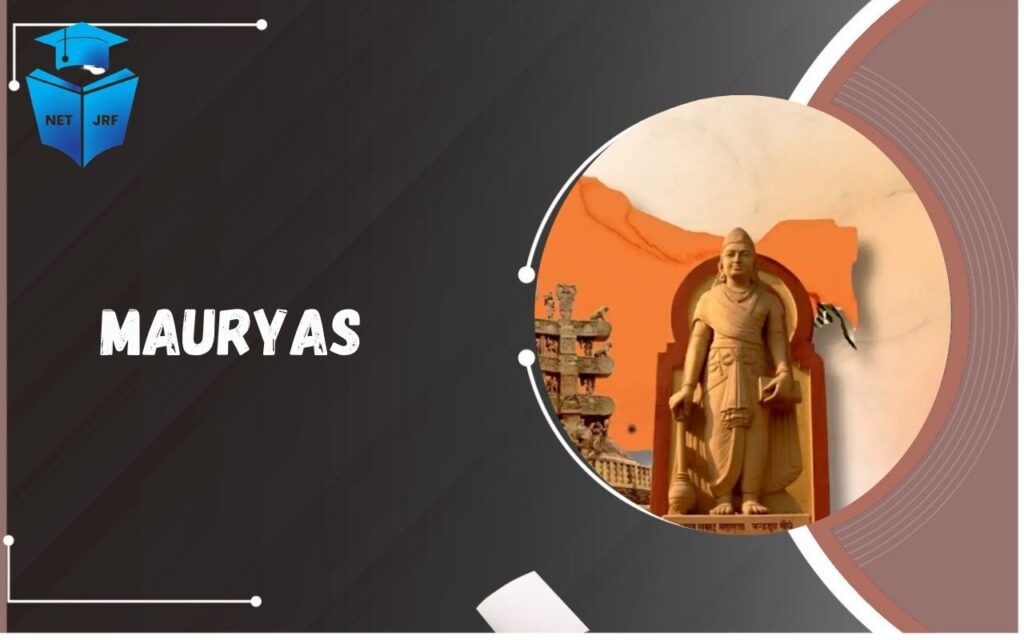
The central administration under the Maurya Empire was one of the most highly organized and efficient systems in ancient Indian history. It was characterized by a strong, centralized authority where the king held supreme power over political, military, and administrative affairs. The Mauryan rulers, especially Chandragupta Maurya and Ashoka, established a well-structured bureaucracy to manage their vast empire.The administration was supported by a council of ministers known as the Mantriparishad, along with various departments that looked after revenue, justice, defense, trade, and public welfare. Much of our knowledge about this system comes from the Arthashastra written by Kautilya, as well as accounts of the Greek ambassador Megasthenes. Overall, the central administration of the Mauryas laid the foundation for a unified and efficient governance system, ensuring political stability, economic prosperity, and effective control over a vast and diverse territory.

Features of Central administration under Mauryas
The Central administration under Mauryas had some clear and strong features. These features made the system stable and effective.
-
Centralized Authority
-
- The king held supreme power. All decisions were taken at the center. This strong control defined the Central administration under Mauryas.
-
Well-organized Bureaucracy
-
- Officials were appointed for every department. They worked under strict supervision. This made the Central administration under Mauryas efficient.
-
Use of Spies
- A secret spy system helped the king gather information. It ensured control and discipline in the Central administration under Mauryas.
Role of King
The king was the most important part of the Central administration under Mauryas. He controlled administration, military, and justice.
Powers of the King
- Head of state
- Chief law maker
- Supreme judge
- Commander of army
The king personally looked after governance. This direct involvement strengthened the Central administration under Mauryas.
Duties of the King
The king had responsibilities too:
- Protecting people
- Maintaining law and order
- Promoting welfare
Ashoka especially focused on welfare, making the Central administration under Mauryas more humane.
Council of Ministers
The king was supported by a council. This was a key part of the Central administration under Mauryas.
- The Central administration under the Mauryas was not run by the king alone; it was strongly supported by a well-organized Council of Ministers. This council played a crucial role in helping the ruler govern such a vast empire efficiently.
- The king, though powerful, relied on the wisdom and experience of his ministers to make important decisions related to administration, law, economy, and warfare.
- This shows that the Mauryan system was not just autocratic but also consultative in nature.
- The importance of ministers in the Mauryan administration cannot be overstated. They acted as trusted advisors who guided the king in both routine matters and critical situations.
- From managing state affairs to ensuring justice and maintaining order, ministers handled many responsibilities that kept the empire functioning smoothly.
- Their advice helped the king take balanced and thoughtful decisions, reducing the chances of mistakes in governance.
- Different types of officials were appointed, each with specific roles and duties. Mantri served as the chief advisor, offering counsel on political and administrative matters. The Purohita was the religious guide who performed rituals and also influenced decisions by providing moral and spiritual guidance.
- Senapati was the head of the army, responsible for defense, military planning, and leading troops during wars.
- The Amatya were high-ranking officials who managed various departments such as finance, revenue, and public administration.
- Together, these officers ensured that the central administration worked in a smooth and organized manner. Their coordination and specialization made it possible for the Mauryan Empire to maintain control over a large territory, proving the strength and efficiency of its administrative system.
Join UGC NET Offline Classes in Jaipur
Administrative Departments
The Central administration under Mauryas had many departments. Each department
The Mauryan administration was highly organized, with different departments created to handle specific areas of governance.
- This clear division of work made the system efficient and easy to manage. The revenue department was responsible for collecting taxes, which formed the backbone of the empire’s economy. It ensured that the state had enough resources to run administration, maintain the army, and carry out public works. The agriculture department looked after farming activities, irrigation, and land management, as agriculture was the main source of livelihood for people.
- The trade and commerce department regulated markets, controlled prices, and ensured fair trade practices, helping economic growth and stability. The mining and industry department managed natural resources like metals and oversaw production activities, which were important for tools, weapons, and economic development. Meanwhile, the forest department took care of forest resources, wildlife, and forest produce, which were also valuable to the state.
- Each of these departments was headed by a responsible officer who managed its daily functions and reported to higher authorities. This structured system of administration reduced confusion, improved efficiency, and helped the Mauryan rulers maintain strong control over their vast empire.
Central administration under Mauryas
The Central Administration was the core of governance in the Mauryan Empire, with the king at the top as the supreme authority. The king controlled all aspects of administration, from law and revenue to defense, ensuring that the vast empire ran smoothly. He did not govern alone but relied on a well-organized network of ministers and officials who advised him, implemented policies, and managed daily affairs.
| Official | Role | Function |
| King | Supreme authority | Final decision maker |
| Mantri | Advisor | Policy guidance |
| Senapati | Military head | Army control |
| Amatya | Administrator | Daily governance |
Revenue System
Revenue collection was a major part of the Central administration under Mauryas.
- The Mauryan Empire had a strong and well-planned financial system, which played a vital role in maintaining its powerful administration.
- The main source of income was land tax, collected from farmers based on the produce of their fields. Since agriculture was the backbone of the economy, this tax provided a steady and reliable flow of revenue to the state. In addition to this, the government also imposed trade tax on goods that were bought and sold in markets, ensuring that commercial activities contributed to the empire’s wealth.
- Another important source of income was forest produce, which included items like timber, herbs, honey, and other natural resources collected from forests. These resources were valuable both for daily use and for trade.
- Similarly, mines contributed significantly to the treasury, as they supplied metals and minerals such as gold, silver, and iron, which were essential for making tools, weapons, and ornaments.
- The Mauryan state was careful and systematic in collecting these taxes. Officials ensured that revenue was gathered efficiently without causing unnecessary burden on the people.
- This well-managed financial system provided the resources needed to support administration, maintain the army, and carry out development activities, making the Central administration under the Mauryas strong and stable.
The state collected taxes carefully. This strong financial system supported the Central administration under Mauryas.
Join UGC NET Offline Coaching in Jaipur

Military Administration
The army played a key role in the Central administration under Mauryas.
Structure of Army
- The Mauryan army was one of the strongest pillars of the empire, carefully organized into different divisions to ensure power and efficiency. The infantry formed the largest part of the army. These were foot soldiers who fought on the ground using weapons like swords, spears, and bows.
- They played a key role in battles and were essential for defending and expanding the empire.
- The cavalry, or soldiers on horseback, added speed and mobility to the army.
- They were used for quick attacks, chasing enemies, and carrying messages across long distances. Their ability to move fast made them very effective in warfare. Another powerful division was the use of war elephants.
- These elephants created fear among enemies and were often used to break enemy lines during battle. They also carried soldiers and weapons, making them a strong force on the battlefield.
- The chariots were another important part of the Mauryan army.
- They were used in warfare for both attack and movement, carrying warriors who could shoot arrows or throw weapons while moving.
- Together, these four divisions made the Mauryan army well-balanced and powerful.
- This strong military structure helped the rulers maintain control over a vast empire and protect it from external threats.
A special board managed military affairs. This organization strengthened the Central administration under Mauryas.
Espionage System
The spy system was unique in the Central administration under Mauryas.
- In the Mauryan administration, spies played a very important but often hidden role in maintaining control and discipline across the empire.
- They were appointed by the king to collect information about what was happening in different parts of the state. This included keeping an eye on public opinion, possible rebellions, and activities of enemies. Because the empire was so large, spies helped the king stay informed even about distant regions.
- Another key duty of spies was to report corruption. They secretly observed officials and reported any misuse of power, bribery, or unfair practices.
- This helped in maintaining honesty and accountability within the administration. Officials knew they were being watched, which discouraged them from acting wrongly.
- Spies were also responsible to monitor officials and ensure they were performing their duties properly. They checked whether orders were being followed and whether administration was running smoothly at all levels.
- Through this secret network, the king could maintain strict control over governance.
- Overall, the spy system made the Mauryan administration more effective and disciplined. It helped in preventing corruption, ensuring loyalty, and maintaining stability throughout the empire.
Spies helped maintain discipline. This secret network was a strong pillar of the Central administration under Mauryas.
Judicial System
Justice was an important part of the Central administration under Mauryas.
Courts and Laws
The Mauryan system of courts and laws was designed to maintain strict discipline and justice across the empire. The king acted as the highest judge, holding the ultimate authority in legal matters.
- Important cases and appeals could be brought before him, and his decisions were final. This showed that justice was closely connected to the ruler, who was expected to be fair and responsible.
- At the local level, officials handled disputes among people. These officers took care of everyday issues such as property conflicts, trade disagreements, and minor criminal cases. By resolving problems at the local level, they reduced the burden on the central authority and ensured that justice was delivered quickly and efficiently.
- The Mauryan administration was also known for its strict punishments, which played a key role in maintaining law and order.
- Harsh penalties were given for crimes like theft, corruption, and disobedience. This created a sense of fear among people and discouraged wrongdoing.
- This system maintained law and order in the Central administration under Mauryas.
Welfare Policies
The Central administration under Mauryas also focused on public welfare.
Ashoka’s Contribution
- The Mauryan rulers, especially Ashoka, paid great attention to the welfare of their people and even animals. One of the most remarkable features of his rule was the establishment of hospitals for both humans and animals.
- This showed a sense of compassion and responsibility toward all living beings. Medical facilities were set up to treat the sick, and care was also provided to animals, which was quite advanced for that time.
- Another important contribution was the development of roads and rest houses. Well-constructed roads connected different parts of the empire, making travel and trade easier. Along these roads, rest houses were built for travelers to stay and relax during long journeys. These facilities improved communication, boosted economic activities, and made administration more efficient.
- Ashoka also focused on the spread of Dhamma, which was a set of moral and ethical principles. Dhamma emphasized values like non-violence, kindness, respect for elders, and tolerance towards all religions. Instead of forcing people to follow a particular religion, he encouraged them to live a good and moral life.
- Through inscriptions and officials, these ideas were spread across the empire.
- Together, these efforts reflect how the Mauryan administration was not only strong but also caring and people-oriented, aiming for the overall welfare and harmony of society.
These policies made the Central administration under Mauryas people-friendly.

Strengths of System
The Central administration under Mauryas had many strengths
The Mauryan administration was known for its strong central control, where the king held supreme authority over the entire empire. Decisions related to governance, military, and law were taken at the center, ensuring unity and uniformity across vast regions. This centralization helped the ruler maintain direct control and quickly respond to any challenges.
- Another important feature was the presence of efficient officials. Skilled and trained officers were appointed to carry out administrative duties.
- They worked under strict supervision and were responsible for maintaining order, collecting taxes, and implementing the king’s policies. Their efficiency ensured that the administration functioned smoothly without delays or confusion.
- The system was further strengthened by organized departments, each handling a specific area such as agriculture, trade, mining, and forests.
- This clear division of responsibilities reduced overlap and increased productivity. Every department was managed by a capable officer, which made governance more systematic and effective.
- Lastly, the Mauryan Empire had a good revenue system, which provided the financial strength needed to run the state. Taxes were collected carefully from various sources like land, trade, forests, and mines.
- This steady flow of income supported administration, welfare activities, and a powerful army.
- Together, these features made the Mauryan administration strong, stable, and highly efficient, helping it become one of the greatest empires in ancient India.
These strengths made the Central administration under Mauryas successful.
Best UGC NET Foundation Batch Online
The Central administration under Mauryas was a well-planned system that combined power, efficiency, and welfare. It helped rulers manage a vast empire with control and discipline.
|
Read UGC Notes |
||
| Unit | Topic | Link |
| Archaeological | Archaeological Sources for UGC NET | Open |
| Archaeological | Exploration in Archaeology | Open |
| Archaeological | Excavation Techniques in Archaeology | Open |
| Archaeological | Dating of Archaeological Sites | Open |
| Archaeological | Epigraphy — Study of Inscriptions | Open |
| Archaeological | Inscriptions in Reconstructing History | Open |
| Archaeological | Numismatics in History | Open |
| Archaeological | Importance of Coins in History | Open |
| Literary Sources | Meaning of Historical Sources | Open |
| Literary Sources | Literary Sources in History | Open |
| Literary Sources | Indigenous Literature | Open |
| Literary Sources | Dating Ancient Literary Sources | Open |
| Literary Sources | Secular Literature as Historical Source | Open |
| Literary Sources | Role of Myths & Legends in Historical Reconstruction | Open |
| Foreign Accounts | Foreign Accounts of India — Overview | Open |
| Foreign Accounts | Greek Accounts on Ancient India | Open |
| Foreign Accounts | Chinese Accounts on India | Open |
| Foreign Accounts | Arabic Accounts on India | Open |
| Neolithic & Chalcolithic | Neolithic and Chalcolithic Phases | Open |
| Neolithic & Chalcolithic | Hunting, Gathering & Food Production | Open |
| Neolithic & Chalcolithic | Neolithic Revolution in India | Open |
| Neolithic & Chalcolithic | Neolithic Settlements in India | Open |
| Neolithic & Chalcolithic | Distribution of Neolithic Cultures in India | Open |
| Neolithic & Chalcolithic | Tools and Technology in Neolithic Period | Open |
| Neolithic & Chalcolithic | Chalcolithic Culture in India | Open |
| Neolithic & Chalcolithic | Settlement Pattern & Economy in Chalcolithic Phase | Open |
| Neolithic & Chalcolithic | Trade & Exchange Networks in Chalcolithic Societies | Open |
| Indus Valley | Indus Valley Civilization — Overview | Open |
| Indus Valley | Major Sites of Indus Civilization | Open |
| Indus Valley | Urban Planning in Harappan Civilization | Open |
| Indus Valley | Architecture and Town Planning | Open |
| Indus Valley | Agriculture and Food Economy | Open |
| Indus Valley | Craft Specialization & Industrial Activities | Open |
| Indus Valley | Internal Trade of Harappan Civilization | Open |
| Indus Valley | Internal and External Trade | Open |
| Indus Valley | Social Structure of Indus Civilization | Open |
| Indus Valley | Political Organization of Harappan Civilization | Open |
| Indus Valley | Religion and Beliefs in Indus Civilization | Open |
| Indus Valley | Decline of Indus Civilization | Open |
| Indus Valley | Indus Civilization as First Urbanization | Open |
| Vedic Period | Vedic and Later Vedic Periods — Overview | Open |
| Vedic Period | Origin of Vedic Civilization | Open |
| Vedic Period | Aryan Debate — Migration, Invasion & Indigenous Theories | Open |
| Vedic Period | Early Vedic Society and Economy | Open |
| Vedic Period | Political Institutions in Early Vedic Period | Open |
| Vedic Period | Social Structure in Early Vedic Period | Open |
| Vedic Period | Later Vedic Society and Economy | Open |
| Vedic Period | Emergence of Varnas and Social Stratification | Open |
| Vedic Period | Emergence of Heterodox Sects in India | Open |
| Vedic Period | Impact of Iron Technology in India | Open |
| Miscellaneous | Megalithic Culture of South India | Open |
| Miscellaneous | Religious and Philosophical Vedic Ideas | Open |
| Miscellaneous | State System in Ancient India | Open |
Central Administration under Mauryas FAQs

Who was the head of administration?
The king was the supreme head of administration. He had complete control over governance, including law, military, and financial matters. All important decisions were taken by him, making his role central to the functioning of the empire.
What role did ministers play?
Ministers played a crucial role in assisting the king. They advised him on important matters and helped in managing day-to-day administration. Their experience and guidance made decision-making more effective and balanced.
How was revenue collected?
Revenue in the Mauryan Empire was collected from multiple sources. The main sources included land tax from farmers, trade tax from markets, income from mines, and forest resources. This well-planned system ensured a steady flow of income for the state.
What was the role of spies?
Spies were an important part of the administration. They gathered information about different regions and secretly monitored officials. They also reported corruption and misconduct, which helped the king maintain discipline and control throughout the empire.