

Kushana administration and economy formed a strong base for one of the most powerful empires in ancient India. It combined effective governance with active trade systems, which helped the Kushanas manage large territories smoothly.The Kushana Empire flourished between the 1st and 3rd century CE. It covered regions like Central Asia, Afghanistan, and northern India. This wide area required a flexible system, and the Kushanas successfully created one.

Kushana Administration and Economy
Kushana administration and economy had several strong features that made it stable and successful. These features were practical and suited to a large empire.
Key characteristics explained
- Strong monarchy with powerful rulers
The king held the highest authority. He controlled administration, army, and economy. His decisions were final, which helped maintain unity in the empire. - Decentralized administration
Instead of controlling everything directly, the empire allowed local officials to manage regions. This reduced pressure on the central government. - Control over major trade routes
The Kushanas controlled important routes like the Silk Route. This increased their wealth and influence. - Use of gold coins
Gold coins were widely used, which shows strong economic conditions and active trade. - Cultural and economic integration
Different cultures mixed together, which helped trade and social harmony.
Enroll UGC NET Online Test Series
Nature of Kingship
The king was the most important figure in Kushana administration and economy. He was not just a ruler but also a protector and organizer.
Role of the king explained
- Head of administration
The king made laws and ensured proper governance across the empire. - Commander of the army
He led the army during wars and protected the empire from enemies. - Controller of revenue
All taxes and income were under his supervision. - Protector of trade routes
Trade routes were very important, and the king ensured their safety.
Rulers like Kanishka played a major role in strengthening both administration and economy.
Kushana administration and Economy Structure
Kushana administration and economy was organized in a way that allowed easy control over large areas without strict central pressure.
Central administration in detail
- The king was the supreme authority
- Ministers helped in decision-making
- Royal court was the center of power
This system ensured that important decisions were taken carefully.
Provincial administration explained
- Empire divided into provinces
- Governors managed each region
- Local rulers sometimes continued under Kushana control
This helped in better management of distant areas.
Enroll UGC NET Mock Test Series
Kushana Local Administration
Local governance was very important in Kushana administration and economy because it connected people directly to the system.
Village administration explained
- Villages were basic units of administration
- Village heads managed daily activities
- Local people solved disputes
This system reduced the burden on higher authorities.

Urban administration explained
- Towns had officials for trade and tax collection
- Markets were well organized
- Merchants had influence
Urban areas became centers of economic growth.
Kushana Revenue System
Revenue was the backbone of Kushana administration and economy. Without proper income, the empire could not function.
Sources of revenue explained
- Land tax
Farmers paid a portion of their produce. This was the main source of income. - Trade taxes
Goods moving through trade routes were taxed. - Custom duties
Taxes were collected on imported and exported goods. - Fines
Penalties for crimes also added to revenue.
Importance of taxation
- Helped maintain army
- Paid salaries to officials
- Supported development activities
Kushana administration and economy Overview
The Kushana Empire, under rulers like Kujula Kadphises, Vima Kadphises, and Kanishka, had a well-organized administration and a strong economic system that supported its vast territories across Central Asia and northern India.
| Aspect | Details |
| Political System | Monarchy |
| Key Ruler | Kanishka |
| Provinces | Governed by officials |
| Revenue Source | Land tax, trade |
| Trade Routes | Silk Route |
| Currency | Gold coins |
| Economic Base | Agriculture and trade |
Kushana Trade and Commerce
Trade was the strongest pillar of Kushana administration and economy. It connected different regions and brought wealth.
Internal trade explained
- Goods moved between cities and villages
- Markets developed in urban centers
- Artisans sold their products locally
External trade explained
- Trade with Rome, China, Central Asia
- Exported goods like spices, silk, ivory
- Imported gold, wine, glass items
This made the empire rich and powerful.
Enroll UGC NET Offline Classes in Jaipur
Role of Silk Route
The Silk Route was one of the most important elements of Kushana administration and economy.
Importance explained
- Connected Asia with Europe
- Allowed exchange of goods and ideas
- Increased wealth of the empire
Control over this route gave the Kushanas great advantage.
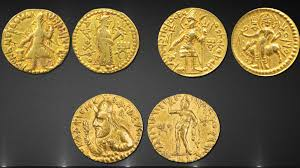
Kushana Coinage System
Coins played a major role in Kushana administration and economy.
Features explained
- Gold coins showed economic strength
- Coins had images of kings and gods
- Different scripts showed cultural diversity
Coins also help historians understand the economy.
Kushana Agriculture
Agriculture remained the foundation of Kushana administration and economy despite strong trade.
Features explained
- Most people were farmers
- Irrigation supported farming
- Land grants increased cultivation
Agriculture ensured food supply and stability.
Kushana Urbanization
Urban growth increased during Kushana administration and economy.
Features of cities explained
- Cities became trade centers
- Markets and workshops developed
- Artisans and traders settled there
Urban areas boosted economic activity.
Kushana Guilds and Economy
Guilds were important economic groups in Kushana administration and economy.
Functions explained
- Controlled production
- Maintained quality
- Provided loans
Guilds acted like modern business organizations.
Kushana Cultural Impact on Economy
Culture influenced Kushana administration and economy in many ways.
Key points explained
- Cultural exchange through trade
- Growth of art and architecture
- Influence of different traditions
This made the empire culturally rich.

Kushana Military and Economy
Military strength supported Kushana administration and economy by ensuring safety.
Role explained
- Protected trade routes
- Maintained internal peace
- Helped in expansion
Without security, economic growth was not possible.
Join UGC NET Coaching in Jaipur
Kushana System Strengths
- Strong leadership ensured stability
- Trade routes brought wealth
- Cultural mix supported growth
- Efficient administration
These strengths made the empire successful.
Kushana System Weaknesses
- Large empire difficult to manage
- Dependence on trade
- Decline after strong rulers
These weaknesses affected long-term stability.
Conclusion
Kushana administration and economy was a powerful system that combined governance with economic strength. It helped the Kushanas build a rich and stable empire.
Kushana Administration and Economy FAQs

Who was the most important ruler for Kushana administration and economy?
Kanishka played a key role in strengthening administration and economy. He centralized authority, ensured safety of trade routes, and promoted economic and cultural growth. His reign is considered the golden phase of Kushana governance.
What was the main source of revenue for the Kushanas?
The primary revenue came from land taxes paid by farmers. Trade taxes and custom duties on goods added significant income. Fines and penalties also contributed to the state treasury.
Why was the Silk Route important in Kushana economy?
The Silk Route connected India with Central Asia, China, and Europe. It enabled the exchange of luxury goods and ideas. Control over this route increased wealth and political influence for the empire.
How did coins support the Kushana economy?
Gold coins reflected economic prosperity and facilitated trade. They displayed images of kings and gods, indicating political authority. Different scripts on coins showed cultural diversity and international interactions.