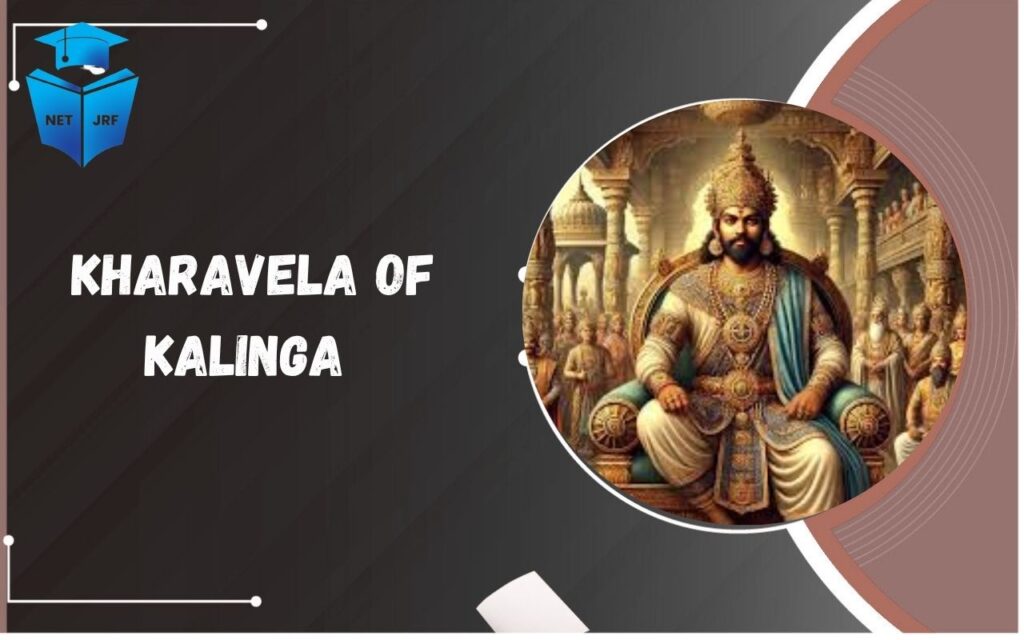
Kharavela of Kalinga was one of the most powerful rulers of ancient India who restored the pride of Kalinga after the Mauryan period. His rule gives us a clear picture of strong leadership, public welfare, military success, and cultural development.

Who was Kharavela of Kalinga?
Kharavela of Kalinga was a famous king of the Mahameghavahana dynasty who ruled in the 1st century BCE. He is mainly known from the Hathigumpha inscription found in Odisha.
He is remembered as a ruler who focused on both expansion of his kingdom and welfare of his people. His personality reflects courage, intelligence, and a deep sense of duty.
Enroll UGC NET Coaching in Jaipur
Kalinga Historical Background
Before understanding Kharavela of Kalinga, it is important to know about Kalinga.
Importance of Kalinga
- Located in present-day Odisha
- Known for trade and maritime activities
- Strong military tradition
Kalinga became famous after the Kalinga War fought by Ashoka. After the decline of the Mauryan Empire, Kalinga regained its independence. It was during this time that Kharavela of Kalinga rose to power.
Early Life and Education
Kharavela, one of the most celebrated rulers of Kalinga, had an early life that reflected careful preparation for kingship. From a young age, he was trained not only in the duties of a ruler but also in the arts and culture, ensuring that he grew into a well-rounded and capable monarch.
-
Training in Administration
-
-
- Kharavela was educated in the intricacies of governance. He learned how to manage the state, collect revenues, maintain law and order, and oversee public works. This administrative training equipped him to handle the challenges of ruling a kingdom, especially when he ascended the throne at a young age. His understanding of administration ensured that his decisions were efficient and effective, earning the respect of his ministers and subjects.
-
-
Training in Warfare
-
-
- Alongside administration, Kharavela received rigorous military training. He learned the art of strategy, combat techniques, and the organization of armies. This prepared him to lead campaigns, defend Kalinga from invasions, and expand its territory. His early exposure to warfare instilled courage and tactical thinking, qualities that became central to his successful rule.
-
-
Education in Music, Dance, and Culture
-
-
- Kharavela was not only trained as a warrior and administrator but also as a patron of culture. He studied music, dance, literature, and other cultural pursuits. This cultural education helped him connect with his people, support religious and artistic activities, and rule as a king who valued both power and refinement. It contributed to a balanced personality, combining strength with wisdom and appreciation for the arts.
-
-
Becoming a Balanced Ruler
-
- Kharavela became king at a young age, but his comprehensive training allowed him to rule effectively from the start. His knowledge of administration, military strategy, and culture made him a leader who could command respect, manage his kingdom efficiently, and promote the arts and religion. This early preparation was key to his enduring legacy as one of Kalinga’s greatest rulers.
- He became king at a young age, but his training helped him rule effectively. His knowledge of different fields made him a balanced ruler.
Accession to Throne
After extensive training in administration, warfare, and culture, Kharavela ascended the throne at a young age. His early education in statecraft ensured that he was prepared to take on the responsibilities of kingship from day one. He was well-versed in governance, military strategy, and diplomacy, which enabled him to rule effectively despite his youth.
Key Points
Early Reforms and Policies
Kharavela wasted no time after becoming king. He immediately started implementing reforms aimed at strengthening the administration and improving the welfare of his subjects. These reforms included:
- Administrative Efficiency: Streamlining revenue collection and appointing capable officials.
- Military Strengthening: Organizing the army and fortifying the kingdom’s defenses.
- Cultural and Religious Patronage: Supporting temples, art, and literature to integrate cultural authority with political power.
These early reforms reflected his vision of a strong, well-governed, and culturally vibrant kingdom. By combining careful administration with strategic military planning, Kharavela set the foundation for a prosperous and influential reign.
His rule is considered a turning point in the history of Kalinga.
Administration under Kharavela
Kharavela, one of the greatest rulers of Kalinga, is remembered not only for his military prowess but also for his effective and welfare-oriented administration. His governance reflected a careful balance between power, justice, and public service.
Features of Administration
-
Focus on Public Welfare
-
-
- At the heart of Kharavela’s administration was the welfare of his people. He believed that a kingdom could only be strong if the needs of its citizens were met. Policies and projects were designed to improve the lives of the common people, from farmers and merchants to artisans and traders. This people-centric approach helped build loyalty and stability within his kingdom.
-
-
Repair and Maintenance of Infrastructure
-
-
- Kharavela paid special attention to public infrastructure, recognizing its importance for trade, agriculture, and defense. He repaired city walls and gates, ensuring that towns remained secure from invasions. Roads and pathways were maintained to facilitate communication and commerce. This focus on infrastructure not only protected his kingdom but also supported economic growth and urban development.
-
-
Promotion of Arts and Culture
-
-
- Kharavela was a patron of culture and the arts. He encouraged music, dance, literature, and religious activities, making Kalinga a hub of cultural vibrancy. Temples, sculptures, and public monuments were constructed or supported under his rule, reflecting both devotion and artistic excellence. By promoting culture, he strengthened the identity and pride of his people.
-
-
Strong Law and Order
-
- Maintaining law and order was a key feature of his governance. Kharavela ensured that justice was served fairly, crime was controlled, and the kingdom remained peaceful. A well-organized administrative system, supported by capable officials, helped enforce laws effectively and maintain social harmony.
Enroll UGC NET Offline Coaching in Jaipur
Public Welfare Works
Kharavela carried out several projects that directly benefited his subjects:
- Repair of City Walls and Gates: Strengthened towns and protected citizens from external threats.
- Construction of Canals for Irrigation: Improved agriculture, ensured water supply, and enhanced food security.
- Organization of Festivals: Fostered community spirit, celebrated cultural traditions, and encouraged social cohesion.
These works demonstrate that Kharavela’s rule was deeply concerned with the well-being of his people, making him a ruler remembered for both strength and compassion.
Military Achievements
Kharavela of Kalinga was not only a capable administrator but also a dynamic military leader. His campaigns demonstrated his ambition, strategic acumen, and desire to restore Kalinga’s prestige.
-
Western Campaigns to Show Power
-
-
- One of Kharavela’s initial military objectives was to assert Kalinga’s strength in the western regions of India. These campaigns were meant to send a clear message to neighboring kingdoms that Kalinga was a formidable power. By demonstrating military might in the west, Kharavela ensured that potential rivals were cautious about challenging his authority. These expeditions helped solidify Kalinga’s influence over strategic trade routes and key territories.
-
-
Attack on Magadha
-
-
- Kharavela famously targeted Magadha, a neighboring kingdom with a history of rivalry with Kalinga. This campaign was not merely about territorial gain—it was also a mission to restore Kalinga’s pride, which had been shaken in earlier conflicts. By defeating Magadha, Kharavela reinforced Kalinga’s reputation as a dominant regional power and reestablished the kingdom’s political and military prestige.
-
-
Northern Expeditions
-
- In addition to the western and eastern campaigns, Kharavela conducted expeditions towards the north. These northern campaigns helped extend Kalinga’s influence and created strategic alliances with other northern kingdoms. His ability to conduct simultaneous military operations in multiple directions reflected both his planning skills and the strength of his army.
Impact of Kharavela’s Campaigns
The results of these campaigns were far-reaching:
- Strengthened Kalinga’s Position: Military victories secured Kalinga’s borders and elevated its standing among contemporary kingdoms.
- Restored Lost Pride: Earlier defeats or periods of decline were reversed, and Kalinga regained its former glory.
- Expanded Influence: Beyond mere conquest, these campaigns increased Kalinga’s political, economic, and cultural influence across India.
His military strength made Kalinga a major power in India again.
Religious Policy
Religious Policy of Kharavela of Kalinga
Religion played a central role in Kharavela’s rule, but he combined personal devotion with tolerance and inclusivity, making him a ruler admired for both faith and fairness.
-
Jainism
-
-
- Kharavela was a devoted follower of Jainism, which influenced many aspects of his personal and administrative life. He actively supported Jain monks and religious scholars, providing them with patronage, resources, and recognition. He also commissioned caves and shelters for ascetics, allowing them to practice their faith and lead lives of contemplation. His support of Jainism not only strengthened the religion within Kalinga but also made him a protector of spiritual pursuits.
-
-
Religious Tolerance
-
-
- Despite his personal faith in Jainism, Kharavela was remarkably tolerant of other religious traditions. He respected the beliefs and practices of non-Jain communities and did not impose his own religion on his subjects. Temples and shrines of other faiths continued to flourish under his rule. This approach ensured harmony among diverse communities and reflected his vision of governance that valued inclusivity over coercion.
-
-
Liberal and Inclusive Policy
-
- Kharavela’s combination of personal devotion and public tolerance highlights his liberal approach to religion. By supporting Jainism while respecting other faiths, he fostered cultural and religious coexistence in Kalinga. His policies ensured that religion became a unifying factor rather than a source of conflict, contributing to the stability and prosperity of his kingdom.

Cultural Contributions
Culture and art flourished during the time of Kharavela of Kalinga.
Key Contributions
-
Promotion of Music and Dance
-
-
- Kharavela actively encouraged music and dance across Kalinga. He supported performances in courts, temples, and public festivals, making arts an integral part of daily life and royal ceremonies. By fostering these cultural expressions, he helped preserve traditional art forms and inspired new artistic creativity among musicians and dancers.
-
-
Organization of Festivals
-
-
- Festivals under Kharavela’s reign were grand and well-organized, serving both religious and social purposes. They brought communities together, celebrated seasonal and spiritual occasions, and reinforced shared cultural identity. Through these festivals, Kharavela strengthened social cohesion and promoted a sense of belonging among his subjects.
-
-
Support to Artists
-
- Kharavela provided patronage and protection to artists, poets, and performers. By ensuring that creators were supported financially and socially, he encouraged innovation and high-quality artistic production. This not only enriched the cultural landscape of Kalinga but also enhanced the prestige of his court, which became a hub of artistic excellence.
- These efforts made society vibrant and lively.
Enroll UGC NET Online Coaching
Economic Policies
Kharavela understood that a strong economy was the backbone of a prosperous kingdom. He took strategic steps to boost agriculture, trade, and overall prosperity, ensuring that his people and his kingdom flourished.
Major Steps
-
Improvement of Irrigation
-
-
- Recognizing the importance of water for agriculture, Kharavela invested in canals, reservoirs, and irrigation systems. These improvements ensured a steady water supply for crops, prevented famines, and increased agricultural productivity. By enhancing irrigation, he directly supported farmers and strengthened the kingdom’s food security, which was essential for both economic stability and population growth.
-
-
Encouragement of Agriculture
-
-
- Kharavela actively promoted farming by providing support to cultivators. This included maintaining fertile lands, protecting farmers from exploitation, and possibly offering incentives for increased production. His focus on agriculture not only boosted the kingdom’s wealth but also ensured that his people had a reliable livelihood, reflecting a ruler concerned with the welfare of his subjects.
-
-
Support for Trade
-
- In addition to agriculture, Kharavela encouraged local and long-distance trade. He ensured that trade routes were secure, markets were well-organized, and merchants were supported. This fostered economic exchange, increased wealth, and connected Kalinga with other regions, both within India and beyond. Trade also facilitated cultural interactions and helped Kalinga gain political influence through economic strength.
- These policies increased prosperity in the kingdom.
Personality and Leadership Style
The personality of Kharavela of Kalinga makes him stand out among ancient rulers.
Leadership Qualities
- Brave and confident
- Focused on people’s welfare
- Balanced ruler
He knew when to fight and when to focus on development.
-
Significance of Kharavela in Indian History
-
-
- Kharavela of Kalinga is remembered as one of ancient India’s most remarkable rulers. His reign left a lasting impact on politics, culture, and society, demonstrating the capabilities of regional kingdoms in shaping Indian history.
-
-
Historical Importance
-
-
- Kharavela played a key role in reviving Kalinga after the decline of the Mauryan Empire. He restored the kingdom’s political strength, territorial control, and economic prosperity. His reign showcased the power and potential of regional states, proving that independent kingdoms could flourish alongside or even rival larger empires.
-
-
Political Importance
-
-
- As an independent and capable ruler, Kharavela maintained strong administration, effective law and order, and a well-organized military. He successfully defended his kingdom, conducted strategic campaigns, and implemented reforms that strengthened governance. His political acumen ensured Kalinga remained a powerful, self-reliant state during his rule.
-
-
Cultural Importance
-
-
- Kharavela was also a patron of arts, religion, and culture. He promoted music, dance, literature, and festivals, and supported religious institutions, particularly Jainism, while respecting other faiths. His encouragement of cultural activities enriched society and left a legacy of artistic and spiritual growth in Kalinga.
-
-
Overall Significance
-
- Kharavela’s rule demonstrates that a ruler could combine military strength, political skill, cultural patronage, and economic foresight. His achievements reflect the vitality of regional kingdoms in ancient India and highlight the potential for visionary leadership to leave a lasting imprint on history.
Limitations Sources
Even though we know much about Kharavela of Kalinga, there are some limitations.
Issues
- Information mainly from one inscription
- Some parts unclear
- Possible exaggeration
Historians interpret the data carefully.

Kharavela of Kalinga was a powerful ruler who brought glory back to Kalinga through strong leadership, military success, and public welfare. His balanced approach makes him one of the most respected kings in ancient Indian history.
Kharavela of Kalinga FAQs

What is the Hathigumpha inscription?
The Hathigumpha inscription in Odisha is the main source about Kharavela. It records his military campaigns, public works, and cultural patronage.
What were Kharavela’s early reforms?
He reformed administration, strengthened the army, and supported arts and religion to create a strong and prosperous kingdom.
How did Kharavela strengthen Kalinga’s economy?
He improved irrigation, promoted agriculture, and secured trade routes, which increased wealth and ensured food security for his people.
What were Kharavela’s major military achievements?
Kharavela conducted campaigns in western India, attacked Magadha, and led northern expeditions, restoring Kalinga’s prestige and expanding influence.