

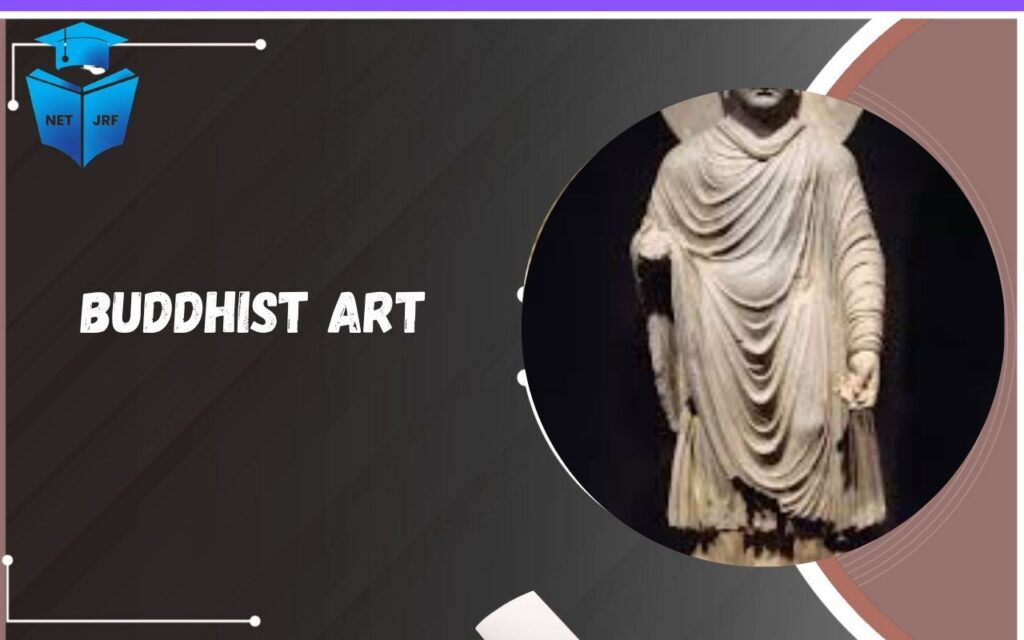
Buddhist art in post-Mauryan period marks an important phase in Indian history where art became more expressive, detailed, and symbolic. This period saw the transformation of simple religious ideas into rich artistic forms that influenced generations. The period after the decline of the Mauryan Empire (around 2nd century BCE onwards) witnessed remarkable growth in Buddhist art across India. During this time, regional styles flourished under the patronage of various dynasties like the Kushanas, Satavahanas, and Indo-Greeks. Buddhist art became more diverse, expressive, and sophisticated.

Buddhist art in Post-Mauryan period Introduction
The Buddhist art in post-Mauryan period developed after the decline of the Mauryan Empire around 200 BCE. During this time, many regional kingdoms like Shungas, Satavahanas, and Kushanas supported art. This support helped Buddhist art grow in new directions with different styles and regional influences.
Enroll UGC NET Online Coaching
Post-Mauryan period Historical background
The post-Mauryan period saw political fragmentation, but cultural growth continued.
Key dynasties
- Shunga dynasty
- Satavahana dynasty
- Kushana dynasty
These rulers supported Buddhist institutions like monasteries and stupas, which helped art to flourish.
Major features of Buddhist art
Buddhist art in post-Mauryan period had some unique features.
Key characteristics
- Use of symbols instead of Buddha image (early phase)
- Development of narrative art
- Growth of sculpture and architecture
- Regional diversity in styles
This period shows transition from simple to complex art forms.
Stupa architecture development
Stupas were the most important structures in Buddhist art in post-Mauryan period.
Features of stupas
- Dome-shaped structure
- Harmika at the top
- Chatra (umbrella-like structure)
- Surrounding railing
Famous examples
- Sanchi Stupa
- Bharhut Stupa
- Amaravati Stupa
Stupas became centers of worship and artistic expression.

Buddhist art in post-Mauryan period key elements
Buddhist art in the post-Mauryan period reflects a transition from symbolic to human forms, regional diversity, and the influence of foreign styles, highlighting the growing religious, cultural, and artistic richness of ancient India.
| Feature | Description |
| Buddhist art in post-Mauryan period architecture | Stupas, caves |
| Sculpture | Narrative carvings |
| Symbolism | Non-human Buddha representation |
| Schools | Gandhara, Mathura |
| Material | Stone, terracotta |
Symbolism in Early Buddhist Art
Before Buddha was depicted in human form, artists used symbols to represent him:
- Bodhi Tree: Signified Buddha’s enlightenment.
- Empty Throne: Represented Buddha’s presence.
- Footprints: Indicated Buddha’s journey and teachings.
- Wheel (Dharma Chakra): Symbolized the Dharma and Buddhist law.
Significance: These symbols allowed devotees to connect spiritually without human representations, reflecting early aniconic traditions.
Development of Narrative Art
Buddhist art evolved to tell stories visually during the post-Mauryan period:
- Themes Depicted:
- Jataka tales (previous lives of Buddha)
- Key life events of Buddha (birth, enlightenment, nirvana)
- Scenes from daily monastic life
- Techniques: Relief carvings on railing panels, gateways, and stupa walls created sequential storytelling.
Cave Architecture and Art
Caves became major centers for Buddhist art and monastic life:
- Types of Caves:
- Chaitya: Prayer halls
- Vihara: Monasteries for monks
- Examples:
- Karle Caves
- Bhaja Caves
- Ajanta Caves
- Features: Sculptures and murals carved directly into rock, often narrating Buddhist stories.
Gandhara School of Art
The Gandhara school reflected foreign influence and realism:
- Greek Influence: Techniques in drapery, proportion, and realism.
- Human Buddha Images: Curly hair, serene expression, detailed clothing folds.
- Materials: Mainly schist and stone for sculptures.
Mathura School of Art
The Mathura school represented indigenous Indian styles:
- Materials: Red sandstone
- Figures: Strong, bold, and spiritually expressive
- Buddha Images: Indian physiognomy, symbolic strength, less foreign influence
Comparison: Gandhara vs Mathura
Both schools played a key role in evolving Buddhist art, combining symbolism, narrative storytelling, and human representation.
| Feature | Gandhara | Mathura |
| Influence | Greek / Western | Indigenous Indian |
| Style | Realistic, naturalistic | Bold, symbolic, spiritual |
| Buddha Representation | Detailed drapery, calm expression | Indian facial features, spiritual vigor |
| Contribution | Introduced human Buddha form | Developed Indian identity in Buddha images |
Role of Patronage
The growth of Buddhist art in the post-Mauryan period depended heavily on support from various sections of society:
- Kings and Rulers: Funded the construction of stupas, monasteries, and rock-cut caves.
- Merchants and Traders: Donated wealth, sponsored sculptural and architectural projects.
- Common People: Contributed in smaller ways, like funding smaller shrines or carvings.
Impact: Patronage ensured continuous artistic production and the flourishing of regional styles like Gandhara, Mathura, and Amaravati.
Enroll UGC NET Coaching in Jaipur
Spread of Buddhism Through Art
Buddhist art became a powerful medium for religious propagation:
- Visual Storytelling: Reliefs and sculptures depicted the Buddha’s life and Jataka tales.
- Accessibility: Even illiterate people could understand and relate to Buddhist teachings.
- Attraction: Artistic monuments like stupas and chaityas drew devotees, promoting Buddhism across India and beyond.
Influence of Trade on Art
Trade networks significantly supported the development and diversity of Buddhist art:
- Connection Between Regions: Trade routes connected distant areas, facilitating cultural exchange.
- Merchant Donations: Wealth from trade funded artistic and architectural projects.
- Cultural Influence: Exposure to foreign artistic techniques (e.g., Greek influence on Gandhara) diversified Indian Buddhist art.

Materials Used in Post-Mauryan Buddhist Art
Artists used durable and versatile materials to create detailed artworks:
- Stone: Used for caves, stupas, and relief sculptures (Mathura red sandstone, Gandhara schist).
- Wood: Employed in smaller shrines and decorative elements.
- Terracotta: Common for figurines, votive objects, and smaller reliefs.
These materials allowed for long-lasting, detailed, and intricate artworks, preserving Buddhist art for posterity.
Enroll UGC NET Offline Coaching in Jaipur
Buddhist Art in Post-Mauryan Period FAQs

What are the key features of Buddhist art in post-Mauryan period?
Key features include symbolic representations, narrative panels, stupas, cave architecture, and regional diversity. The art combined religious teachings with expressive storytelling. Sculptures evolved from simple forms to detailed human figures.
What is Gandhara art?
Gandhara art developed in northwestern India and Pakistan with strong Greek and Roman influence. Buddha was depicted with realistic human features, curly hair, and detailed drapery. It introduced the first human images of Buddha in Indian art.
What is Mathura art?
Mathura art is an indigenous Indian style developed in central India using red sandstone. Buddha images were bold, spiritually expressive, and symbolic rather than realistic. It emphasized Indian physiognomy and spiritual vigor.
What is Amaravati art?
Amaravati art originated in Andhra Pradesh around Krishna River valley. Artists focused on narrative panels depicting Buddha’s life and Jataka tales. Sculptures were dynamic, decorative, and often carved in white limestone with deep reliefs.