
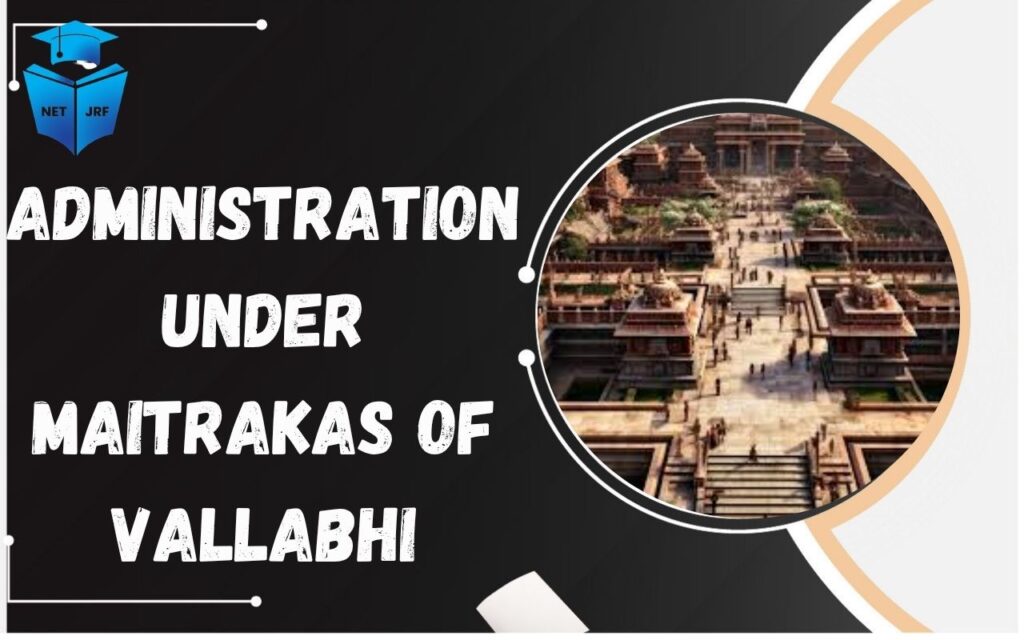
The Maitrakas of Vallabhi developed a well-organized administrative system that helped them rule western India effectively after the decline of the Gupta Empire. Their governance style shows a mix of central authority and local participation.
Enroll UGC NET Foundation Course
The administrative system of the Maitrakas of Vallabhi is important for understanding how regional kingdoms maintained stability, managed resources, and controlled territories

Introduction Administration under Maitrakas of Vallabhi
The Maitrakas of Vallabhi ruled from the 5th to 8th centuries CE in Gujarat. Their capital Vallabhi became not only a political center but also an administrative hub.
Their administration was influenced by Gupta traditions but also had its own regional features. The Maitrakas of Vallabhi created a flexible system that worked well for a diverse region.
Key Features
- Centralized monarchy
- Provincial administration
- Role of local officials
- Efficient revenue system
Maitrakas of Vallabhi Central Administration System
The Maitrakas of Vallabhi followed a monarchical system, where the king held the highest authority. Their administrative system was well-organized and practical, allowing them to manage a large kingdom effectively. The rulers were not just symbolic figures but actively involved in governance, decision-making, and maintaining order in the state.
Role of the King
The king was the supreme authority in the Maitraka administration. All power was centered in his hands, and his decisions were final.
- He was responsible for maintaining unity and stability in the kingdom.
- This central authority helped avoid confusion in governance and ensured that policies were implemented effectively across the state.
Head of Administration
The king also acted as the head of administration. He supervised officials, monitored governance, and ensured that different parts of the kingdom functioned smoothly.
- He played an active role in making laws, resolving disputes, and guiding his officials.
- This direct involvement helped maintain efficiency in administration.
Commander of the Army
Another important role of the king was that of the commander of the army.
- He was responsible for protecting the kingdom from external threats and maintaining internal security.
- The king often led or supervised military activities, which strengthened his authority and ensured loyalty from the army.
Royal Titles
The Maitraka rulers used grand and powerful titles to display their authority and prestige.
Maharaja
-
- The title “Maharaja” was commonly used by the rulers. It reflected their status as great kings and powerful leaders.
- This title helped in establishing their authority both within the kingdom and among neighboring rulers.
-
Paramabhattaraka
- Another important title was “Paramabhattaraka,” which indicated supreme sovereignty and high respect.
- Such titles were not just symbolic; they enhanced the prestige of the rulers and reinforced their position as powerful monarchs.
Maitrakas of Vallabhi Local Administration
The Maitrakas understood that effective governance required attention at the local level. Therefore, they gave importance to local administration.
-
Village Administration
-
-
- Villages formed the basic unit of administration. Most of the population lived in villages, so managing them properly was essential.
-
-
Managed by Local Leaders
-
- Local leaders were responsible for handling day-to-day matters such as land management, dispute resolution, and tax collection.
- This system ensured that governance reached the grassroots level and people’s issues were solved quickly.
Urban Administration
-
Separate Officials for Towns
-
-
- Towns and cities had separate administrative officials. These officials focused on managing urban life, which was different from village administration.
-
-
Focus on Trade and Commerce
-
- Urban administration gave special attention to trade and commerce. Markets, trade routes, and business activities were carefully managed to ensure economic growth.
Join UGC NET Online Test Series
Land Grants Maitrakas of Vallabhi
Land grants were an important part of the administrative system of the Maitrakas of Vallabhi. Instead of only depending on direct control, the rulers used land distribution as a smart way to manage resources, reward loyalty, and strengthen their authority. This system helped them build strong relationships with different sections of society and maintain stability in their kingdom.
Types of Land Grants
Grants to Brahmins
The Maitraka rulers often granted land to Brahmins as a mark of respect and religious merit. These grants were not only acts of generosity but also had political importance.
- By supporting Brahmins, the rulers gained social recognition and legitimacy.
- Brahmins were respected in society, so their support helped strengthen the king’s image and authority. These grants also encouraged the spread of religious and educational activities.
Grants to Temples
Land was also given to temples and religious institutions. These grants helped in the maintenance of temples and supported religious practices.
Temples became centers of social and cultural life, where people gathered for religious activities. By supporting temples, the Maitrakas promoted religion and also ensured the loyalty of religious communities. This contributed to a peaceful and culturally rich society.
Grants to Officials
The Maitrakas also granted land to their officials as a reward for their services.
- Instead of always paying salaries in cash, land grants were used as a form of compensation.
- This system motivated officials to remain loyal and perform their duties efficiently. It also reduced the financial burden on the state, while ensuring that administration functioned smoothly.
Importance of Land Grants
- Land grants helped the Maitrakas gain the support of important groups such as Brahmins, religious institutions, and officials.
- This support was essential for maintaining political stability. When influential groups were satisfied, it became easier for the rulers to govern without resistance.
-
Encouraged Agriculture
-
- Another important benefit of land grants was the promotion of agriculture. When land was given to individuals or institutions, they worked to cultivate it and make it productive.
- This increased agricultural output and improved the economic condition of the kingdom. More cultivation meant more food and more revenue in the long run.
Maitrakas of Vallabhi Administration Features
| Feature | Details |
| Dynasty | Maitrakas of Vallabhi |
| Capital | Vallabhi |
| System | Monarchy |
| Key Officials | Amatyas, Senapati |
| Revenue Source | Land tax, trade |
Maitrakas of Vallabhi Role of Trade in Administration
The Maitrakas of Vallabhi greatly benefited from trade, mainly because of their strategic location in western India. Gujarat connected inland regions with the sea, making it a natural hub for commerce. The rulers understood the importance of trade and used it not only for economic growth but also to strengthen their administrative system.
Best UGC NET Offline Coaching in Jaipur
Trade Features
- The Maitrakas had access to important coastal trade routes along the Arabian Sea. These routes connected India with distant regions like West Asia and other parts of the world.
- Because of this, goods were regularly exported and imported through ports. The rulers ensured that these routes were safe and well-managed, which encouraged merchants to carry out trade without fear. This increased the flow of wealth into the kingdom.
-
Inland Trade Centers
-
-
- Along with coastal trade, inland trade centers also played a major role. Cities and towns within the kingdom acted as marketplaces where goods were exchanged.
- These centers connected rural areas with ports and major cities. Farmers, artisans, and merchants all depended on these trade networks. By maintaining these centers, the Maitrakas ensured smooth economic activity across the kingdom.
-
-
Tax on Goods
-
- The Maitrakas collected taxes on goods that were traded within and outside the kingdom. This included taxes on transportation, markets, and trade transactions.
- These taxes became an important source of revenue for the state. The income collected from trade helped in running the administration, maintaining the army, and supporting public works.

Maitrakas of Vallabhi Education and Administration Link
The Maitrakas of Vallabhi not only focused on trade and economy but also gave importance to education. They understood that a strong administration required educated and skilled people. Therefore, they supported learning institutions, which indirectly strengthened their governance.
Vallabhi University
- Vallabhi University was one of the most important centers of learning during the Maitraka period. It attracted students from different parts of India.
- Subjects like administration, politics, religion, and philosophy were taught here. This made Vallabhi an intellectually vibrant place.
Produced Scholars and Administrators
The university produced not only scholars but also trained individuals who could work in administration.
- These educated people had knowledge of governance, law, and management.
- They were well-suited to serve as officials in the kingdom, which improved the quality of administration.
Role of Educated People in Administration
Educated individuals played an important role in the functioning of the Maitraka administration.
- They helped in maintaining records, managing revenue, and assisting the king in decision-making.
- Because of their knowledge and skills, administration became more efficient and organized. This shows that education was directly linked to good governance.
Strengths of Maitraka Administration
The Maitrakas of Vallabhi system had many strengths.
Key Strengths
- Strong central authority
- Efficient revenue system
- Local participation
These strengths helped the Maitrakas of Vallabhi maintain stability.
Weaknesses of Administration
Despite strengths, the Maitrakas of Vallabhi faced some challenges.
Key Weaknesses
- Dependence on local officials
- Regional differences
- External threats
These issues later affected the Maitrakas of Vallabhi rule.
Top UGC NET Offline Coaching in Jaipur
Conclusion
The administrative system of the Maitrakas of Vallabhi was well-structured and practical. It combined strong central authority with local governance, which helped them rule effectively for centuries. The Maitrakas of Vallabhi provide a clear example of how regional dynasties managed governance after the Gupta period.

Administration under the Maitrakas FAQs

2. Who was the head of administration in the Maitraka system?
The king was the head of administration, controlled governance, military, law, decision-making in the kingdom.
3. What were the main features of Maitraka administration?
Main features included centralized monarchy, provincial division, local governance, efficient revenue system, use of land grants.
4. What role did local administration play under the Maitrakas?
Local leaders managed villages, towns, handled disputes, collected taxes, ensured smooth governance at grassroots level.
5. What were land grants in Maitraka administration?
Land grants were given to Brahmins, temples, officials to gain support, promote agriculture, strengthen political control.