
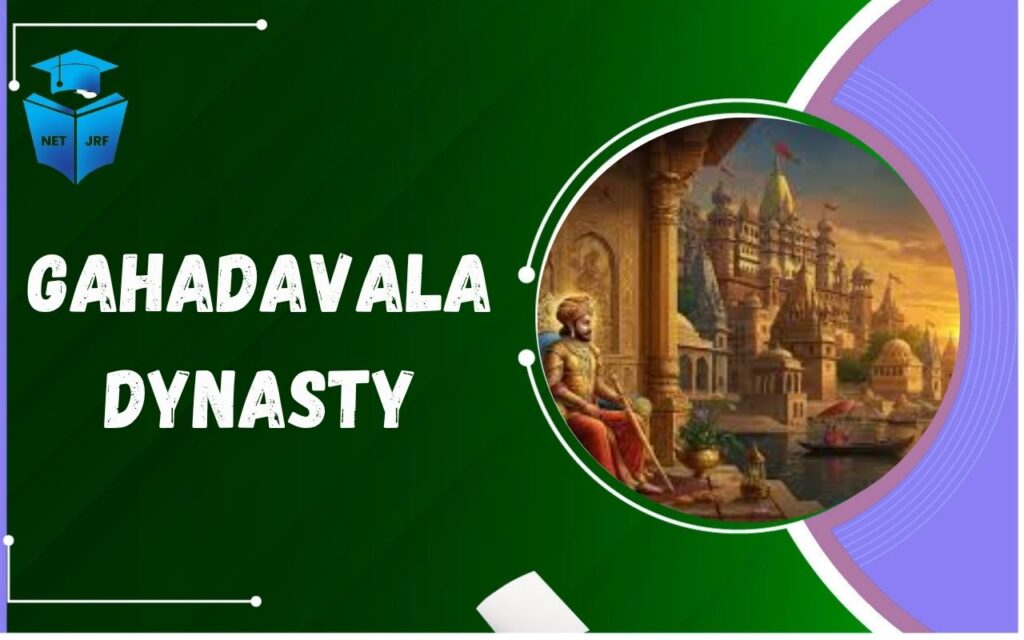
The Gahadavala Dynasty was one of the important ruling powers in North India during the early medieval period. It played a major role in shaping the political structure of the Gangetic plains after the decline of earlier empires. The Gahadavala Dynasty ruled mainly over present-day Uttar Pradesh and Bihar. Their capital cities like Kannauj and Varanasi became centers of culture, religion, and administration. Their rule reflects a transition phase where regional kingdoms tried to maintain stability during a time of invasions.

Gahadavala Dynasty Rise
The rise of the Gahadavala Dynasty took place in the 11th century. This period saw the weakening of earlier powers like the Pratiharas, which created space for new regional dynasties.
Enroll UGC NET Online Coaching
Early Foundation
The founder of the dynasty is believed to be Chandradeva. He established control over Kannauj, which was a very important political center at that time.
Key factors behind the rise:
- Decline of Pratihara power
- Political instability in North India
- Strategic control over fertile Gangetic plains
- Strong military leadership
Chandradeva successfully defeated local chiefs and expanded his kingdom. His rule laid the base for future expansion.
Expansion under Successors
After Chandradeva, rulers like Madanapala and Govindachandra further strengthened the dynasty.
Govindachandra was the most powerful ruler. His reign marked the peak of the Gahadavala Dynasty.
Important achievements of Govindachandra:
- Expanded territory across North India
- Maintained diplomatic relations with other kingdoms
- Strengthened administration
- Promoted trade and culture
This period is often considered the golden phase of the dynasty.
Gahadavala Dynasty Structure
The political system of the Gahadavala Dynasty was monarchical in nature. The king held supreme authority but was supported by ministers and officials.
Nature of Kingship
The king was seen as the protector of dharma. His main duties included:
- Maintaining law and order
- Protecting the kingdom from invasions
- Supporting religion
- Ensuring justice
Kings used titles like Maharajadhiraja to show their power.
Enroll UGC NET Online Test Series
Role of Ministers
The administration was not run by the king alone. A group of ministers helped in governance.
Important officials included:
- Mahamatya – Chief minister
- Senapati – Head of army
- Purohit – Religious advisor
These officials helped in smooth functioning of the state.
Gahadavala Dynasty Administration
The Gahadavala Dynasty developed a well-organized administrative system. It shows features of decentralization.
Central Administration
At the center, the king controlled major decisions. However, he delegated work to trusted officials.
Main features:
- Central authority remained strong
- Ministers handled different departments
- Efficient record keeping
Provincial Administration
The kingdom was divided into provinces for better management.
Each province was governed by local officers who were responsible for:
- Tax collection
- Maintaining order
- Implementing royal orders
This system helped in better control over distant regions.
Village Administration
Villages formed the base of administration.
Important features:
- Village headmen managed local affairs
- Panchayats played a role in decision making
- Agriculture was the main occupation
This shows that local self-governance existed even in early times.

Gahadavala Dynasty Military System
The military was an important part of the Gahadavala Dynasty.
Structure of Army
The army mainly consisted of:
- Infantry
- Cavalry
- Elephants
The use of elephants was common in Indian warfare.
Defense Strategy
The rulers focused on:
- Protecting borders
- Defending important cities
- Fighting invasions
However, their military system later proved weak against Turkish invasions.
Gahadavala Dynasty Economic Condition
The economy of the Gahadavala Dynasty was strong and mainly based on agriculture.
Sources of Revenue
The main sources of income were:
- Land revenue
- Trade taxes
- Gifts and tributes
Farmers paid taxes in kind or cash.
Trade and Commerce
Trade flourished during this period.
Important points:
- Cities like Varanasi became trade centers
- Both internal and external trade existed
- Markets were well organized
This economic strength helped the dynasty maintain stability.
Join UGC NET Coaching in Jaipur
Society under Gahadavala Dynasty
The society during the Gahadavala Dynasty was based on traditional Indian values.
Social Structure
The caste system played an important role.
Main features:
- Brahmins held high status
- Kshatriyas ruled and protected
- Vaishyas were involved in trade
- Shudras worked in agriculture
Role of Women
Women had a respected position in society but their role was mostly limited to family.
Gahadavala Dynasty Religion and Culture
Religion was an important part of life in the Gahadavala Dynasty.
Religious Practices
The rulers mainly supported Hinduism.
Key points:
- Construction of temples
- Patronage to Brahmins
- Performance of rituals
However, other religions were also tolerated.
Cultural Development
The period saw growth in:
- Literature
- Art
- Architecture
Sanskrit was widely used for inscriptions and texts.
Important Rulers of Gahadavala Dynasty
Here is a structured overview of major rulers:
Key Rulers of Gahadavala Dynasty
| Ruler Name | Contribution |
| Chandradeva | Founder, established control over Kannauj |
| Madanapala | Maintained stability |
| Govindachandra | Expanded empire, strong administration |
| Jayachandra | Last ruler, faced Turkish invasions |
Best UGC NET Coaching in Jaipur
Decline Gahadavala Dynasty
The decline of the Gahadavala Dynasty started in the late 12th century.
Main Reasons
- Weak successors after Govindachandra
- Internal conflicts
- Turkish invasions
Role of Jayachandra
Jayachandra was the last important ruler. He is often remembered for his defeat against Muhammad Ghori.
Conclusion
The Gahadavala Dynasty played a key role in maintaining political stability in North India during a time of change. It developed a strong administrative system, supported culture, and promoted economic growth.

Gahadavala Dynasty FAQs

2. Who founded Gahadavala dynasty?
Chandradeva founded Gahadavala dynasty, established control over Kannauj, laid foundation of political power.
3. Who was most powerful ruler of Gahadavala dynasty?
Govindachandra was most powerful ruler, expanded territory, strengthened administration, promoted trade culture.
4. What was capital of Gahadavala dynasty?
Important capitals included Kannauj, Varanasi which became major political cultural centers.
5. What type of administration existed in Gahadavala dynasty?
Gahadavala dynasty followed monarchical system, king as supreme authority supported by ministers provincial officers village administration.
6. What were main sources of revenue in Gahadavala dynasty?
Main sources included land revenue trade taxes tributes gifts collected from agriculture trade activities.
7. What was military structure of Gahadavala dynasty?
Military included infantry cavalry elephants, focused on defense of cities borders protection from invasions.
8. How was society structured in Gahadavala dynasty?
Society followed caste system with Brahmins Kshatriyas Vaishyas Shudras, social roles based on occupation traditions.
9. Why did Gahadavala dynasty decline?
Decline happened due to weak rulers internal conflicts Turkish invasions defeat of Jayachandra.
10. Who defeated Gahadavala dynasty?
Muhammad Ghori defeated Gahadavala ruler Jayachandra leading to decline of dynasty.