
Foundation of the Mughal Empire: Check History of Babur, Humayun, Sher Shah Suri and Battles Timeline

foundation of the mughal empire in this topic you learn how babur established rule in india key battles humayun struggles exile return sher shah suri reforms administration and timeline that shaped early mughal power and legacy

vishal

mughal empire

Table of Contents

The Foundation of the Mughal Empire marks a pivotal chapter in Indian history, introducing a dynasty that shaped the subcontinent for centuries. The Foundation of the Mughal Empire began in 1526 when Babur defeated Ibrahim Lodi and established Mughal rule in northern India. 

Study Planner

Who Was Babur?

Babur, born Zahiruddin Muhammad Babur in 1483, descended from Timur on his father’s side and Genghis Khan on his mother’s side. He inherited a small principality in Ferghana (modern Uzbekistan) at age 12 but faced constant struggles to hold power in Central Asia.
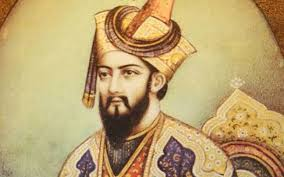
Babur

  • Babur captured Kabul in 1504 and used it as a base. He made several raids into India before launching a full invasion. 
  • Invited by disaffected nobles like Daulat Khan Lodi and Alam Khan, Babur saw an opportunity against the weakening Delhi Sultanate under Ibrahim Lodi.
  • The turning point came at the First Battle of Panipat on April 21, 1526. Babur’s smaller army of about 12,000-15,000 men faced Ibrahim Lodi’s much larger force of 30,000-100,000 soldiers and 1,000 elephants.

Babur used innovative tactics: he tied carts together to form barriers, protected his artillery, and employed gunpowder cannons and matchlocks effectively early examples of firearm dominance in Indian warfare.

  • Ibrahim Lodi died in the battle, ending the Lodi dynasty and the Delhi Sultanate. Babur seized Delhi and Agra, laying the Foundation of the Mughal Empire
  • He consolidated power further by defeating Rajput confederacy led by Rana Sanga at the Battle of Khanwa in 1527 and Afghan forces at the Battle of Ghaghra in 1529.
  • Babur ruled briefly until his death in 1530. His memoirs, the Baburnama, provide valuable insights into his life and conquests.

Enroll UGC NET Online Coaching

Humayun

Humayun succeeded his father in December 1530 at age 22. He inherited an unstable empire with divided loyalties among nobles and threats from Afghan chiefs and Rajputs.
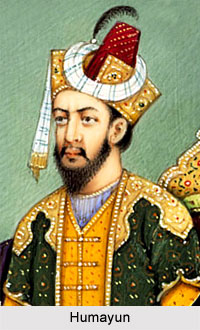
Humayun

  • Humayun faced immediate rebellions. His brothers Kamran, Askari, and Hindal challenged his authority. He recaptured Gujarat and Malwa temporarily but struggled with administration.
  • The biggest threat came from Sher Shah Suri, an Afghan noble who rose under the Lodis and later became governor of Bihar. Sher Shah built his power base independently.

Key defeats for Humayun included:

  • Battle of Chausa (June 26, 1539): Sher Shah surprised Humayun’s army during the monsoon. Humayun barely escaped with his life, saved by a water carrier.
  • Battle of Kannauj (Bilgram) (May 17, 1540): Humayun’s forces collapsed again. Sher Shah captured Delhi and Agra.

Humayun fled into exile, wandering through Sindh and reaching Persia in 1544. There, Safavid Shah Tahmasp provided military aid in exchange for Humayun adopting Shia practices temporarily.

Enroll UGC NET Online Course

Sher Shah Suri 

Sher Shah Suri (born Farid Khan) founded the short-lived Sur Empire after defeating Humayun. He assumed the title Sher (lion) after killing a tiger.
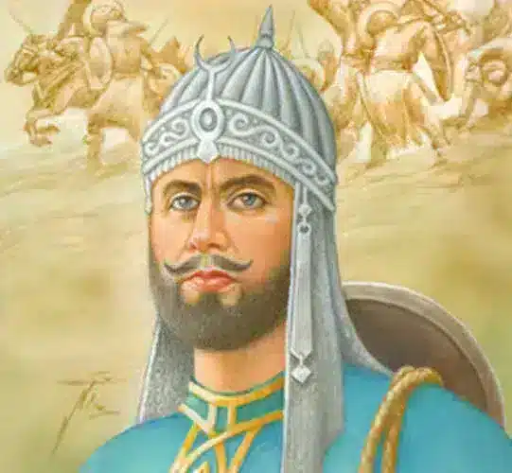
Sher Shah Suri

  • Sher Shah ruled from 1540 to 1545. His administration proved efficient and influential, laying groundwork that later Mughals adopted.

reforms by Sher Shah:

  • Introduced a unified currency system with the silver rupiya.
  • Built the Grand Trunk Road from Bengal to Peshawar for trade and communication.
  • Reformed revenue system based on land measurement (introduced zabt-like system).
  • Established efficient postal system and justice administration.
  • Maintained a strong army and suppressed rebellions.

After Sher Shah’s accidental death in 1545 (from a cannon explosion during the siege of Kalinjar), his son Islam Shah ruled until 1554. The dynasty weakened under later successors like Firuz Shah and Sikandar Shah.

The Sur Empire controlled much of northern India but remained unstable due to internal rivalries.

App JRF Adda

Enroll UGC NET Coaching in Jaipur

Humayun’s Return and Restoration

With Persian support, Humayun returned in 1555. He defeated Sikandar Shah Suri at the Battle of Sirhind (June 22, 1555) and recaptured Delhi and Agra.

  • Humayun’s second reign lasted only months. He died in January 1556 after falling from the stairs of his library in Delhi.
  • His restoration set the stage for Akbar’s long reign and the empire’s true consolidation.

Babur, Humayun, and Sher Shah Suri

Aspect Babur (1526–1530) Humayun (1530–1540, 1555–1556) Sher Shah Suri (1540–1545)
Origin Central Asia (Timurid prince) Son of Babur Afghan noble
Key Achievement Founded Mughal Empire via Panipat victory Lost and regained empire Established Sur Empire, administrative reforms
Military Strength Innovative use of artillery Weak leadership, defeats Strong strategies, defeated Mughals
Administration Limited, focused on conquest Unstable, divided loyalties Efficient revenue, roads, currency
Legacy Laid Foundation of the Mughal Empire Bridge to Akbar’s consolidation Reforms adopted by later Mughals

Events Timeline

  1. 1526: First Battle of Panipat – Babur defeats Ibrahim Lodi.
  2. 1527: Battle of Khanwa – Babur defeats Rana Sanga.
  3. 1529: Battle of Ghaghra – Babur secures eastern frontiers.
  4. 1530: Babur dies; Humayun ascends.
  5. 1539: Battle of Chausa – Sher Shah defeats Humayun.
  6. 1540: Battle of Kannauj – Humayun exiled; Sur Empire begins.
  7. 1545: Sher Shah dies.
  8. 1555: Humayun recaptures Delhi.
  9. 1556: Humayun dies.

Enroll UGC NET Offline Coaching in Jaipur

Battles and Outcomes 

Battle Year Key Figures Outcome
First Battle of Panipat 1526 Babur vs Ibrahim Lodi Mughal victory; Foundation of the Mughal Empire
Battle of Khanwa 1527 Babur vs Rana Sanga Mughal victory over Rajputs
Battle of Chausa 1539 Humayun vs Sher Shah Afghan victory; Humayun flees
Battle of Kannauj 1540 Humayun vs Sher Shah Sur victory; Humayun exiled
Battle of Sirhind 1555 Humayun vs Sikandar Suri Mughal restoration
  • Babur introduced gunpowder effectively in India.
  • Humayun’s exile exposed Mughal vulnerabilities.
  • Sher Shah’s reforms strengthened central authority.
  • The period tested resilience, leading to stronger foundations under Akbar.

JRF Adda Book
The Foundation of the Mughal Empire involved conquest by Babur, trials under Humayun, and a brief but impactful Afghan interlude under the Suris. This early phase blended military innovation, administrative experiments, and recovery from setbacks. It prepared the ground for the empire’s golden age. 

Read UGC NET Notes
1 Archaeological Sources for UGC NET Epigraphy – Study of Inscriptions Meaning of Historical Sources Archaeological
2 Meaning of Historical Sources Archaeological Sources for UGC NET Literary Sources in History Archaeological
3 Exploration in Archaeology Excavation Techniques in Archaeology Dating of Archaeological Sites Archaeological
4 Excavation Techniques in Archaeology Exploration in Archaeology Dating of Archaeological Sites Archaeological
5 Epigraphy – Study of Inscriptions Inscriptions in Reconstructing History Numismatics in History Archaeological
6 Inscriptions in Reconstructing History Epigraphy – Study of Inscriptions Archaeological Sources for UGC NET Archaeological
7 Numismatics in History Importance of Coins in History Epigraphy – Study of Inscriptions Archaeological
8 Importance of Coins in History Numismatics in History Archaeological Sources for UGC NET Archaeological
9 Dating of Archaeological Sites Excavation Techniques in Archaeology Dating Ancient Literary Sources Archaeological
10 Indigenous Literature Literary Sources in History Secular Literature as Historical Source Literary
11 Dating Ancient Literary Sources Literary Sources in History Dating of Archaeological Sites Literary
12 Literary Sources in History Indigenous Literature Foreign Accounts of India Literary
13 Foreign Accounts of India Greek Accounts on Ancient India Chinese Accounts on India Literary
14 Greek Accounts on Ancient India Foreign Accounts of India Chinese Accounts on India Literary
15 Secular Literature as Historical Source Literary Sources in History Indigenous Literature Literary
16 Role of Myths and Legends in Historical Reconstruction Literary Sources in History Secular Literature as Historical Source Literary
17 Chinese Accounts on India Foreign Accounts of India Greek Accounts on Ancient India Literary
18 Arabic Accounts on India Foreign Accounts of India Chinese Accounts on India Literary
19 Neolithic and Chalcolithic Phases Neolithic Revolution in India Chalcolithic Culture in India Neolithic
20 Hunting, Gathering & Food Production Neolithic Revolution in India Neolithic Settlements in India Neolithic
21 Neolithic Revolution in India Neolithic Settlements in India Tools and Technology in Neolithic Period Neolithic
22 Neolithic Settlements in India Distribution of Neolithic Cultures in India Neolithic Revolution in India Neolithic
23 Distribution of Neolithic Cultures in India Neolithic Settlements in India Tools and Technology in Neolithic Period Neolithic
24 Tools and Technology in Neolithic Period Neolithic Revolution in India Chalcolithic Culture in India Neolithic
25 Chalcolithic Culture in India Settlement Pattern & Economy in Chalcolithic Phase Trade & Exchange Networks in Chalcolithic Societies Neolithic
26 Settlement Pattern & Economy – Chalcolithic Phase Chalcolithic Culture in India Trade & Exchange Networks in Chalcolithic Societies Neolithic
27 Trade & Exchange Networks – Chalcolithic Societies Chalcolithic Culture in India IVC Internal & External Trade Neolithic
28 Indus Valley Civilization – UGC NET Major Sites of Indus Civilization Urban Planning in Harappan Civilization IVC
29 IVC Internal & External Trade Internal Trade – Harappan Civilization Craft Specialization in Harappan Civilization IVC
30 Political Organization – Harappan Civilization Social Structure – Indus Civilization Urban Planning in Harappan Civilization IVC
31 Major Sites of Indus Civilization Indus Valley Civilization – UGC NET Urban Planning in Harappan Civilization IVC
32 Urban Planning & Settlement – Harappan Civilization Architecture & Town Planning – Harappan Cities IVC as First Urbanization in India IVC
33 Architecture & Town Planning – Harappan Cities Urban Planning in Harappan Civilization Major Sites of Indus Civilization IVC
34 Craft Specialization & Industrial Activities – Harappan Agriculture & Food Economy – Harappans IVC Internal & External Trade IVC
35 Agriculture & Food Economy – Harappans Craft Specialization in Harappan Civilization Internal Trade – Harappan Civilization IVC
36 Internal Trade – Harappan Civilization IVC Internal & External Trade Craft Specialization in Harappan Civilization IVC
37 Religion & Beliefs – Indus Civilization Social Structure – Indus Civilization Indus Valley Civilization – UGC NET IVC
38 Social Structure – Indus Civilization Political Organization – Harappan Civilization Religion & Beliefs – Indus Civilization IVC
39 Decline of Indus Civilization Indus Valley Civilization – UGC NET IVC as First Urbanization in India IVC
40 IVC as First Urbanization in India Urban Planning in Harappan Civilization Second Urbanization in India IVC
41 Vedic & Later Vedic Periods – Aryan Varna System Early Vedic Society and Economy Later Vedic Society and Economy Vedic
42 Origin of Vedic Civilization Aryan Debate – Migration, Invasion & Indigenous Theories Early Vedic Society and Economy Vedic
43 Aryan Debate – Migration, Invasion & Indigenous Theories Origin of Vedic Civilization Early Vedic Society and Economy Vedic
44 Early Vedic Society and Economy Political Institutions – Early Vedic Period Social Structure – Early Vedic Period Vedic
45 Political Institutions – Early Vedic Period Early Vedic Society and Economy Monarchical States in Ancient India Vedic
46 Social Structure – Early Vedic Period Emergence of Varnas & Social Stratification Early Vedic Society and Economy Vedic
47 Later Vedic Society and Economy Emergence of Varnas & Social Stratification Impact of Iron Technology in India Vedic
48 Emergence of Varnas & Social Stratification Social Structure – Early Vedic Period Later Vedic Society and Economy Vedic
49 Emergence of Heterodox Sects in India Jainism, Buddhism & Ajivikas – Origins & Teachings Later Vedic Society and Economy Vedic
50 Impact of Iron Technology in India Later Vedic Society and Economy Agricultural Expansion & Economic Changes – Ancient India Vedic
51 Religious & Philosophical Vedic Ideas Emergence of Varnas & Social Stratification Emergence of Heterodox Sects in India Vedic
52 Megalithic Culture of South India Neolithic and Chalcolithic Phases Agricultural Expansion & Economic Changes General
53 State System in Ancient India Rise of Mahajanapadas Transition: Tribal Polities to Territorial States General
54 Transition: Tribal Polities to Territorial States Rise of Mahajanapadas Later Vedic Society and Economy General
55 Rise of Mahajanapadas Monarchical States in Ancient India Republican States (Gana-Sanghas) – Ancient India Magadha
56 Monarchical States in Ancient India Rise of Mahajanapadas Emergence of Magadha Magadha
57 Republican States (Gana-Sanghas) – Ancient India Rise of Mahajanapadas Monarchical States in Ancient India Magadha
58 Agricultural Expansion & Economic Changes – Ancient India Second Urbanization in India Impact of Iron Technology in India General
59 Second Urbanization in India IVC as First Urbanization in India Rise of Mahajanapadas General
60 Jainism, Buddhism & Ajivikas – Origins & Teachings Emergence of Heterodox Sects in India Ashoka’s Policy of Dhamma General
61 Emergence of Magadha Geographical Advantages of Magadha Early Rulers of Magadha Magadha
62 Geographical Advantages of Magadha Natural Resources & Economic Strength of Magadha Reasons for Success of Magadha Magadha
63 Natural Resources & Economic Strength of Magadha Geographical Advantages of Magadha Economic Policies of the Nandas Magadha
64 Early Rulers of Magadha Haryanka Dynasty – Rise of Magadha Emergence of Magadha Magadha
65 Haryanka Dynasty – Rise of Magadha Expansion Policy of Bimbisara Early Rulers of Magadha Magadha
66 Expansion Policy of Bimbisara Ajatashatru – Military Reforms Haryanka Dynasty – Rise of Magadha Magadha
67 Ajatashatru – Military Reforms Wars of Ajatashatru Expansion Policy of Bimbisara Magadha
68 Wars of Ajatashatru Ajatashatru – Military Reforms Udayin & Establishment of Pataliputra Magadha
69 Udayin & Establishment of Pataliputra Wars of Ajatashatru Shishunaga Dynasty Magadha
70 Shishunaga Dynasty Administrative Structure of the Shishunagas Nanda Dynasty Magadha
71 Administrative Structure of the Shishunagas Shishunaga Dynasty Central Administration Under Mauryas Magadha
72 Nanda Dynasty Mahapadma Nanda – Imperial Expansion Shishunaga Dynasty Magadha
73 Mahapadma Nanda – Imperial Expansion Military Strength of the Nandas Nanda Dynasty Magadha
74 Economic Policies of the Nandas Nanda Dynasty Taxation System – Mauryan State Magadha
75 Military Strength of the Nandas Mahapadma Nanda – Imperial Expansion Defeat of Nandas & Rise of Mauryan Empire Magadha
76 Reasons for Success of Magadha Geographical Advantages of Magadha Natural Resources & Economic Strength of Magadha Magadha
77 Mahajanapadas to Empire – Evolution & Rise of Magadha Rise of Mahajanapadas Emergence of Magadha Magadha
78 Mauryan Empire – Expansion Rise of Chandragupta Maurya Expansion of Mauryan Empire Maurya
79 Rise of Chandragupta Maurya Role of Chanakya in Rise of Mauryan Empire Defeat of Nandas & Rise of Mauryan Empire Maurya
80 Role of Chanakya in Rise of Mauryan Empire Rise of Chandragupta Maurya Defeat of Nandas & Rise of Mauryan Empire Maurya
81 Defeat of Nandas & Rise of Mauryan Empire Military Strength of the Nandas Rise of Chandragupta Maurya Maurya
82 Chandragupta Maurya – Seleucus Treaty & Diplomacy Expansion of Mauryan Empire Greek Accounts on Ancient India Maurya
83 Expansion of Mauryan Empire Chandragupta Maurya – Seleucus Treaty & Diplomacy Kalinga War Maurya
84 Administration of Chandragupta Maurya Central Administration Under Mauryas Mauryan Bureaucracy Maurya
85 Sources for Mauryan History Archaeological Sources for UGC NET Greek Accounts on Ancient India Maurya
86 Central Administration Under Mauryas Provincial Administration – Mauryan Empire Mauryan Bureaucracy Maurya
87 Provincial Administration – Mauryan Empire Local Administration – Mauryan Empire Central Administration Under Mauryas Maurya
88 Local Administration – Mauryan Empire Provincial Administration – Mauryan Empire Mauryan Bureaucracy Maurya
89 Mauryan Bureaucracy Central Administration Under Mauryas Espionage System – Mauryan Empire Maurya
90 Espionage System – Mauryan Empire Mauryan Bureaucracy Central Administration Under Mauryas Maurya
91 Ancient India – Trade and Commerce Trade and Commerce Under Mauryas Agrarian Economy – Mauryan Period Maurya
92 Agrarian Economy – Mauryan Period Taxation System – Mauryan State Trade and Commerce Under Mauryas Maurya
93 Trade and Commerce Under Mauryas Ancient India – Trade and Commerce Agrarian Economy – Mauryan Period Maurya
94 Taxation System – Mauryan State Agrarian Economy – Mauryan Period Economic Policies of the Nandas Maurya
95 Kalinga War Ashoka’s Policy of Dhamma Expansion of Mauryan Empire Maurya
96 Ashoka’s Policy of Dhamma Nature & Philosophy of Dhamma Kalinga War Maurya
97 Nature & Philosophy of Dhamma Ashoka’s Policy of Dhamma Jainism, Buddhism & Ajivikas Maurya

Foundation of the Mughal Empire FAQ

Loader image

Babur founded the Mughal Empire after his victory at the First Battle of Panipat in 1526.

Humayun lost his empire due to poor leadership, family betrayals, and defeats by Sher Shah Suri in battles like Chausa and Kannauj.

Sher Shah introduced the silver rupiya, built the Grand Trunk Road, reformed land revenue, and created an efficient administration that influenced later Mughals.

Humayun regained his throne in 1555 with Safavid Persian aid and by defeating Sikandar Suri at Sirhind.

Babur's use of cannons and matchlocks at Panipat gave him an edge over larger armies relying on elephants and cavalry.

The Sur period (1540–1555) interrupted Mughal rule, acting as a brief interregnum before Humayun's restoration.

Babur's Timurid and Mongol heritage provided military skills and legitimacy, aiding his conquests in India.


Leave a Reply

Recent Posts
Aditi

Aditi Sharma, founder of JRFAdda, is a Computer Science educator with an MCA degree and JRF qualification (99.91 percentile, Dec 2019). Her experience includes roles as an SBI SO (DBA), work at Cognizant, and over 5 years of teaching online and offline. She has also served as a Government Computer Teacher in Rajasthan.