

Expansion and Consolidation from Akbar to Aurangzeb marks one of the most decisive phases in medieval Indian history. This period shaped the political map of India, strengthened imperial administration, expanded territory, and later faced structural strain under military pressure.

The Mughal Empire reached its peak between 1556 and 1707. Four major rulers Akbar, Jahangir, Shah Jahan, and Aurangzeb shaped imperial policy. Each ruler expanded territory in different ways. Each also strengthened or stressed the system differently.
Scholars view Expansion and Consolidation from Akbar to Aurangzeb as a continuous process of territorial growth, administrative reform, military organization, and ideological shifts.
Enroll UGC NET Mock Test Series
Akbar to Aurangzeb Expansion and Consolidation
From the reign of Akbar to that of Aurangzeb, the Mughal Empire moved from a phase of rapid territorial expansion to one of administrative consolidation, where military conquests were matched by efforts to strengthen governance, revenue systems, and imperial control.
- Expansion means territorial growth through wars, alliances, and diplomacy.
- Consolidation means strengthening control through administration, revenue reforms, law, and military organization.
This period saw rapid territorial growth under Akbar and Aurangzeb. It also saw strong administrative foundations that supported imperial rule for nearly 150 years.
Political Background Before Akbar
Before Akbar:
- Babur founded the Mughal Empire in 1526.
- Humayun faced Afghan resistance.
- The empire remained unstable.
When Akbar came to power in 1556 after the Second Battle of Panipat, he began systematic consolidation. His reign forms the backbone of Expansion and Consolidation from Akbar to Aurangzeb.
Akbar (1556–1605) Foundation
Akbar (1556–1605), the third ruler of the Mughal dynasty, ascended the throne at just thirteen after the death of his father Humayun and went on to greatly expand imperial power across the Indian subcontinent.
- Through strong military leadership, effective diplomacy, and inclusive political strategies, he built a centralized administration and secured the loyalty of both conquered rulers and non-Muslim subjects, especially through his Rajput and religious policies.
- His reign brought economic stability and encouraged remarkable progress in art, architecture, and literature, including celebrated works such as the Akbarnama. His patronage of scholars and artists, along with his spirit of tolerance, played a key role in strengthening and sustaining Mughal authority.
- Akbar was born as Abu’l-Fath Jalal-ud-din Muhammad on 15 October 1542 at Umarkot. He was the grandson of Babur and the son of Humayun and Hamida Banu Begum.
- After Humayun’s death in 1556, Akbar ascended the Mughal throne at the age of thirteen, when the powerful noble Bairam Khan crowned him and proclaimed him Shehanshah, marking the beginning of a remarkable imperial reign.
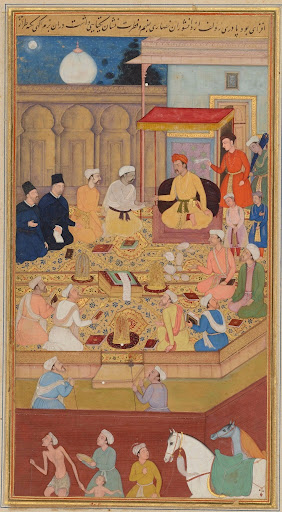
Territorial Expansion
Akbar expanded the empire through:
- Conquest of Malwa (1561)
- Gujarat (1572)
- Bengal (1576)
- Kashmir (1586)
- Deccan campaigns (1590s)
His Rajput policy helped political stability. He married Rajput princesses and gave high positions to Rajput rulers.
Akbar laid the administrative foundation of Expansion and Consolidation from Akbar to Aurangzeb by integrating local elites into imperial service.
Administrative Reforms
- Mansabdari System
- Zabt Revenue System
- Centralized bureaucracy
- Provincial administration (Suba system)
The Mansabdari system ranked officers based on military and civil responsibilities. It became the backbone of Expansion and Consolidation from Akbar to Aurangzeb.
Administrative Features under Akbar
| Feature | Description | Importance |
| Mansabdari | Rank-based service system | Military efficiency |
| Zabt System | Land revenue assessment | Stable income |
| Suba System | Provincial administration | Central control |
| Religious Policy | Sulh-i-Kul (peace with all) | Political unity |
Akbar’s policies strengthened imperial authority and reduced rebellion.

Jahangir (1605–1627)
Jahangir (born August 31, 1569, at Fatehpur Sikri died October 28, 1627, near Lahore) was the Mughal emperor of India who ruled from 1605 to 1627, succeeding his father Akbar and continuing the imperial traditions of governance, culture, and artistic patronage.
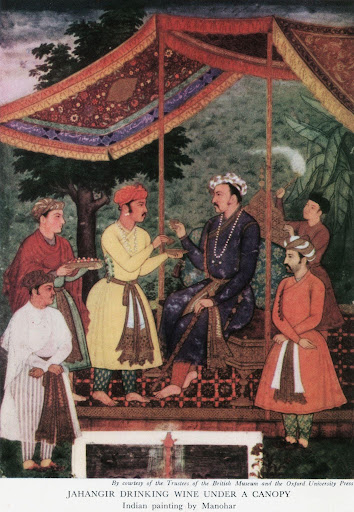
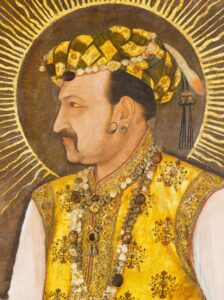
- Akbar was succeeded by his son Salim with the title Nur-ud-din Jahangir.
- He was Akbar’s son by a Rajput wife.
- His ascension was challenged by his eldest son Prince Khusrau who staged a revolt with the blessings of Sikh Guru Arjun Dev.
- Prince Khusrau was defeated, captured and blinded, while Guru Arjun Dev was executed.
- In 1608 Ahmad Nagar in the Deccan had declared independence under Malik Ambar.
- During the reign of Jahangir there was no addition to the Mughal territory in Deccan.
- Jahangir’s reign witnessed the visit of two Englishmen – William Hawkins and
- Sir Tomas Roe. While the former could not get the consent of the Emperor for
- establishing an English factory in India, the latter, sent as ambassador by King
- James I, succeeded in securing permission to establish a British factory at Surat.
- In 1611, Jahangir married Mehrunnisa who was known as Nur Jahan (Light of World).
- Nur Jahan dominated the royal household and set new fashions based on Persian traditions. She encouraged Persian art and culture in the court.
- Nur jahan became the real power behind the throne.
- The political intrigues that prevailed because of Nur-Jahan, led Prince Khurram(Shah Jahan) to rebel against his father.
- Nur-Jahan, who ruled the empire for ten years, lost her power and influence
- after Jahangir’s death.
- Jahangir died near Lahore (on the way from Kashmir to Lahore). He was buried in Lahore.
Enroll UGC NET Online Test Series
Features
- Suppression of rebellions
- Expansion in Mewar
- Increased influence of Nur Jahan
- Development of Mughal painting
Jahangir strengthened imperial institutions created during Expansion and Consolidation from Akbar to Aurangzeb, but he focused less on large territorial expansion.
Shah Jahan (1628–1658)
After the death of Jahangir, a brief succession struggle followed, but Prince Khurram secured power in 1628 and became Shah Jahan. He was a capable military commander, though his reign is most celebrated for architectural brilliance, when Mughal architecture reached its peak.
- He attempted to recover Kandahar and Central Asian territories like Balkh and Badakhshan to secure Mughal frontiers, but failed to retain Kandahar. His Deccan policy was more successful: Ahmadnagar was annexed, while Bijapur and Golkonda accepted Mughal authority.
- In 1631, his beloved wife Mumtaz Mahal died at Burhanpur. In her memory, he commissioned the Taj Mahal, one of the greatest monuments in the world. He also built masterpieces such as the Red Fort, Jama Masjid, Diwan-i-Aam, Diwan-i-Khas, and Moti Masjid.
- Shah Jahan shifted the Mughal capital from Agra to Delhi in 1648 and commissioned the famous Peacock Throne. His court attracted European visitors like François Bernier, Jean-Baptiste Tavernier, Peter Mundy, and Niccolao Manucci, who described Mughal India in detail.
- His son Dara Shikoh translated the Upanishads into Persian as Sirr-i-Akbar and wrote Majma-ul-Bahrain, reflecting intellectual synthesis. Court poet Kalim Kashani served as poet-laureate.
- Shah Jahan abolished the court practice of Sijda (prostration before the ruler), and although his reign was culturally magnificent, the loss of Kandahar weakened Mughal strategic strength.
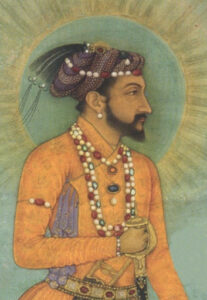
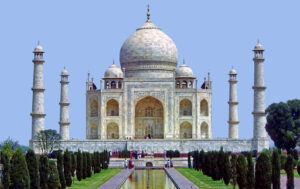
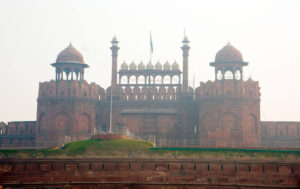
Shah Jahan Conquests, Policies, Foreign Relations & Evaluation
The reign of Shah Jahan illustrates how imperial power was shaped through military conquests, administrative and religious policies, diplomatic dealings with foreign traders, and overall evaluation of his rule as both a period of splendour and underlying strain in Mughal history.
-
Conquests and Military Campaigns
-
-
- Shah Jahan proved his military skill early by suppressing rebellions such as that of Jujhar Singh Bundela in Bundelkhand and Khan-i-Jahan Lodi in the Deccan. He aimed to establish Mughal supremacy in the Deccan by weakening the states of Ahmadnagar, Bijapur, and Golconda.
- In 1629 he launched a major campaign against Ahmadnagar, annexed large territory, and installed a puppet ruler. His general Mahabat Khan later defeated combined Deccan forces including Shahji Bhonsle, ending the Nizam Shahi dynasty. Treaties in 1636 forced Bijapur and Golconda to accept Mughal suzerainty, marking a major diplomatic success.
-
-
Religious Policy
-
-
- Shah Jahan was a devout Sunni Muslim and initially followed orthodox policies such as imposing pilgrimage taxes and restricting temple construction. Some temples were destroyed early in his reign. However, his stance softened later under the influence of his liberal-minded son Dara Shikoh and daughter Jahanara Begum.
- He resumed practices like jharokha darshan, patronised Hindu scholars such as Kavindra Saraswati, and appointed Hindus like Jaswant Singh to high posts. Thus, despite early orthodoxy, his later rule showed relative tolerance.
-
-
Relations with European Traders
-
-
- The Portuguese settlement at Hugli was attacked after they fortified it and engaged in slave trade and forced conversions. Shah Jahan expelled them and restored imperial authority.
- Meanwhile, the Dutch East India Company expanded trade centers across India, and the English established factories including at Fort St. George, reflecting growing European commercial presence.
-
-
War of Succession (1657–1658)
-
- When Shah Jahan fell ill, his sons Dara, Shah Shuja, Aurangzeb, and Murad Baksh fought for power. Aurangzeb allied with Murad and defeated imperial forces at the Battle of Dharmat and then decisively crushed Dara at the Battle of Samugarh.
Aurangzeb imprisoned Shah Jahan, executed Dara and Murad, and eventually became emperor.
Enroll UGC NET Offline Classes in Jaipur
-
Evaluation of His Reign
-
-
- Shah Jahan’s reign is often called the Golden Age of the Mughal Empire due to peace, prosperity, flourishing trade, and magnificent architecture. The splendour of his court impressed European travelers.
- However, beneath the grandeur lay financial strain caused by costly wars and lavish building projects. These hidden weaknesses later contributed to imperial decline.
-
-
Political Expansion
-
- Conquest of Ahmednagar
- Campaigns in Balkh and Badakhshan
- Control over Deccan states
- During this phase of Expansion and Consolidation from Akbar to Aurangzeb, the empire reached administrative maturity.
- However, expensive military campaigns created financial pressure.
Aurangzeb (1658–1707)
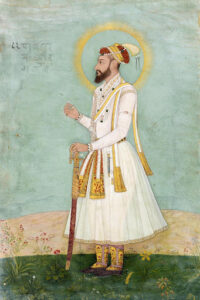
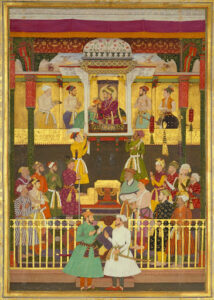
Aurangzeb ascended the throne in 1658 and adopted the title Alamgir (“Conqueror of the World”). He ruled for nearly fifty years, making his reign one of the longest in Mughal history.
- From 1658 to about 1681 he focused on northern India, but afterward shifted attention to the Deccan. He defeated the sultanates of Bijapur and Golconda, yet his prolonged conflict with the Marathas remained unresolved and drained imperial resources.
- His rebellious son Prince Muhammad Akbar revolted in 1681, weakening Mughal authority and complicating relations with Rajput allies.
- Despite his orthodox reputation, Aurangzeb employed a large number of Hindu nobles and generals in the Mughal army, reflecting administrative pragmatism.
- He commissioned notable buildings such as the Bibi Ka Maqbara (often called the “Second Taj Mahal”) and the Moti Masjid inside Delhi’s Red Fort.
- The later decades of his reign, spent largely in the Deccan, strained the treasury and administration, contributing to financial crisis and weakening imperial stability.
Note: The Mansabdari system was not introduced by Aurangzeb; it had originally been developed under Akbar as part of administrative reforms.
Aurangzeb Administration, Religious Policy & Evaluation
Aurangzeb maintained a highly centralized system of governance and personally supervised even minor administrative matters.
-
- He read petitions himself and issued orders directly, reducing ministers to mere executors rather than decision-makers.
- While the administrative structure remained similar to that of earlier rulers like Akbar, the spirit of governance changed because excessive centralization caused inefficiency and dependence on the emperor.
- At his death in 1707, the empire consisted of twenty-one provinces, including northern territories, Afghanistan, and six in the Deccan.
- His long absence from northern India during Deccan campaigns weakened provincial administration, allowing zamindars and local chiefs to defy authority.
- Revenue collection shifted toward farming contracts, which worsened the condition of peasants.
- Military expenditure doubled compared to Shah Jahan, yet discipline declined compared with earlier Mughal standards.
-
Economic and Trade Conditions
-
-
- Agriculture remained the backbone of the economy, followed by the cotton textile industry. India exported indigo and cotton goods, while imports included metals, woollens, horses, spices, and luxury items from Europe and West Asia. Despite active trade, customs revenue remained relatively small, showing that warfare rather than commerce dominated imperial priorities.
-
-
Religious Policy
-
-
- Aurangzeb was a strict Sunni ruler who sought to enforce Islamic law. He appointed muhtasibs to supervise public morality, banned court music, discontinued jharokha darshan, and revived the Jizya on non-Muslims in 1679. After revolts by groups such as the Jats and Rajputs, he permitted destruction of certain temples, including those at Mathura and Varanasi.
- He also executed Guru Tegh Bahadur, which intensified Sikh resistance and contributed to the later militarization of the Sikh community. His religious rigidity alienated many groups, including Hindus, Sikhs, and even sections of Muslims.
-
-
Major Religious Regulations Quick List
-
-
- Appointment of Muhtasibs (1659)
- Ban on certain Hindu court rituals and festivals (1668–1670)
- Abolition of imperial ceremonies like Tuladan
- Re-imposition of Jizya (1679)
-
-
Evaluation of His Reign
-
- Aurangzeb died in 1707 leaving a vast but fragile empire. Continuous wars in the Deccan drained the treasury and weakened trade. His religious orthodoxy provoked revolts by Marathas, Sikhs, Jats, and others, disrupting stability. Over-centralization meant that when his strong personal control ended, administrative chaos followed.
- Historical Assessment:
Aurangzeb was a disciplined ruler and capable general, but his prolonged wars, rigid policies, and administrative overreach accelerated the decline of the Mughal Empire after his death.
Art, Culture, and Architecture
This period produced:
- Mughal miniature painting
- Taj Mahal
- Red Fort
- Persian literary works
Cultural growth paralleled political Expansion and Consolidation from Akbar to Aurangzeb.
Join UGC NET Coaching in Jaipur
Comparison of Mughal Rulers
| Ruler | Expansion | Religious Policy | Administration | Impact |
| Akbar | Major North Indian expansion | Tolerant | Strong reforms | Stability |
| Jahangir | Limited | Moderate | Continued system | Stability |
| Shah Jahan | Deccan focus | Slightly orthodox | Stable | Prestige |
| Aurangzeb | Maximum territorial growth | Orthodox | Strained | Overextension |
This comparison helps understand Expansion and Consolidation from Akbar to Aurangzeb in a structured way.

Expansion and Consolidation from Akbar to Aurangzeb Developments
| Area | Early Phase | Middle Phase | Late Phase | |
| Territory | Rapid growth | Controlled expansion | Maximum size | |
| Revenue | Zabt stability | Increased jagirs | Jagir crisis | |
| Military | Organized | Strong | Overstretched | |
| Religion | Tolerance | Balanced | Orthodoxy |
Conclusion
The story of Expansion and Consolidation from Akbar to Aurangzeb shows how strong institutions create stability but excessive military pressure weakens empire structure. Akbar built inclusive administration. Jahangir maintained stability. Shah Jahan strengthened prestige. Aurangzeb expanded territory but strained resources.
Expansion and Consolidation from Akbar to Aurangzeb UGC NET FAQs

Why is this period important for UGC NET?
UGC NET focuses on institutional development, revenue systems, religious policy, and Deccan campaigns.
Who expanded the Mughal Empire the most?
Aurangzeb expanded the empire to its largest territorial limits.
What was Akbar’s biggest contribution?
He created the Mansabdari and revenue systems that stabilized the empire.
Why did Mughal power weaken after Aurangzeb?
Long wars in the Deccan drained finances and created regional resistance.