

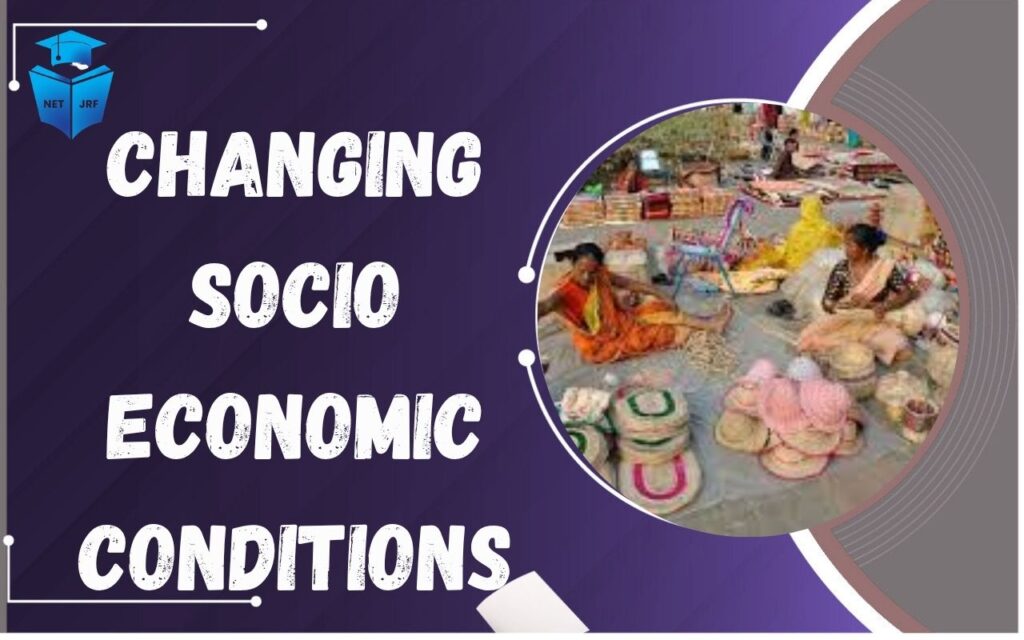
Changing Socio-Economic Conditions of Artisans became one of the most important transformations in the Indian economy during the colonial period. Traditional artisans once formed a vital part of India’s rural and urban economy. They produced textiles, metal goods, pottery, woodwork, and other handmade products that served both local markets and international trade.

Before colonial rule, India enjoyed a strong reputation for its skilled craftsmen and high-quality handmade goods. However, British colonial policies, the Industrial Revolution in Britain, and the rise of machine-made products dramatically transformed the economic and social conditions of artisans.
Changing Socio-Economic Conditions of Artisans in Colonial India
Changing Socio-Economic Conditions of Artisans refers to the transformation in the economic position, social status, and working conditions of traditional craftsmen due to colonial economic policies and industrialization.
Artisans included various occupational groups such as weavers, carpenters, blacksmiths, goldsmiths, potters, and leather workers.
Key Features Explained
- Decline of traditional handicraft industries
- Handicrafts made by skilled artisans like weaving, pottery, metalwork used to be a major source of livelihood in India.
- Under British rule, these traditional industries started shrinking because they could not compete with the cheaper, machine-made goods imported from Britain.
- Competition from machine-made imports
- The Industrial Revolution in Britain produced goods faster and cheaper than handmade products.
- Indian markets were flooded with these imported goods, making it difficult for local artisans to sell their products.
- Loss of employment among craftsmen
- As demand for handmade goods fell, many skilled craftsmen lost their jobs.
- Families that depended on these trades faced financial difficulties.
- Migration of artisans to rural labour markets
- With no work in towns or cities, many artisans moved to villages or worked as agricultural laborers.
- This shift changed their traditional way of living, from independent craftsmen to wage laborers.
- Impact on artisan communities
- The decline of traditional industries altered the livelihood patterns of entire artisan communities.
- Many lost social status, financial independence, and cultural continuity tied to their craft.
Artisans in Indian Economy Traditional Role
Before colonial rule, artisans played an important role in economic production and local trade.
Village-Based Craft Production
- Artisans in village communities
- Artisans (like weavers, carpenters, blacksmiths, potters) lived in the villages where most farmers lived.
- Their homes and workshops were part of the village economy, not separate towns or cities.
- Services provided by artisans
- Weaving cloth: Made clothes for villagers.
- Making agricultural tools: Created ploughs, sickles, and other farming equipment.
- Producing household items: Crafted utensils, pots, furniture, and other daily-use goods.
- Repairing equipment: Fixed tools, carts, and other village necessities.
- Mutual dependence
- Farmers needed artisans for tools, cloth, and household items.
- Artisans depended on farmers for food and payment in kind (like grain or produce).
- This created a balanced village economy where everyone contributed and benefited.
Urban Craft Centers
Cities such as Murshidabad, Surat, and Dhaka became famous for textile and craft production.
Indian textiles, especially cotton and silk, attracted global demand.
Major Artisan Occupations in Pre-Colonial India
In pre-colonial India, many skilled artisans worked in different crafts and industries, producing goods for local markets and international trade
| Artisan Group | Main Products |
| Weavers | Cotton cloth, silk textiles |
| Blacksmiths | Agricultural tools, weapons |
| Potters | Earthen utensils |
| Goldsmiths | Jewelry |
| Carpenters | Wooden furniture |
Changing Socio-Economic Conditions of Artisans Causes
Several factors contributed to the Changing Socio-Economic Conditions of Artisans during colonial rule.
1. Industrial Revolution in Britain
The Industrial Revolution introduced machines that produced goods much faster than handmade production. British factories began exporting machine-made textiles to India.
These goods were cheaper and gradually replaced traditional Indian handicrafts.
2. Colonial Trade Policies
British trade policies favored industrial goods from Britain. Indian handicrafts faced heavy competition from imported products.
This policy reduced demand for traditional artisan goods.
3. Decline of Royal Patronage
Before colonial rule, many artisans received patronage from kings and nobles. The decline of traditional courts removed an important source of income.
4. Market Disruption
British control over Indian markets changed trade patterns. Local craft industries lost access to traditional export markets.
Economic Impact on Artisan Communities
The Changing Socio-Economic Conditions of Artisans produced serious economic challenges.
Impact on Artisans
- Loss of Employment
- Many artisans lost their traditional jobs because British-made machine products were cheaper and more widely available.
- Handloom weavers were hit the hardest, as British textile mills could produce cloth faster and cheaper than handmade weaving.
- Decline of Income
- With fewer people buying their products, artisans’ earnings fell sharply.
- Families that relied on craft work faced financial difficulties.
- Migration to Agriculture
- Without work in their traditional craft, many artisans shifted to farming or became agricultural laborers.
- This movement increased the number of workers in rural fields, sometimes creating overcrowding and reducing wages for everyone.
Join UGC NET Offline Coaching in Jaipur
Social Impact of Artisan Decline
The Changing Socio-Economic Conditions of Artisans also transformed social structures.
Declining Social Status
- Traditionally, artisans were respected members of village society because of their skills and essential services.
- When their crafts declined, their importance and status in the community fell.
Growth of Rural Poverty
- Losing their traditional jobs caused many artisan families to struggle financially.
- This led to increased poverty in villages, as more households depended on low-paying work.
Urban Migration
- Some artisans moved to cities looking for work in factories, workshops, or service jobs.
- This shift changed village demographics and introduced artisans to new types of employment but often at lower wages.
Effects on Indian Economy
The Changing Socio-Economic Conditions of Artisans affected the broader economic structure of colonial India.
Deindustrialization in India
- Decline of Traditional Industries
- India’s handicraft and craft industries shrank during British rule.
- This process is called deindustrialization, meaning traditional manufacturing declined while industrial production shifted to Britain.
- Shift Toward Agriculture
- Many former artisans became agricultural laborers because their traditional jobs disappeared.
- This increased rural dependence on farming, making agriculture the main source of livelihood again.
- Economic Dependency
- India started to export raw materials like cotton, jute, and indigo to Britain.
- At the same time, India became a market for British manufactured goods, which replaced local crafts.
- This created economic dependence on Britain, weakening India’s traditional economy.
Stepwise Process of Artisan Decline
The transformation of artisan communities followed a clear pattern.
Transformation of Artisan Communities
- Introduction of machine-made goods from Britain
- British factories produced textiles, metal tools, and other goods faster and cheaper than handmade products.
- Reduction in demand for handmade products
- Villagers and traders started buying British goods instead of local crafts, reducing the market for artisans.
- Decline in artisan income
- With fewer buyers, artisans’ earnings fell sharply, affecting their families and social status.
- Closure of traditional workshops
- Many workshops and craft units stopped operating because it was no longer profitable to continue production.
- Migration to rural labour markets
- Artisans moved to villages or became agricultural laborers to survive, taking on low-paying jobs instead of practicing their craft.

Key Points for UGC NET Preparation
Changing Socio-Economic Conditions of Artisans under Colonial Rule
The artisans of India underwent significant changes during British colonial rule due to economic, technological, and social shifts. This topic is an important part of colonial economic history and frequently appears in competitive exams like UGC NET.
Key Themes to Focus On
- Decline of Handicraft Industries
- Traditional craft industries like weaving, metalwork, and pottery lost their importance.
- Competition from British machine-made goods reduced demand for handmade products.
- Impact of the Industrial Revolution
- The Industrial Revolution in Britain introduced mass-produced goods that were cheaper and more uniform.
- This led to loss of employment and income among Indian artisans.
- Colonial Trade Policies
- British policies favored imports from Britain and restricted Indian exports.
- India became a supplier of raw materials and a market for British goods, weakening local economies.
- Deindustrialization Debate
- Scholars discuss how British rule deindustrialized India—destroying traditional manufacturing while India’s economy shifted toward agriculture and raw material exports.
- This concept is important for understanding the structural changes in the Indian economy.
- Rural Migration of Artisans
- As craft jobs disappeared, many artisans moved to villages as agricultural laborers.
- Some migrated to cities seeking employment in factories or services.
- This reshaped social and economic life in both rural and urban areas.
Long-Term Consequences
The Changing Socio-Economic Conditions of Artisans had lasting effects on Indian economic development.
Weak Industrial Growth
- India’s traditional manufacturing declined, and local industries were unable to compete with British factories.
- As a result, India did not develop modern industries quickly, unlike Britain.
Rural Economic Pressure
- Many displaced artisans moved back to villages and worked as agricultural laborers.
- This increased competition for farm jobs and put additional pressure on rural wages and resources.
Rise of Modern Industries
- By the late colonial period, some artisans found jobs in emerging factories and workshops.
- This marked a gradual shift from traditional craft work to modern industrial employment for a few skilled workers.
Conclusion
The Changing Socio-Economic Conditions of Artisans represent a major transformation in colonial India’s economic and social history. British industrialization and colonial trade policies weakened traditional craft industries and disrupted artisan livelihoods.
Enroll UGC NET Offline Classes in Jaipur
As demand for handmade goods declined, many artisans lost employment and moved into agriculture or urban labour markets. These developments contributed to widespread poverty and structural economic changes.

Changing Socio-Economic Conditions of Artisans in Colonial India FAQs

2. Why did artisan industries decline during British rule in India?
Artisan industries declined because machine-made goods from British factories entered Indian markets at lower prices. Local handmade products could not compete with these cheaper industrial products.
3. Which artisan groups were most affected during colonial rule?
Handloom weavers suffered the most because British textile mills produced cloth faster, cheaper. Potters, metal workers, carpenters also experienced reduced demand for handmade goods.
4. How did artisan decline affect rural society in colonial India?
Loss of craft employment forced many artisans to migrate to villages. They worked as agricultural laborers, which increased pressure on land, reduced wages, expanded rural poverty.
5. What is deindustrialization in colonial India?
Deindustrialization refers to decline of traditional industries like handicrafts during British rule while India shifted toward agriculture, raw material export, dependence on imported manufactured goods.