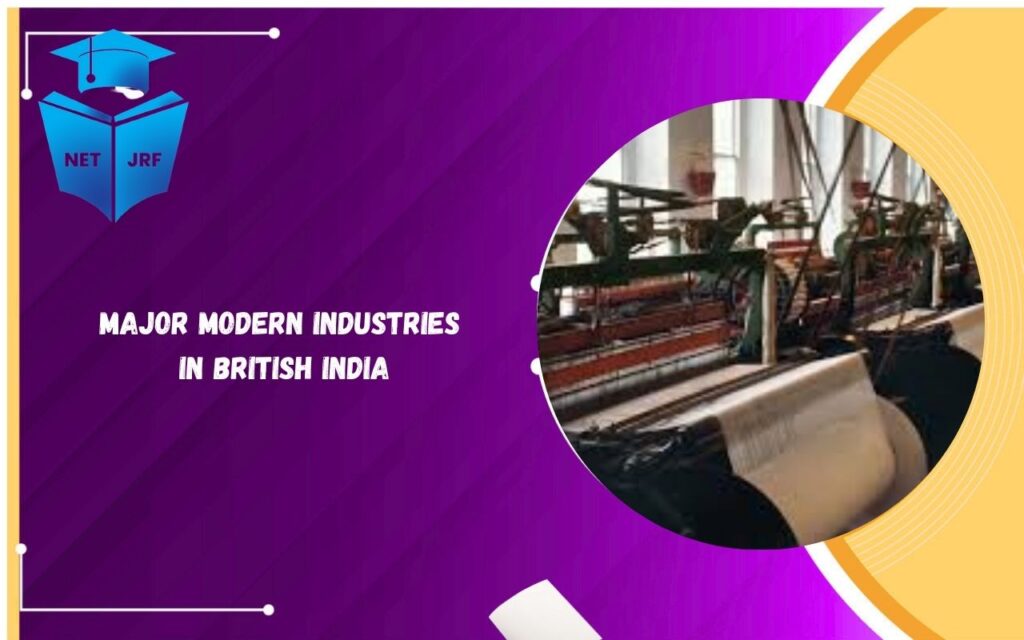
Major Modern Industries started emerging rapidly during the late nineteenth century while the British ruled India. This period marked a massive shift from traditional handlooms to large-scale machine production. The British government introduced these changes to exploit Indian resources more efficiently. They also wanted to create a bigger market for goods made in Britain. This article explores the growth, impact, and history of these industrial sectors.

Major Modern Industries Evolution
The rise of Major Modern Industries did not happen overnight. It was a planned process driven by colonial economic interests. Before the British arrived, India was famous for its high-quality hand-made textiles. However, the British textile industry used new machines to make cloth faster and cheaper. This forced a change in the Indian landscape.
- The British focused on specific sectors like railways, cotton, jute, and tea. They built these industries primarily in port cities like Bombay, Calcutta, and Madras.
- These locations made it easy to ship raw materials back to Europe.
- While these industries were exploitative, they created a base for India’s future industrial growth after 1947.
Cotton Textile Industry Growth
The cotton textile industry stands as one of the most successful Major Modern Industries from the British era. It grew very quickly because India had plenty of raw cotton.
- Early Beginnings: The first cotton mills started in the 1800s.
- Key Locations: Mumbai and Ahmedabad became the main hubs for cotton production.
- The First Mill: India’s very first cotton mill opened in Mumbai in 1854.
- Job Creation: These mills provided thousands of jobs, especially for women.
The shift to machine-made cloth was hard for traditional workers. Many handloom weavers lost their jobs because they could not compete with cheap mill cloth. This led to many social changes in Indian cities.
Jute Industry: Golden Fibre of Bengal
During the late 19th century, jute became another of the Major Modern Industries to dominate the market. The British realized that jute was perfect for making strong bags and ropes.
- Bengal’s Dominance: Bengal was the perfect place to grow jute due to its fertile soil and rivers.
- Factory Growth: British merchants set up many mills around Kolkata.
- Products: These factories made gunny bags, Hessian cloth, and heavy ropes.
- War Demand: The industry saw huge profits during World War I and World War II because the army needed packaging materials.
Workers in jute mills often faced very tough conditions. They worked long hours in dusty, hot environments for very low pay. Despite these hardships, the industry generated massive revenue for the British administration.
Enroll UGC NET Foundation Course
Tea Plantations and Export Focus
Tea is one of the Major Modern Industries that changed the face of Northeast India. Before the 1800s, Britain bought most of its tea from China.
- In 1823, a British officer found wild tea plants in Assam. This discovery allowed the British East India Company to start its own plantations. They wanted to stop sending so much silver to China for tea. By the 1860s, large commercial gardens were producing high-quality tea in Assam and Darjeeling.
- The industry relied on millions of low-paid workers brought from eastern India. These people lived in crowded labour lines with very few benefits. However, by the early 20th century, India became the world’s largest tea producer.
Railway Industry
The British built the railway industry as one of the most important Major Modern Industries to control India. The main goal was to move soldiers quickly and transport raw materials to ports.
- First Journey: The first train ran in 1853 between Bombay and Thane.
- Massive Expansion: By 1930, the network covered over 54,000 kilometres.
- Affordability: Over time, the introduction of 3rd class compartments made travel cheap for common people.
- Employment: By 1905, the railways employed over 200,000 people, and 95% of them were Indians.
The railways helped businesses grow by moving coal, iron, and crops across long distances. It remains a vital part of India’s infrastructure today.

Iron, Steel, and Other Heavy Sectors
As the British expanded their control, they needed more building materials. This led to the rise of other Major Modern Industries like iron, steel, and cement.
The iron and steel industry started growing in the early 20th century, mainly in the Bihar and Bengal regions. These factories supplied rails for the growing railway network and materials for large buildings.
- Other sectors like sugar, chemicals, and paper also began to appear.
- These industries were often dominated by British capital and management.
- This meant that most of the profits went back to Britain rather than staying in India. However, these factories introduced modern technology and large-scale manufacturing to the country.
Comparison of Major Modern Industries
During the colonial period, several modern industries developed in India, each with different locations, resources, and economic roles.
| Industry Name | Start Period | Primary Region | Main Purpose |
| Cotton Textiles | Mid-19th Century | Mumbai, Ahmedabad | Clothing for local and export markets |
| Jute Industry | Late 19th Century | Bengal (Kolkata) | Gunny bags, Hessian cloth, and ropes |
| Tea Industry | Early 19th Century | Assam, Darjeeling | Exporting tea to Europe and Britain |
| Railway Industry | 1853 | Pan-India | Moving troops and raw materials |
| Iron and Steel | Early 20th Century | Bihar, Bengal | Rails and construction materials |
Milestones of Industrial Development
During the period of colonial rule, several important developments marked the growth of modern industries in India.
| Year | Significant Event | Impact on Industry |
| 1823 | Wild tea plants found in Assam | Started the Indian tea industry |
| 1830s | First tea plantations in Assam | Reduced dependence on Chinese tea |
| 1853 | First train runs (Bombay to Thane) | Birth of the Indian Railway network |
| 1854 | First cotton mill opens in Mumbai | Started the modern textile sector |
| 1919 | Montague-Chelmsford Reforms | Made railways a central government subject |
Enroll UGC NET Offline Classes in Jaipur
How Jute Was Processed in Mills
The production of goods in the jute industry followed a specific set of steps to ensure quality:
- Sowing: Farmers planted seeds in fertile land near rivers in March.
- Harvesting: Workers cut the plants in June or July when stems turned yellow.
- Extraction: Fibres were pulled from the stems and baled for sale.
- Washing: Mills in Kolkata washed and dried the raw fibres.
- Combing: Machines arranged the fibres in the same direction.
- Spinning: The processed fibres were spun into yarn.
- Weaving: Looms wove the yarn into fabrics like Hessian or gunny bags.
Join UGC NET Offline Coaching in Jaipur

Conclusion
The story of industrial growth in India is complex. The British government introduced Major Modern Industries to strengthen their own political and economic control. They focused on extracting wealth through tea exports, textile production, and a vast railway network. While the primary motive was exploitation, these sectors changed the Indian landscape forever. They shifted the population toward cities and introduced the country to global trade.
Major Modern Industries in British India FAQs

What was the first modern industry in India?
The cotton textile and railway industries were among the first to develop in the mid-19th century.
Where was the jute industry mainly located?
It was almost entirely based in Bengal, especially around the city of Kolkata.
How did railways help the British?
Railways allowed the British to move their army quickly and transport goods to ports for export.
What were the Major Modern Industries in British India?
The main ones included cotton textiles, jute, tea, railways, iron, steel, and cement.
Did Indian workers benefit from these industries?
While they got jobs, the pay was very low and working conditions were often dangerous.
Why was Assam important for the tea industry?
Assam had the perfect climate and soil for growing high-quality tea on a large scale.
When did the first train run in India?
The first operational train ran in 1853 between Bombay and Thane.
How did the World Wars affect Indian industry?
The wars increased demand for products like jute bags and iron, which helped factories grow.
What happened to these industries after 1947?
The Indian government took over or nationalized many of these sectors to build the country’s modern economy.