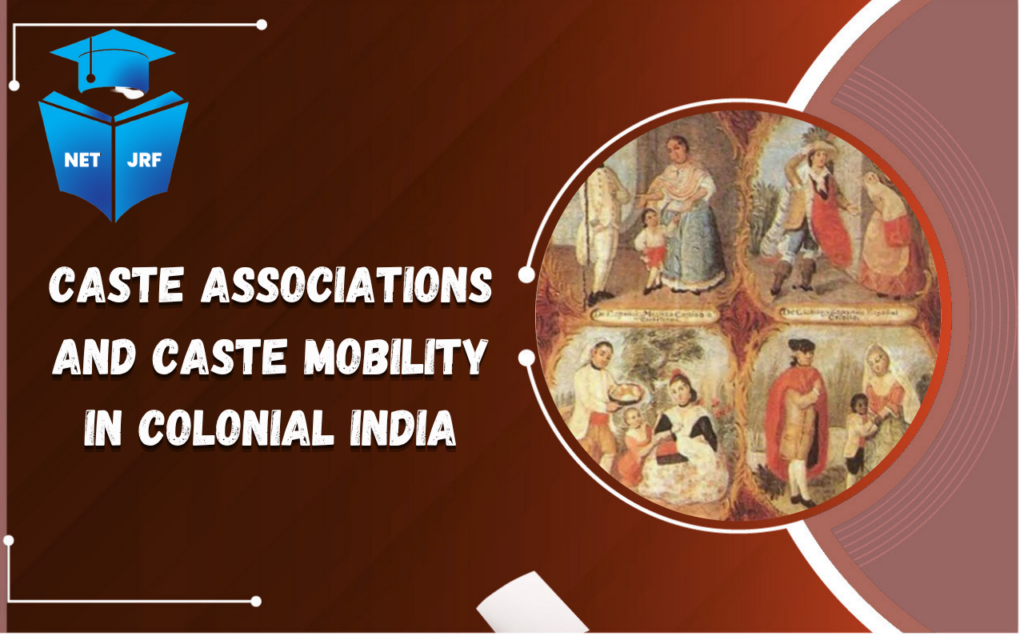
Caste Associations became central to social reform and mobility in colonial India. These organizations provided platforms for lower and marginalized castes to advocate for equality, education, and social recognition. The British codification of caste created both challenges and opportunities, making caste associations crucial agents of social change.

Caste Associations Meaning
Caste Associations refer to organized groups formed around specific caste identities. Their primary goals included promoting education, political awareness, and economic upliftment of their members. These associations acted as a bridge between colonial administration and communities seeking social advancement. They were often instrumental in challenging historical inequalities and advocating for caste mobility.
Caste Associations Historical Background
Understanding the origins and evolution of caste-based organizations in India and their role in social and political mobilization.
-
Pre-Colonial Flexibility
-
- Before British rule, caste identities were flexible. The varna system, outlined in the Rigveda, categorized society into Brahmins, Kshatriyas, Vaishyas, and Shudras based primarily on occupation. Social mobility was possible through personal merit, achievements, or changes in occupation.
-
Colonial Rigidity
- The British codified caste categories through censuses and legal frameworks. This institutionalization fixed previously flexible social boundaries, which intensified inequalities. In response, caste associations emerged to reclaim social and economic rights for marginalized communities.
Emergence of Caste Associations
The rise of caste associations was closely linked to education, political representation, and economic mobility. Associations like the Sahu Jain Society and Adi Hindu Association organized schools, lobbied for legal reforms, and created forums for community solidarity.
| Association Name | Founding Year | Objectives | Key Leaders |
| Adi Hindu Association | 1910 | Social equality, education | B.R. Ambedkar |
| Sahu Jain Society | 1925 | Economic uplift, education | Local merchants |
| Paraiyar Movement | 1891 | End untouchability, social justice | Iyothee Thass |
Features of Caste Associations
Caste associations emerged as important social organizations during the late nineteenth and early twentieth centuries. They worked to protect the interests of particular communities and helped them adapt to the changing social and political environment of colonial India. These associations played a role in promoting education, social reform, and political participation among their members.
- Community Representation:
Caste associations worked to represent the interests of their communities in the public sphere. They often voiced the concerns of their members in colonial administrative bodies and demanded fair opportunities in education, employment, and political representation. - Promotion of Education:
Many caste associations focused strongly on education. They established schools, hostels, and scholarship programs to support students from their communities. By encouraging education, they aimed to improve the social and economic position of their members. - Support for Social Reform:
Some caste organizations also participated in social reform efforts. They questioned discriminatory practices such as untouchability and promoted dialogue between different social groups. Their activities helped create awareness about equality and social justice. - Economic Assistance:
These associations sometimes provided financial help to their members. They encouraged small businesses, cooperative efforts, and self-employment so that members of the community could improve their economic condition. - Development of Political Awareness:
Caste associations also played a role in increasing political awareness among their members. They encouraged people to participate in elections, public discussions, and civic activities. In this way, they helped many communities become more active in the political life of the country.
Enroll UGC NET Mock Test Series

Caste Associations Impact
Social Mobility
Caste Associations facilitated upward mobility by promoting education, skill development, and advocacy. Members gained better access to colonial jobs, higher education, and political positions.
-
Challenging Inequality
-
- By organizing communities, associations challenged social discrimination. Movements like the Depressed Classes Association and Madras Presidency Scheduled Castes Federation demanded equal treatment and representation.
-
Preservation of Identity
- While promoting reform, caste associations also reinforced cultural identities, ensuring communities retained a sense of heritage while negotiating modernity.
Pre-Colonial vs Colonial Caste Structures
| Aspect | Pre-Colonial India | Colonial India |
| Caste Flexibility | High, occupation-based | Low, birth-based |
| Social Mobility | Possible through merit | Restricted by codification |
| Role of Associations | Informal groups | Formal Caste Associations |
| Legal Recognition | Minimal | Extensive through British law |
| Educational Opportunities | Limited | Expanded via associations |
Numbered List Key Achievements
Caste associations established schools within their communities to promote education among members. These schools helped children from marginalized castes access basic and higher education, improving literacy and enabling upward social mobility.
- Legal advocacy for caste-based reservations
Many caste associations actively lobbied the government for legal safeguards and affirmative action policies, such as reservations in education, government jobs, and political representation. This was aimed at reducing historical social inequalities. - Mobilization of community votes in municipal councils
Caste associations organized members to participate collectively in local elections, ensuring that their community interests were represented in municipal councils and local governance. This increased political influence and decision-making power. - Campaigns against untouchability and social exclusion
Associations often led social reform initiatives to fight caste discrimination, untouchability, and exclusion from temples, schools, and public spaces. These campaigns helped promote social integration and equality. - Publication of community newspapers to raise awareness
Many associations started newspapers, journals, and pamphlets to educate their members about social rights, government policies, and reform movements. These publications also helped unify communities and spread awareness of social and political issues.
Enroll UGC NET Offline Coaching in Jaipur
Role of Women in Caste Associations
Women gradually began to participate in the activities of caste associations, especially during the late nineteenth and early twentieth centuries. Although their involvement was limited in the beginning due to social restrictions, it slowly increased as education and reform movements spread across Indian society.
- Women took part in education campaigns and literacy programs organized by caste associations. They helped encourage girls’ education and supported efforts to improve awareness about the importance of learning within their communities.
- These initiatives played an important role in raising educational levels among women from different social backgrounds.
- Women also contributed to social reform activities.
- They participated in movements that aimed to reduce social discrimination, improve the status of women, and challenge harmful social practices.
- Through meetings, community programs, and awareness campaigns, women helped bring attention to issues related to equality and social justice.
- Over time, their participation in caste associations created greater opportunities for gender equality within many communities.
- Although the progress was gradual, the involvement of women helped expand the scope of social reform and strengthened efforts to bring positive change in society.
Regional Variations
- North India
Caste associations primarily concentrated on education and political representation, especially for Scheduled Castes. They established schools, promoted literacy, and worked to secure seats in local bodies and legislative councils to increase political influence. - South India
Associations were more active in social reform, tackling issues like untouchability, temple entry, and caste-based discrimination. They campaigned for social equality and greater integration of marginalized communities into public life. - Western India
The focus was on economic development, encouraging community entrepreneurship, establishing business networks, and creating cooperative societies to strengthen the economic position of their members.
Challenges Faced by Caste Associations
British colonial authorities often imposed regulations that restricted the independent functioning of caste associations. Many associations faced legal and administrative hurdles, making it difficult to run schools, publish newspapers, or organize community programs freely.
Enroll UGC NET Offline Classes in Jaipur

- Internal disputes over leadership and representation
Leadership conflicts within communities sometimes arose over who would represent the caste association. These disputes weakened the associations’ unity and reduced their effectiveness in social, educational, and political campaigns. - Resistance from dominant castes against reform initiatives
Efforts to challenge caste hierarchies, untouchability, or promote reservations often faced backlash from socially and economically dominant castes. Such resistance limited the impact of reform initiatives and slowed social progress. - Limited resources and reach
Many caste associations struggled with financial constraints, lack of access to education, and limited membership participation. This restricted their ability to implement programs, expand schools, or publish newspapers widely.
Prominent Leaders and Their Contributions
Highlighting key figures who shaped caste associations through social reform, education, and political activism.
| Leader | Association | Contribution |
| B.R. Ambedkar | Depressed Classes Association | Legal reforms, education, political mobilization |
| Iyothee Thass | Paraiyar Movement | Social reform, anti-untouchability |
| M.C. Rajah | Scheduled Castes Federation | Advocacy for representation, education |
| Sahu Jain | Sahu Jain Society | Economic support, educational institutions |
Conclusion
Caste Associations played a pivotal role in shaping social mobility during colonial India. By providing education, advocating for legal reforms, and challenging social hierarchies, they influenced modern Indian society. The emergence of Caste Associations underscores the dynamic interplay between tradition, colonial policies, and community-driven reform.
Caste Associations and Caste Mobility in Colonial India FAQs

Q2: How did Caste Associations help in social mobility?
Caste associations supported social mobility by encouraging education, providing scholarships, and creating awareness about employment opportunities. They also advocated for fair treatment and better representation, which helped many individuals improve their social and economic position.
Q3: Name some major Caste Associations.
Some well-known examples include the Depressed Classes Association, the Adi Hindu Association, and movements like the Paraiyar Movement, which worked for the rights and upliftment of marginalized communities.
Q4: Did Caste Associations challenge untouchability?
Yes, many caste associations played an important role in challenging untouchability. They promoted social reform, demanded temple entry for marginalized groups, and encouraged dialogue between different communities to reduce discrimination.
Q5: What role did women play in Caste Associations?
Women participated in activities such as literacy programs, educational campaigns, and social reform movements. Their involvement helped expand opportunities for women’s education and gradually strengthened the movement for gender equality within communities.
Q6: How did colonial policies impact Caste Associations?
Colonial administrative policies often categorized and recorded caste identities more formally, which sometimes made social divisions more rigid. However, caste associations used this situation to organize themselves and demand rights, representation, and social recognition.
Q7: How were regional variations visible in Caste Associations?
Caste associations developed differently across regions. In many parts of North India, they focused more on political representation and rights. In South India, several movements emphasized social reform and the challenge to caste hierarchies. In Western India, some associations concentrated on education, economic advancement, and community development.