
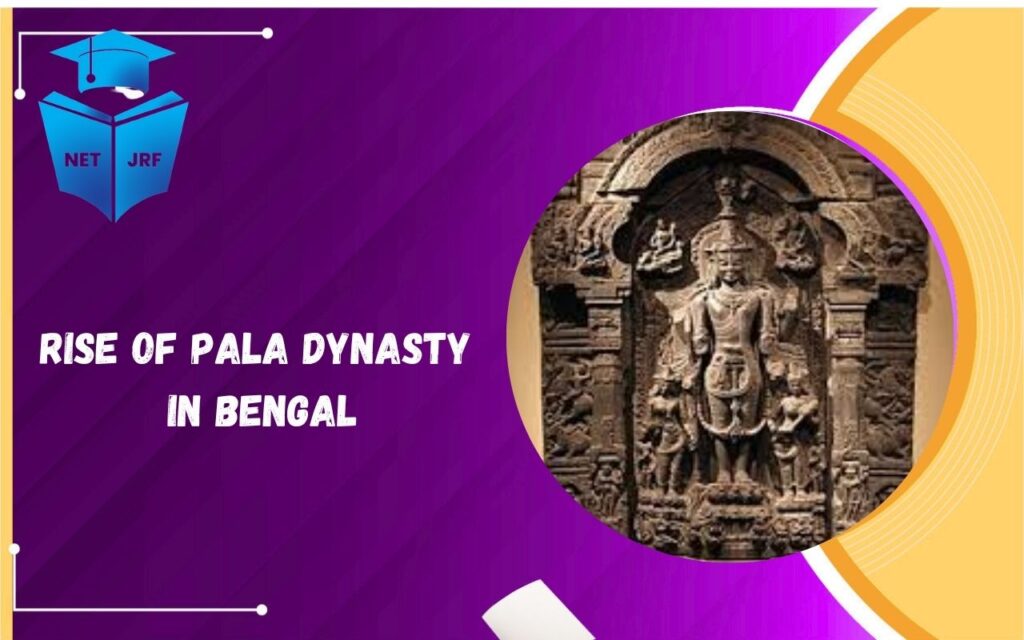

Rise of Pala dynasty in Bengal, which represents one of the most significant periods in eastern Indian history. The dynasty emerged in the mid-8th century, founded by Gopala, who rose to power during a time of political chaos. Over the next four centuries, the Palas established a strong, well-administered kingdom, promoting Buddhism, art, and education, leaving a lasting imprint on the region.

Origins Pala Dynasty
The Pala dynasty originated in the region of Bengal and parts of Bihar during a period of anarchy after the decline of local rulers.
- Founder: Gopala (c. 750–770 CE) was elected by regional chieftains to restore order.
- Background: Gopala was a local chieftain with limited initial resources but leveraged political alliances to consolidate power.
- Significance: His election represents one of the early instances of democratic selection in Indian monarchies.
The rise of the Pala dynasty reflects the ability to unify smaller kingdoms and create a centralized administration during turbulent times.
Territorial Expansion under the Palas
The dynasty reached its peak under Dharmapala and Devapala.
- Dharmapala (c. 770–810 CE): Expanded the kingdom significantly, controlling territories including Kannauj for a period.
- Devapala (c. 810–850 CE): Conducted military expeditions in northern India, the Deccan, and the peninsula.
- Mahipala I (c. 988–1038 CE): Restored Pala influence, extending power to Varanasi and strengthening administration.
- Ramapala (c. 1077–1120 CE): Last significant ruler, extended influence to Assam and Orissa, featured in the Sanskrit epic Ramacarita.
| Pala Ruler | Reign (CE) | Key Achievements | Territories Controlled |
| Gopala | 750–770 | Established dynasty, restored order | Bengal, parts of Bihar |
| Dharmapala | 770–810 | Expanded kingdom, controlled Kannauj | Bengal, Bihar, parts of northern India |
| Devapala | 810–850 | Raids in north and Deccan | Bengal, Bihar, Deccan |
| Mahipala I | 988–1038 | Restored Pala power | Bengal, Varanasi region |
| Ramapala | 1077–1120 | Strengthened dynasty, expanded eastwards | Bengal, Assam, Orissa |
The dynasty’s expansion was strategic, blending military conquest with alliances and diplomacy to consolidate its authority.
Rise of Pala dynasty Administrative Structure
The Palas established an efficient administrative framework, balancing central authority with regional autonomy.
- Central Administration: The king held supreme authority with ministers overseeing taxation, military, and justice.
- Regional Governance: Provinces were managed by governors, often relatives or trusted nobles, ensuring loyalty and efficient control.
- Revenue System: Land revenue was the primary source, supplemented by trade tariffs and tribute from vassal states.
- Military Organization: Standing armies were maintained, with cavalry and elephant corps for large campaigns.
Rise of Pala Dynasty Cultural Contributions
The Palas are renowned for their cultural patronage, particularly in Buddhism and education.
- Buddhism: Strong supporters of Mahayana Buddhism, they established monasteries and universities such as Nalanda and Vikramashila.
- Art and Architecture: Pala art featured stone and metal sculptures with distinctive styles, influencing regions beyond Bengal.
- Literature: Sanskrit literature flourished, with historical epics like Ramacarita celebrating rulers like Ramapala.
- International Influence: Pala missionaries helped spread Buddhism to Tibet, Nepal, and Southeast Asia, creating enduring religious and cultural links.
Rise of Pala Dynasty Economy and Trade
The Pala economy was agrarian with active trade networks.
- Agriculture: Fertile plains of Bengal allowed surplus production, ensuring stable revenues.
- Crafts and Industry: Metalwork, sculpture, and textiles contributed to wealth.
- Trade: Both inland and maritime trade flourished, connecting Bengal with northern India, the Deccan, and Southeast Asia.
- Urban Centers: Towns like Pataliputra and Vikramapura became hubs of commerce, education, and cultural exchange.
Economic prosperity supported strong administration and patronage of art and religion.

Rise of Pala Dynasty Decline
After Ramapala, the dynasty weakened due to internal strife and the rise of the Sena dynasty.
- Loss of Territory: Palas lost control over northern Bengal and Bihar.
- Internal Weakness: Succession disputes and decentralization undermined central authority.
- External Pressure: Rise of the Senas gradually eclipsed Pala influence.
- Survival: Minor Pala rulers continued to govern parts of southern Bihar for a few decades.
Despite decline, the Palas left a legacy of art, culture, and administration that influenced subsequent regional kingdoms.
Key Features of Pala Rule
- Strong centralized authority balanced with provincial administration.
- Promotion of Mahayana Buddhism and establishment of educational institutions.
- Patronage of art, literature, and sculpture, creating a distinctive Pala style.
- Strategic military campaigns that expanded territory and influence.
- Prosperous agrarian economy with active trade networks.
Enroll UGC NET Offline Classes in Jaipur

Legacy
The Pala dynasty shaped eastern India’s cultural and political history. Their contributions to education, religion, and art influenced Bengal, Bihar, and beyond for centuries.
The Rise of Pala dynasty in Bengal demonstrates how a local chieftain transformed a period of chaos into a strong, culturally rich kingdom. Their administration, patronage of Buddhism, flourishing art, and economic stability set a model for future kingdoms in eastern India.
Best UGC NET Offline Coaching in Jaipur