
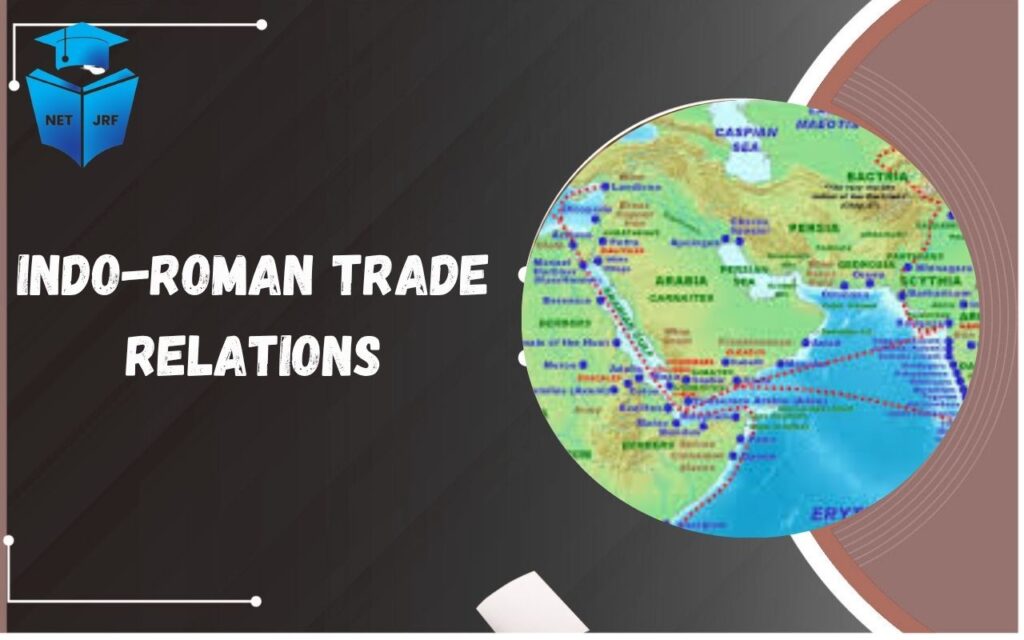

Indo-Roman trade relations were one of the most important features of ancient Indian economic history. These relations connected India with the powerful Roman Empire between the 1st century BCE and 3rd century CE. Through these exchanges, goods, culture, and ideas traveled across seas, creating strong economic and cultural links.

Indo-Roman trade relations Introduction
The Indo-Roman trade relations developed mainly during the Sangam age and early historic period.
- South India played a major role in this trade because of its coastal location and active ports.
- Roman traders came to Indian ports, and Indian merchants traveled abroad. Goods moved through sea routes using monsoon winds.
- The Indo-Roman trade relations were well-organized and highly profitable for both sides.
Enroll UGC NET Online Coaching
Growth of Indo-Roman trade relations
The Indo-Roman trade relations grew due to several strong reasons.
Demand for Indian Goods
- Roman Empire had high demand for spices
- Indian textiles were very popular
- Precious stones attracted Roman buyers
This demand played a key role in expanding Indo-Roman trade relations.
Use of Monsoon Winds
- Sailors understood seasonal winds
- Travel became faster and safer
- Direct sea routes were used
This discovery improved Indo-Roman trade relations significantly.
Strategic Location of India
- India was located between East and West
- Easy access to sea routes
- Natural ports supported trade
This advantage helped strengthen Indo-Roman trade relations.
Indo-Roman Trade Relations in Ancient India
The trade between India and the Roman world was one of the most remarkable aspects of ancient maritime commerce, connecting economies, cultures, and societies across continents.
Major Ports
Ports were the hubs of Indo-Roman trade, acting as gateways for goods between India and the Roman Empire.
- Muziris (Kerala): Famous for spices like black pepper; a key export center.
- Arikamedu (near Puducherry): Important for textiles and trade connections.
- Kaveripattinam (Tamil region): Served as a coastal trade hub for goods from inland.
- Bharuch (Gujarat): Western port connecting India with the Red Sea and Mediterranean world.
These ports were bustling centers of commerce, linking the interior economy with international markets.
Trade Routes
Indo-Roman trade primarily relied on sea routes, complemented by land connections.
- Arabian Sea Route: Linked western India to the Red Sea, Egypt, and the Mediterranean.
- Egyptian Connection: Goods passed through Egyptian ports to reach Roman cities.
- Land Routes: Connected ports with interior towns and cities, facilitating movement of goods from villages to international markets.
These routes made trade efficient, organized, and far-reaching.
Goods Exchanged
Indian Exports:
- Spices (black pepper, cardamom)
- Cotton and silk textiles
- Ivory, pearls, and precious stones
Roman Imports:
- Gold and silver coins
- Wine, glassware, and luxury items
This exchange was highly profitable, enriching merchants, kings, and local economies.
Enroll UGC NET Coaching in Jaipur
Role of Merchants
Merchants were the backbone of Indo-Roman trade.
Their Activities:
- Organized trade journeys across seas and inland routes.
- Managed the safety and transport of goods.
- Maintained strong connections with foreign traders, ensuring smooth operations.
Merchant guilds and groups often protected traders from risks like storms or pirates.

Evidence of Trade
Archaeological Evidence:
- Roman coins discovered in South India.
- Amphorae and pottery remains at port sites.
- Ruins of settlements near ancient ports indicating commercial activity.
Literary Evidence:
- Sangam texts in Tamil mention foreign trade and goods.
- Roman writings describe Indian spices, textiles, and other exports.
These sources confirm the scope and importance of Indo-Roman trade relations.
Indo-Roman trade relations Overview
The Indo-Roman trade relations were among the most significant economic and cultural exchanges of the ancient world. They connected the Indian subcontinent with the Mediterranean, creating a network of commerce, culture, and influence that lasted for several centuries.
| Aspect | Description |
| Indo-Roman trade relations | Trade between India and Roman Empire |
| Ports | Muziris, Arikamedu, Bharuch |
| Routes | Sea routes via Arabian Sea |
| Exports | Spices, textiles, ivory |
| Imports | Gold, wine, luxury goods |
| Evidence | Coins, literature, archaeology |
Economic Impact
The trade created substantial wealth and transformed the economic landscape of South India. Indo-Roman trade was one of the most significant commercial connections of the ancient world, influencing not only the economy but also society and culture in India.
Key Effects:
- Increase in Wealth: Kings, merchants, and artisans grew richer due to the high demand for Indian goods in Rome.
- Growth of Port Cities: Ports like Muziris, Arikamedu, and Korkai flourished as urban centers with markets, warehouses, and shipyards.
- Development of Trade Industries: Textile production, metalwork, pottery, and shipbuilding expanded to meet export needs.
- Rise of Merchant Class: Traders gained social influence and wealth, forming an organized network of commerce that strengthened local economies.
Cultural Impact
Trade was not just about goods—it also fostered cultural exchange.
Key Effects:
- Spread of Ideas and Traditions: Indian religious and cultural concepts traveled to Southeast Asia, influencing local customs.
- Influence on Art and Architecture: Exposure to Roman and Mediterranean art styles led to new forms in Indian craftsmanship.
- Interaction Between Societies: Merchants, sailors, and travelers exchanged languages, beliefs, and practices, enriching societies on both sides.
Join UGC NET Offline Coaching in Jaipur
Role of Inland Trade
Inland trade was essential for supporting maritime commerce.
- Goods like spices, textiles, and ivory were collected from villages and towns.
- These goods were transported to ports for export.
- Without organized inland networks, overseas trade could not have functioned smoothly.

Decline of Trade
The Indo-Roman trade declined after the 3rd century CE due to several reasons:
- Fall of the Roman Empire: Reduced demand for luxury goods like spices and textiles.
- Political Instability: Wars and invasions disrupted trade routes and port activities.
- Decrease in Demand: Changes in consumer preference in Rome and other markets affected exports.
Although the decline occurred, the legacy of Indo-Roman trade continued to shape India’s economic and cultural history for centuries.
Indo-Roman trade relations were economically prosperous and culturally enriching. They created wealth, urban growth, a powerful merchant class, and cultural exchange, while inland and maritime trade networks worked hand in hand. Even after its decline, the impact on Indian ports, craft industries, and cultural contacts remained significant.