

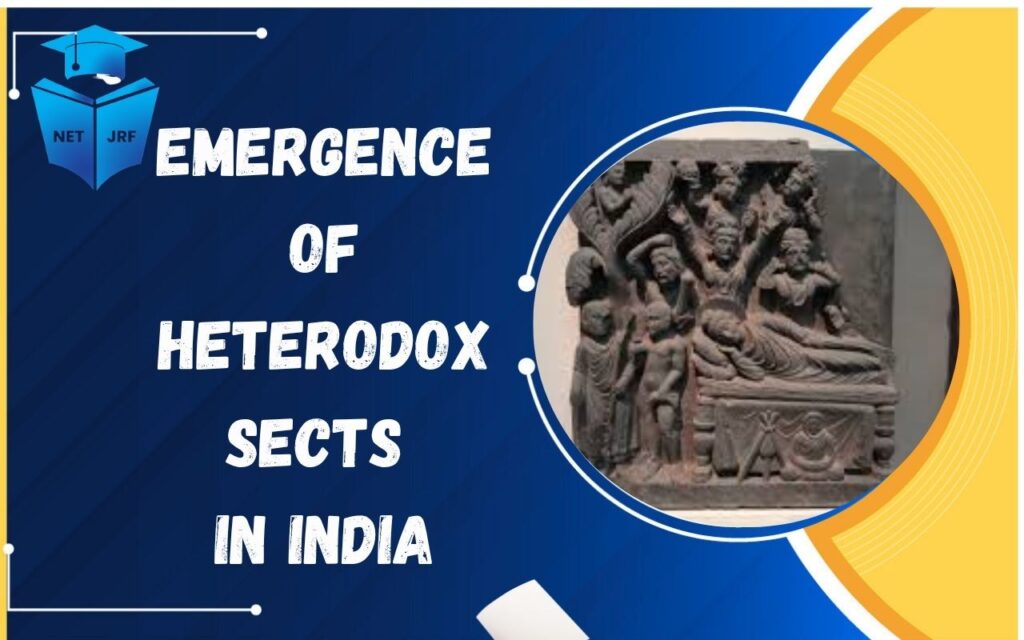

The Emergence of Heterodox Sects in India marked a crucial period of social and religious transformation during the 6th century BCE. People began questioning rigid Vedic rituals, caste hierarchies, and Brahmanical dominance. This gave rise to alternative philosophies, offering new ways of thinking about ethics, spiritual liberation, and social responsibility.

Historical Background
During the 6th century BCE, India witnessed profound intellectual and social ferment. The rise of large kingdoms known as Mahajanapadas brought urbanization, trade expansion, and economic diversification. New social groups, like artisans and merchants, challenged the traditional Vedic order. Dissatisfaction with ritualistic practices, excessive emphasis on sacrifices, and social inequality created fertile ground for the Emergence of Heterodox Sects. These sects rejected the authority of the Vedas and Brahmins, emphasizing personal ethical conduct and spiritual experience.
Major Heterodox Sects
During the 6th–5th century BCE, alongside Vedic traditions, several major heterodox sects emerged in India, challenging orthodox religious practices and offering new ideas about life, ethics, and salvation. These sects emphasized personal discipline, non-violence, and spiritual self-realization, often rejecting the authority of Vedic rituals and the caste hierarchy.
Jainism
Founder: Vardhamana Mahavira (c. 599–527 BCE)
Mahavira, the 24th Tirthankara, was born in Kundagrama near Vaishali into the Kshatriya clan of Nathaputta. He renounced worldly life at the age of 30, practicing rigorous penance for 12 years to attain Kevala Jnana (omniscience). He passed away at Pavapuri (present-day Bihar).
Core Teachings:
- Ahimsa (Non-violence): Central ethical principle applied to all living beings.
- Satya (Truthfulness), Asteya (Non-stealing), Brahmacharya (Celibacy), Aparigraha (Non-possession): Five ethical vows shaping personal conduct.
- Karma and Rebirth: Moral actions affect future lives.
- Asceticism: Strict discipline to achieve spiritual liberation.
- Rejection of Vedas, sacrifices, and caste system.
Sects:
- Digambaras: Extreme ascetic practices, often nude.
- Svetambaras: More liberal, wear white clothes.
Scriptures: Agamas, written in Ardhamagadhi Prakrit.
Buddhism
Founder: Siddhartha Gautama (Buddha) (c. 563–483 BCE)
Born in Lumbini into the Shakya clan, Siddhartha renounced his royal life at 29. He attained enlightenment at 35 under the Bodhi tree in Bodh Gaya and delivered his first sermon at Sarnath.
Core Teachings:
- Four Noble Truths: Life is suffering; desire causes suffering; suffering can end; the Eightfold Path leads to liberation.
- Eightfold Path: Includes Right View, Right Intention, Right Speech, Right Action, Right Livelihood, Right Effort, Right Mindfulness, Right Concentration.
- Middle Path: Avoid extremes of indulgence and asceticism.
- Rejection of rituals, caste system, and Vedic authority.
- Belief in karma, rebirth, and Nirvana.
Sects:
- Hinayana (Theravada): Conservative, strictly follows Buddha’s teachings.
- Mahayana: Liberal, emphasizes Bodhisattvas and rituals.
Scriptures: Tripitaka (Vinaya Pitaka, Sutta Pitaka, Abhidhamma Pitaka) in Pali and later Sanskrit.
Ajivikas
Founder: Makkhali Gosala
A contemporary of Mahavira and Buddha, Ajivikas promoted strict determinism. Initially a companion of Mahavira, Gosala later founded a separate sect.
Key Beliefs:
- Niyati (Determinism): Life events are preordained; human effort cannot change destiny.
- Rejection of Karma control: Universe follows fixed cosmic principles.
- Asceticism: Severe self-mortification to attain liberation.
- Transmigration of souls: Belief in liberation after a fixed number of rebirths (84 lakh).
- Decline: Extinct by the medieval period.
Comparison of Heterodox Sects
| Feature | Jainism | Buddhism | Ajivikas |
| Founder | Mahavira | Buddha | Makkhali Gosala |
| Key Concept | Ahimsa, Aparigraha | Four Noble Truths, Middle Path | Niyati (Determinism) |
| Karma & Rebirth | Accepted | Accepted | Rejected, fate-driven |
| Rituals & Vedas | Rejected | Rejected | Rejected |
| Caste System | Rejected | Rejected | Rejected |
| Emphasis | Asceticism | Middle Path | Severe Asceticism |
| Popularity | India | Spread across Asia | Declined early |
Best UGC NET Offline Classes in Jaipur

Social and Cultural Significance
The rise of Jainism, Buddhism and Ajivikas had a profound impact on the social and cultural life of ancient India.
-
- These sects challenged Vedic ritualism and questioned the strict authority of the Brahmins. Instead of focusing on elaborate sacrifices, they emphasized ethical living, personal responsibility, and spiritual liberation.
- This made religion more practical and meaningful for ordinary people rather than just the priestly class.
- One of their most significant contributions was how they democratized religion.
- People from all social classes, including women and marginalized groups, could follow their teachings.
- This accessibility allowed their ideas to spread widely, especially in growing urban centers. Merchants, traders, and other city dwellers found these teachings appealing because they aligned with ethical conduct and everyday life.
- The cultural influence of these sects was also remarkable.
- They shaped literature, art, architecture, and philosophical thought. Stories, moral teachings, temples, monasteries, and monuments reflect the values promoted by Jainism, Buddhism and Ajivikas.
- Through these contributions, they left a lasting imprint on Indian society, blending spiritual practice with cultural creativity.
- Urban support played a key role in their popularity. Cities and trade hubs provided both the audience and resources for monastic communities.
- By encouraging practical ascetic practices and promoting ethical living, these sects attracted followers who sought a disciplined yet accessible spiritual path.
- Their teachings not only redefined personal faith but also influenced how communities organized themselves socially, culturally, and economically.
- In short, the social and cultural significance of these heterodox sects lies in their ability to challenge old hierarchies, offer moral guidance, foster inclusivity, and inspire lasting cultural achievements across India.
Reasons for Popularity
The popularity of Jainism, Buddhism and Ajivikas grew for several practical reasons that connected deeply with people’s everyday lives.
- Urban Support: As towns and trade hubs expanded, these growing urban centers became fertile ground for spreading new ideas. Merchants, artisans, and city dwellers were open to philosophies that encouraged ethical business, fairness, and personal growth. The bustling cities helped these sects reach a larger and more diverse audience.
- Ethical Conduct: The teachings promoted a practical moral lifestyle. People were drawn to guidance that emphasized honesty, non-violence, and personal responsibility. Unlike ritual-heavy practices, these ethical values were easy to understand and follow in daily life, making the sects relatable for ordinary men and women.
- Accessible Philosophy: By rejecting the rigid caste system, these sects became attractive to marginalized groups. Anyone could pursue spiritual progress, regardless of birth or social status. This inclusivity allowed the teachings to resonate across social layers, offering hope and spiritual meaning to people often excluded from traditional Vedic practices.
- Practical Asceticism: Monastic life and lay practices encouraged self-discipline without demanding extreme isolation. Followers could integrate spiritual practices into their daily routines, balancing devotion with work and family life. This approach made ascetic principles approachable and sustainable, further contributing to the sects’ widespread appeal.
- In essence, these factors urban support, ethical living, accessible philosophy, and practical asceticism combined to make Jainism, Buddhism and Ajivikas highly relevant and popular in the social and cultural life of ancient India.

Key Features of Heterodox Sects
Building on their social and cultural significance, the key features of heterodox sects highlight what set them apart from traditional Vedic practices and why they appealed to a wide range of people.
| Feature | Jainism | Buddhism | Ajivikas |
| Founder | Mahavira | Buddha | Makkhali Gosala |
| Main Idea | Non-violence, Self-restraint | Middle Path, End of Suffering | Determinism |
| Ethical Focus | Asceticism | Balanced conduct | Severe discipline |
| Social Approach | Rejects caste | Rejects caste | Rejects caste |
| Spread | India | India & Asia | Limited, extinct |
| Scriptures | Agamas | Tripitaka | None surviving |
Conclusion
The Emergence of Heterodox Sects reshaped ancient India’s religious and social landscape. Jainism, Buddhism, and Ajivikas offered alternatives to Vedic orthodoxy, emphasizing ethics, asceticism, and spiritual liberation. Their teachings influenced philosophy, society, and culture, leaving a lasting legacy for centuries.
Best UGC NET Offline Coaching in Jaipur
Emergence of Heterodox Sects in India FAQs

Q2. Who founded Jainism?
Mahavira founded Jainism and taught non-violence, truthfulness, and renunciation.
Q3. What are the main teachings of Buddhism?
Buddha taught Four Noble Truths and the Eightfold Path to end suffering through ethical and mindful living.
Q4. How did Ajivikas differ from other sects?
Ajivikas believed in determinism, denying free will and karma’s ethical influence.
Q5. Why were heterodox sects popular in cities?
Urbanization and trade created new social groups seeking ethical and accessible spiritual guidance.
Q6. Which scriptures are associated with Buddhism?
Tripitaka, including Vinaya Pitaka, Sutta Pitaka, and Abhidhamma Pitaka.
Q7. How did heterodox sects influence society?
They challenged caste hierarchies, promoted ethical living, and democratized religion.
Q8. Why is this topic important for UGC NET history?
It explains social, religious, and cultural transformation in ancient India essential for exam analysis.