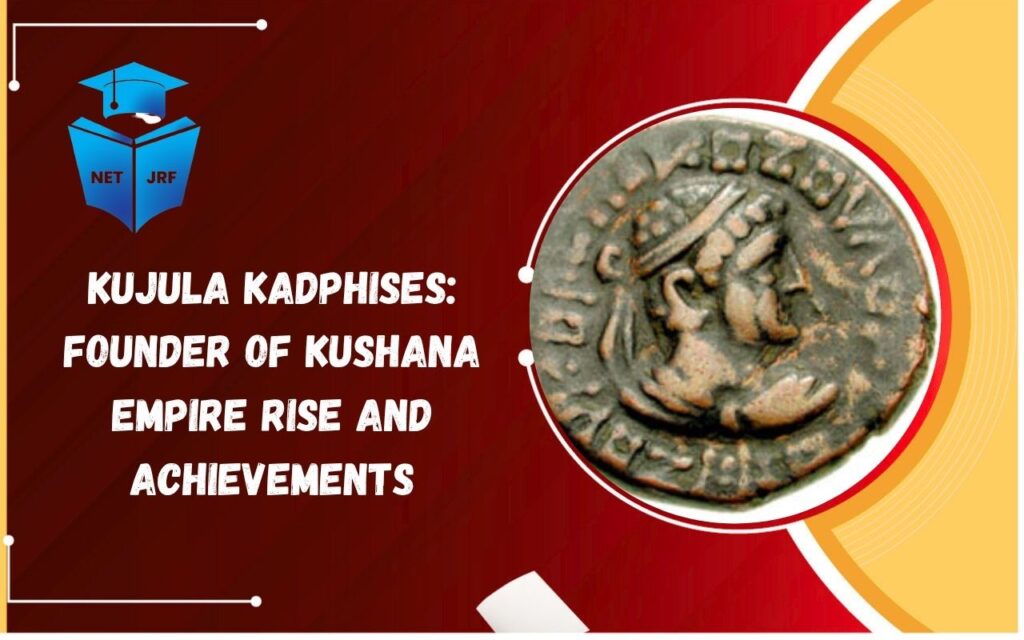
Kujula Kadphises is known as the founder of the Kushana Empire who played a major role in transforming a nomadic tribe into a strong political power. He belonged to the Yuezhi tribe, which migrated from Central Asia. Over time, he united different clans and laid the foundation of a powerful empire. His leadership marked the beginning of Kushana dominance in northwestern India.
Kujula Kadphises
To understand Kujula Kadphises, we must first look at the Yuezhi tribe. They were originally from northwestern China and lived a nomadic life.
Migration of Yuezhi
- Defeated by Xiongnu tribe
- Forced to migrate towards Central Asia
- Settled in Bactria region
After settling, the Yuezhi divided into five groups. One of these groups later became powerful under Kujula Kadphises.
Enroll UGC NET Mock Test Series

Kujula Kadphises and Rise of Kushana Power
Kujula Kadphises played a key role in uniting the five Yuezhi clans. This step was very important because it created a strong political base.
Key Achievements
- United different Yuezhi tribes
- Established central authority
- Started expansion towards India
This phase shows how Kujula Kadphises transformed tribal power into an organized state.
Kujula Kadphises Early Life
Very little is known about the early life of Kujula Kadphises. However, his achievements show strong leadership qualities.
Leadership Qualities
- Strategic thinking
- Ability to unite tribes
- Military strength
These qualities helped him build a powerful empire from scattered groups.
Expansion into Afghanistan and India
One of the most important achievements of Kujula Kadphises, the founder of the Kushana Empire, was his expansion into new territories, which laid the foundation for Kushana power in India and Central Asia.
Areas Conquered:
- Bactria – a key center for trade and Hellenistic culture.
- Kabul region – strategically important for controlling northwestern passes into India.
- Gandhara – an important cultural and trade hub, linking Central Asia with the Indian subcontinent.
This expansion not only secured control over critical trade routes but also marked the beginning of Kushana influence in India, setting the stage for further growth by later rulers.
Enroll UGC NET Online Test Series
Kujula Kadphises Political Importance
Kujula Kadphises established a strong political and administrative system that ensured stability and continuity for the empire:
Key Features:
- Centralized Rule: Unified scattered tribes under a single authority.
- Control over Trade Routes: Secured vital land and river routes to boost commerce.
- Strong Military Base: Maintained armed forces to protect territories and expand influence.
His policies created a stable and organized empire, providing a framework for successors like Vima Kadphises and Kanishka to further strengthen and expand Kushana power.

Kujula Kadphises Coinage System
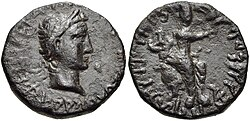
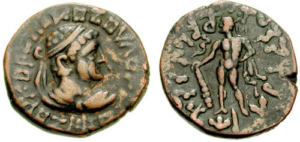
Coins issued during Kujula’s reign are a valuable historical source, revealing both economic and cultural aspects of his rule:
Features of Coins:
- Made primarily of copper, facilitating local trade.
- Show influence of Indo-Greek coin styles, reflecting earlier Hellenistic traditions.
- Greek inscriptions (legends) appeared on coins, indicating cultural interactions between Central Asia and India.
These coins not only served as mediums of trade but also symbolized political authority and cross-cultural connections.
Kujula Kadphises Cultural Influence
Kujula Kadphises played a significant role in promoting cultural exchange between India and Central Asia, influencing art and architecture:
Cultural Features:
- Blending of Greek, Persian, and Indian styles, which became a hallmark of Kushana art.
- Spread of new art forms that later flourished under Kanishka.
- Development of Gandhara art, a fusion of Hellenistic and Indian traditions, which became prominent in religious and secular sculptures.
This early cultural blending laid the foundation for the rich artistic achievements of later Kushana rulers, making the empire a hub of cross-cultural innovation.
Enroll UGC NET Offline Classes in Jaipur
Kujula Kadphises Trade and Economy
Trade played a crucial role in consolidating the Kushana Empire during Kujula Kadphises’ reign. By controlling important regions in Central Asia and northwestern India, he was able to dominate key trade routes, including parts of the Silk Route.
Key Features of Trade:
- Control over Silk Route: Secured the major overland route connecting China to the Roman Empire, allowing movement of luxury goods.
- Trade with Roman Empire: Engaged in active trade, exchanging Indian and Central Asian goods for gold and other foreign products.
- Goods Traded: Silk, spices, precious stones, and luxury items were exported, while gold, wine, and glassware were imported.
This economic activity strengthened the empire, increased wealth, and facilitated political stability. Trade also allowed cultural exchange, bringing new artistic and religious influences into the empire.
Key Facts about Kujula Kadphises
| Aspect | Details |
| Tribe | Yuezhi |
| Region | Central Asia |
| Role | Founder of Kushana Empire |
| Expansion | Afghanistan, India |
| Coinage | Copper coins |
| Importance | Political unification and economic foundation |

Kushana Empire Role in Formation
Kujula Kadphises laid the foundation for the Kushana Empire, which later rulers like Vima Kadphises and Kanishka expanded.
Major Contributions:
- Political Unity: United scattered tribes under a centralized authority.
- Territorial Expansion: Conquered Bactria, Kabul region, and Gandhara, securing trade routes.
- Economic Growth: Promoted trade and issued coins, stabilizing the economy.
Without Kujula’s efforts, the Kushana Empire would not have existed, as he provided the initial political, economic, and territorial framework.
Join UGC NET Coaching in Jaipur
Comparison with Later Rulers
| Aspect | Kujula Kadphises | Kanishka |
| Role | Founder of empire | Greatest ruler |
| Focus | Expansion and consolidation | Culture, religion, and trade |
| Achievements | Political unification, trade | Patronage of Buddhism, Gandhara art, Silk Route trade expansion |
While Kujula focused on expansion and political consolidation, Kanishka built on this foundation to promote culture, religion, and international trade, bringing the empire to its peak. Kujula Kadphises was the architect of the Kushana Empire. Through territorial expansion, trade control, coinage, and political unification, he created a strong base for the empire. His reign emphasized economic stability and consolidation, which allowed later rulers like Kanishka to focus on cultural, religious, and international influence, making the Kushanas one of the most important powers in ancient India and Central Asia.
Kujula Kadphises played a very important role in Indian history by establishing the Kushana Empire. He united tribes, expanded territories, and created a strong political system. His contributions laid the foundation for future rulers like Kanishka.
Kujula Kadphises FAQs

2. What is the connection between Kujula Kadphises and the Yuezhi tribe?
Kujula Kadphises belonged to the Yuezhi, a nomadic tribe from northwestern China. After migrating west due to Xiongnu attacks, the Yuezhi settled in Bactria. One branch under Kujula became the Kushanas.
3. Which regions did Kujula Kadphises conquer?
He expanded the empire into Bactria, Kabul region, and Gandhara. These areas were strategically important for trade and cultural exchange. His conquests laid the foundation for Kushana control in India and Central Asia.
4. What were Kujula Kadphises’ key achievements?
He united different Yuezhi clans under centralized authority. He started territorial expansion toward India and established trade networks. These actions created political stability and economic strength for the Kushana Empire.
5. What leadership qualities did Kujula Kadphises display?
He demonstrated strategic thinking, military strength, and the ability to unite tribes. These qualities helped him consolidate power. His leadership transformed nomadic groups into an organized state.
6. How did Kujula Kadphises promote trade and economy?
He controlled important regions and Silk Route trade. Active exchange with Rome included silk, spices, and precious stones. Trade generated wealth, increased stability, and enabled cultural interactions.
7. What role did coinage play under Kujula Kadphises?
Coins were primarily made of copper for local trade. They showed Indo-Greek influence and Greek inscriptions. Coins symbolized authority, facilitated commerce, and reflected cross-cultural connections.
8. How did Kujula Kadphises influence culture?
He promoted blending of Greek, Persian, and Indian styles. This early cultural fusion paved the way for Gandhara art. His reign encouraged artistic innovation, later flourishing under Kanishka.
9. What was the political importance of Kujula Kadphises?
He established centralized rule and maintained control over trade routes. A strong military protected territories and expanded influence. These policies ensured stability and provided a framework for successors.
10. How did Kujula Kadphises compare with later rulers like Kanishka?
Kujula focused on expansion and consolidation, while Kanishka emphasized culture, Buddhism, and Silk Route trade. Kujula provided the political and economic foundation that Kanishka expanded to peak Kushana power.