

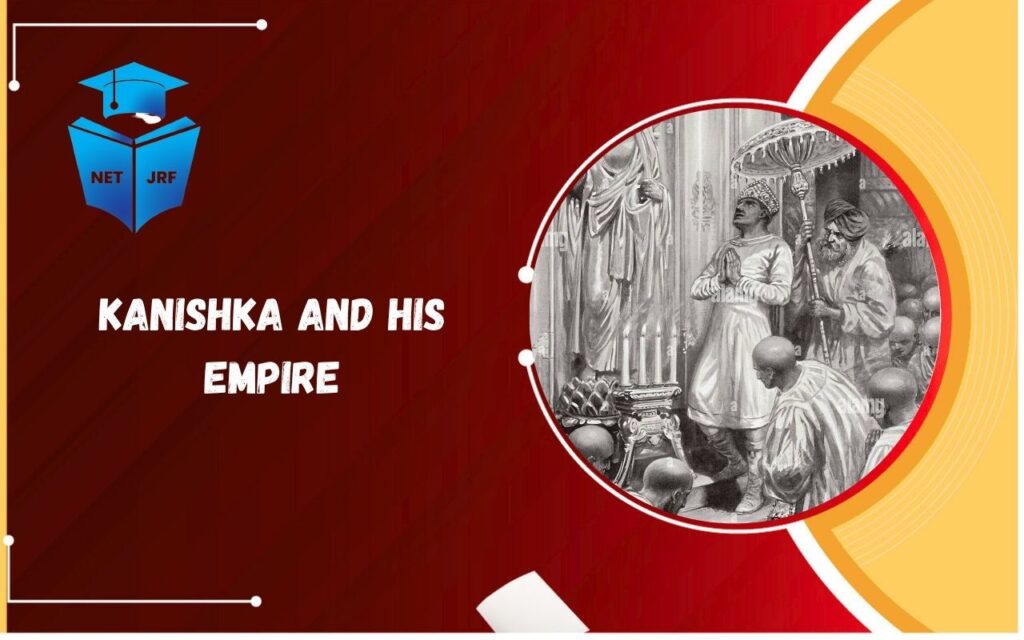
Kanishka and His Empire Kushana Power Trade Buddhism and Culture

Kanishka and his empire in this topic you learn how he built a vast Kushana power his administration military strength trade networks Silk Route role promotion of Buddhism Fourth Buddhist Council art culture coinage and lasting legacy

vishal

kanishka and his empire

Table of Contents

Kanishka and his empire represent one of the most powerful phases in ancient Indian history. He was a great ruler of the Kushana dynasty who expanded his empire widely and promoted culture, religion, and trade. The reign of Kanishka is usually placed around the 2nd century CE. He ruled over a vast territory that included parts of Central Asia, Afghanistan, Pakistan, and northern India. His empire became a center of trade, religion, and art.

kanishka and his empire

Study Planner

Background of Kanishka and His Empire

To understand Kanishka, one of the greatest Kushana rulers, we first need to consider the Kushana dynasty, which migrated from Central Asia and gradually established a strong empire in India. Building on the foundations laid by rulers like Kujula Kadphises and Vima Kadphises, Kanishka elevated the empire to its peak of power, wealth, and cultural influence.

Enroll UGC NET Online Test Series

Rise of Kanishka

  • Kanishka succeeded earlier rulers and expanded the Kushana territories.
  • He made Purushapura (modern Peshawar) his capital, which became a hub of political and cultural activity.
  • This period marks the height of Kushana power, with strong control over trade, culture, and military.
rise of kanishka

Extent of the Empire

Kanishka’s empire was vast, making him one of the most powerful rulers of his time:

Regions under control:

  • Central Asia and Afghanistan
  • Gandhara region
  • Punjab
  • Northern India, including Mathura

This extensive empire allowed Kanishka to control important trade routes, linking India with Central Asia and beyond, boosting both economy and cultural exchange.

Administration

Kanishka’s empire had a well-organized administrative system to maintain stability across diverse regions.

Key Features:

  • King held supreme authority.
  • Provinces governed by officials, with some local rulers retained for effective control.
  • Governance style balanced central power with local autonomy.
  • Encouraged trade and economic growth, while maintaining a strong military presence.

This system allowed Kanishka to manage a large, culturally diverse empire efficiently.

Enroll UGC NET Mock Test Series

Kanishka Military Strength

Kanishka’s military was a key factor in his success:

Features of the army:

  • Included cavalry, infantry, and war elephants.
  • Soldiers were well-trained and disciplined.
  • Used both for territorial expansion and defense.

His army enabled him to expand and secure the empire, ensuring political and economic stability.

Religion under Kanishka

Religion played a major role in Kanishka’s reign, with Buddhism receiving special patronage.

Support to Buddhism:

  • Patron of Mahayana Buddhism.
  • Organized the Fourth Buddhist Council, strengthening Buddhist philosophy.
  • Promoted Buddhist teachings across Central Asia.

Religious Tolerance:

  • Worshipped Greek, Persian, and Indian gods.
  • Coins show multiple deities, reflecting inclusiveness.
  • Kanishka’s policies ensured religious harmony across his diverse empire.

Fourth Buddhist Council

The Fourth Buddhist Council, held during Kanishka’s reign, was a landmark event:

Key Details:

  • Held in Kashmir under Kanishka’s patronage.
  • Focused on Mahayana Buddhism.

Importance:

  • Helped spread Buddhism to Central Asia and China.
  • Strengthened Buddhist philosophy and organizational structure.
  • Left a long-lasting impact on religion and culture in Asia. 

Kanishka Art and Culture

Art flourished during Kanishka and his empire. This period saw the development of unique artistic styles.

Gandhara School of Art

  • Influenced by Greek art
  • Buddha images in human form
  • Realistic features

Mathura School of Art

  • Indian style
  • Use of red sandstone
  • Religious sculptures

These styles reflect cultural blending.

Kanishka and his empire Key Features

Aspect Details
Capital Purushapura
Empire Extent Central Asia to North India
Religion Buddhism (Mahayana)
Famous Event Fourth Buddhist Council
Art Style Gandhara and Mathura
Trade Silk Route

App JRF Adda

Trade and Economy under Kanishka

Trade was one of the strongest pillars of Kanishka’s empire, providing economic wealth, cultural connections, and urban growth.

Trade Routes:

  • Kanishka controlled the Silk Route, connecting India with China in the east and the Roman Empire in the west.
  • These routes facilitated the exchange of luxury goods like silk, spices, precious stones, and other high-value items.

Enroll UGC NET Offline Classes in Jaipur

Economic Benefits

  • Trade brought increased wealth to the empire, funding administration, the military, and cultural projects.
  • It encouraged cultural exchange, introducing new ideas, art forms, and religious influences from different regions.
  • Cities along trade routes grew into important commercial and cultural centers, strengthening urban life in the empire.

Coins and Currency
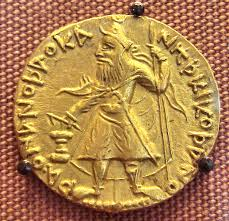
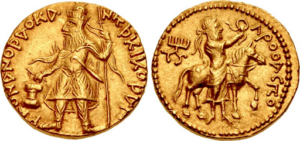
Coins issued under Kanishka are key historical sources for understanding the empire:

Features of Coins:

  • Gold coins were widely used, reflecting prosperity.
  • Coins depicted images of gods and the king, highlighting both religion and royal authority.
  • Different scripts, such as Greek and Kharosthi, were used, showing cultural diversity and international interactions.

These coins not only facilitated trade and economic transactions but also served as symbols of political authority and cultural identity.

Kanishka Language and Literature

Language played a significant role in administration, culture, and intellectual life during Kanishka’s reign.

Key Points:

  • Greek and Kharosthi Scripts: Used in inscriptions and coinage, reflecting Kushana connections with Central Asia and Hellenistic traditions.
  • Development of Buddhist Literature: Patronage of Mahayana Buddhism led to the creation and preservation of important religious texts.
  • Spread of Sanskrit: Sanskrit gained prominence as a literary and religious language, helping unify diverse regions culturally.

This combination of languages and literary growth supported intellectual development and strengthened cultural cohesion across the empire.

Kanishka Cultural Exchange

Kanishka’s empire was a hub of cultural interaction, bridging India with Central Asia, China, and beyond.

Cultural Links:

  • Interaction between India, China, and Central Asia facilitated the exchange of ideas, religious teachings, and artistic styles.
  • Spread of art and religion: Gandhara art flourished, combining Greek, Persian, and Indian styles, while Buddhism spread along trade routes.

This cultural exchange made the Kushana Empire unique in its fusion of traditions and helped India’s cultural influence reach far into Central Asia.

Join UGC NET Coaching in Jaipur

Strengths of Kanishka’s Rule

Kanishka was one of the most powerful and influential rulers of the Kushana Empire. His reign was marked by several strengths:

  • Strong Leadership: Kanishka demonstrated exceptional vision, strategic thinking, and administrative skills.
  • Vast Empire: He controlled a large and diverse territory stretching from Central Asia to northern India, which gave him political and economic influence.
  • Promotion of Trade: By controlling the Silk Route and other trade networks, he increased wealth, encouraged urban growth, and facilitated cultural exchange.
  • Cultural Development: Patronage of Buddhism, support for arts, and encouragement of literature and scholarship made his empire a center of cultural activity.

These strengths ensured stability, prosperity, and international recognition for his empire during his lifetime.

JRF Adda Book

Weaknesses of Kanishka’s Rule

Despite his achievements, Kanishka faced challenges that limited long-term stability:

  • Large Empire Difficult to Control: Managing such vast territories required constant administrative effort and vigilance.
  • Dependence on Military: Military strength was essential to maintain control, making the empire vulnerable if leadership weakened.
  • Decline after His Death: After Kanishka’s death, successors could not maintain the same level of political and military control, leading to gradual decline.

These weaknesses show that while Kanishka was a strong ruler, sustaining a large empire over generations was challenging.

Legacy of Kanishka

Kanishka’s reign left a lasting impact on Indian and Central Asian history:

Major Contributions:

  • Spread of Buddhism: Patronized Mahayana Buddhism, organized the Fourth Buddhist Council, and helped Buddhism reach Central Asia and China.
  • Growth of Art and Culture: Supported Gandhara art, cultural exchange, and the development of literature.
  • Development of Trade: Strengthened trade networks, increased wealth, and promoted urban growth.

His legacy endured long after the decline of the Kushana Empire, influencing religion, art, trade, and culture in the region for centuries.

Kanishka and his empire represent a golden phase of the Kushana dynasty. His rule brought political stability, economic growth, and cultural richness.

Read UGC NET Notes
1 Archaeological Sources for UGC NET Epigraphy – Study of Inscriptions Meaning of Historical Sources Archaeological
2 Meaning of Historical Sources Archaeological Sources for UGC NET Literary Sources in History Archaeological
3 Exploration in Archaeology Excavation Techniques in Archaeology Dating of Archaeological Sites Archaeological
4 Excavation Techniques in Archaeology Exploration in Archaeology Dating of Archaeological Sites Archaeological
5 Epigraphy – Study of Inscriptions Inscriptions in Reconstructing History Numismatics in History Archaeological
6 Inscriptions in Reconstructing History Epigraphy – Study of Inscriptions Archaeological Sources for UGC NET Archaeological
7 Numismatics in History Importance of Coins in History Epigraphy – Study of Inscriptions Archaeological
8 Importance of Coins in History Numismatics in History Archaeological Sources for UGC NET Archaeological
9 Dating of Archaeological Sites Excavation Techniques in Archaeology Dating Ancient Literary Sources Archaeological
10 Indigenous Literature Literary Sources in History Secular Literature as Historical Source Literary
11 Dating Ancient Literary Sources Literary Sources in History Dating of Archaeological Sites Literary
12 Literary Sources in History Indigenous Literature Foreign Accounts of India Literary
13 Foreign Accounts of India Greek Accounts on Ancient India Chinese Accounts on India Literary
14 Greek Accounts on Ancient India Foreign Accounts of India Chinese Accounts on India Literary
15 Secular Literature as Historical Source Literary Sources in History Indigenous Literature Literary
16 Role of Myths and Legends in Historical Reconstruction Literary Sources in History Secular Literature as Historical Source Literary
17 Chinese Accounts on India Foreign Accounts of India Greek Accounts on Ancient India Literary
18 Arabic Accounts on India Foreign Accounts of India Chinese Accounts on India Literary
19 Neolithic and Chalcolithic Phases Neolithic Revolution in India Chalcolithic Culture in India Neolithic
20 Hunting, Gathering & Food Production Neolithic Revolution in India Neolithic Settlements in India Neolithic
21 Neolithic Revolution in India Neolithic Settlements in India Tools and Technology in Neolithic Period Neolithic
22 Neolithic Settlements in India Distribution of Neolithic Cultures in India Neolithic Revolution in India Neolithic
23 Distribution of Neolithic Cultures in India Neolithic Settlements in India Tools and Technology in Neolithic Period Neolithic
24 Tools and Technology in Neolithic Period Neolithic Revolution in India Chalcolithic Culture in India Neolithic
25 Chalcolithic Culture in India Settlement Pattern & Economy in Chalcolithic Phase Trade & Exchange Networks in Chalcolithic Societies Neolithic
26 Settlement Pattern & Economy – Chalcolithic Phase Chalcolithic Culture in India Trade & Exchange Networks in Chalcolithic Societies Neolithic
27 Trade & Exchange Networks – Chalcolithic Societies Chalcolithic Culture in India IVC Internal & External Trade Neolithic
28 Indus Valley Civilization – UGC NET Major Sites of Indus Civilization Urban Planning in Harappan Civilization IVC
29 IVC Internal & External Trade Internal Trade – Harappan Civilization Craft Specialization in Harappan Civilization IVC
30 Political Organization – Harappan Civilization Social Structure – Indus Civilization Urban Planning in Harappan Civilization IVC
31 Major Sites of Indus Civilization Indus Valley Civilization – UGC NET Urban Planning in Harappan Civilization IVC
32 Urban Planning & Settlement – Harappan Civilization Architecture & Town Planning – Harappan Cities IVC as First Urbanization in India IVC
33 Architecture & Town Planning – Harappan Cities Urban Planning in Harappan Civilization Major Sites of Indus Civilization IVC
34 Craft Specialization & Industrial Activities – Harappan Agriculture & Food Economy – Harappans IVC Internal & External Trade IVC
35 Agriculture & Food Economy – Harappans Craft Specialization in Harappan Civilization Internal Trade – Harappan Civilization IVC
36 Internal Trade – Harappan Civilization IVC Internal & External Trade Craft Specialization in Harappan Civilization IVC
37 Religion & Beliefs – Indus Civilization Social Structure – Indus Civilization Indus Valley Civilization – UGC NET IVC
38 Social Structure – Indus Civilization Political Organization – Harappan Civilization Religion & Beliefs – Indus Civilization IVC
39 Decline of Indus Civilization Indus Valley Civilization – UGC NET IVC as First Urbanization in India IVC
40 IVC as First Urbanization in India Urban Planning in Harappan Civilization Second Urbanization in India IVC
41 Vedic & Later Vedic Periods – Aryan Varna System Early Vedic Society and Economy Later Vedic Society and Economy Vedic
42 Origin of Vedic Civilization Aryan Debate – Migration, Invasion & Indigenous Theories Early Vedic Society and Economy Vedic
43 Aryan Debate – Migration, Invasion & Indigenous Theories Origin of Vedic Civilization Early Vedic Society and Economy Vedic
44 Early Vedic Society and Economy Political Institutions – Early Vedic Period Social Structure – Early Vedic Period Vedic
45 Political Institutions – Early Vedic Period Early Vedic Society and Economy Monarchical States in Ancient India Vedic
46 Social Structure – Early Vedic Period Emergence of Varnas & Social Stratification Early Vedic Society and Economy Vedic
47 Later Vedic Society and Economy Emergence of Varnas & Social Stratification Impact of Iron Technology in India Vedic
48 Emergence of Varnas & Social Stratification Social Structure – Early Vedic Period Later Vedic Society and Economy Vedic
49 Emergence of Heterodox Sects in India Jainism, Buddhism & Ajivikas – Origins & Teachings Later Vedic Society and Economy Vedic
50 Impact of Iron Technology in India Later Vedic Society and Economy Agricultural Expansion & Economic Changes – Ancient India Vedic
51 Religious & Philosophical Vedic Ideas Emergence of Varnas & Social Stratification Emergence of Heterodox Sects in India Vedic
52 Megalithic Culture of South India Neolithic and Chalcolithic Phases Agricultural Expansion & Economic Changes General
53 State System in Ancient India Rise of Mahajanapadas Transition: Tribal Polities to Territorial States General
54 Transition: Tribal Polities to Territorial States Rise of Mahajanapadas Later Vedic Society and Economy General
55 Rise of Mahajanapadas Monarchical States in Ancient India Republican States (Gana-Sanghas) – Ancient India Magadha
56 Monarchical States in Ancient India Rise of Mahajanapadas Emergence of Magadha Magadha
57 Republican States (Gana-Sanghas) – Ancient India Rise of Mahajanapadas Monarchical States in Ancient India Magadha
58 Agricultural Expansion & Economic Changes – Ancient India Second Urbanization in India Impact of Iron Technology in India General
59 Second Urbanization in India IVC as First Urbanization in India Rise of Mahajanapadas General
60 Jainism, Buddhism & Ajivikas – Origins & Teachings Emergence of Heterodox Sects in India Ashoka’s Policy of Dhamma General
61 Emergence of Magadha Geographical Advantages of Magadha Early Rulers of Magadha Magadha
62 Geographical Advantages of Magadha Natural Resources & Economic Strength of Magadha Reasons for Success of Magadha Magadha
63 Natural Resources & Economic Strength of Magadha Geographical Advantages of Magadha Economic Policies of the Nandas Magadha
64 Early Rulers of Magadha Haryanka Dynasty – Rise of Magadha Emergence of Magadha Magadha
65 Haryanka Dynasty – Rise of Magadha Expansion Policy of Bimbisara Early Rulers of Magadha Magadha
66 Expansion Policy of Bimbisara Ajatashatru – Military Reforms Haryanka Dynasty – Rise of Magadha Magadha
67 Ajatashatru – Military Reforms Wars of Ajatashatru Expansion Policy of Bimbisara Magadha
68 Wars of Ajatashatru Ajatashatru – Military Reforms Udayin & Establishment of Pataliputra Magadha
69 Udayin & Establishment of Pataliputra Wars of Ajatashatru Shishunaga Dynasty Magadha
70 Shishunaga Dynasty Administrative Structure of the Shishunagas Nanda Dynasty Magadha
71 Administrative Structure of the Shishunagas Shishunaga Dynasty Central Administration Under Mauryas Magadha
72 Nanda Dynasty Mahapadma Nanda – Imperial Expansion Shishunaga Dynasty Magadha
73 Mahapadma Nanda – Imperial Expansion Military Strength of the Nandas Nanda Dynasty Magadha
74 Economic Policies of the Nandas Nanda Dynasty Taxation System – Mauryan State Magadha
75 Military Strength of the Nandas Mahapadma Nanda – Imperial Expansion Defeat of Nandas & Rise of Mauryan Empire Magadha
76 Reasons for Success of Magadha Geographical Advantages of Magadha Natural Resources & Economic Strength of Magadha Magadha
77 Mahajanapadas to Empire – Evolution & Rise of Magadha Rise of Mahajanapadas Emergence of Magadha Magadha
78 Mauryan Empire – Expansion Rise of Chandragupta Maurya Expansion of Mauryan Empire Maurya
79 Rise of Chandragupta Maurya Role of Chanakya in Rise of Mauryan Empire Defeat of Nandas & Rise of Mauryan Empire Maurya
80 Role of Chanakya in Rise of Mauryan Empire Rise of Chandragupta Maurya Defeat of Nandas & Rise of Mauryan Empire Maurya
81 Defeat of Nandas & Rise of Mauryan Empire Military Strength of the Nandas Rise of Chandragupta Maurya Maurya
82 Chandragupta Maurya – Seleucus Treaty & Diplomacy Expansion of Mauryan Empire Greek Accounts on Ancient India Maurya
83 Expansion of Mauryan Empire Chandragupta Maurya – Seleucus Treaty & Diplomacy Kalinga War Maurya
84 Administration of Chandragupta Maurya Central Administration Under Mauryas Mauryan Bureaucracy Maurya
85 Sources for Mauryan History Archaeological Sources for UGC NET Greek Accounts on Ancient India Maurya
86 Central Administration Under Mauryas Provincial Administration – Mauryan Empire Mauryan Bureaucracy Maurya
87 Provincial Administration – Mauryan Empire Local Administration – Mauryan Empire Central Administration Under Mauryas Maurya
88 Local Administration – Mauryan Empire Provincial Administration – Mauryan Empire Mauryan Bureaucracy Maurya
89 Mauryan Bureaucracy Central Administration Under Mauryas Espionage System – Mauryan Empire Maurya
90 Espionage System – Mauryan Empire Mauryan Bureaucracy Central Administration Under Mauryas Maurya
91 Ancient India – Trade and Commerce Trade and Commerce Under Mauryas Agrarian Economy – Mauryan Period Maurya
92 Agrarian Economy – Mauryan Period Taxation System – Mauryan State Trade and Commerce Under Mauryas Maurya
93 Trade and Commerce Under Mauryas Ancient India – Trade and Commerce Agrarian Economy – Mauryan Period Maurya
94 Taxation System – Mauryan State Agrarian Economy – Mauryan Period Economic Policies of the Nandas Maurya
95 Kalinga War Ashoka’s Policy of Dhamma Expansion of Mauryan Empire Maurya
96 Ashoka’s Policy of Dhamma Nature & Philosophy of Dhamma Kalinga War Maurya
97 Nature & Philosophy of Dhamma Ashoka’s Policy of Dhamma Jainism, Buddhism & Ajivikas Maurya

Kanishka and his Empire FAQs

Loader image

He controlled Central Asia, Afghanistan, Gandhara, Punjab, and northern India including Mathura. This vast empire allowed control of important trade and cultural centers. It connected India with Central Asia, China, and the Silk Route.

 Kanishka made Purushapura (modern Peshawar) his capital. It became a political, cultural, and trade hub of the empire. The city flourished under his patronage and became a center of Buddhist activity.

He was a major patron of Mahayana Buddhism and organized the Fourth Buddhist Council. He also respected local deities, showing religious tolerance. His support helped Buddhism spread across Central Asia and China.

 Held in Kashmir under Kanishka’s patronage, it focused on Mahayana Buddhism. It helped systematize Buddhist teachings and scriptures. The council had a long-lasting impact on religion in Asia.


Leave a Reply

Recent Posts
Aditi

Aditi Sharma, founder of JRFAdda, is a Computer Science educator with an MCA degree and JRF qualification (99.91 percentile, Dec 2019). Her experience includes roles as an SBI SO (DBA), work at Cognizant, and over 5 years of teaching online and offline. She has also served as a Government Computer Teacher in Rajasthan.