

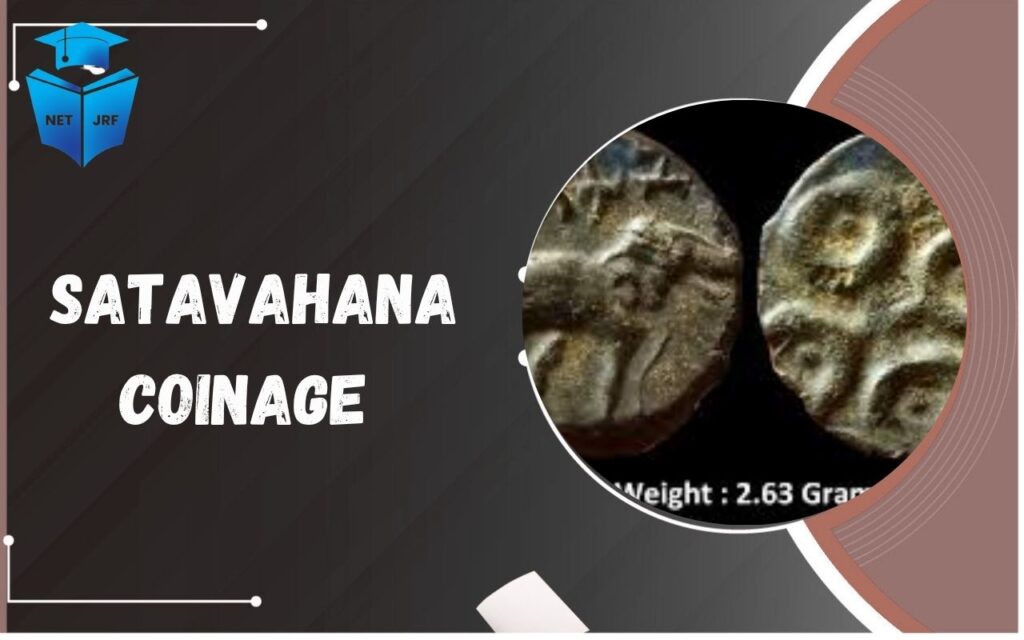
Satavahana coinage is one of the most important topics to understand the economy, trade, and culture of post-Mauryan India. It gives us a clear picture of how rulers managed money, controlled trade, and showed their power through symbols. The Satavahana dynasty ruled large parts of Deccan India roughly between 1st century BCE to 3rd century CE. Their coins are found in Maharashtra, Andhra Pradesh, Telangana, and nearby regions. These coins help historians understand political authority, economic growth, and cultural exchange during that period.
Enroll UGC NET Online Coaching

Understanding Satavahana Coinage
Satavahana coinage refers to the system of coins issued by Satavahana rulers for trade, taxation, and administration. These coins were made using different metals like lead, copper, and sometimes silver. The use of local materials shows regional adaptation.
Key Features of Satavahana Coins
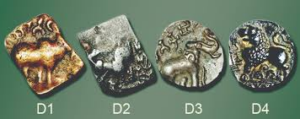
- Mostly made of lead, which was easily available in Deccan
- Some coins made of copper and potin (mixed metal)
- Rare use of silver coins
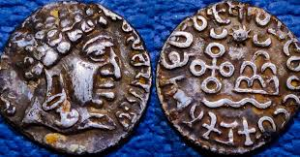
- Coins often had symbols instead of detailed portraits
- Use of Prakrit language in Brahmi script
- Names of rulers mentioned in many coins
These features make Satavahana coinage unique compared to northern Indian coin systems.
Satavahana Coin Production Materials Used
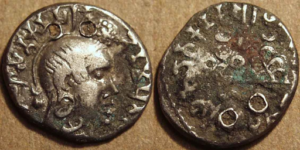
Satavahana rulers used locally available metals, which made their coin system different from other dynasties.
Types of Metals
| Metal Type | Usage | Importance |
| Lead | Most common | Easy availability in Deccan |
| Copper | Widely used | Durable for daily trade |
| Silver | Limited use | High-value transactions |
| Potin | Mixed alloy | Cost-effective production |
Explanation
Lead coins were heavy but easy to produce. Copper coins were more practical for daily use. Silver coins were less common, which shows that Satavahana economy depended more on regional trade rather than long-distance luxury exchange.
Satavahana Symbols and Designs on Coins
One of the most interesting parts of Satavahana coinage is the use of symbols. Instead of human portraits, these coins mostly used symbolic designs.
Common Symbols
- Ujjain symbol (cross with circles)
- Ship symbol (shows maritime trade)
- Elephant and horse
- Chaitya (Buddhist structure)
- Tree-in-railing
Meaning of Symbols
These symbols were not random. They represented:
- Religious beliefs (Buddhism influence)
- Political authority
- Trade connections
- Cultural identity
For example, the ship symbol shows strong trade links with foreign regions like Rome.
Satavahana Language and Script on Coins
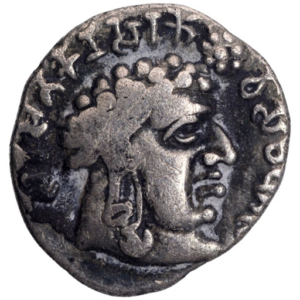
Satavahana coins used Prakrit language written in Brahmi script. This shows that rulers wanted their coins to be understood by common people.
Important Observations
- Names of kings were written clearly
- Titles like “Rano” (King) were used
- Regional variations existed
This aspect of Satavahana coinage helps historians identify rulers and their territories.

Satavahana Role of Rulers in Coinage
Satavahana rulers played a key role in issuing coins. Each ruler had slightly different styles, which helps historians track their reign.
Important Rulers
- Gautamiputra Satakarni
- Vashishtiputra Pulumavi
- Yajna Sri Satakarni
Contributions
- Standardization of coin system
- Expansion of trade networks
- Use of symbols to show power
Coins of Gautamiputra Satakarni are especially important because they reflect his strong rule and victories.
Enroll UGC NET Coaching in Jaipur
Satavahana Coins Economic Importance
Satavahana coinage played a major role in economic development. It helped in smooth trade and taxation.
Key Economic Functions
- Medium of exchange
- Store of value
- Tool for tax collection
- Indicator of trade routes
Trade and Commerce
- Active trade with Roman Empire
- Inland trade across Deccan
- Use of ports for maritime trade
Coins found in coastal areas prove strong trade activity.
Satavahana Regional Variations in Coins
Satavahana coinage shows different patterns in different regions.
Variations
- Western Deccan: More lead coins
- Eastern regions: More copper coins
- Coastal areas: Trade-related symbols
This variation shows flexibility in administration.
Satavahana Religious Influence on Coinage
Religion played a strong role in shaping Satavahana coins.
Evidence
- Buddhist symbols like chaitya
- Tree-in-railing symbol
- Lack of aggressive war imagery
This shows that rulers supported peaceful and religious values.
Satavahana Coins Comparison with Other Dynasties
Satavahana coinage can be compared with other dynasties to understand differences.
| Feature | Satavahana | Indo-Greek | Kushana |
| Metal | Lead dominant | Silver | Gold |
| Design | Symbols | Portraits | Detailed images |
| Language | Prakrit | Greek | Bactrian |
| Focus | Regional trade | International | Empire power |
Satavahana Coins Archaeological Importance
Coins are one of the most reliable historical sources.
Why Important?
- Provide Exact Ruler Names
Many coins carry the names of kings, such as Gautamiputra Satakarni, which helps historians identify rulers and their reigns accurately. - Help in Dating Events
By linking coins to specific rulers, historians can date events, inscriptions, and other historical developments, creating a reliable chronological framework. - Show Economic Condition
The materials (lead, copper, silver) and circulation of coins reflect economic prosperity, trade activity, and the wealth of the empire. - Reveal Trade Links
The presence of Satavahana coins in distant regions, including Roman territories, indicates long-distance trade networks and cultural exchange. - Reconstruction of History
Large coin hoards discovered across India provide insights into political authority, economic organization, and the reach of the Satavahana Empire, making coins an essential tool for historical research. - Many Satavahana coins have been found in hoards, which helps historians reconstruct history.

Challenges in Studying Coinage
Even though coins are useful, they have some limitations.
Problems
- Damage and Wear
Many coins are worn out or damaged, making it difficult to read inscriptions or identify the ruler clearly. - Difficult-to-Interpret Symbols
Some coins carry symbols or motifs whose meanings are unclear, posing challenges for historians trying to reconstruct cultural or political details. - Regional Differences
Coins varied across regions in terms of design, inscriptions, and metal, which can create confusion when linking them to specific rulers or events. - Despite Limitations
Even with these challenges, Satavahana coins remain one of the most reliable and widely used sources for understanding the dynasty’s rulers, economy, trade, and political history.
Satavahana coinage gives us a deep insight into the political strength, economic system, and cultural values of the Satavahana dynasty. It shows how rulers used simple materials, meaningful symbols, and local language to manage a strong regional economy.
Enroll UGC NET Offline Coaching in Jaipur
Satavahana coinage FAQs

Which metal was most used?
Lead was the most commonly used metal because it was easily available in the Deccan region.
Why are symbols important on coins?
Symbols show religious beliefs, trade links, and political authority. They also help identify regions.
Did Satavahana coins have portraits?
Most coins did not have portraits. They mainly used symbols instead of human images.
What language was used on coins?
Prakrit language in Brahmi script was commonly used for inscriptions.