
The Hathigumpha inscription is one of the most important historical sources for understanding ancient Indian history, especially the rule of King Kharavela of Kalinga. It gives us deep insight into politics, culture, religion, and administration of that time.This inscription is not just a piece of writing carved on a rock. It is a story of power, ambition, war, and public welfare.

What is Hathigumpha inscription?
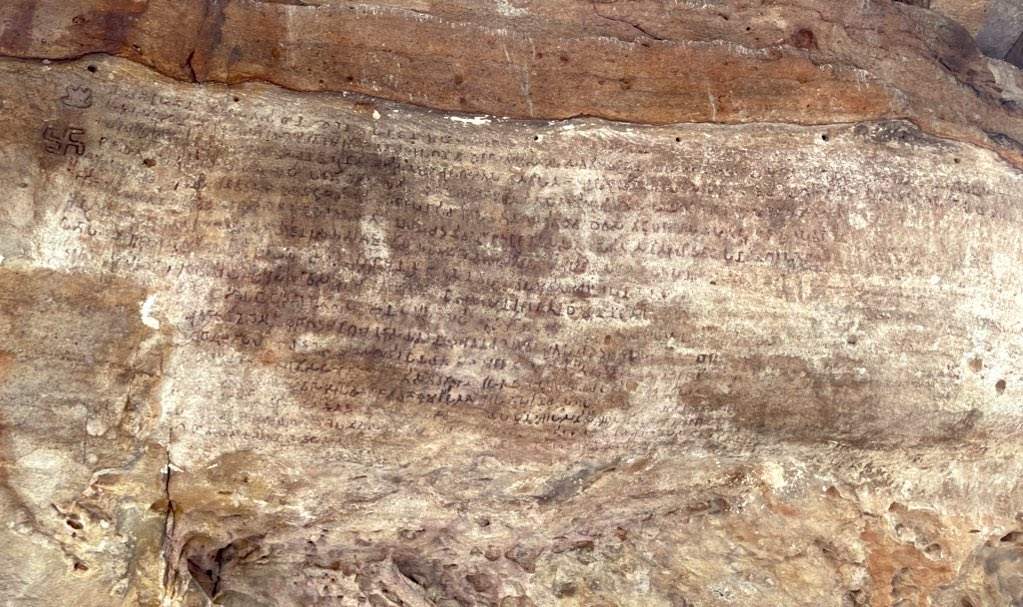
The Hathigumpha inscription is a long rock inscription found in Odisha. It is engraved inside a cave called Hathigumpha, which means Elephant Cave.
- This cave is located in the Udayagiri hills near Bhubaneswar.
- It was written during the reign of King Kharavela, who ruled Kalinga in the 1st century BCE. The inscription describes his achievements year by year. It acts like a royal record or biography of the king.
Enroll UGC NET Online Coaching
Hathigumpha inscription Location
The Hathigumpha Inscription is one of the most important historical records of ancient India, providing detailed insights into Kharavela’s reign. Understanding the language and script used in the inscription is essential for interpreting its content and historical significance.
Language: Prakrit
Exact Location
- Udayagiri hills, near Bhubaneswar, Odisha
- Inside Hathigumpha cave
Discovery
The Hathigumpha inscription was discovered in the early modern period by British scholars. Later, historians and archaeologists studied it deeply to understand ancient India.
Importance of Location
- Udayagiri and Khandagiri caves were important Jain centers
- These caves were used by monks for meditation
- The presence of inscription shows political support for religion
Hathigumpha inscription Historical Background
To understand the Hathigumpha inscription, we must first understand Kalinga.
Kalinga in Ancient India
- Kalinga was a powerful kingdom in eastern India
- It was famous for trade, military strength, and culture
- It was earlier conquered by Ashoka in the Kalinga War
After Ashoka, Kalinga regained its power. King Kharavela became one of its greatest rulers.
King Kharavela
The Hathigumpha inscription mainly talks about King Kharavela. It describes his life, achievements, and policies.
Early Life
- Kharavela belonged to the Mahameghavahana dynasty
- He was trained in administration, warfare, and arts
- He became king at a young age
Personality
- Brave and ambitious
- Supporter of religion
- Focused on public welfare
The inscription presents him as an ideal ruler.
Hathigumpha inscription Language and Script
The Hathigumpha Inscription, one of the most important sources of information about Kharavela’s reign, provides valuable insights into the administration, culture, and history of ancient Kalinga. Understanding its language and script is crucial for historical study and exam preparation.
-
Language: Prakrit
-
-
- The inscription was written in Prakrit, the common language of the people in ancient India. Unlike Sanskrit, which was mostly used by scholars and religious texts, Prakrit was widely understood and accessible to the general population. By using Prakrit, Kharavela ensured that his deeds, reforms, and achievements were recorded in a language that could communicate effectively with both officials and ordinary citizens.
-
-
Script: Brahmi
-
-
- The Hathigumpha Inscription was carved in Brahmi script, one of the earliest writing systems in India. Brahmi was used extensively for inscriptions across the subcontinent, making it a standard script for official and public records. Its use in Hathigumpha reflects the administrative sophistication of Kalinga and the importance placed on permanent, legible records.
-
-
Style and Expression
-
-
- The inscription is written in a poetic and narrative form, combining storytelling with factual records. While the expressions are simple and direct, the meaning is strong and impactful. This style allowed Kharavela to highlight his achievements, public works, military campaigns, and religious patronage in an engaging way. It also ensured that the inscription was not just informative but memorable, leaving a lasting impression for posterity.
-
-
Importance
-
- The Hathigumpha Inscription is significant because it shows how Prakrit was widely used for official records, making governance transparent and accessible. It serves as a direct historical source, providing insights into the reign of Kharavela, the political and economic conditions of Kalinga, and the culture of the period.
- The Hathigumpha inscription is important because it shows how Prakrit was widely used for official records.
Hathigumpha inscription Structure
The Hathigumpha Inscription, carved in the famous Hathigumpha cave in Udayagiri, is one of the most important sources of information about Kharavela’s reign. Its structure, content, and style make it a rich historical document.
-
Chronological Order
-
-
- The inscription is carefully organized in chronological order, with each line or section corresponding to a particular year of Kharavela’s rule. This systematic recording allows historians to track the progress of his reign year by year. It also shows Kharavela’s attention to detail and desire to maintain an accurate record of his achievements.
-
-
Year-wise Achievements
-
-
- Each line of the Hathigumpha Inscription highlights specific accomplishments in a given year. This includes military victories, administrative reforms, public works, religious patronage, and cultural initiatives. By documenting achievements annually, the inscription provides a clear timeline of Kharavela’s policies and campaigns, offering invaluable insight into the governance and priorities of his reign.
-
-
Mix of Military and Civil Activities
-
- The Hathigumpha Inscription records a blend of military and civil activities. It describes Kharavela’s conquests, campaigns, and defense strategies, alongside civic works such as repair of city walls, irrigation projects, festivals, and support for religion and culture. This mix shows that Kharavela was a balanced ruler, equally focused on strengthening his kingdom’s power and improving the welfare of his people.
Year-wise Achievements of Kharavela of Kalinga
The Hathigumpha Inscription provides a chronological record of Kharavela’s reign, highlighting both his military prowess and dedication to public welfare. Each year marks specific accomplishments, reflecting a ruler who skillfully balanced governance, culture, and defense.
-
1st Year: Repair of City Gates and Public Works
-
-
- In the first year of his reign, Kharavela focused on strengthening infrastructure and public welfare. He repaired city gates and fortifications, ensuring security for his citizens. These projects show that from the very beginning, Kharavela prioritized the safety and convenience of his people, laying the foundation for a well-governed kingdom.
-
-
2nd Year: Organization of Festivals and Promotion of Culture
-
-
- In the second year, Kharavela emphasized cultural development. He organized festivals, entertainment events, and celebrations that brought communities together. By promoting arts and culture, he enhanced social cohesion and made his kingdom lively and vibrant.
-
-
3rd Year: Strengthened Administration and Improved Economy
-
-
- During the third year, Kharavela concentrated on administrative efficiency and economic growth. He streamlined governance, ensured effective revenue collection, and supported trade and agriculture. These reforms strengthened the internal structure of Kalinga, making the kingdom prosperous and well-managed.
-
-
4th Year: Military Campaign in the West
-
-
- In the fourth year, Kharavela launched a western military campaign, demonstrating the strength of Kalinga. These campaigns showcased his military skill and strategic planning, asserting Kalinga’s influence over neighboring regions.
-
-
5th Year: Restoration of Canals and Irrigation
-
-
- In the fifth year, he restored an ancient canal built by earlier rulers, improving irrigation systems. This not only enhanced agricultural productivity but also demonstrated his concern for the welfare of farmers and his commitment to sustaining the kingdom’s economy.
-
-
8th Year: Attack on Magadha
-
-
- By the eighth year, Kharavela had launched a campaign against Magadha, forcing the enemy to retreat. This victory reinforced Kalinga’s power and restored the pride of a kingdom that had previously suffered under external domination.
-
-
12th Year: Northern Expedition
-
-
- In the twelfth year, Kharavela conducted military campaigns in northern India, extending Kalinga’s influence. These expeditions helped establish Kalinga as a formidable regional power and strengthened political alliances across northern territories.
-
-
13th Year: Support for Jainism
-
-
- By the thirteenth year, Kharavela focused on religious and cultural patronage. He supported Jain monks and built caves for ascetics, reflecting his devotion to Jainism while fostering an atmosphere of religious tolerance and spiritual growth.
-
-
Balance of War and Welfare
-
- The Hathigumpha Inscription clearly shows that Kharavela balanced military campaigns with public welfare and cultural patronage. His reign was not solely about conquest but also about improving infrastructure, promoting culture, and supporting religion, making him a well-rounded and visionary ruler.
Enroll UGC NET Coaching in Jaipur
Hathigumpha inscription Religious Importance
Religious Aspects in the Hathigumpha Inscription
The Hathigumpha Inscription is not only a record of Kharavela’s military and administrative achievements but also a window into his religious policies. It highlights his personal faith as well as his secular and inclusive approach to governance.
-
Jainism Connection
-
-
- Kharavela was a devoted follower of Jainism, and this is clearly reflected in the inscription. He actively supported Jain monks, providing them with patronage and resources for their spiritual activities. He also commissioned caves and shelters for ascetics, allowing them to live, meditate, and study in peace. These actions show his personal devotion as well as his interest in promoting religious institutions that aligned with his beliefs.
-
-
Religious Tolerance
-
-
- Despite being a follower of Jainism, Kharavela respected other religions. The inscription indicates that he did not impose his faith on others and allowed followers of different religions to practice freely. This approach ensured harmony among diverse communities in Kalinga and reflected his understanding that a stable kingdom required both devotion and tolerance.
-
-
Secular Approach
-
- The Hathigumpha Inscription shows that Kharavela followed a secular and inclusive policy, even in ancient times. By supporting his own religion while respecting others, he set an example of how rulers could combine personal faith with public fairness. This approach strengthened his kingdom socially and politically, fostering unity and cultural richness.

Hathigumpha inscription Administrative
The Hathigumpha inscription gives valuable information about governance.
Key Administrative Features of Kharavela
Kharavela of Kalinga is remembered not just as a powerful ruler but as an efficient and welfare-oriented administrator. His governance reflected a careful balance between public welfare, cultural development, military strength, and economic prosperity.
-
Focus on Public Welfare
-
-
- At the heart of Kharavela’s administration was the well-being of his people. He prioritized initiatives that directly improved the lives of his subjects. Public works, repair of infrastructure, and social initiatives show that he ruled with a people-centric approach, understanding that a content and secure population was the backbone of a strong kingdom.
-
-
Repair of Roads and Canals
-
-
- Kharavela paid special attention to infrastructure. He repaired roads, city gates, and canals, ensuring smooth communication, safe transport, and adequate irrigation. These projects not only facilitated trade and travel but also improved agricultural productivity, showcasing his vision for sustainable development.
-
-
Support for Arts and Culture
-
-
- Kharavela actively promoted arts, music, dance, festivals, and religious activities. By supporting artists, organizing cultural events, and patronizing religious institutions, he fostered a vibrant and lively society. Culture under Kharavela became a tool for social cohesion and a symbol of Kalinga’s prosperity.
-
-
Military Strength
-
- Alongside civic development, Kharavela maintained a strong and well-organized military. His army ensured the kingdom’s security, facilitated expansion, and protected trade routes. Military strength allowed Kharavela to assert Kalinga’s power regionally while maintaining internal stability.
Economic Policies
Kharavela’s administration focused on economic growth and sustainability:
- Encouragement of Trade: He supported merchants and protected trade routes, boosting commerce locally and with distant regions.
- Improved Irrigation: By restoring canals and enhancing water management, he increased agricultural productivity.
- Boosted Agriculture: Farmers were supported through land management, irrigation, and protection, ensuring food security and prosperity.
Hathigumpha inscription Significance
Kharavela of Kalinga was a visionary ruler, and the Hathigumpha Inscription serves as a key source to understand his reign. Its significance spans historical, political, cultural, and archaeological dimensions.
-
Historical Importance
-
-
- The inscription provides a detailed account of Kharavela’s reign, including his administrative reforms, public works, military campaigns, and cultural initiatives. It helps historians reconstruct the history of Kalinga, offering insight into the political, social, and economic conditions of the period. Without such records, much of Kalinga’s past would remain obscure.
-
-
Political Importance
-
-
- Kharavela’s inscriptions reflect the strength and independence of Kalinga following the decline of the Mauryan Empire. They show how he maintained a powerful regional kingdom, defended borders, conducted successful campaigns, and managed a strong administration. This demonstrates the capabilities of regional rulers in ancient India.
-
-
Cultural Importance
-
-
- The Hathigumpha Inscription provides evidence of festivals, arts, and cultural patronage under Kharavela. It shows his support for music, dance, literature, and religious institutions, particularly Jainism. These details highlight a ruler who valued cultural vibrancy alongside governance, creating a lively and harmonious society.
-
-
Archaeological Importance
-
- The Hathigumpha Inscription is one of the longest and most detailed inscriptions of ancient India, carved in Brahmi script and written in Prakrit. Its archaeological value is immense, as it offers primary evidence of political, military, economic, and cultural life in Kalinga. For historians and archaeologists, it is an invaluable source for studying early Indian history.
Enroll UGC NET Offline Coaching in Jaipur
Hathigumpha inscription Limitations
Even though the Hathigumpha inscription is important, it has some limitations.
-
Problems
-
-
- While the Hathigumpha Inscription is one of the most valuable sources for understanding Kharavela’s reign, it also presents certain challenges for historians.
-
-
Physical Damage
-
-
- Some parts of the inscription have been damaged or eroded over time. Natural wear, weathering, and human activity have caused portions of the text to become faint or missing. This makes it difficult to reconstruct the full content accurately, leaving gaps in the historical record.
-
-
Bias Towards the King
-
-
- The inscription is primarily written to glorify Kharavela’s achievements. It emphasizes his victories, public works, and devotion to religion, while naturally downplaying failures or challenges. This inherent bias requires historians to carefully interpret the text, cross-referencing it with other sources where possible.
-
-
Interpretation Issues
-
-
- Due to damaged sections, poetic language, and archaic expressions, some parts of the inscription are difficult to interpret. Historians often disagree on the exact meanings of certain lines, leading to multiple versions of Kharavela’s story. The narrative style, while engaging, sometimes complicates precise historical reconstruction.
-
-
Impact on Historical Study
-
-
- Despite these problems, the Hathigumpha Inscription remains an invaluable primary source. Scholars must read it critically, balancing its factual content with its biases and gaps. Even with interpretation challenges, it provides unique insights into Kharavela’s administration, military campaigns, religious policies, and cultural contributions.
-
-
Interpretation Issues
-
- Historians sometimes disagree on meanings due to unclear text.

Conclusion
The Hathigumpha inscription is not just an inscription. It is a powerful historical document that tells us about a strong king, a rising kingdom, and a balanced approach to governance. It highlights how Kharavela focused on both military success and public welfare.
FAQs

Who wrote the Hathigumpha inscription?
The inscription was issued by King Kharavela of the Mahameghavahana dynasty in the 1st century BCE.
Why is the Hathigumpha inscription important?
It provides detailed insights into Kharavela’s rule, Kalinga’s politics, culture, economy, administration, and religious policies.
Which language is used in the inscription?
The inscription is written in Prakrit, the common language of the people at that time.
What script was used in the Hathigumpha inscription?
It was carved in Brahmi script, one of the earliest and widely used writing systems in ancient India.