


Agrarian economy of Gupta age formed the strong foundation of the Gupta Empire, where almost every aspect of life depended on agriculture. If we try to imagine daily life in that period, we will see villages full of farmers, fields full of crops, and a system where land was the main source of wealth and power. This agricultural base did not just feed people. It supported the state, funded administration, and shaped social relations in a deep way.

Importance of Agriculture in Daily life
Agrarian economy of Gupta age made agriculture the heart of life.
Why agriculture was so important
- It provided food for the entire population
- It generated revenue for the king
- It gave employment to the majority
If crops were good, the kingdom prospered. If crops failed, people suffered. So agriculture directly affected both rulers and common people.
Enroll UGC NET Online Coaching
Land ownership system
Agrarian economy of Gupta age had a mixed system of land ownership. Land was not owned by one single authority.
Types of land ownership
- Royal land – controlled by the king
- Private land – owned by individuals or families
- Donated land – given to Brahmins, temples, or officials
This variety shows that land was both an economic and political resource.
Land grants
One of the most important features of Agrarian economy of Gupta age was the system of land grants. This system slowly changed the whole rural structure.
What were land grants
Kings gave land to:
- Brahmins (called Brahmadeya)
- Temples
- Officials
Why kings gave land
- To gain religious merit
- To reward services
- To maintain loyalty
Impact on society
- Reduced direct control of the king
- Increased power of local landlords
- Created inequality among people
This system later became one of the roots of feudalism in India.
Agrarian economy of Gupta age land structure
This table shows how land was distributed and how each type played a role.
| Type of Land | Owner | Role in Economy |
| Agrarian economy of Gupta age royal land | King | Revenue source |
| Private land | Individuals | Farming production |
| Brahmadeya land | Brahmins | Religious and social power |
| Temple land | Religious bodies | Cultural activities |
Role of Peasants in the Gupta Economy
The economy of the Gupta period was primarily agrarian, and at the heart of this system were the peasants. They formed the backbone of economic life, as agriculture was the main source of livelihood and revenue.
Importance of Peasants
Peasants were the real foundation of the Gupta economy.
- They produced the food that sustained the population.
- Agricultural surplus generated by them supported trade, administration, and urban life.
- The state largely depended on land revenue (taxes) collected from peasants.
Without their contribution, the entire economic structure of the empire would not have functioned.
Life of Peasants
Hard Work in Fields
Peasants spent most of their time cultivating land, using simple tools and traditional methods. Farming required continuous labor, from ploughing to harvesting.
Tax Burden
- They had to pay taxes to the king or local landlords.
- Taxes were often collected in the form of a share of agricultural produce.
- This sometimes made their lives difficult, especially during poor harvests.
Dependence on Nature
- Agriculture largely depended on the monsoon rains.
- Irrigation systems existed but were not sufficient everywhere.
- A failure of rains could lead to crop loss and hardship.
Economic Condition
- Most peasants lived a simple and modest life.
- They were not very wealthy, as much of their produce went into taxes or survival needs.
- Despite this, they remained indispensable to the economy.
Types of Crops Grown
The Gupta agrarian economy was diverse and well-balanced, with farmers cultivating a variety of crops. This diversity helped ensure food security and economic stability.
Main Crops
- Rice was widely grown in fertile and well-watered regions, especially in river valleys.
- Wheat and barley were cultivated in areas with less rainfall.
- Sugarcane was an important cash crop, often used for trade and production of sweeteners.
- Pulses and oilseeds were also grown, providing essential nutrition and supporting daily needs.
Significance
- Growing different crops reduced the risk of total crop failure.
- If one crop failed due to poor weather, other crops could ensure survival.
- It also supported both subsistence and trade, strengthening the economy.
Irrigation System and Water Management
Agriculture during the Gupta period depended on both natural and man-made irrigation systems.
Sources of Irrigation
- Major rivers like the Ganga River provided natural water supply to fertile lands.
- Wells were commonly used in villages for everyday irrigation needs.
- Tanks and ponds helped in storing rainwater for later use.
Water Management
- Farmers had a good understanding of water conservation.
- Local communities developed systems to store and distribute water efficiently.
- These efforts helped agriculture continue even during irregular rainfall.
Tools and Farming Techniques
Farming in the Gupta period relied on simple yet effective tools and techniques.
Common Tools
- The wooden plough was widely used for tilling the land.
- Iron tools such as hoes and sickles improved efficiency in farming tasks.
- Oxen (bullocks) were used to pull ploughs and assist in heavy work.
Nature of Farming
- Agriculture was labor-intensive, requiring significant human effort.
- There were no machines, so both humans and animals played a major role.
- Farming techniques were based on experience and traditional knowledge passed down through generations.

Importance of Agricultural Taxes
The Gupta economy was largely based on agriculture, and taxes collected from farmers were the main source of state revenue. These taxes helped the rulers maintain administration, army, and public works.
Types of Taxes
- Land Tax (Main Source):
The most important tax was the land tax, usually taken as a portion of the agricultural produce. - Share of Produce:
Farmers often had to give a fixed share of their crops to the state. This system ensured regular income for the government. - Additional Local Taxes:
There were also minor taxes at the village or regional level, which could vary depending on local conditions.
Nature of Taxation
- Taxes were generally not extremely harsh, but they were essential and unavoidable.
- They formed the financial backbone of the empire.
Revenue Collection Process
The Gupta administration had a fairly organized system for collecting revenue, ensuring that taxes reached the state efficiently.
How Taxes Were Collected
- Taxes were collected either in cash or in kind (grain and produce), depending on the situation.
- Local officials were responsible for supervising and collecting revenue from villages.
- In some cases, intermediaries (like landlords or local chiefs) collected taxes on behalf of the state.
Impact of the System
- This system was efficient and practical, especially in a largely rural economy.
- However, it also gave significant power to local authorities, which could sometimes lead to exploitation of peasants.
Enroll UGC NET Coaching in Jaipur
Role of Intermediaries
During the Gupta period, intermediaries began to play a very important role in the agrarian economy. They acted as a link between the king and the peasants, but over time, their power increased significantly.
Who Were the Intermediaries?
- Landlords who owned or controlled large areas of land
- Government officials appointed to manage revenue
- Land grant holders (such as Brahmins or temples) who received land from the king
Their Role
- They were responsible for collecting taxes from peasants
- They exercised control over land and agricultural production
- They helped in managing village administration
Impact
- This system reduced the direct connection between the king and the peasants
- Intermediaries often became powerful local authorities, sometimes acting independently
Rise of Feudal Tendencies
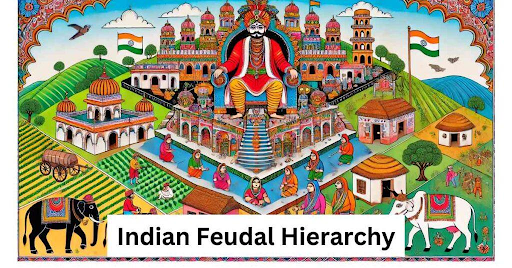
The agrarian system of the Gupta period shows early signs of feudalism, which became more prominent in later centuries.
Key Features
- Land grants were given in exchange for services or loyalty (especially to Brahmins and officials)
- Peasants became increasingly dependent on landlords rather than the central authority
- Local powers grew stronger, while the king’s direct control weakened
Consequences
- This led to the gradual decentralization of power
- The system slowly weakened the central administration of the empire
- It laid the foundation for a more feudal structure in early medieval India
Enroll UGC NET Offline Coaching in Jaipur
Village Economy
The Gupta agrarian economy was deeply rooted in village life, which functioned as the basic unit of production and society.
Features of Village Economy
- Villages were largely self-sufficient units
- They produced most of their own food and goods
- There was limited dependence on urban centers or long-distance trade
Structure of Village Life
- Villages included farmers, artisans, traders, and laborers
- Essential goods like tools, clothes, and food were produced locally
- This created a stable and sustainable rural economy

Significance
- Self-sufficiency ensured economic stability even during crises
- It strengthened the rural foundation of the Gupta economy
The agrarian structure of the Gupta period was gradually changing. While villages remained self-sufficient and stable, the rise of intermediaries and feudal tendencies led to decentralization of power. This shift marked an important transition from a centralized system to a more localized, feudal economy.
Agrarian Economy of Gupta Age FAQs

2. What types of land ownership existed in Gupta period?
Land ownership was mixed in nature. It included royal land, private land, donated land.
This system showed economic, political importance of land.
3. What were land grants in Gupta period?
Land grants were gifts given by kings.They were given to Brahmins, temples, officials.
It helped in gaining loyalty, religious merit.
4. What was Brahmadeya land?
Brahmadeya was land granted to Brahmins. It gave them economic, social power in villages.
It increased their influence in society.
5. What was the role of peasants in Gupta economy?
Peasants were backbone of the economy.They produced food, paid taxes to state.Their surplus supported administration, trade.