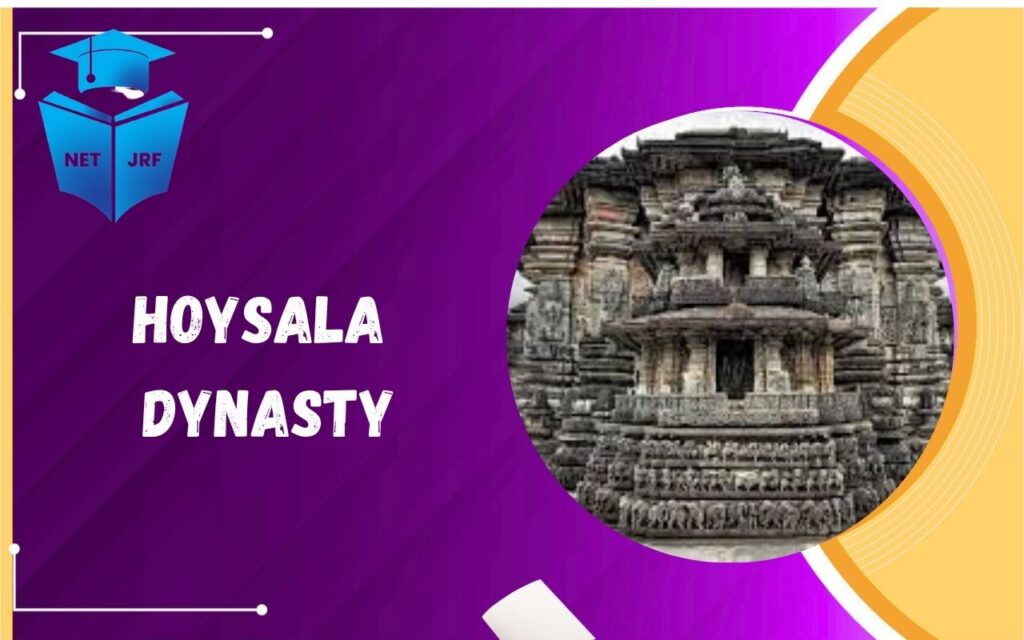
Hoysala Dynasty: Rise, Administration, Culture and Architectural Legacy

Hoysala Dynasty In this topic you learn how the Hoysalas rose in Karnataka, expanded their territory, built strong administration, promoted trade and agriculture, created iconic temples, and shaped South Indian culture and politics.

vishal

Hoysala Dynasty

Table of Contents

The Hoysala dynasty was one of the prominent medieval kingdoms in South India, primarily based in present-day Karnataka. It played a significant role in politics, culture, and architecture between the 10th and 14th centuries CE.

Study Planner
Early Rise of Hoysala Dynasty

The Hoysala dynasty began as minor feudatories under the Western Chalukyas. They leveraged the decline of their overlords to gain independence and consolidate regional power.

  • Founder: Nripa Kama II (1026–1047 CE) established the dynasty by consolidating local chieftains and forming alliances.
  • Territorial Base: Initially in Malnad and coastal Karnataka, later expanded into the Deccan plateau.
  • Political Growth: Early rulers capitalized on declining Chalukya influence to establish sovereignty.
  • Dynastic Stability: Vinayaditya (1047–1098 CE) strengthened administration, revenue systems, and territorial control.

The early period laid the foundation for political and economic growth, allowing later rulers to focus on cultural achievements.

Enroll UGC NET Online Coaching

Key Hoysala Rulers and Their Contributions

The Hoysala dynasty played a major role in South Indian history, particularly in Karnataka. Each ruler contributed to political stability, cultural growth, and architectural achievements.

Nripa Kama II (1026–1047 CE)

  • Nripa Kama II is credited with laying the foundation for political independence of the Hoysalas.
  • He established alliances with neighboring chieftains, which helped stabilize early rule and create a secure base for future expansion.
  • His reign set the stage for centralized administration and regional influence.

Vinayaditya (1047–1098 CE)

  • Vinayaditya focused on consolidating power in Karnataka, ensuring law and order across the territories.
  • He developed early administrative mechanisms, including provincial management and tax collection systems.
  • Under his rule, the Hoysala kingdom became stronger and more organized, which helped in later territorial expansion.

Vishnuvardhana (1108–1152 CE)

  • Vishnuvardhana is a pivotal ruler in Hoysala history. He adopted Vaishnavism under the guidance of Ramanujacharya, which influenced religious and cultural life.
  • He commissioned the Chennakesava Temple at Belur, a masterpiece of Hoysala architecture that became a symbol of the dynasty’s cultural achievements.
  • Vishnuvardhana expanded Hoysala influence through military campaigns against the Cholas, asserting dominance in the region.

Veera Ballala II (1173–1220 CE)

  • Veera Ballala II expanded the Hoysala territory into Tamil Nadu and coastal Karnataka, increasing political and economic influence.
  • He patronized Kannada and Sanskrit literature, supporting scholars, poets, and religious institutions.
  • Under his reign, the Hoysaleswara Temple at Halebidu was commissioned, reflecting the dynasty’s unique architectural style.

Veera Ballala III (1292–1343 CE)

  • Veera Ballala III faced invasions from the Delhi Sultanate, making his reign challenging.
  • Despite external threats, he maintained administrative control and attempted to preserve the dynasty’s strength.
  • His reign marked the decline of the Hoysala dynasty, but it also paved the way for the rise of the Vijayanagara Empire in South India.

Enroll UGC NET Online Course

Hoysala Dynasty Administration 

Hoysala administration combined central authority with local autonomy. Their governance system ensured efficient taxation, military readiness, and social stability.

  • Royal Cabinet: Pancha Pradhanas managed key administrative functions.
    • Sandhivigrahi: Handled foreign relations.
    • Mahabhandari: Managed treasury and finances.
    • Dandanayakas: Military commanders and law enforcement.
    • Dharmadhikari: Oversaw justice and legal matters.
  • Provincial Division: Kingdom divided into Vishaya, Nadu, Kampana, and Desha with provincial officers managing revenue, law, and public welfare.
  • Village Administration: Local officials (Heggades, Gavundas) supervised agriculture, irrigation, and village affairs.
  • Royal Protection: Garuda bodyguards ensured ruler safety, commemorated with Garuda pillars.
  • Coinage System: Gold Honnu, Pana, and Haga coins facilitated trade and demonstrated royal authority.

App JRF Adda

Hoysala Dynasty  Territorial Expansion

Hoysala expansion was strategic, combining military campaigns with alliances and diplomacy:

  1. Military Conquests: Fought Cholas, Pandyas, and Hoysalas to expand southern influence.
  2. Strategic Forts: Fortified capitals and key towns for defense.
  3. Alliance System: Used marriages and treaties to consolidate regional power.
  4. Agricultural Lands: Expansion secured fertile lands, boosting revenue and trade.

Hoysala Dynasty Economy 

Hoysala economy was agrarian-based but diversified through trade and coinage:

  • Agriculture: Enhanced through irrigation tanks and water management systems.
  • Irrigation Projects: Promoted stable agricultural productivity supporting population growth.
  • Trade: Internal and external trade flourished due to fortified trade routes.
  • Revenue Collection: Land taxes, trade duties, and temple grants sustained state expenditures.
  • Temple Economy: Brahmadeya land grants encouraged social cohesion and economic development.

Hoysala Dynasty  Cultural Contributions

Architecture and Art

  • Temple Design: Star-shaped platforms, ornate carvings, and distinct Dravidian influence.
  • Notable Temples: Chennakesava Temple at Belur, Hoysaleswara Temple at Halebidu.
  • Sculptures: Detailed carvings depicting mythology, daily life, and royal achievements.

Literature

  • Flourished in Kannada and Sanskrit under royal patronage.
  • Temples acted as centers for education, literature, and cultural activities.

Religion and Social Life

  • Shift from Jainism to Vaishnavism and promotion of Virashaivism.
  • Temples were hubs for cultural, religious, and social interaction.
  • Festivals, rituals, and temple administration reinforced societal cohesion.

Enroll UGC NET Coaching in Jaipur

Hoysala Dynasty Key Features

The Hoysala Dynasty was a prominent South Indian power known for its artistic excellence, efficient administration, and cultural achievements.

Feature Description
Founder Nripa Kama II (1026–1047 CE)
Notable Rulers Vishnuvardhana, Veera Ballala II, Veera Ballala III
Capital Belur, later Halebidu
Administration Pancha Pradhanas, Dandanayakas, provincial governors, village officials
Territorial Expansion Tamil Nadu, Malnad, coastal Karnataka
Cultural Contributions Temples, literature, sculptures, educational hubs
Religion Vaishnavism, Virashaivism, Jainism
Military & Defense Fortifications, Garuda bodyguards, disciplined army
Economy Agriculture, trade, coinage (Honnu, Pana, Haga)

JRF Adda Book

Enroll UGC NET Offline Coaching in Jaipur

Hoysala Dynasty Legacy 

Hoysala dynasty left a lasting impact on Karnataka’s political, cultural, and economic landscape:

  • Architecture: Temples remain UNESCO heritage sites and tourist attractions.
  • Literature: Kannada literature thrived due to royal support.
  • Governance: Administrative and revenue reforms influenced later South Indian kingdoms.
  • Military Strength: Fortifications and disciplined armies ensured long-term stability.
  • Religion: Promotion of Vaishnavism and Virashaivism shaped social and cultural identity.

Hoysala dynasty shaped Karnataka through strategic territorial expansion, strong governance, military strength, cultural patronage, and architectural innovation. Temples, literature, irrigation systems, and religious promotion ensured lasting prosperity.

Read UGC NET Notes
1 Archaeological Sources for UGC NET Epigraphy – Study of Inscriptions Meaning of Historical Sources Archaeological
2 Meaning of Historical Sources Archaeological Sources for UGC NET Literary Sources in History Archaeological
3 Exploration in Archaeology Excavation Techniques in Archaeology Dating of Archaeological Sites Archaeological
4 Excavation Techniques in Archaeology Exploration in Archaeology Dating of Archaeological Sites Archaeological
5 Epigraphy – Study of Inscriptions Inscriptions in Reconstructing History Numismatics in History Archaeological
6 Inscriptions in Reconstructing History Epigraphy – Study of Inscriptions Archaeological Sources for UGC NET Archaeological
7 Numismatics in History Importance of Coins in History Epigraphy – Study of Inscriptions Archaeological
8 Importance of Coins in History Numismatics in History Archaeological Sources for UGC NET Archaeological
9 Dating of Archaeological Sites Excavation Techniques in Archaeology Dating Ancient Literary Sources Archaeological
10 Indigenous Literature Literary Sources in History Secular Literature as Historical Source Literary
11 Dating Ancient Literary Sources Literary Sources in History Dating of Archaeological Sites Literary
12 Literary Sources in History Indigenous Literature Foreign Accounts of India Literary
13 Foreign Accounts of India Greek Accounts on Ancient India Chinese Accounts on India Literary
14 Greek Accounts on Ancient India Foreign Accounts of India Chinese Accounts on India Literary
15 Secular Literature as Historical Source Literary Sources in History Indigenous Literature Literary
16 Role of Myths and Legends in Historical Reconstruction Literary Sources in History Secular Literature as Historical Source Literary
17 Chinese Accounts on India Foreign Accounts of India Greek Accounts on Ancient India Literary
18 Arabic Accounts on India Foreign Accounts of India Chinese Accounts on India Literary
19 Neolithic and Chalcolithic Phases Neolithic Revolution in India Chalcolithic Culture in India Neolithic
20 Hunting, Gathering & Food Production Neolithic Revolution in India Neolithic Settlements in India Neolithic
21 Neolithic Revolution in India Neolithic Settlements in India Tools and Technology in Neolithic Period Neolithic
22 Neolithic Settlements in India Distribution of Neolithic Cultures in India Neolithic Revolution in India Neolithic
23 Distribution of Neolithic Cultures in India Neolithic Settlements in India Tools and Technology in Neolithic Period Neolithic
24 Tools and Technology in Neolithic Period Neolithic Revolution in India Chalcolithic Culture in India Neolithic
25 Chalcolithic Culture in India Settlement Pattern & Economy in Chalcolithic Phase Trade & Exchange Networks in Chalcolithic Societies Neolithic
26 Settlement Pattern & Economy – Chalcolithic Phase Chalcolithic Culture in India Trade & Exchange Networks in Chalcolithic Societies Neolithic
27 Trade & Exchange Networks – Chalcolithic Societies Chalcolithic Culture in India IVC Internal & External Trade Neolithic
28 Indus Valley Civilization – UGC NET Major Sites of Indus Civilization Urban Planning in Harappan Civilization IVC
29 IVC Internal & External Trade Internal Trade – Harappan Civilization Craft Specialization in Harappan Civilization IVC
30 Political Organization – Harappan Civilization Social Structure – Indus Civilization Urban Planning in Harappan Civilization IVC
31 Major Sites of Indus Civilization Indus Valley Civilization – UGC NET Urban Planning in Harappan Civilization IVC
32 Urban Planning & Settlement – Harappan Civilization Architecture & Town Planning – Harappan Cities IVC as First Urbanization in India IVC
33 Architecture & Town Planning – Harappan Cities Urban Planning in Harappan Civilization Major Sites of Indus Civilization IVC
34 Craft Specialization & Industrial Activities – Harappan Agriculture & Food Economy – Harappans IVC Internal & External Trade IVC
35 Agriculture & Food Economy – Harappans Craft Specialization in Harappan Civilization Internal Trade – Harappan Civilization IVC
36 Internal Trade – Harappan Civilization IVC Internal & External Trade Craft Specialization in Harappan Civilization IVC
37 Religion & Beliefs – Indus Civilization Social Structure – Indus Civilization Indus Valley Civilization – UGC NET IVC
38 Social Structure – Indus Civilization Political Organization – Harappan Civilization Religion & Beliefs – Indus Civilization IVC
39 Decline of Indus Civilization Indus Valley Civilization – UGC NET IVC as First Urbanization in India IVC
40 IVC as First Urbanization in India Urban Planning in Harappan Civilization Second Urbanization in India IVC
41 Vedic & Later Vedic Periods – Aryan Varna System Early Vedic Society and Economy Later Vedic Society and Economy Vedic
42 Origin of Vedic Civilization Aryan Debate – Migration, Invasion & Indigenous Theories Early Vedic Society and Economy Vedic
43 Aryan Debate – Migration, Invasion & Indigenous Theories Origin of Vedic Civilization Early Vedic Society and Economy Vedic
44 Early Vedic Society and Economy Political Institutions – Early Vedic Period Social Structure – Early Vedic Period Vedic
45 Political Institutions – Early Vedic Period Early Vedic Society and Economy Monarchical States in Ancient India Vedic
46 Social Structure – Early Vedic Period Emergence of Varnas & Social Stratification Early Vedic Society and Economy Vedic
47 Later Vedic Society and Economy Emergence of Varnas & Social Stratification Impact of Iron Technology in India Vedic
48 Emergence of Varnas & Social Stratification Social Structure – Early Vedic Period Later Vedic Society and Economy Vedic
49 Emergence of Heterodox Sects in India Jainism, Buddhism & Ajivikas – Origins & Teachings Later Vedic Society and Economy Vedic
50 Impact of Iron Technology in India Later Vedic Society and Economy Agricultural Expansion & Economic Changes – Ancient India Vedic
51 Religious & Philosophical Vedic Ideas Emergence of Varnas & Social Stratification Emergence of Heterodox Sects in India Vedic
52 Megalithic Culture of South India Neolithic and Chalcolithic Phases Agricultural Expansion & Economic Changes General
53 State System in Ancient India Rise of Mahajanapadas Transition: Tribal Polities to Territorial States General
54 Transition: Tribal Polities to Territorial States Rise of Mahajanapadas Later Vedic Society and Economy General
55 Rise of Mahajanapadas Monarchical States in Ancient India Republican States (Gana-Sanghas) – Ancient India Magadha
56 Monarchical States in Ancient India Rise of Mahajanapadas Emergence of Magadha Magadha
57 Republican States (Gana-Sanghas) – Ancient India Rise of Mahajanapadas Monarchical States in Ancient India Magadha
58 Agricultural Expansion & Economic Changes – Ancient India Second Urbanization in India Impact of Iron Technology in India General
59 Second Urbanization in India IVC as First Urbanization in India Rise of Mahajanapadas General
60 Jainism, Buddhism & Ajivikas – Origins & Teachings Emergence of Heterodox Sects in India Ashoka’s Policy of Dhamma General
61 Emergence of Magadha Geographical Advantages of Magadha Early Rulers of Magadha Magadha
62 Geographical Advantages of Magadha Natural Resources & Economic Strength of Magadha Reasons for Success of Magadha Magadha
63 Natural Resources & Economic Strength of Magadha Geographical Advantages of Magadha Economic Policies of the Nandas Magadha
64 Early Rulers of Magadha Haryanka Dynasty – Rise of Magadha Emergence of Magadha Magadha
65 Haryanka Dynasty – Rise of Magadha Expansion Policy of Bimbisara Early Rulers of Magadha Magadha
66 Expansion Policy of Bimbisara Ajatashatru – Military Reforms Haryanka Dynasty – Rise of Magadha Magadha
67 Ajatashatru – Military Reforms Wars of Ajatashatru Expansion Policy of Bimbisara Magadha
68 Wars of Ajatashatru Ajatashatru – Military Reforms Udayin & Establishment of Pataliputra Magadha
69 Udayin & Establishment of Pataliputra Wars of Ajatashatru Shishunaga Dynasty Magadha
70 Shishunaga Dynasty Administrative Structure of the Shishunagas Nanda Dynasty Magadha
71 Administrative Structure of the Shishunagas Shishunaga Dynasty Central Administration Under Mauryas Magadha
72 Nanda Dynasty Mahapadma Nanda – Imperial Expansion Shishunaga Dynasty Magadha
73 Mahapadma Nanda – Imperial Expansion Military Strength of the Nandas Nanda Dynasty Magadha
74 Economic Policies of the Nandas Nanda Dynasty Taxation System – Mauryan State Magadha
75 Military Strength of the Nandas Mahapadma Nanda – Imperial Expansion Defeat of Nandas & Rise of Mauryan Empire Magadha
76 Reasons for Success of Magadha Geographical Advantages of Magadha Natural Resources & Economic Strength of Magadha Magadha
77 Mahajanapadas to Empire – Evolution & Rise of Magadha Rise of Mahajanapadas Emergence of Magadha Magadha
78 Mauryan Empire – Expansion Rise of Chandragupta Maurya Expansion of Mauryan Empire Maurya
79 Rise of Chandragupta Maurya Role of Chanakya in Rise of Mauryan Empire Defeat of Nandas & Rise of Mauryan Empire Maurya
80 Role of Chanakya in Rise of Mauryan Empire Rise of Chandragupta Maurya Defeat of Nandas & Rise of Mauryan Empire Maurya
81 Defeat of Nandas & Rise of Mauryan Empire Military Strength of the Nandas Rise of Chandragupta Maurya Maurya
82 Chandragupta Maurya – Seleucus Treaty & Diplomacy Expansion of Mauryan Empire Greek Accounts on Ancient India Maurya
83 Expansion of Mauryan Empire Chandragupta Maurya – Seleucus Treaty & Diplomacy Kalinga War Maurya
84 Administration of Chandragupta Maurya Central Administration Under Mauryas Mauryan Bureaucracy Maurya
85 Sources for Mauryan History Archaeological Sources for UGC NET Greek Accounts on Ancient India Maurya
86 Central Administration Under Mauryas Provincial Administration – Mauryan Empire Mauryan Bureaucracy Maurya
87 Provincial Administration – Mauryan Empire Local Administration – Mauryan Empire Central Administration Under Mauryas Maurya
88 Local Administration – Mauryan Empire Provincial Administration – Mauryan Empire Mauryan Bureaucracy Maurya
89 Mauryan Bureaucracy Central Administration Under Mauryas Espionage System – Mauryan Empire Maurya
90 Espionage System – Mauryan Empire Mauryan Bureaucracy Central Administration Under Mauryas Maurya
91 Ancient India – Trade and Commerce Trade and Commerce Under Mauryas Agrarian Economy – Mauryan Period Maurya
92 Agrarian Economy – Mauryan Period Taxation System – Mauryan State Trade and Commerce Under Mauryas Maurya
93 Trade and Commerce Under Mauryas Ancient India – Trade and Commerce Agrarian Economy – Mauryan Period Maurya
94 Taxation System – Mauryan State Agrarian Economy – Mauryan Period Economic Policies of the Nandas Maurya
95 Kalinga War Ashoka’s Policy of Dhamma Expansion of Mauryan Empire Maurya
96 Ashoka’s Policy of Dhamma Nature & Philosophy of Dhamma Kalinga War Maurya
97 Nature & Philosophy of Dhamma Ashoka’s Policy of Dhamma Jainism, Buddhism & Ajivikas Maurya

Hoysala: Rise, Cultural Contributions FAQs

Loader image

Nripa Kama II (1026–1047 CE) is credited as the founder, consolidating local chieftains and establishing the dynasty.

Vishnuvardhana, Veera Ballala II, and Veera Ballala III contributed to temple architecture, literature, religious patronage, and territorial expansion.

Chennakesava Temple at Belur and Hoysaleswara Temple at Halebidu are prime examples of Hoysala star-shaped temple architecture with detailed carvings.

The dynasty had a centralized monarchy with Pancha Pradhanas, Dandanayakas, provincial governors, and local village officials managing law, revenue, and military affairs.

The economy relied on agriculture enhanced by irrigation tanks, trade through fortified routes, temple land grants, and coinage like Honnu, Pana, and Haga.

Primarily Vaishnavism and Virashaivism, while also accommodating Jainism. Temples became centers of religious, cultural, and social life.

Through military campaigns against Cholas and Pandyas, strategic alliances, fortified towns, and control over fertile agricultural lands.

Temples acted as religious hubs, centers of education, cultural gathering spaces, and economic nodes through donations and land grants.

They left a lasting impact with architectural masterpieces, thriving Kannada literature, administrative reforms, military discipline, and religious-cultural promotion in Karnataka.


Leave a Reply

Recent Posts
Aditi

Aditi Sharma, founder of JRFAdda, is a Computer Science educator with an MCA degree and JRF qualification (99.91 percentile, Dec 2019). Her experience includes roles as an SBI SO (DBA), work at Cognizant, and over 5 years of teaching online and offline. She has also served as a Government Computer Teacher in Rajasthan.