

Amoghavarsha and Rashtrakuta Culture Literature Art and Legacy

Amoghavarsha and Rashtrakuta Culture In this topic you learn how Amoghavarsha I shaped Rashtrakuta literature, religion, art, architecture, education, administration, society, and the lasting legacy of this cultural golden age.

vishal

Amoghavarsha and Rashtrakuta Culture

Table of Contents

Amoghavarsha and Rashtrakuta culture played a central role in shaping medieval Indian history and left a lasting legacy in literature art , architecture religion and society. The Rashtrakutas ruled large parts of central and southern India between the 8th and 10th centuries CE. Under rulers like Amoghavarsha I, the empire experienced unprecedented cultural growth, especially in literature, religious tolerance, and artistic expression. Introduction Rashtrakuta Dynasty

Top UGC NET Online Coaching

Amoghavarsha and Rashtrakuta culture cannot be understood without first knowing who the Rashtrakutas were.

  • The Rashtrakutas were a powerful ruling dynasty based in the Deccan region of India from around 753 CE to about 973 CE. They rose to power by overthrowing the Chalukyas and establishing their capital at Manyakheta in present-day Karnataka.
  • Their influence expanded from central India to south India and even briefly into north India. They became a bridge between northern and southern cultures and were well known for their tolerant policies towards different religions, languages, and traditions. 

Study Planner

Origins and Expansion Rashtrakutas

The Rashtrakuta dynasty began with its founder Dantidurga, who carved out a powerful realm by defeating neighbouring kingdoms such as the Chalukyas of Vatapi. 

Early Kings

  • Dantidurga (c. 753–756 CE): Laid the foundation of the Rashtrakuta Empire by defeating the Chalukyas. (
  • Krishna I: Strengthened the empire and built the famous Kailasa Temple at Ellora. 
  • Govinda III: Carried out successful military expeditions across India and expanded the empire greatly. 

The Rashtrakutas extended their rule over large territories, promoting economic growth and trade with distant regions. Their strong military and administrative systems helped maintain stability. 

The Reign of Amoghavarsha I

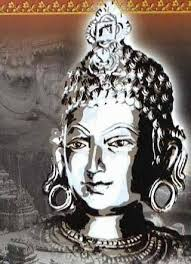
When discussing Amoghavarsha and Rashtrakuta culture, the most important figure is Amoghavarsha I, the 6th Rashtrakuta emperor. He ruled from 814 CE until his death in 878 CE  a remarkable period of 64 years.

    • He came to the throne at a young age and became one of the most celebrated rulers of the dynasty. Historians regard his reign as a golden age of cultural development. He was not just a political leader but also a scholar and thinker.
  • Titles and Personality

    • Amoghavarsha I held many honorary titles like Nripatunga, Atisayadhavala, and Vira-Narayana which reflected his royal status and virtues. 
    • He was deeply interested in religion and spent much of his life studying spiritual teachings. While he showed personal inclination towards Jainism, he also supported Hindu religions generously. 
The Reign of Amoghavarsha I

Administrative Features under Rashtrakutas

The Rashtrakuta administration was both strong and flexible. The emperor remained the centre of authority, while a large network of local chiefs and feudatories helped manage daily affairs. 

Key Features

  1. Monarchical Power: The king had absolute power over law, decision-making, and administration. 
  2. Feudatory System: Local governors helped rule provinces, but remained loyal to the emperor. 
  3. Law and Order: Officials called kotwals managed towns while village systems dealt with rural areas. 
  4. Military Strength: The Rashtrakutas maintained strong infantry, cavalry, and elephants, and imported horses from abroad. 

This blend of centralised royal authority and local cooperation allowed the empire to grow and maintain stability for many years. 

Top UGC NET Foundation Batch Online

Religion and Tolerance

One of the most remarkable aspects of Amoghavarsha and Rashtrakuta culture was religious tolerance.

The Rashtrakutas followed a policy of supporting all major religions of the time:

  • Jainism: Amoghavarsha I was influenced by Jaina monks and scholars. 
  • Hinduism: Temples of Shaivism, Vaishnavism, and Shaktism were built and supported. 
  • Buddhism: Although less dominant, Buddhist centres were respected and cared for. 

This created a vibrant society where people of varied beliefs learned from one another and lived peacefully. 

Language and Literature

Under the Rashtrakuta rulers, literature grew in both Kannada and Sanskrit languages.

  • Kannada Literature

      • Amoghavarsha I was a pioneering figure in Kannada literature. He wrote the famous Kavirajamarga, which is the earliest known work of Kannada literary criticism. 
      • This work became a foundation for later Kannada poets and writers. It helped standardise the language and encouraged many scholars to write in Kannada.
  • Sanskrit Literature

    • Amoghavarsha also composed Prashnottara Ratnamalika in Sanskrit  a philosophical work presented as questions and answers. 
    • His court supported many other Sanskrit scholars, including Jain mathematicians and poets. 

Best UGC NET Offline Coaching in Jaipur

Art and Architecture

The Rashtrakutas made great contributions to Indian art and architecture, which remains influential even today.

  • Rock-Cut Temples

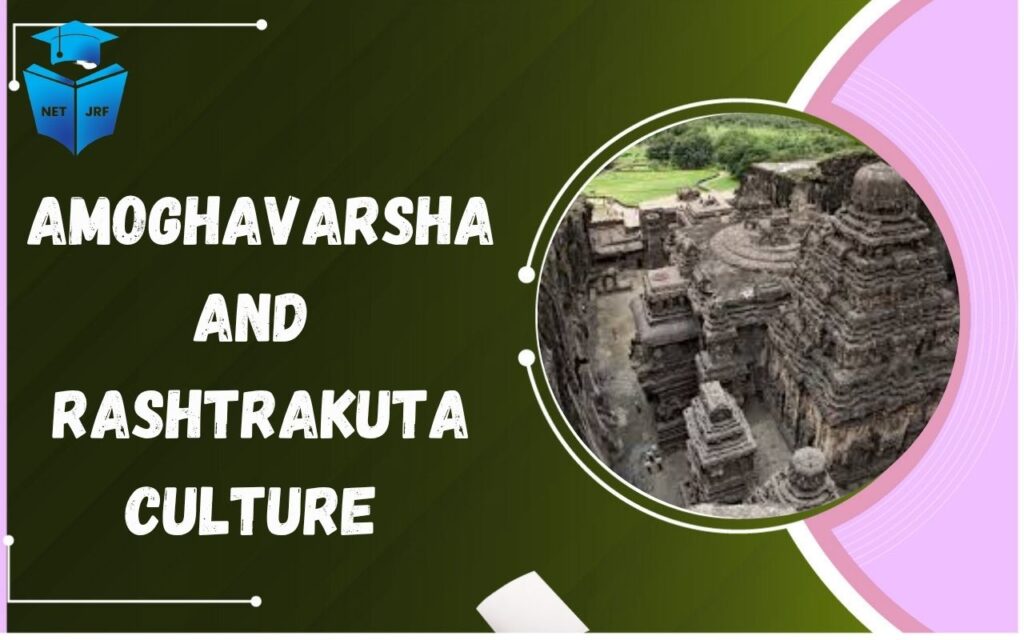
      • One of the greatest achievements of Rashtrakuta art was the rock-cut temples of Ellora in present-day Maharashtra. 
      • The Kailasa Temple is the most famous  a massive structure carved out of a single rock. Its walls display intricate sculptures of Hindu gods, goddesses, and mythological stories. 
  • Other Temples

    • Other Rashtrakuta constructions include several Jain and Hindu temples across present-day Karnataka, Maharashtra, and Andhra Pradesh.
    • These artworks show a blend of northern and southern architectural styles, which became known as the Karnata-Dravida style. 

App JRF Adda

Education and Scholarship

Education flourished under Amoghavarsha and Rashtrakuta culture as they encouraged learning in various fields:

  • Scholars worked on religion, philosophy, mathematics, and poetry. 
  • Centres of learning grew in major cities, attracting students from distant regions.
  • Libraries and manuscripts were preserved in royal collections. 

This focus on education helped preserve ancient knowledge and inspired many future scholars, making the Rashtrakuta period a landmark in India’s intellectual history. Society during the Rashtrakuta period was mainly agrarian but was also supported by trade and crafts. The kings promoted trade with the Arab world and Southeast Asia, contributing to economic growth. The common people included farmers, artisans, traders, priests, and soldiers  making society diverse and cooperative.

Decline and Legacy

After centuries of prominence, the Rashtrakuta Empire began to decline during the late 10th century CE when invaders attacked their capital, Manyakheta, and weakened central power. 

However, the cultural impact of Amoghavarsha and Rashtrakuta culture remained strong. Their legacy continued through:

  • Continued growth of Kannada literature
  • Architectural inspiration in later Indian kingdoms. 
  • Religious tolerance models in society. 

The Rashtrakuta era is remembered as a golden age of cultural harmony and artistic achievements in Indian history. 

Key Features of Rashtrakuta Culture

The culture of the Rashtrakutas was rich, diverse, and highly developed, reflecting a blend of artistic excellence, religious tolerance, and literary growth.

Feature Description
Literature Growth in Kannada and Sanskrit, Kavirajamarga foundation work
Religion Support for Jainism, Hinduism, Buddhism
Architecture Rock-cut temples like Kailasa at Ellora
Administration Strong monarchy with local governance
Education Centres of learning, philosophical debates
Art and Sculpture Blend of northern and southern styles

Join UGC NET Coaching in Jaipur

Conclusion

Amoghavarsha and Rashtrakuta culture transformed Indian history through a blend of intellectual achievement, artistic exploration, religious harmony, and strong governance. Their contributions to literature, architecture, and education made their era a golden age in the Deccan region. The Rashtrakutas remain celebrated for fostering harmony among diverse traditions and encouraging creative and scholarly pursuits across India. 

JRF Adda Book

Read UGC NET Notes
1 Archaeological Sources for UGC NET Epigraphy – Study of Inscriptions Meaning of Historical Sources Archaeological
2 Meaning of Historical Sources Archaeological Sources for UGC NET Literary Sources in History Archaeological
3 Exploration in Archaeology Excavation Techniques in Archaeology Dating of Archaeological Sites Archaeological
4 Excavation Techniques in Archaeology Exploration in Archaeology Dating of Archaeological Sites Archaeological
5 Epigraphy – Study of Inscriptions Inscriptions in Reconstructing History Numismatics in History Archaeological
6 Inscriptions in Reconstructing History Epigraphy – Study of Inscriptions Archaeological Sources for UGC NET Archaeological
7 Numismatics in History Importance of Coins in History Epigraphy – Study of Inscriptions Archaeological
8 Importance of Coins in History Numismatics in History Archaeological Sources for UGC NET Archaeological
9 Dating of Archaeological Sites Excavation Techniques in Archaeology Dating Ancient Literary Sources Archaeological
10 Indigenous Literature Literary Sources in History Secular Literature as Historical Source Literary
11 Dating Ancient Literary Sources Literary Sources in History Dating of Archaeological Sites Literary
12 Literary Sources in History Indigenous Literature Foreign Accounts of India Literary
13 Foreign Accounts of India Greek Accounts on Ancient India Chinese Accounts on India Literary
14 Greek Accounts on Ancient India Foreign Accounts of India Chinese Accounts on India Literary
15 Secular Literature as Historical Source Literary Sources in History Indigenous Literature Literary
16 Role of Myths and Legends in Historical Reconstruction Literary Sources in History Secular Literature as Historical Source Literary
17 Chinese Accounts on India Foreign Accounts of India Greek Accounts on Ancient India Literary
18 Arabic Accounts on India Foreign Accounts of India Chinese Accounts on India Literary
19 Neolithic and Chalcolithic Phases Neolithic Revolution in India Chalcolithic Culture in India Neolithic
20 Hunting, Gathering & Food Production Neolithic Revolution in India Neolithic Settlements in India Neolithic
21 Neolithic Revolution in India Neolithic Settlements in India Tools and Technology in Neolithic Period Neolithic
22 Neolithic Settlements in India Distribution of Neolithic Cultures in India Neolithic Revolution in India Neolithic
23 Distribution of Neolithic Cultures in India Neolithic Settlements in India Tools and Technology in Neolithic Period Neolithic
24 Tools and Technology in Neolithic Period Neolithic Revolution in India Chalcolithic Culture in India Neolithic
25 Chalcolithic Culture in India Settlement Pattern & Economy in Chalcolithic Phase Trade & Exchange Networks in Chalcolithic Societies Neolithic
26 Settlement Pattern & Economy – Chalcolithic Phase Chalcolithic Culture in India Trade & Exchange Networks in Chalcolithic Societies Neolithic
27 Trade & Exchange Networks – Chalcolithic Societies Chalcolithic Culture in India IVC Internal & External Trade Neolithic
28 Indus Valley Civilization – UGC NET Major Sites of Indus Civilization Urban Planning in Harappan Civilization IVC
29 IVC Internal & External Trade Internal Trade – Harappan Civilization Craft Specialization in Harappan Civilization IVC
30 Political Organization – Harappan Civilization Social Structure – Indus Civilization Urban Planning in Harappan Civilization IVC
31 Major Sites of Indus Civilization Indus Valley Civilization – UGC NET Urban Planning in Harappan Civilization IVC
32 Urban Planning & Settlement – Harappan Civilization Architecture & Town Planning – Harappan Cities IVC as First Urbanization in India IVC
33 Architecture & Town Planning – Harappan Cities Urban Planning in Harappan Civilization Major Sites of Indus Civilization IVC
34 Craft Specialization & Industrial Activities – Harappan Agriculture & Food Economy – Harappans IVC Internal & External Trade IVC
35 Agriculture & Food Economy – Harappans Craft Specialization in Harappan Civilization Internal Trade – Harappan Civilization IVC
36 Internal Trade – Harappan Civilization IVC Internal & External Trade Craft Specialization in Harappan Civilization IVC
37 Religion & Beliefs – Indus Civilization Social Structure – Indus Civilization Indus Valley Civilization – UGC NET IVC
38 Social Structure – Indus Civilization Political Organization – Harappan Civilization Religion & Beliefs – Indus Civilization IVC
39 Decline of Indus Civilization Indus Valley Civilization – UGC NET IVC as First Urbanization in India IVC
40 IVC as First Urbanization in India Urban Planning in Harappan Civilization Second Urbanization in India IVC
41 Vedic & Later Vedic Periods – Aryan Varna System Early Vedic Society and Economy Later Vedic Society and Economy Vedic
42 Origin of Vedic Civilization Aryan Debate – Migration, Invasion & Indigenous Theories Early Vedic Society and Economy Vedic
43 Aryan Debate – Migration, Invasion & Indigenous Theories Origin of Vedic Civilization Early Vedic Society and Economy Vedic
44 Early Vedic Society and Economy Political Institutions – Early Vedic Period Social Structure – Early Vedic Period Vedic
45 Political Institutions – Early Vedic Period Early Vedic Society and Economy Monarchical States in Ancient India Vedic
46 Social Structure – Early Vedic Period Emergence of Varnas & Social Stratification Early Vedic Society and Economy Vedic
47 Later Vedic Society and Economy Emergence of Varnas & Social Stratification Impact of Iron Technology in India Vedic
48 Emergence of Varnas & Social Stratification Social Structure – Early Vedic Period Later Vedic Society and Economy Vedic
49 Emergence of Heterodox Sects in India Jainism, Buddhism & Ajivikas – Origins & Teachings Later Vedic Society and Economy Vedic
50 Impact of Iron Technology in India Later Vedic Society and Economy Agricultural Expansion & Economic Changes – Ancient India Vedic
51 Religious & Philosophical Vedic Ideas Emergence of Varnas & Social Stratification Emergence of Heterodox Sects in India Vedic
52 Megalithic Culture of South India Neolithic and Chalcolithic Phases Agricultural Expansion & Economic Changes General
53 State System in Ancient India Rise of Mahajanapadas Transition: Tribal Polities to Territorial States General
54 Transition: Tribal Polities to Territorial States Rise of Mahajanapadas Later Vedic Society and Economy General
55 Rise of Mahajanapadas Monarchical States in Ancient India Republican States (Gana-Sanghas) – Ancient India Magadha
56 Monarchical States in Ancient India Rise of Mahajanapadas Emergence of Magadha Magadha
57 Republican States (Gana-Sanghas) – Ancient India Rise of Mahajanapadas Monarchical States in Ancient India Magadha
58 Agricultural Expansion & Economic Changes – Ancient India Second Urbanization in India Impact of Iron Technology in India General
59 Second Urbanization in India IVC as First Urbanization in India Rise of Mahajanapadas General
60 Jainism, Buddhism & Ajivikas – Origins & Teachings Emergence of Heterodox Sects in India Ashoka’s Policy of Dhamma General
61 Emergence of Magadha Geographical Advantages of Magadha Early Rulers of Magadha Magadha
62 Geographical Advantages of Magadha Natural Resources & Economic Strength of Magadha Reasons for Success of Magadha Magadha
63 Natural Resources & Economic Strength of Magadha Geographical Advantages of Magadha Economic Policies of the Nandas Magadha
64 Early Rulers of Magadha Haryanka Dynasty – Rise of Magadha Emergence of Magadha Magadha
65 Haryanka Dynasty – Rise of Magadha Expansion Policy of Bimbisara Early Rulers of Magadha Magadha
66 Expansion Policy of Bimbisara Ajatashatru – Military Reforms Haryanka Dynasty – Rise of Magadha Magadha
67 Ajatashatru – Military Reforms Wars of Ajatashatru Expansion Policy of Bimbisara Magadha
68 Wars of Ajatashatru Ajatashatru – Military Reforms Udayin & Establishment of Pataliputra Magadha
69 Udayin & Establishment of Pataliputra Wars of Ajatashatru Shishunaga Dynasty Magadha
70 Shishunaga Dynasty Administrative Structure of the Shishunagas Nanda Dynasty Magadha
71 Administrative Structure of the Shishunagas Shishunaga Dynasty Central Administration Under Mauryas Magadha
72 Nanda Dynasty Mahapadma Nanda – Imperial Expansion Shishunaga Dynasty Magadha
73 Mahapadma Nanda – Imperial Expansion Military Strength of the Nandas Nanda Dynasty Magadha
74 Economic Policies of the Nandas Nanda Dynasty Taxation System – Mauryan State Magadha
75 Military Strength of the Nandas Mahapadma Nanda – Imperial Expansion Defeat of Nandas & Rise of Mauryan Empire Magadha
76 Reasons for Success of Magadha Geographical Advantages of Magadha Natural Resources & Economic Strength of Magadha Magadha
77 Mahajanapadas to Empire – Evolution & Rise of Magadha Rise of Mahajanapadas Emergence of Magadha Magadha
78 Mauryan Empire – Expansion Rise of Chandragupta Maurya Expansion of Mauryan Empire Maurya
79 Rise of Chandragupta Maurya Role of Chanakya in Rise of Mauryan Empire Defeat of Nandas & Rise of Mauryan Empire Maurya
80 Role of Chanakya in Rise of Mauryan Empire Rise of Chandragupta Maurya Defeat of Nandas & Rise of Mauryan Empire Maurya
81 Defeat of Nandas & Rise of Mauryan Empire Military Strength of the Nandas Rise of Chandragupta Maurya Maurya
82 Chandragupta Maurya – Seleucus Treaty & Diplomacy Expansion of Mauryan Empire Greek Accounts on Ancient India Maurya
83 Expansion of Mauryan Empire Chandragupta Maurya – Seleucus Treaty & Diplomacy Kalinga War Maurya
84 Administration of Chandragupta Maurya Central Administration Under Mauryas Mauryan Bureaucracy Maurya
85 Sources for Mauryan History Archaeological Sources for UGC NET Greek Accounts on Ancient India Maurya
86 Central Administration Under Mauryas Provincial Administration – Mauryan Empire Mauryan Bureaucracy Maurya
87 Provincial Administration – Mauryan Empire Local Administration – Mauryan Empire Central Administration Under Mauryas Maurya
88 Local Administration – Mauryan Empire Provincial Administration – Mauryan Empire Mauryan Bureaucracy Maurya
89 Mauryan Bureaucracy Central Administration Under Mauryas Espionage System – Mauryan Empire Maurya
90 Espionage System – Mauryan Empire Mauryan Bureaucracy Central Administration Under Mauryas Maurya
91 Ancient India – Trade and Commerce Trade and Commerce Under Mauryas Agrarian Economy – Mauryan Period Maurya
92 Agrarian Economy – Mauryan Period Taxation System – Mauryan State Trade and Commerce Under Mauryas Maurya
93 Trade and Commerce Under Mauryas Ancient India – Trade and Commerce Agrarian Economy – Mauryan Period Maurya
94 Taxation System – Mauryan State Agrarian Economy – Mauryan Period Economic Policies of the Nandas Maurya
95 Kalinga War Ashoka’s Policy of Dhamma Expansion of Mauryan Empire Maurya
96 Ashoka’s Policy of Dhamma Nature & Philosophy of Dhamma Kalinga War Maurya
97 Nature & Philosophy of Dhamma Ashoka’s Policy of Dhamma Jainism, Buddhism & Ajivikas Maurya

Amoghavarsha and Rashtrakuta Culture FAQs

Loader image

The Rashtrakutas supported Jainism, Hinduism, and Buddhism by building temples and giving grants to religious scholars.

He is remembered as a scholar-king who fostered literature, encouraged scholars, and ruled with religious tolerance.

Kannada and Sanskrit were the major languages promoted and developed under Rashtrakuta rule.

The Kailasa Temple is a giant rock-cut temple representing the highest point of Rashtrakuta architecture.


Leave a Reply

Recent Posts
Aditi

Aditi Sharma, founder of JRFAdda, is a Computer Science educator with an MCA degree and JRF qualification (99.91 percentile, Dec 2019). Her experience includes roles as an SBI SO (DBA), work at Cognizant, and over 5 years of teaching online and offline. She has also served as a Government Computer Teacher in Rajasthan.