

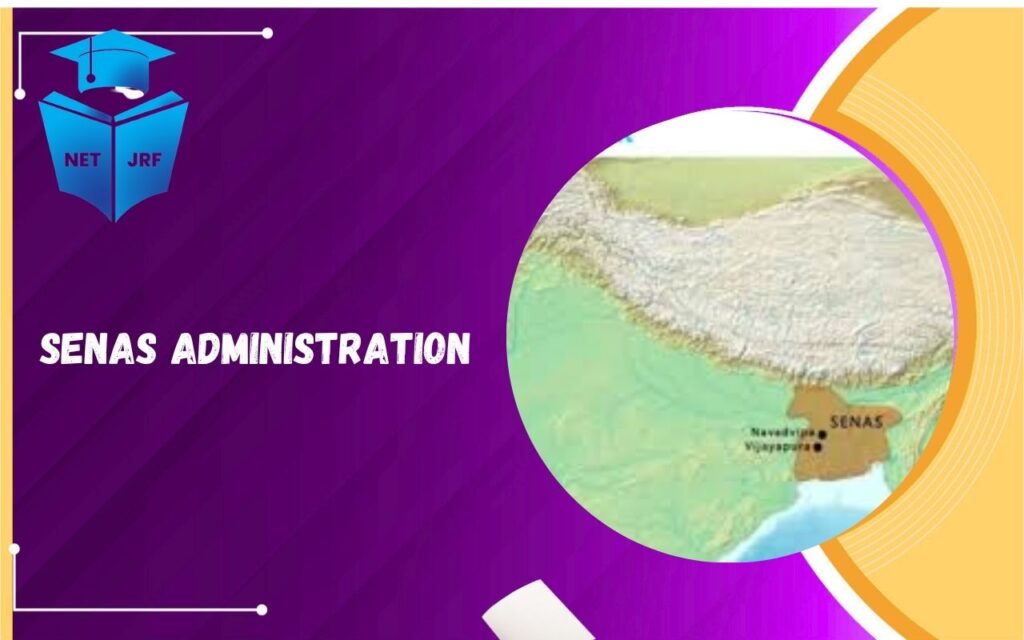
Senas Administration and Social Policies in Medieval Bengal

Senas Administration Social Policies in this topic you learn how Sena rulers managed governance social hierarchy economy religion education cultural growth and their lasting impact on medieval Bengal

vishal

Senas Administration

Table of Contents

The Senas were a powerful dynasty that ruled Bengal after the decline of the Palas. Their administration and social policies laid the foundation for governance, education, and societal structures in medieval Bengal.

Study Planner

Historical Background of Senas

The Senas emerged in Bengal around the 11th century CE, succeeding the Palas. They were originally a Kshatriya family from Karnataka and established control over key Bengal regions. Key rulers include Vijaya Sena, Ballala Sena, and Lakshmana Sena. Under their rule, Bengal experienced political stability, cultural growth, and social restructuring.

Enroll UGC NET Online Coaching

Political Expansion of Sena Dynasty

The Sena dynasty expanded its power across Bengal through a combination of military campaigns, strategic alliances, and efficient governance. This allowed them to establish a stable and influential kingdom in eastern India during the 11th–13th centuries.

Expansion Areas:

  • Bengal region – the core territory of the dynasty
  • Parts of Bihar – extending influence westward
  • Eastern India – gradually covering strategic trade and agricultural centers

Methods of Expansion:

  1. Military Conquests – defeating local rulers and regional chiefs
  2. Diplomatic Alliances – marrying into influential families and forming pacts with neighboring states
  3. Administrative Control – establishing governance structures to maintain authority over newly acquired regions

Through these methods, the Sena dynasty created a stable political system and strengthened their position as the dominant power in eastern India.

Important Rulers of Sena Dynasty

The success of the Sena dynasty was largely due to its capable rulers who combined military skill with administrative foresight.

  • Vijayasena
      • Considered the greatest ruler of the Sena dynasty
      • Expanded the kingdom widely across Bengal and Bihar
      • Laid the foundation for political stability
  • Ballalasena
      • Known for social reforms and strengthening Brahmanical traditions
      • Encouraged caste hierarchy to stabilize society
      • Supported Brahmins and Hindu scholars, consolidating cultural authority
  • Lakshmanasena
    • Last major ruler of the dynasty
    • Faced external invasions from emerging Turkish powers
    • During his reign, the dynasty reached its peak but also encountered significant challenges

Administrative System

The Sena dynasty developed a structured administration to govern its expanding territories effectively.

Features of Administration:

  • King as supreme authority – held central power and final say in all matters
  • Division into provinces – regional control through governors
  • Local administration – village-level officers managed daily affairs

Officials in Administration:

  • Governors – oversaw provinces and ensured tax collection
  • Revenue officers – managed land revenue and trade taxes
  • Military leaders – maintained security and mobilized forces when needed

This administrative framework allowed the Sena rulers to maintain control over large regions and respond effectively to political challenges.

Social and Religious Policies

The Sena dynasty strongly supported Brahmanical traditions, which influenced both social life and religious practices.

Social Structure:

  • Promotion of caste system to organize society
  • Support to Brahmins – granted land and privileges to strengthen social stability
  • Social hierarchy – ensured smooth functioning of administrative and religious systems

Religious Policies:

  • Encouraged Hindu practices and rituals
  • Built temples as centers of culture and religious authority
  • Supported scholars and Brahmanical education

These policies shaped society under the Sena dynasty, reinforcing their cultural and political influence in Bengal.

Enroll UGC NET Online Course

Economic Conditions

The Sena dynasty had a stable economy that supported political expansion and military campaigns.

Main Sources of Revenue:

  • Land revenue – major source collected from fertile agricultural areas
  • Trade – active commerce within Bengal and with neighboring regions
  • Taxes – imposed on markets, crafts, and local production

Agriculture:

  • Fertile lands of Bengal provided high yield
  • Use of irrigation systems, such as canals and tanks, improved productivity

This economic strength underpinned the political and military expansion of the Sena dynasty.

Sena Dynasty Key Facts

The Sena Dynasty was a significant medieval dynasty that ruled parts of eastern India, especially Bengal, after the decline of the Palas.

Feature Details
Dynasty Sena dynasty
Region Bengal
Period 11th–13th century
Founder Samanta Sena
Key Rulers Vijayasena, Ballalasena, Lakshmanasena
Economy Agriculture, trade, taxes
Social Policy Promotion of caste system, Brahmanical traditions
Religion Hinduism, temple patronage

Enroll UGC NET Coaching in Jaipur

Cultural Contributions

The Sena dynasty made significant contributions to literature, art, architecture, and education.

Literature:

  • Sanskrit literature flourished under court patronage
  • Scholars were encouraged to write and teach, leading to growth of learning centers

Architecture:

  • Temples were constructed as centers of culture and religion
  • Artistic development reflected Brahmanical influence

Education:

    • Support to scholars and teachers
    • Centers of learning grew in importance, contributing to intellectual and religious life

App JRF Adda

Decline of Sena Dynasty

The decline of the Sena dynasty began in the early 13th century due to both internal and external factors.

Causes of Decline:

  • Weak successors – inability to maintain political control
  • External invasions – rise of Turkish powers threatened the kingdom
  • Bakhtiyar Khalji’s Invasion – the Turkish general defeated Lakshmanasena, ending Sena authority in Bengal

The dynasty lost its territories gradually, and the political landscape of Bengal changed forever.

Political Importance

The Sena dynasty played a crucial role in eastern India’s history.

Key Contributions:

  • Ended Pala rule, establishing a new political order
  • Strengthened regional identity in Bengal
  • Maintained stability and controlled trade routes
  • Reinforced Brahmanical culture, influencing social norms for centuries 

Sena Dynasty Key Rulers and Contributions

The Sena Dynasty was an important ruling power in Bengal after the decline of the Palas, known for its role in reviving Hindu traditions and strengthening regional administration.

Ruler Reign Major Contributions
Vijaya Sena 1095–1159 CE Consolidated Bengal, military campaigns
Ballala Sena 1159–1179 CE Patronized literature, Sanskrit works
Lakshmana Sena 1179–1206 CE Expanded territories, cultural development

JRF Adda Book

Legacy of Senas

  • Strengthened Hindu social structure in Bengal.
  • Promoted learning, literature, and temple architecture.
  • Influenced later rulers with their administrative systems and cultural emphasis.

The Senas played a crucial role in shaping medieval Bengal’s administration and social fabric. Their policies strengthened governance, promoted education, religious harmony, and culture, leaving a lasting impact on the region.

Enroll UGC NET Offline Coaching in Jaipur

Read UGC NET Notes
1 Archaeological Sources for UGC NET Epigraphy – Study of Inscriptions Meaning of Historical Sources Archaeological
2 Meaning of Historical Sources Archaeological Sources for UGC NET Literary Sources in History Archaeological
3 Exploration in Archaeology Excavation Techniques in Archaeology Dating of Archaeological Sites Archaeological
4 Excavation Techniques in Archaeology Exploration in Archaeology Dating of Archaeological Sites Archaeological
5 Epigraphy – Study of Inscriptions Inscriptions in Reconstructing History Numismatics in History Archaeological
6 Inscriptions in Reconstructing History Epigraphy – Study of Inscriptions Archaeological Sources for UGC NET Archaeological
7 Numismatics in History Importance of Coins in History Epigraphy – Study of Inscriptions Archaeological
8 Importance of Coins in History Numismatics in History Archaeological Sources for UGC NET Archaeological
9 Dating of Archaeological Sites Excavation Techniques in Archaeology Dating Ancient Literary Sources Archaeological
10 Indigenous Literature Literary Sources in History Secular Literature as Historical Source Literary
11 Dating Ancient Literary Sources Literary Sources in History Dating of Archaeological Sites Literary
12 Literary Sources in History Indigenous Literature Foreign Accounts of India Literary
13 Foreign Accounts of India Greek Accounts on Ancient India Chinese Accounts on India Literary
14 Greek Accounts on Ancient India Foreign Accounts of India Chinese Accounts on India Literary
15 Secular Literature as Historical Source Literary Sources in History Indigenous Literature Literary
16 Role of Myths and Legends in Historical Reconstruction Literary Sources in History Secular Literature as Historical Source Literary
17 Chinese Accounts on India Foreign Accounts of India Greek Accounts on Ancient India Literary
18 Arabic Accounts on India Foreign Accounts of India Chinese Accounts on India Literary
19 Neolithic and Chalcolithic Phases Neolithic Revolution in India Chalcolithic Culture in India Neolithic
20 Hunting, Gathering & Food Production Neolithic Revolution in India Neolithic Settlements in India Neolithic
21 Neolithic Revolution in India Neolithic Settlements in India Tools and Technology in Neolithic Period Neolithic
22 Neolithic Settlements in India Distribution of Neolithic Cultures in India Neolithic Revolution in India Neolithic
23 Distribution of Neolithic Cultures in India Neolithic Settlements in India Tools and Technology in Neolithic Period Neolithic
24 Tools and Technology in Neolithic Period Neolithic Revolution in India Chalcolithic Culture in India Neolithic
25 Chalcolithic Culture in India Settlement Pattern & Economy in Chalcolithic Phase Trade & Exchange Networks in Chalcolithic Societies Neolithic
26 Settlement Pattern & Economy – Chalcolithic Phase Chalcolithic Culture in India Trade & Exchange Networks in Chalcolithic Societies Neolithic
27 Trade & Exchange Networks – Chalcolithic Societies Chalcolithic Culture in India IVC Internal & External Trade Neolithic
28 Indus Valley Civilization – UGC NET Major Sites of Indus Civilization Urban Planning in Harappan Civilization IVC
29 IVC Internal & External Trade Internal Trade – Harappan Civilization Craft Specialization in Harappan Civilization IVC
30 Political Organization – Harappan Civilization Social Structure – Indus Civilization Urban Planning in Harappan Civilization IVC
31 Major Sites of Indus Civilization Indus Valley Civilization – UGC NET Urban Planning in Harappan Civilization IVC
32 Urban Planning & Settlement – Harappan Civilization Architecture & Town Planning – Harappan Cities IVC as First Urbanization in India IVC
33 Architecture & Town Planning – Harappan Cities Urban Planning in Harappan Civilization Major Sites of Indus Civilization IVC
34 Craft Specialization & Industrial Activities – Harappan Agriculture & Food Economy – Harappans IVC Internal & External Trade IVC
35 Agriculture & Food Economy – Harappans Craft Specialization in Harappan Civilization Internal Trade – Harappan Civilization IVC
36 Internal Trade – Harappan Civilization IVC Internal & External Trade Craft Specialization in Harappan Civilization IVC
37 Religion & Beliefs – Indus Civilization Social Structure – Indus Civilization Indus Valley Civilization – UGC NET IVC
38 Social Structure – Indus Civilization Political Organization – Harappan Civilization Religion & Beliefs – Indus Civilization IVC
39 Decline of Indus Civilization Indus Valley Civilization – UGC NET IVC as First Urbanization in India IVC
40 IVC as First Urbanization in India Urban Planning in Harappan Civilization Second Urbanization in India IVC
41 Vedic & Later Vedic Periods – Aryan Varna System Early Vedic Society and Economy Later Vedic Society and Economy Vedic
42 Origin of Vedic Civilization Aryan Debate – Migration, Invasion & Indigenous Theories Early Vedic Society and Economy Vedic
43 Aryan Debate – Migration, Invasion & Indigenous Theories Origin of Vedic Civilization Early Vedic Society and Economy Vedic
44 Early Vedic Society and Economy Political Institutions – Early Vedic Period Social Structure – Early Vedic Period Vedic
45 Political Institutions – Early Vedic Period Early Vedic Society and Economy Monarchical States in Ancient India Vedic
46 Social Structure – Early Vedic Period Emergence of Varnas & Social Stratification Early Vedic Society and Economy Vedic
47 Later Vedic Society and Economy Emergence of Varnas & Social Stratification Impact of Iron Technology in India Vedic
48 Emergence of Varnas & Social Stratification Social Structure – Early Vedic Period Later Vedic Society and Economy Vedic
49 Emergence of Heterodox Sects in India Jainism, Buddhism & Ajivikas – Origins & Teachings Later Vedic Society and Economy Vedic
50 Impact of Iron Technology in India Later Vedic Society and Economy Agricultural Expansion & Economic Changes – Ancient India Vedic
51 Religious & Philosophical Vedic Ideas Emergence of Varnas & Social Stratification Emergence of Heterodox Sects in India Vedic
52 Megalithic Culture of South India Neolithic and Chalcolithic Phases Agricultural Expansion & Economic Changes General
53 State System in Ancient India Rise of Mahajanapadas Transition: Tribal Polities to Territorial States General
54 Transition: Tribal Polities to Territorial States Rise of Mahajanapadas Later Vedic Society and Economy General
55 Rise of Mahajanapadas Monarchical States in Ancient India Republican States (Gana-Sanghas) – Ancient India Magadha
56 Monarchical States in Ancient India Rise of Mahajanapadas Emergence of Magadha Magadha
57 Republican States (Gana-Sanghas) – Ancient India Rise of Mahajanapadas Monarchical States in Ancient India Magadha
58 Agricultural Expansion & Economic Changes – Ancient India Second Urbanization in India Impact of Iron Technology in India General
59 Second Urbanization in India IVC as First Urbanization in India Rise of Mahajanapadas General
60 Jainism, Buddhism & Ajivikas – Origins & Teachings Emergence of Heterodox Sects in India Ashoka’s Policy of Dhamma General
61 Emergence of Magadha Geographical Advantages of Magadha Early Rulers of Magadha Magadha
62 Geographical Advantages of Magadha Natural Resources & Economic Strength of Magadha Reasons for Success of Magadha Magadha
63 Natural Resources & Economic Strength of Magadha Geographical Advantages of Magadha Economic Policies of the Nandas Magadha
64 Early Rulers of Magadha Haryanka Dynasty – Rise of Magadha Emergence of Magadha Magadha
65 Haryanka Dynasty – Rise of Magadha Expansion Policy of Bimbisara Early Rulers of Magadha Magadha
66 Expansion Policy of Bimbisara Ajatashatru – Military Reforms Haryanka Dynasty – Rise of Magadha Magadha
67 Ajatashatru – Military Reforms Wars of Ajatashatru Expansion Policy of Bimbisara Magadha
68 Wars of Ajatashatru Ajatashatru – Military Reforms Udayin & Establishment of Pataliputra Magadha
69 Udayin & Establishment of Pataliputra Wars of Ajatashatru Shishunaga Dynasty Magadha
70 Shishunaga Dynasty Administrative Structure of the Shishunagas Nanda Dynasty Magadha
71 Administrative Structure of the Shishunagas Shishunaga Dynasty Central Administration Under Mauryas Magadha
72 Nanda Dynasty Mahapadma Nanda – Imperial Expansion Shishunaga Dynasty Magadha
73 Mahapadma Nanda – Imperial Expansion Military Strength of the Nandas Nanda Dynasty Magadha
74 Economic Policies of the Nandas Nanda Dynasty Taxation System – Mauryan State Magadha
75 Military Strength of the Nandas Mahapadma Nanda – Imperial Expansion Defeat of Nandas & Rise of Mauryan Empire Magadha
76 Reasons for Success of Magadha Geographical Advantages of Magadha Natural Resources & Economic Strength of Magadha Magadha
77 Mahajanapadas to Empire – Evolution & Rise of Magadha Rise of Mahajanapadas Emergence of Magadha Magadha
78 Mauryan Empire – Expansion Rise of Chandragupta Maurya Expansion of Mauryan Empire Maurya
79 Rise of Chandragupta Maurya Role of Chanakya in Rise of Mauryan Empire Defeat of Nandas & Rise of Mauryan Empire Maurya
80 Role of Chanakya in Rise of Mauryan Empire Rise of Chandragupta Maurya Defeat of Nandas & Rise of Mauryan Empire Maurya
81 Defeat of Nandas & Rise of Mauryan Empire Military Strength of the Nandas Rise of Chandragupta Maurya Maurya
82 Chandragupta Maurya – Seleucus Treaty & Diplomacy Expansion of Mauryan Empire Greek Accounts on Ancient India Maurya
83 Expansion of Mauryan Empire Chandragupta Maurya – Seleucus Treaty & Diplomacy Kalinga War Maurya
84 Administration of Chandragupta Maurya Central Administration Under Mauryas Mauryan Bureaucracy Maurya
85 Sources for Mauryan History Archaeological Sources for UGC NET Greek Accounts on Ancient India Maurya
86 Central Administration Under Mauryas Provincial Administration – Mauryan Empire Mauryan Bureaucracy Maurya
87 Provincial Administration – Mauryan Empire Local Administration – Mauryan Empire Central Administration Under Mauryas Maurya
88 Local Administration – Mauryan Empire Provincial Administration – Mauryan Empire Mauryan Bureaucracy Maurya
89 Mauryan Bureaucracy Central Administration Under Mauryas Espionage System – Mauryan Empire Maurya
90 Espionage System – Mauryan Empire Mauryan Bureaucracy Central Administration Under Mauryas Maurya
91 Ancient India – Trade and Commerce Trade and Commerce Under Mauryas Agrarian Economy – Mauryan Period Maurya
92 Agrarian Economy – Mauryan Period Taxation System – Mauryan State Trade and Commerce Under Mauryas Maurya
93 Trade and Commerce Under Mauryas Ancient India – Trade and Commerce Agrarian Economy – Mauryan Period Maurya
94 Taxation System – Mauryan State Agrarian Economy – Mauryan Period Economic Policies of the Nandas Maurya
95 Kalinga War Ashoka’s Policy of Dhamma Expansion of Mauryan Empire Maurya
96 Ashoka’s Policy of Dhamma Nature & Philosophy of Dhamma Kalinga War Maurya
97 Nature & Philosophy of Dhamma Ashoka’s Policy of Dhamma Jainism, Buddhism & Ajivikas Maurya

Senas: Administration, Social Policies FAQs

Loader image

They sponsored scholars, established learning centers, and promoted Sanskrit literature and intellectual activities.

The dynasty emphasized Hinduism, particularly Vaishnavism and Shaivism, building temples and supporting priests.


Officials like Mahapratihara, Dandanayaka, Senapati, and Amatya managed governance, law, military, and revenue.

Agriculture formed the main income, complemented by trade, markets, crafts, and taxation.

Leave a Reply

Recent Posts
Aditi

Aditi Sharma, founder of JRFAdda, is a Computer Science educator with an MCA degree and JRF qualification (99.91 percentile, Dec 2019). Her experience includes roles as an SBI SO (DBA), work at Cognizant, and over 5 years of teaching online and offline. She has also served as a Government Computer Teacher in Rajasthan.