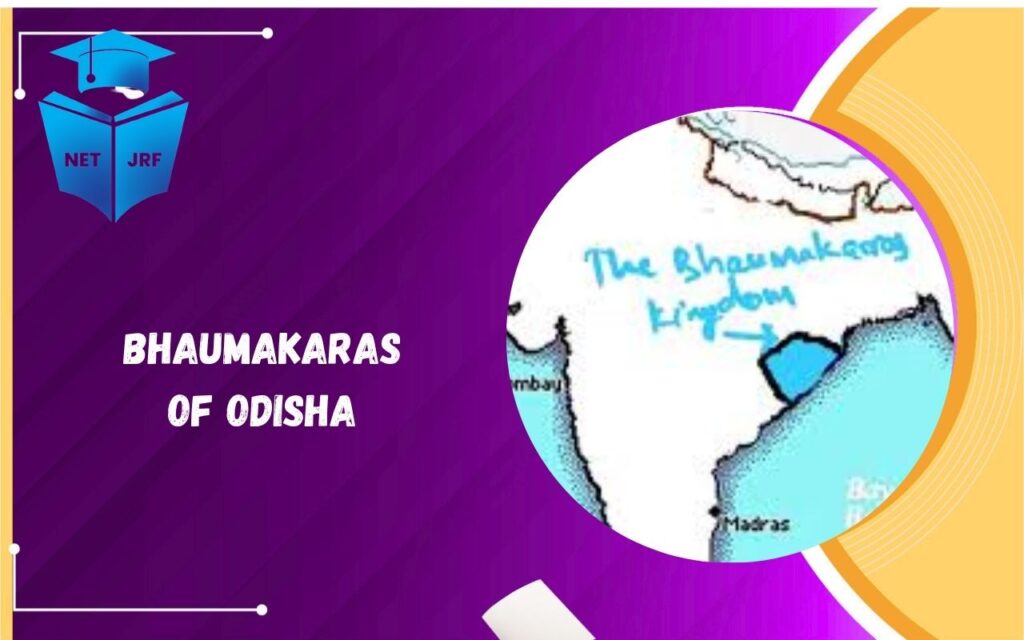
Bhaumakaras of Odisha, a prominent medieval dynasty that ruled Kalinga and surrounding regions from the 8th to 10th centuries CE. Known for their unique matriarchal succession and religious tolerance, they played a vital role in shaping Odisha’s political, cultural, and religious landscape. Their administration, support of diverse religions, and encouragement of learning left lasting impacts on Odishan history.
Enroll UGC NET Coaching in Jaipur
Origins Bhaumakaras of Odisha
The Bhaumakaras rose to prominence after the decline of the Gupta Empire and weakening of the Shailodbhava rulers in Odisha. They established control over Kalinga by defeating local rulers and consolidating their power through military campaigns and strategic alliances. The term “Bhauma” reflects a divine connection with the Earth Goddess (Bhumi Devi), while “Kara” indicates their administrative and military authority. Their capital was at Guheshvara Pattana, identified with modern Jajpur in Odisha.

Key Points:
- Ruled Kalinga and parts of eastern India from 8th to 10th centuries CE.
- Established authority in a politically fragmented region.
- Divine legitimacy suggested through the name Bhauma.
- Capital: Guheshvara Pattana (modern Jajpur).
Bhaumakaras of Odisha Dynastic Succession
One of the most remarkable features of the Bhaumakaras of Odisha was their matriarchal succession. Several queens ruled independently, which was rare in medieval India. Prominent queens included Tribhuvana Mahadevi I, who ascended the throne and led military campaigns, and Dandi Mahadevi, who maintained the dynasty’s traditions of religious tolerance and cultural support.
Administrative Structure:
- Centralized administration with hierarchical officials.
- Local governance by feudal chiefs (Samantas).
- Effective revenue collection and judicial oversight.
- Issued copper plate grants in Sanskrit and Odra-Magadhi documenting land grants.
Best UGC NET Offline Classes in Jaipur
Administrative Hierarchy under Bhaumakaras of Odisha
| Position | Role & Responsibilities |
| King/Queen | Supreme authority, military leadership, policy-making |
| Ministers | Assisted rulers in governance, finance, and law |
| Samantas | Local chiefs overseeing regions, tax collection, defense |
| Local Officers | Managed villages, implemented administrative orders |
| Religious Leaders | Supervised temples and monasteries |
Bhaumakaras of Odisha Prominent Rulers
- Shivakaradeva I (Founder): Unified Kalinga, established military and administrative systems.
- Tribhuvana Mahadevi I: First female ruler, notable for military leadership and support of Buddhism.
- Shubhakara Deva IV: Expanded influence, contributed to architecture and culture.
- Dandi Mahadevi: Ruled independently, promoted religious pluralism and temple construction.
Bhaumakaras of Odisha Religious Patronage
The Bhaumakaras of Odisha were remarkable for their inclusive religious policies. They supported Buddhism, Hinduism, and Jainism, reflecting a pluralistic society.
Buddhism:
- Promoted Tantric Mahayana and Vajrayana schools.
- Funded monasteries and stupas.
- Centers like Ratnagiri, Lalitgiri, and Udayagiri became major hubs of learning and Buddhist practice.
Hinduism:
- Supported Shaivism and Vaishnavism.
- Built temples for Shiva and Vishnu.
- Encouraged Hindu scholars and literature.
Jainism:
- Provided patronage to Jain communities, maintaining religious harmony.

Bhaumakaras of OdishaCultural Contributions
The Bhaumakaras of Odisha left rich legacies in art, literature, and education.
Literature:
- Promoted Sanskrit and Odra-Magadhi texts.
- Sponsored religious and poetic literature.
- Scholars produced Buddhist tantric scriptures and classical Sanskrit poetry.
Art and Sculpture:
- Early Odishan temples influenced later Kalinga architecture.
- Supported sculptural art in Buddhist and Hindu motifs.
- Exquisite carvings and narrative reliefs in temples reflect advanced artistic skills.
Education:
- Established educational institutions and monasteries.
- Attracted scholars from India and Southeast Asia.
- Buddhist centers like Ratnagiri became learning hubs.
Enroll UGC NET Online Test Series
Bhaumakaras of Odisha Social and Economic Policies
- Encouraged agrarian development through land grants.
- Supported artisans and craftsmen via temple construction projects.
- Issued copper plate inscriptions that provide insights into economic and social conditions.
- Ensured local governance through Samantas, balancing central authority with regional autonomy.
Legacy of Bhaumakaras of Odisha
The Bhaumakaras laid the foundation for subsequent Odishan dynasties, including the Eastern Gangas. Their promotion of religious tolerance, art, and education shaped the cultural landscape of Odisha for centuries. Their matriarchal succession and pluralistic policies were exceptional features that highlight their progressive approach in medieval Indian society.

Conclusion
The Bhaumakaras of Odisha demonstrated exceptional governance with matriarchal succession, inclusive religious policies, and patronage of art and education. Their administration balanced central authority with regional autonomy, while their cultural contributions enriched Odishan society.
Bhaumakaras of Odisha FAQs

What was the capital of the Bhaumakaras of Odisha?
The capital was Guheshvara Pattana, identified with modern Jajpur in Odisha.
Which religion did the Bhaumakaras of Odisha support?
They supported Buddhism, Hinduism, and Jainism, showing religious pluralism.
Who was Tribhuvana Mahadevi I?
She was a prominent queen who ruled independently and promoted Buddhism while leading military campaigns.
What was the administrative system under the Bhaumakaras of Odisha?
They had a hierarchical system with central officials, regional Samantas, and local officers overseeing governance, revenue, and law.
Which Buddhist centers flourished under the Bhaumakaras of Odisha?
Ratnagiri, Lalitgiri, and Udayagiri became major hubs of learning and practice.
Did the Bhaumakaras of Odisha contribute to literature?
Yes, they promoted Sanskrit and Odra-Magadhi texts including religious, tantric, and poetic literature.
How did the Bhaumakaras support art and architecture?
They initiated early Odishan temples and supported sculptures in Buddhist and Hindu motifs, influencing later Kalinga architecture.
Did women rule in the Bhaumakaras of Odisha dynasty?
Yes, queens like Tribhuvana Mahadevi I and Dandi Mahadevi ruled independently, which was rare in medieval India.
What is the legacy of the Bhaumakaras of Odisha?
They established a model of administration, religious tolerance, cultural growth, and education that influenced later Odishan dynasties.