

Guru Nanak Dev Teachings and Practices in Medieval India and Sikh Philosophy

Guru Nanak Dev teachings and practices in this topic you learn how Ik Onkar philosophy, Langar tradition, Udasis journeys, social equality, honest labour, community service, rejection of caste barriers, and Sikh spiritual values shaped medieval Indian society and religious reform.

vishal

Guru Nanak Dev

Table of Contents

Guru Nanak Dev remains one of history’s most influential spiritual leaders. He founded the Sikh faith during a time of great social and religious confusion. His message focused on the oneness of God and the equality of all human beings. This philosophy challenged the rigid caste systems and empty rituals of the 15th century. Today, millions of people follow his path of honest living and selfless service.

Study Planner

Understanding the life of Guru Nanak Dev helps us appreciate the roots of social justice in South Asia. He did not just preach; he lived his principles every single day.  He traveled thousands of miles to share his vision with people of different faiths. His teachings offer a practical way to achieve spiritual peace while remaining active in society. This balance makes his message relevant even in the modern world.
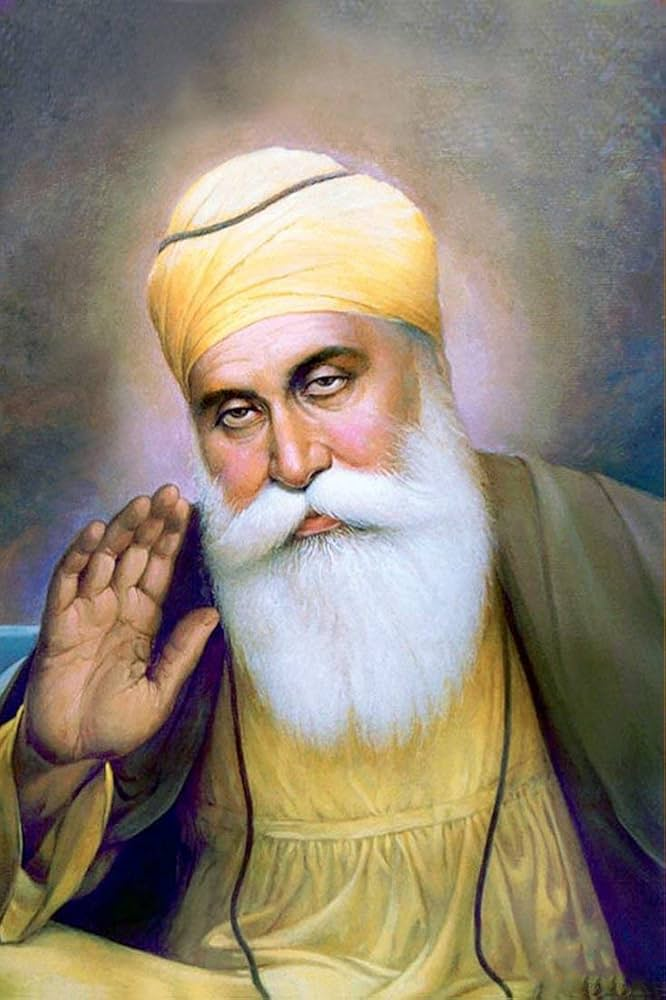
Guru Nanak Dev

Guru Nanak Dev Early Life 

The story of Guru Nanak Dev begins in 1469 in a village called Rai Bhoi di Talwandi. This place is now known as Nankana Sahib in modern-day Pakistan. From a very young age, he showed a deep interest in spiritual matters. He often surprised his teachers and parents with his profound questions about God and the soul. While other children played, he preferred to sit with holy men and discuss the mysteries of life.

  • One famous event from his youth is the “Sacha Sauda” or the True Bargain. His father gave him twenty rupees to start a business in the city. 
  • On the way, Nanak met a group of hungry and poor monks. Instead of buying goods to sell for profit, he spent all the money to feed the hungry men. 
  • He told his father that feeding the needy was the best business one could ever do. This event showed his early commitment to Vand Chakko or sharing with others.
  • Another turning point occurred at the river Bein. One morning, he went to bathe and did not come out for three days. Everyone thought he had drowned. 
  • When he finally emerged, he remained silent for a while. Eventually, he spoke his first words of revelation: 
  • There is no Hindu, there is no Muslim. This statement meant that God sees only the person, not the religious label. This experience marked the formal beginning of his mission to spread divine truth.

Enroll UGC NET Online Course

Guru Nanak Dev The Three Pillars

The philosophy of Guru Nanak Dev rests on three fundamental pillars. These principles provide a roadmap for a meaningful and ethical life. They ensure that spirituality does not lead to laziness or isolation from the world. Instead, they encourage followers to be productive and compassionate members of society.

  1. Naam Japo: This means meditating on the name of God. He taught that constant remembrance of the Creator keeps the mind pure. It helps a person overcome ego and stay connected to the divine source.
  2. Kirat Karo: This principle emphasizes honest labor. He rejected the idea of begging or living off the hard work of others. Every person should earn their living through truthful and physical means.
  3. Vand Chakko: This means sharing one’s earnings with the needy. It promotes the idea of social responsibility and community welfare. He believed that what we give to others actually comes back to us in spiritual wealth.

These three pillars create a balanced lifestyle. A person remembers God while working hard and helping others. This practical approach is a key reason why the movement grew so quickly. It appealed to common people like farmers, traders, and laborers who wanted a spiritual path they could follow while supporting their families.

Join UGC NET Online Coaching

Concept of Ik Onkar and Monotheism

The most central teaching of Guru Nanak Dev is Ik Onkar. This symbol appears at the start of the Sikh scripture. It means “God is One.” He taught that there is only one Creator who exists inside everything and everyone. This belief rejected the worship of multiple idols or the idea that God lives only in specific temples or mosques.

  • He described God as Nirguna and Sarguna. Nirguna means God is without physical form or attributes. Sarguna means God is present within the visible creation. 
  • By seeing God in nature and in other people, a person develops a sense of universal brotherhood. This perspective removes the roots of hatred and prejudice. If the same divine light shines in everyone, then nobody is an enemy.
  • This monotheism also led to the rejection of rituals.
  •  He criticized practices like animal sacrifice, empty fasting, and complicated pilgrimages. He argued that if the heart is not pure, these external acts have no value. Real worship happens through truthful living and service. 
  • This religion of the heart simplified spirituality for the masses and removed the need for middlemen or priests.

Major Travels of Guru Nanak Dev The Udasis

Major Travels of Guru Nanak Dev, known as the Udasis, played a crucial role in spreading his teachings of devotion, equality, spiritual unity, social reform across different regions of South Asia, Central Asia, Middle East.

Journey Number Direction Key Locations Visited Major Impact
First Udasi East Haridwar, Varanasi, Assam Challenged rituals and caste
Second Udasi South Sri Lanka, Tamil Nadu Spread message of One God
Third Udasi North Tibet, Himalayas, Ladakh Met with Yogis and Siddhas
Fourth Udasi West Mecca, Medina, Baghdad Discussed faith with Sufi saints

the Caste System Breaking the Chains 

During the 15th century, the caste system strictly divided Indian society. People from lower castes faced terrible discrimination and were often barred from religious activities. Guru Nanak Dev took a firm stand against this injustice. He taught that caste is a hollow notion and that God only cares about a person’s deeds. He deliberately spent time with people from lower backgrounds to show that all are equal.

  • He introduced two major social practices to break these barriers: Sangat and Pangat. Sangat refers to a holy congregation where people of all castes sit together to pray. Pangat refers to the practice of sitting in a straight row to eat a common meal. 
  • This meal, known as Langar, became a revolutionary tool for social equality. In the Langar, a king and a beggar sit side by side and eat the same food.

By making these practices mandatory, he ensured that equality stayed at the center of the faith. He also empowered women in a way that was unheard of at the time. He asked why people look down on women when women give birth to the greatest leaders and kings. He allowed women to lead prayers and participate fully in all community affairs. This progressive social vision helped create a more just and inclusive society.

Guru Nanak Dev Institutional Practices and Social Equality

The growth of the community required strong institutions. Guru Nanak Dev established the town of Kartarpur on the banks of the Ravi River. This place became a model for the Sikh way of life. Here, followers lived together as a community of “householders.” They worked in the fields during the day and gathered for prayers in the evening. This lifestyle proved that one does not need to become a monk to find God.

  • In Kartarpur, he formalized the Langar system. He insisted that anyone who came to see him must first eat in the common kitchen. 
  • This rule applied even to powerful emperors. The Langar was funded by the voluntary contributions of the followers. This system taught the values of humility, service, and collective responsibility. It remains one of the most visible and respected traditions of the faith today.
  • He also emphasized the importance of the Shabad or the Divine Word. He composed many hymns in the language of the common people. 
  • These hymns, known as Bani, explained complex spiritual truths in simple poetry. 
  • By using the local dialect, he made divine knowledge accessible to everyone. This shift away from Sanskrit or Persian ensured that the message of truth reached the hearts of the common masses.

Enroll UGC NET Offline Coaching in Jaipur

Five Evils and Five Virtues

The Five Evils (Panj Chor) The Five Virtues (Panj Gunn)
Kam (Lust/Desire) Sat (Truth)
Krodh (Anger/Rage) Santokh (Contentment)
Lobh (Greed/Avarice) Daya (Compassion)
Moh (Attachment) Nimrata (Humility)
Ahankar (Ego/Pride) Pyar (Love)

UGC NET History Students

Students preparing for competitive exams like the UGC NET must understand specific academic terms. These terms describe the inner workings of the philosophy and the social structure of the early community. Mastering these words will help in identifying correct answers in history and philosophy papers.

  • Hukam: The Divine Will or Order. A person should live in harmony with the laws of nature and God.
  • Haumai: The ego or “I-am-ness.” He taught that ego is the biggest barrier between a human and God.
  • Manmukh: A person who follows their own ego and desires, leading to spiritual darkness.
  • Gurmukh: A person who turns toward the Guru and follows the path of truth.
  • Nadar: Divine Grace. While human effort is important, spiritual liberation ultimately comes through God’s grace.
  • Sewa: Selfless service. This is the practical application of love and compassion in the world.

These concepts explain why Guru Nanak Dev: focused so much on internal transformation. He believed that social change starts with the individual. If a person conquers their own ego and greed, they naturally become a better member of society. This link between personal ethics and social welfare is a hallmark of his teachings. Students should memorize these terms as they often appear in matching or multiple-choice questions.

App JRF Adda

The Final Years and the Succession

In his final years, Guru Nanak Dev faced the important task of choosing a successor. He did not choose his own sons, because they did not fully embody his teachings. Instead, he chose a devoted follower named Bhai Lehna

  • He tested Lehna’s humility and obedience many times. When Lehna passed every test, Nanak renamed him Angad, which means a part of my own body.
  • This act of choosing a successor based on merit rather than blood was revolutionary. It ensured that the leadership of the community remained in the hands of the most spiritually fit person. 
  • Guru Angad Dev continued the work of his master and further developed the Gurmukhi script. 
  • This transition ensured that the movement would survive and thrive after the founder passed away.
  • In 1539, the Great Teacher left his physical body in Kartarpur. A famous legend says that his Hindu and Muslim followers argued about whether to bury or cremate him. 
  • When they lifted the sheet covering his body, they found only fresh flowers. 
  • The Hindus took half the flowers and the Muslims took the other half. 
  • This story beautifully illustrates how Guru Nanak Dev belonged to all of humanity, beyond the boundaries of any single religion.

Top UGC NET Coaching in Jaipur

JRF Adda Book

Read UGC NET Notes
1 Archaeological Sources for UGC NET Epigraphy – Study of Inscriptions Meaning of Historical Sources Archaeological
2 Meaning of Historical Sources Archaeological Sources for UGC NET Literary Sources in History Archaeological
3 Exploration in Archaeology Excavation Techniques in Archaeology Dating of Archaeological Sites Archaeological
4 Excavation Techniques in Archaeology Exploration in Archaeology Dating of Archaeological Sites Archaeological
5 Epigraphy – Study of Inscriptions Inscriptions in Reconstructing History Numismatics in History Archaeological
6 Inscriptions in Reconstructing History Epigraphy – Study of Inscriptions Archaeological Sources for UGC NET Archaeological
7 Numismatics in History Importance of Coins in History Epigraphy – Study of Inscriptions Archaeological
8 Importance of Coins in History Numismatics in History Archaeological Sources for UGC NET Archaeological
9 Dating of Archaeological Sites Excavation Techniques in Archaeology Dating Ancient Literary Sources Archaeological
10 Indigenous Literature Literary Sources in History Secular Literature as Historical Source Literary
11 Dating Ancient Literary Sources Literary Sources in History Dating of Archaeological Sites Literary
12 Literary Sources in History Indigenous Literature Foreign Accounts of India Literary
13 Foreign Accounts of India Greek Accounts on Ancient India Chinese Accounts on India Literary
14 Greek Accounts on Ancient India Foreign Accounts of India Chinese Accounts on India Literary
15 Secular Literature as Historical Source Literary Sources in History Indigenous Literature Literary
16 Role of Myths and Legends in Historical Reconstruction Literary Sources in History Secular Literature as Historical Source Literary
17 Chinese Accounts on India Foreign Accounts of India Greek Accounts on Ancient India Literary
18 Arabic Accounts on India Foreign Accounts of India Chinese Accounts on India Literary
19 Neolithic and Chalcolithic Phases Neolithic Revolution in India Chalcolithic Culture in India Neolithic
20 Hunting, Gathering & Food Production Neolithic Revolution in India Neolithic Settlements in India Neolithic
21 Neolithic Revolution in India Neolithic Settlements in India Tools and Technology in Neolithic Period Neolithic
22 Neolithic Settlements in India Distribution of Neolithic Cultures in India Neolithic Revolution in India Neolithic
23 Distribution of Neolithic Cultures in India Neolithic Settlements in India Tools and Technology in Neolithic Period Neolithic
24 Tools and Technology in Neolithic Period Neolithic Revolution in India Chalcolithic Culture in India Neolithic
25 Chalcolithic Culture in India Settlement Pattern & Economy in Chalcolithic Phase Trade & Exchange Networks in Chalcolithic Societies Neolithic
26 Settlement Pattern & Economy – Chalcolithic Phase Chalcolithic Culture in India Trade & Exchange Networks in Chalcolithic Societies Neolithic
27 Trade & Exchange Networks – Chalcolithic Societies Chalcolithic Culture in India IVC Internal & External Trade Neolithic
28 Indus Valley Civilization – UGC NET Major Sites of Indus Civilization Urban Planning in Harappan Civilization IVC
29 IVC Internal & External Trade Internal Trade – Harappan Civilization Craft Specialization in Harappan Civilization IVC
30 Political Organization – Harappan Civilization Social Structure – Indus Civilization Urban Planning in Harappan Civilization IVC
31 Major Sites of Indus Civilization Indus Valley Civilization – UGC NET Urban Planning in Harappan Civilization IVC
32 Urban Planning & Settlement – Harappan Civilization Architecture & Town Planning – Harappan Cities IVC as First Urbanization in India IVC
33 Architecture & Town Planning – Harappan Cities Urban Planning in Harappan Civilization Major Sites of Indus Civilization IVC
34 Craft Specialization & Industrial Activities – Harappan Agriculture & Food Economy – Harappans IVC Internal & External Trade IVC
35 Agriculture & Food Economy – Harappans Craft Specialization in Harappan Civilization Internal Trade – Harappan Civilization IVC
36 Internal Trade – Harappan Civilization IVC Internal & External Trade Craft Specialization in Harappan Civilization IVC
37 Religion & Beliefs – Indus Civilization Social Structure – Indus Civilization Indus Valley Civilization – UGC NET IVC
38 Social Structure – Indus Civilization Political Organization – Harappan Civilization Religion & Beliefs – Indus Civilization IVC
39 Decline of Indus Civilization Indus Valley Civilization – UGC NET IVC as First Urbanization in India IVC
40 IVC as First Urbanization in India Urban Planning in Harappan Civilization Second Urbanization in India IVC
41 Vedic & Later Vedic Periods – Aryan Varna System Early Vedic Society and Economy Later Vedic Society and Economy Vedic
42 Origin of Vedic Civilization Aryan Debate – Migration, Invasion & Indigenous Theories Early Vedic Society and Economy Vedic
43 Aryan Debate – Migration, Invasion & Indigenous Theories Origin of Vedic Civilization Early Vedic Society and Economy Vedic
44 Early Vedic Society and Economy Political Institutions – Early Vedic Period Social Structure – Early Vedic Period Vedic
45 Political Institutions – Early Vedic Period Early Vedic Society and Economy Monarchical States in Ancient India Vedic
46 Social Structure – Early Vedic Period Emergence of Varnas & Social Stratification Early Vedic Society and Economy Vedic
47 Later Vedic Society and Economy Emergence of Varnas & Social Stratification Impact of Iron Technology in India Vedic
48 Emergence of Varnas & Social Stratification Social Structure – Early Vedic Period Later Vedic Society and Economy Vedic
49 Emergence of Heterodox Sects in India Jainism, Buddhism & Ajivikas – Origins & Teachings Later Vedic Society and Economy Vedic
50 Impact of Iron Technology in India Later Vedic Society and Economy Agricultural Expansion & Economic Changes – Ancient India Vedic
51 Religious & Philosophical Vedic Ideas Emergence of Varnas & Social Stratification Emergence of Heterodox Sects in India Vedic
52 Megalithic Culture of South India Neolithic and Chalcolithic Phases Agricultural Expansion & Economic Changes General
53 State System in Ancient India Rise of Mahajanapadas Transition: Tribal Polities to Territorial States General
54 Transition: Tribal Polities to Territorial States Rise of Mahajanapadas Later Vedic Society and Economy General
55 Rise of Mahajanapadas Monarchical States in Ancient India Republican States (Gana-Sanghas) – Ancient India Magadha
56 Monarchical States in Ancient India Rise of Mahajanapadas Emergence of Magadha Magadha
57 Republican States (Gana-Sanghas) – Ancient India Rise of Mahajanapadas Monarchical States in Ancient India Magadha
58 Agricultural Expansion & Economic Changes – Ancient India Second Urbanization in India Impact of Iron Technology in India General
59 Second Urbanization in India IVC as First Urbanization in India Rise of Mahajanapadas General
60 Jainism, Buddhism & Ajivikas – Origins & Teachings Emergence of Heterodox Sects in India Ashoka’s Policy of Dhamma General
61 Emergence of Magadha Geographical Advantages of Magadha Early Rulers of Magadha Magadha
62 Geographical Advantages of Magadha Natural Resources & Economic Strength of Magadha Reasons for Success of Magadha Magadha
63 Natural Resources & Economic Strength of Magadha Geographical Advantages of Magadha Economic Policies of the Nandas Magadha
64 Early Rulers of Magadha Haryanka Dynasty – Rise of Magadha Emergence of Magadha Magadha
65 Haryanka Dynasty – Rise of Magadha Expansion Policy of Bimbisara Early Rulers of Magadha Magadha
66 Expansion Policy of Bimbisara Ajatashatru – Military Reforms Haryanka Dynasty – Rise of Magadha Magadha
67 Ajatashatru – Military Reforms Wars of Ajatashatru Expansion Policy of Bimbisara Magadha
68 Wars of Ajatashatru Ajatashatru – Military Reforms Udayin & Establishment of Pataliputra Magadha
69 Udayin & Establishment of Pataliputra Wars of Ajatashatru Shishunaga Dynasty Magadha
70 Shishunaga Dynasty Administrative Structure of the Shishunagas Nanda Dynasty Magadha
71 Administrative Structure of the Shishunagas Shishunaga Dynasty Central Administration Under Mauryas Magadha
72 Nanda Dynasty Mahapadma Nanda – Imperial Expansion Shishunaga Dynasty Magadha
73 Mahapadma Nanda – Imperial Expansion Military Strength of the Nandas Nanda Dynasty Magadha
74 Economic Policies of the Nandas Nanda Dynasty Taxation System – Mauryan State Magadha
75 Military Strength of the Nandas Mahapadma Nanda – Imperial Expansion Defeat of Nandas & Rise of Mauryan Empire Magadha
76 Reasons for Success of Magadha Geographical Advantages of Magadha Natural Resources & Economic Strength of Magadha Magadha
77 Mahajanapadas to Empire – Evolution & Rise of Magadha Rise of Mahajanapadas Emergence of Magadha Magadha
78 Mauryan Empire – Expansion Rise of Chandragupta Maurya Expansion of Mauryan Empire Maurya
79 Rise of Chandragupta Maurya Role of Chanakya in Rise of Mauryan Empire Defeat of Nandas & Rise of Mauryan Empire Maurya
80 Role of Chanakya in Rise of Mauryan Empire Rise of Chandragupta Maurya Defeat of Nandas & Rise of Mauryan Empire Maurya
81 Defeat of Nandas & Rise of Mauryan Empire Military Strength of the Nandas Rise of Chandragupta Maurya Maurya
82 Chandragupta Maurya – Seleucus Treaty & Diplomacy Expansion of Mauryan Empire Greek Accounts on Ancient India Maurya
83 Expansion of Mauryan Empire Chandragupta Maurya – Seleucus Treaty & Diplomacy Kalinga War Maurya
84 Administration of Chandragupta Maurya Central Administration Under Mauryas Mauryan Bureaucracy Maurya
85 Sources for Mauryan History Archaeological Sources for UGC NET Greek Accounts on Ancient India Maurya
86 Central Administration Under Mauryas Provincial Administration – Mauryan Empire Mauryan Bureaucracy Maurya
87 Provincial Administration – Mauryan Empire Local Administration – Mauryan Empire Central Administration Under Mauryas Maurya
88 Local Administration – Mauryan Empire Provincial Administration – Mauryan Empire Mauryan Bureaucracy Maurya
89 Mauryan Bureaucracy Central Administration Under Mauryas Espionage System – Mauryan Empire Maurya
90 Espionage System – Mauryan Empire Mauryan Bureaucracy Central Administration Under Mauryas Maurya
91 Ancient India – Trade and Commerce Trade and Commerce Under Mauryas Agrarian Economy – Mauryan Period Maurya
92 Agrarian Economy – Mauryan Period Taxation System – Mauryan State Trade and Commerce Under Mauryas Maurya
93 Trade and Commerce Under Mauryas Ancient India – Trade and Commerce Agrarian Economy – Mauryan Period Maurya
94 Taxation System – Mauryan State Agrarian Economy – Mauryan Period Economic Policies of the Nandas Maurya
95 Kalinga War Ashoka’s Policy of Dhamma Expansion of Mauryan Empire Maurya
96 Ashoka’s Policy of Dhamma Nature & Philosophy of Dhamma Kalinga War Maurya
97 Nature & Philosophy of Dhamma Ashoka’s Policy of Dhamma Jainism, Buddhism & Ajivikas Maurya

Guru Nanak Dev His Teachings and Practices FAQs

Loader image

It is the opening phrase of the Sikh scripture and means "God is One."

He traveled on four major journeys to spread his message of truth and challenge superstitious beliefs.

He started it to promote social equality and ensure that no one goes hungry, regardless of their status.

The pillars are Naam Japo (meditation), Kirat Karo (honest work), and Vand Chakko (sharing).

He completely rejected it, teaching that all humans are equal and carry the same divine light.

Kartarpur is in modern Pakistan. It is the town where he spent his final years and established a model community.

 It is a story from his youth where he used money intended for business to feed hungry monks.

He chose Bhai Lehna, whom he renamed Guru Angad, to lead the community after him.

 His focus on equality, service, and honest living laid the foundation for modern social justice movements in India.

Leave a Reply

Recent Posts
Aditi

Aditi Sharma, founder of JRFAdda, is a Computer Science educator with an MCA degree and JRF qualification (99.91 percentile, Dec 2019). Her experience includes roles as an SBI SO (DBA), work at Cognizant, and over 5 years of teaching online and offline. She has also served as a Government Computer Teacher in Rajasthan.