Administration and society under Pratiharas: Military, Organization, Society, Cultural

Administration and society under Pratiharas in this topic you learn how the dynasty managed monarchy system provincial governance military organization caste structure revenue model and cultural development while maintaining stability in northern India

vishal

Pratiharas

Table of Contents

Administration and society under Pratiharas, a topic that highlights how this dynasty established strong governance systems and social order. The Pratihara rulers, emerging after the fall of the Gupta Empire, focused on creating efficient administration, balancing central authority with local governance, and ensuring social cohesion across their territories. Their policies influenced political stability and cultural integration across northern India.

Study Planner

Pratihara Administration

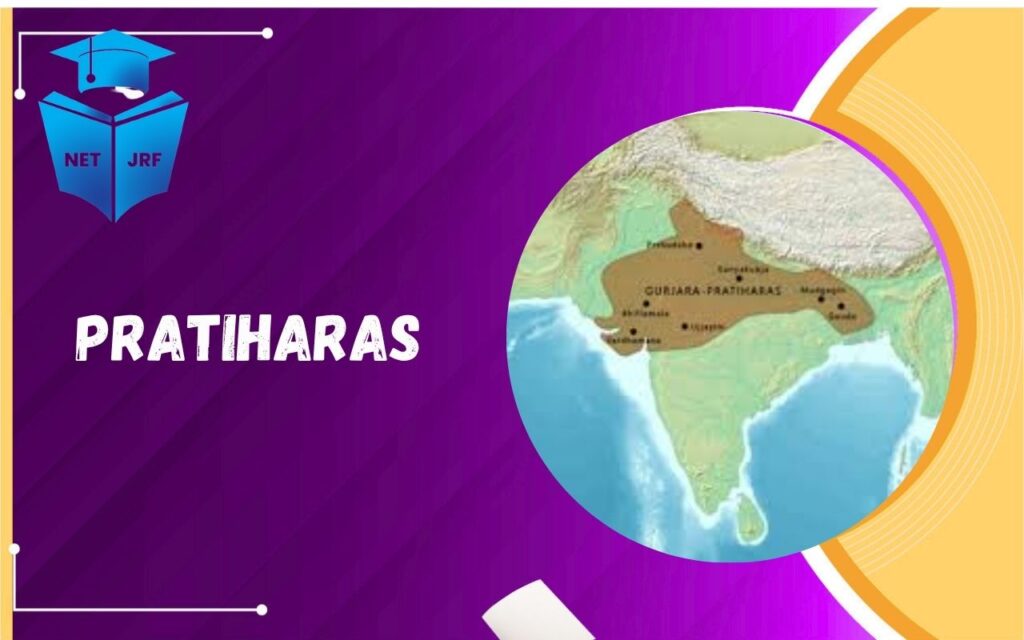
The Pratihara dynasty, prominent between the 8th and 11th centuries, governed a vast territory covering parts of present-day Rajasthan, Madhya Pradesh, and Gujarat. Their administration was marked by a hierarchical structure and effective delegation of authority.

Central Administration

At the top of the administrative hierarchy was the king, known as Maharajadhiraja, who held supreme authority. The king was assisted by ministers responsible for revenue, military, and judicial affairs. These ministers acted as advisors and executed policies efficiently across the empire.

  • Prime Minister: Managed internal affairs and coordinated state functions.
  • Finance Minister: Oversaw revenue collection, taxation, and land grants.
  • Defense Minister: Led armies, organized military campaigns, and ensured frontier security.
  • Judicial Officers: Administered justice and resolved disputes, maintaining law and order.

Enroll UGC NET Online Test Series

Provincial Administration

The Pratihara kingdom was divided into provinces called mandalas, each governed by a local ruler or governor known as Mandalik. These governors were often members of the royal family or loyal nobles. Their responsibilities included collecting taxes, maintaining law and order, and implementing royal decrees.

  • Provinces were further subdivided into districts, administered by officials called Vishayapati.
  • Local village administration was handled by councils (Gram Sabha), which had autonomy over local issues, showcasing early forms of self-governance.

Revenue System

Revenue collection was central to sustaining the Pratihara administration. The state primarily relied on land revenue, which was collected as a portion of agricultural produce. The kingdom also benefited from trade duties, taxes on crafts, and tribute from feudatories.

Enroll UGC NET Foundation Course

Key Features:

  • Land was categorized into royal land, tax-free land, and land granted to Brahmins or nobles.
  • Assessment of revenue was systematic, based on land fertility and crop type.
  • Officials ensured timely collection, minimizing corruption through local supervision.

Pratihara Military Organization

The Pratiharas maintained a well-structured military to protect their territories and expand their influence. The army included cavalry, infantry, and elephant corps, reflecting advanced military strategy.

  • Frontier defense: Forts and garrisons protected borders against invasions.
  • Feudal support: Local chiefs contributed troops, ensuring loyalty and rapid mobilization.
  • Campaigns: Pratihara kings frequently waged wars against Arab invaders, Gurjara-Pratihara rivals, and other regional dynasties.

App JRF Adda

Pratihara Society 

Pratihara society was deeply influenced by Hindu culture, caste structures, and local traditions. They fostered social harmony by supporting religion, culture, and local communities.

Social Hierarchy

  • Brahmins: Held religious authority and managed education.
  • Kshatriyas: Served as rulers and warriors, protecting the kingdom.
  • Vaishyas: Engaged in trade, crafts, and agriculture.
  • Shudras: Provided labor and service, often involved in village administration.

Join UGC NET Coaching in Jaipur

Role of Women

Women in Pratihara society enjoyed relative social freedom. Elite women managed households, participated in religious ceremonies, and sometimes influenced politics indirectly through patronage.

Urban and Rural Society

Urban centers like Kannauj thrived as political, commercial, and cultural hubs, while villages formed the backbone of agricultural production.

  • Urban centers: Hosted markets, temples, and administrative offices.
  • Villages: Maintained self-governing councils for local administration, ensuring societal stability.

Pratihara Cultural Contributions

The Pratihara dynasty actively promoted art, architecture, and education.

  • Temples and Sculptures: Flourishing temple architecture with intricate carvings reflected religious devotion.
  • Education: Support for Brahmin scholars and establishment of centers of learning contributed to UGC NET study resources for history.
  • Trade and Crafts: Encouraged artisanship, especially in textile production and metalwork.

Pratihara Interaction with Other Dynasties

The Pratiharas maintained diplomatic relations with contemporary powers, including:

  • Rashtrakutas: Through alliances and occasional conflicts.
  • Palas: Both cooperative and confrontational relationships, particularly for trade and territorial influence.
  • Arab Invaders: Successfully defended the northern frontier during early incursions.

Key Features of Administration and Society under Pratiharas

Aspect Details
Central Authority King as supreme ruler with ministers for revenue, defense, and justice
Provinces Mandalas governed by Mandaliks, districts by Vishayapati
Revenue System Land revenue, trade taxes, tribute from feudatories
Military Cavalry, infantry, elephants, frontier forts
Social Structure Caste-based hierarchy, urban-rural distinction
Education & Culture Temples, scholars, centers of learning, patronage to arts
Local Governance Village councils with autonomy in minor matters

Pratihara Legacy 

The Pratihara administrative framework laid the foundation for efficient governance in northern India. Their integration of central and local authority, emphasis on military defense, and support for social and cultural activities ensured long-lasting influence.

  • Encouraged local self-rule through village councils.
  • Promoted education, making their period significant for students preparing for UGC NET exams in Indian history.
  • Established a stable society capable of resisting foreign invasions.

Join UGC NET Offline Coaching in Jaipur

JRF Adda Book

Conclusion

Administration and society under Pratiharas combined centralized governance with effective local autonomy, maintaining social harmony, encouraging trade, and promoting cultural growth. 

Read UGC NET Notes
1 Archaeological Sources for UGC NET Epigraphy – Study of Inscriptions Meaning of Historical Sources Archaeological
2 Meaning of Historical Sources Archaeological Sources for UGC NET Literary Sources in History Archaeological
3 Exploration in Archaeology Excavation Techniques in Archaeology Dating of Archaeological Sites Archaeological
4 Excavation Techniques in Archaeology Exploration in Archaeology Dating of Archaeological Sites Archaeological
5 Epigraphy – Study of Inscriptions Inscriptions in Reconstructing History Numismatics in History Archaeological
6 Inscriptions in Reconstructing History Epigraphy – Study of Inscriptions Archaeological Sources for UGC NET Archaeological
7 Numismatics in History Importance of Coins in History Epigraphy – Study of Inscriptions Archaeological
8 Importance of Coins in History Numismatics in History Archaeological Sources for UGC NET Archaeological
9 Dating of Archaeological Sites Excavation Techniques in Archaeology Dating Ancient Literary Sources Archaeological
10 Indigenous Literature Literary Sources in History Secular Literature as Historical Source Literary
11 Dating Ancient Literary Sources Literary Sources in History Dating of Archaeological Sites Literary
12 Literary Sources in History Indigenous Literature Foreign Accounts of India Literary
13 Foreign Accounts of India Greek Accounts on Ancient India Chinese Accounts on India Literary
14 Greek Accounts on Ancient India Foreign Accounts of India Chinese Accounts on India Literary
15 Secular Literature as Historical Source Literary Sources in History Indigenous Literature Literary
16 Role of Myths and Legends in Historical Reconstruction Literary Sources in History Secular Literature as Historical Source Literary
17 Chinese Accounts on India Foreign Accounts of India Greek Accounts on Ancient India Literary
18 Arabic Accounts on India Foreign Accounts of India Chinese Accounts on India Literary
19 Neolithic and Chalcolithic Phases Neolithic Revolution in India Chalcolithic Culture in India Neolithic
20 Hunting, Gathering & Food Production Neolithic Revolution in India Neolithic Settlements in India Neolithic
21 Neolithic Revolution in India Neolithic Settlements in India Tools and Technology in Neolithic Period Neolithic
22 Neolithic Settlements in India Distribution of Neolithic Cultures in India Neolithic Revolution in India Neolithic
23 Distribution of Neolithic Cultures in India Neolithic Settlements in India Tools and Technology in Neolithic Period Neolithic
24 Tools and Technology in Neolithic Period Neolithic Revolution in India Chalcolithic Culture in India Neolithic
25 Chalcolithic Culture in India Settlement Pattern & Economy in Chalcolithic Phase Trade & Exchange Networks in Chalcolithic Societies Neolithic
26 Settlement Pattern & Economy – Chalcolithic Phase Chalcolithic Culture in India Trade & Exchange Networks in Chalcolithic Societies Neolithic
27 Trade & Exchange Networks – Chalcolithic Societies Chalcolithic Culture in India IVC Internal & External Trade Neolithic
28 Indus Valley Civilization – UGC NET Major Sites of Indus Civilization Urban Planning in Harappan Civilization IVC
29 IVC Internal & External Trade Internal Trade – Harappan Civilization Craft Specialization in Harappan Civilization IVC
30 Political Organization – Harappan Civilization Social Structure – Indus Civilization Urban Planning in Harappan Civilization IVC
31 Major Sites of Indus Civilization Indus Valley Civilization – UGC NET Urban Planning in Harappan Civilization IVC
32 Urban Planning & Settlement – Harappan Civilization Architecture & Town Planning – Harappan Cities IVC as First Urbanization in India IVC
33 Architecture & Town Planning – Harappan Cities Urban Planning in Harappan Civilization Major Sites of Indus Civilization IVC
34 Craft Specialization & Industrial Activities – Harappan Agriculture & Food Economy – Harappans IVC Internal & External Trade IVC
35 Agriculture & Food Economy – Harappans Craft Specialization in Harappan Civilization Internal Trade – Harappan Civilization IVC
36 Internal Trade – Harappan Civilization IVC Internal & External Trade Craft Specialization in Harappan Civilization IVC
37 Religion & Beliefs – Indus Civilization Social Structure – Indus Civilization Indus Valley Civilization – UGC NET IVC
38 Social Structure – Indus Civilization Political Organization – Harappan Civilization Religion & Beliefs – Indus Civilization IVC
39 Decline of Indus Civilization Indus Valley Civilization – UGC NET IVC as First Urbanization in India IVC
40 IVC as First Urbanization in India Urban Planning in Harappan Civilization Second Urbanization in India IVC
41 Vedic & Later Vedic Periods – Aryan Varna System Early Vedic Society and Economy Later Vedic Society and Economy Vedic
42 Origin of Vedic Civilization Aryan Debate – Migration, Invasion & Indigenous Theories Early Vedic Society and Economy Vedic
43 Aryan Debate – Migration, Invasion & Indigenous Theories Origin of Vedic Civilization Early Vedic Society and Economy Vedic
44 Early Vedic Society and Economy Political Institutions – Early Vedic Period Social Structure – Early Vedic Period Vedic
45 Political Institutions – Early Vedic Period Early Vedic Society and Economy Monarchical States in Ancient India Vedic
46 Social Structure – Early Vedic Period Emergence of Varnas & Social Stratification Early Vedic Society and Economy Vedic
47 Later Vedic Society and Economy Emergence of Varnas & Social Stratification Impact of Iron Technology in India Vedic
48 Emergence of Varnas & Social Stratification Social Structure – Early Vedic Period Later Vedic Society and Economy Vedic
49 Emergence of Heterodox Sects in India Jainism, Buddhism & Ajivikas – Origins & Teachings Later Vedic Society and Economy Vedic
50 Impact of Iron Technology in India Later Vedic Society and Economy Agricultural Expansion & Economic Changes – Ancient India Vedic
51 Religious & Philosophical Vedic Ideas Emergence of Varnas & Social Stratification Emergence of Heterodox Sects in India Vedic
52 Megalithic Culture of South India Neolithic and Chalcolithic Phases Agricultural Expansion & Economic Changes General
53 State System in Ancient India Rise of Mahajanapadas Transition: Tribal Polities to Territorial States General
54 Transition: Tribal Polities to Territorial States Rise of Mahajanapadas Later Vedic Society and Economy General
55 Rise of Mahajanapadas Monarchical States in Ancient India Republican States (Gana-Sanghas) – Ancient India Magadha
56 Monarchical States in Ancient India Rise of Mahajanapadas Emergence of Magadha Magadha
57 Republican States (Gana-Sanghas) – Ancient India Rise of Mahajanapadas Monarchical States in Ancient India Magadha
58 Agricultural Expansion & Economic Changes – Ancient India Second Urbanization in India Impact of Iron Technology in India General
59 Second Urbanization in India IVC as First Urbanization in India Rise of Mahajanapadas General
60 Jainism, Buddhism & Ajivikas – Origins & Teachings Emergence of Heterodox Sects in India Ashoka’s Policy of Dhamma General
61 Emergence of Magadha Geographical Advantages of Magadha Early Rulers of Magadha Magadha
62 Geographical Advantages of Magadha Natural Resources & Economic Strength of Magadha Reasons for Success of Magadha Magadha
63 Natural Resources & Economic Strength of Magadha Geographical Advantages of Magadha Economic Policies of the Nandas Magadha
64 Early Rulers of Magadha Haryanka Dynasty – Rise of Magadha Emergence of Magadha Magadha
65 Haryanka Dynasty – Rise of Magadha Expansion Policy of Bimbisara Early Rulers of Magadha Magadha
66 Expansion Policy of Bimbisara Ajatashatru – Military Reforms Haryanka Dynasty – Rise of Magadha Magadha
67 Ajatashatru – Military Reforms Wars of Ajatashatru Expansion Policy of Bimbisara Magadha
68 Wars of Ajatashatru Ajatashatru – Military Reforms Udayin & Establishment of Pataliputra Magadha
69 Udayin & Establishment of Pataliputra Wars of Ajatashatru Shishunaga Dynasty Magadha
70 Shishunaga Dynasty Administrative Structure of the Shishunagas Nanda Dynasty Magadha
71 Administrative Structure of the Shishunagas Shishunaga Dynasty Central Administration Under Mauryas Magadha
72 Nanda Dynasty Mahapadma Nanda – Imperial Expansion Shishunaga Dynasty Magadha
73 Mahapadma Nanda – Imperial Expansion Military Strength of the Nandas Nanda Dynasty Magadha
74 Economic Policies of the Nandas Nanda Dynasty Taxation System – Mauryan State Magadha
75 Military Strength of the Nandas Mahapadma Nanda – Imperial Expansion Defeat of Nandas & Rise of Mauryan Empire Magadha
76 Reasons for Success of Magadha Geographical Advantages of Magadha Natural Resources & Economic Strength of Magadha Magadha
77 Mahajanapadas to Empire – Evolution & Rise of Magadha Rise of Mahajanapadas Emergence of Magadha Magadha
78 Mauryan Empire – Expansion Rise of Chandragupta Maurya Expansion of Mauryan Empire Maurya
79 Rise of Chandragupta Maurya Role of Chanakya in Rise of Mauryan Empire Defeat of Nandas & Rise of Mauryan Empire Maurya
80 Role of Chanakya in Rise of Mauryan Empire Rise of Chandragupta Maurya Defeat of Nandas & Rise of Mauryan Empire Maurya
81 Defeat of Nandas & Rise of Mauryan Empire Military Strength of the Nandas Rise of Chandragupta Maurya Maurya
82 Chandragupta Maurya – Seleucus Treaty & Diplomacy Expansion of Mauryan Empire Greek Accounts on Ancient India Maurya
83 Expansion of Mauryan Empire Chandragupta Maurya – Seleucus Treaty & Diplomacy Kalinga War Maurya
84 Administration of Chandragupta Maurya Central Administration Under Mauryas Mauryan Bureaucracy Maurya
85 Sources for Mauryan History Archaeological Sources for UGC NET Greek Accounts on Ancient India Maurya
86 Central Administration Under Mauryas Provincial Administration – Mauryan Empire Mauryan Bureaucracy Maurya
87 Provincial Administration – Mauryan Empire Local Administration – Mauryan Empire Central Administration Under Mauryas Maurya
88 Local Administration – Mauryan Empire Provincial Administration – Mauryan Empire Mauryan Bureaucracy Maurya
89 Mauryan Bureaucracy Central Administration Under Mauryas Espionage System – Mauryan Empire Maurya
90 Espionage System – Mauryan Empire Mauryan Bureaucracy Central Administration Under Mauryas Maurya
91 Ancient India – Trade and Commerce Trade and Commerce Under Mauryas Agrarian Economy – Mauryan Period Maurya
92 Agrarian Economy – Mauryan Period Taxation System – Mauryan State Trade and Commerce Under Mauryas Maurya
93 Trade and Commerce Under Mauryas Ancient India – Trade and Commerce Agrarian Economy – Mauryan Period Maurya
94 Taxation System – Mauryan State Agrarian Economy – Mauryan Period Economic Policies of the Nandas Maurya
95 Kalinga War Ashoka’s Policy of Dhamma Expansion of Mauryan Empire Maurya
96 Ashoka’s Policy of Dhamma Nature & Philosophy of Dhamma Kalinga War Maurya
97 Nature & Philosophy of Dhamma Ashoka’s Policy of Dhamma Jainism, Buddhism & Ajivikas Maurya

Administration and society under Pratiharas FAQ

Loader image

The king was supported by ministers for revenue, defense, and judicial matters, ensuring smooth governance.

 Mandaliks governed provinces, collected taxes, maintained law and order, and implemented royal policies.

They used cavalry, infantry, elephants, and frontier forts while local chiefs provided additional troops.

Land revenue, trade duties, and tributes from feudatories formed the primary sources of income.

 Villages had councils that managed local administration, fostering self-governance and societal stability.


 

Leave a Reply

Recent Posts
Aditi

Aditi Sharma, founder of JRFAdda, is a Computer Science educator with an MCA degree and JRF qualification (99.91 percentile, Dec 2019). Her experience includes roles as an SBI SO (DBA), work at Cognizant, and over 5 years of teaching online and offline. She has also served as a Government Computer Teacher in Rajasthan.