

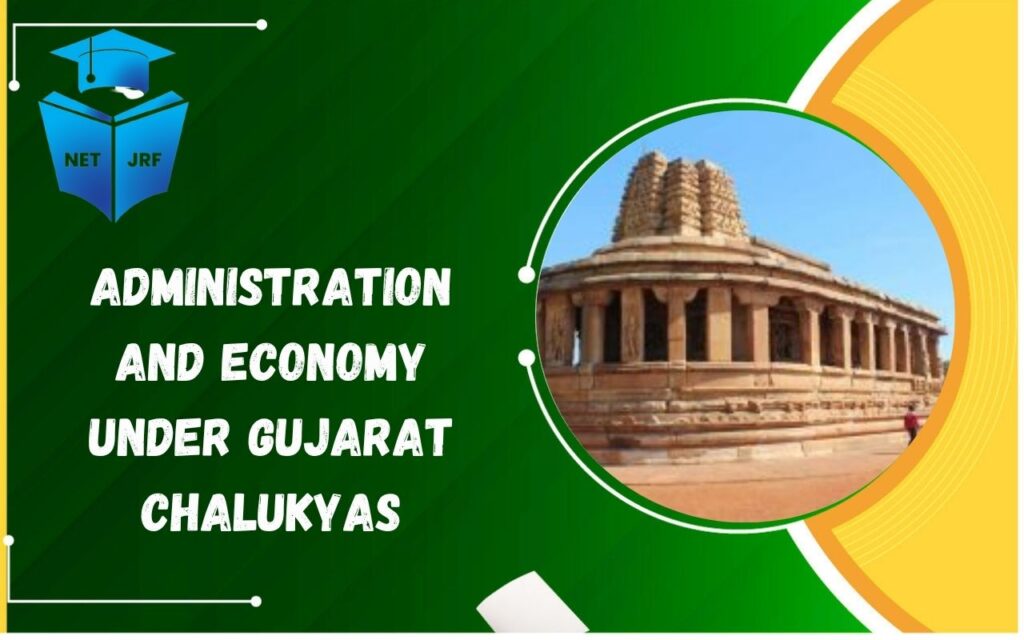
Administration and Economy under Gujarat Chalukyas

Administration and economy under Gujarat Chalukyas in this topic you learn how the dynasty managed governance taxation trade agriculture religion and urban development to build a strong and prosperous state in western India

vishal

administration and economy

Table of Contents

Administration and economy under Gujarat Chalukyas highlights how the dynasty managed governance, trade, and religion to create a prosperous and well-organized state. The Gujarat Chalukyas, also called Solankis, ruled from 950 to 1300 CE and had their capital at Anhilwara, a bustling city central to Indian Ocean trade. Their administration combined military strength, efficient taxation, and religious patronage, creating a society that flourished economically and culturally.

Study Planner

Rise of Gujarat Chalukyas

The Chalukyas of Gujarat, known locally as Solankis, claimed their origin from the Agnikula legend, suggesting a sacred fire pit on Mount Abu as their ancestral source. While historically debated, this legend emphasized divine legitimacy for their rule. Their dynasty emerged after Mularaja overthrew the last Chavda ruler in 940-941 CE, establishing Anhilwara (modern Patan) as the capital. From this center, the Chalukyas expanded across Gujarat, Kathiawar, and parts of Malwa.

  • Capital: Anhilwara, a major trade hub with an estimated population of 100,000 in 1000 CE.
  • Dynasty Duration: 950–1300 CE.
  • Key Rulers: Mularaja, Bhima I, Karna, Jayasimha Siddharaja, Kumarapala, Karna II.

The dynasty was known for strong military campaigns, urban planning, and promoting both Shaivism and Jainism, which deeply influenced Gujarat’s socio-cultural development.

Top UGC NET Coaching in Jaipur

 Gujarat Chalukyas Administrative Structure 

The Chalukya administration revolved around a strong centralized monarchy. The king held supreme authority, controlling military, judicial, and economic functions. Each ruler emphasized loyalty among local chiefs and ministers to maintain control over the territory.

  • King: Supreme authority, oversaw taxation, defense, and religious patronage.
  • Feudatories: Local chieftains administered regions under the king’s supervision.
  • Council of Ministers: Advisors assisted in finance, justice, and diplomacy.
  • Military Commanders: Maintained local security and led campaigns for expansion.

Local Governance

Administration at the village and city level focused on revenue collection, law, and order, and temple supervision. Local officials ensured efficient functioning while allowing trade and agriculture to flourish.

  • Revenue Officers: Collected taxes on land, trade, and production.
  • Village Assemblies: Played roles in dispute resolution and resource management.
  • Urban Administrators: Managed markets, roads, and water systems.

Military Administration

The Chalukyas maintained a strong standing army that secured trade routes, defended borders, and suppressed rebellions. Fortifications around major cities enhanced security.

  • Forts at strategic locations.
  • Cavalry and infantry organized under regional commanders.
  • Naval monitoring along coastal trade centers.

Gujarat Chalukyas Economy  

The economy was largely agrarian but strongly supplemented by trade, crafts, and taxation systems. Gujarat’s location on the western coast facilitated active Indian Ocean trade with Arabia, East Africa, and Southeast Asia.

Agriculture and Land Revenue

Agriculture formed the backbone of revenue collection. Fertile river plains and irrigation systems enhanced crop production.

  • Land Revenue: Collected from cultivators according to land productivity.
  • Irrigation Systems: Tanks, canals, and wells improved farming.
  • Agricultural Produce: Grains, oilseeds, cotton, and pulses dominated.

Trade and Commerce

Trade brought immense wealth, with Anhilwara serving as a major commercial hub. The dynasty promoted market regulation and merchant privileges.

  • Export Goods: Cotton textiles, spices, salt, and gems.
  • Urban Markets: Cities had organized bazaars with guilds of artisans.
  • Maritime Trade: Active ports connected Gujarat to Arabia and East Africa.

Taxation System

A structured taxation system supported public works, temples, and defense. Taxes were levied on land, trade, and markets.

  • Land Tax: Main source of royal income.
  • Trade Tax: Levied on imports and exports.
  • Temple Donations: Encouraged religious endowments benefiting both state and religion.

Best UGC NET Offline Classes in Jaipur

Gujarat Chalukyas Religion and Cultural Policies

The Chalukyas were patrons of both Shaivism and Jainism. Religious patronage strengthened political legitimacy and inspired public works.

Shaivism

Shaiva temples flourished, reflecting devotion and political authority.

  • Construction of RudraMahakala temple.
  • Kings performed rituals emphasizing their divine right.
  • Integration of Shaiva priests into administration.

Jainism

Jain scholars like Hemachandra gained prominence under the dynasty, particularly during Kumarapala’s reign.

  • Promotion of Jain temples and monasteries.
  • Royal support for Jain scholars enhanced literacy and philosophy.
  • Public works included step-wells and pilgrimage sites.

App JRF Adda

Gujarat Chalukyas Architectural and Urban Development

The Chalukyas invested in grand architecture and urban infrastructure.

  • Step-wells: Example, Rani ki Vav built in memory of Bhima I.
  • Temples: Sun Temple at Modhera, reflecting advanced stonework.
  • Urban Planning: Streets, water supply, and marketplaces were systematically organized.

Top UGC NET Online Course

Major Contributions of Gujarat Chalukya Kings

King Period Key Administrative and Economic Achievements Religious and Cultural Works
Mularaja 940-941 CE Established Anhilwara, centralized administration Mulavasatika and Mulanatha-jinadeva temples
Bhima I 1022-1064 CE Defended Gujarat, maintained trade Sun Temple Modhera, patronage of Somnath
Karna 1064-1092 CE Expanded territories, controlled Bhil chiefs Founded Karnavati, promoted temples
Jayasimha Siddharaja 1092-1142 CE Consolidated Gujarat, revenue reforms RudraMahakala temple, patron of Hemachandra
Kumarapala 1142-1172 CE Peak prosperity, trade expansion Reconstructed Somnath, major Jain patronage
Karna II 1172-1244 CE Faced invasions, administrative decline Defensive constructions, minor temple works

Legacy of Administration 

The Gujarat Chalukyas successfully combined military strength, administrative efficiency, and economic prosperity. Their patronage of trade, religion, and arts left an enduring cultural footprint in western India. By integrating urban growth, irrigation, and market regulation, they created a thriving economy that influenced later regional powers.

  • Strong central monarchy with effective local governance.
  • Trade-oriented economy with maritime connections.
  • Religious patronage legitimized political power.
  • Urban and architectural development improved civic life.

JRF Adda Book

In conclusion, Administration and economy under Gujarat Chalukyas showcased a dynasty that balanced military control, trade expansion, and cultural patronage. Their strategic governance, taxation policies, and promotion of Shaivism and Jainism created a prosperous society with lasting influence on western India’s economic and cultural landscape.

Top UGC NET Online Coaching

Read UGC NET Notes
1 Archaeological Sources for UGC NET Epigraphy – Study of Inscriptions Meaning of Historical Sources Archaeological
2 Meaning of Historical Sources Archaeological Sources for UGC NET Literary Sources in History Archaeological
3 Exploration in Archaeology Excavation Techniques in Archaeology Dating of Archaeological Sites Archaeological
4 Excavation Techniques in Archaeology Exploration in Archaeology Dating of Archaeological Sites Archaeological
5 Epigraphy – Study of Inscriptions Inscriptions in Reconstructing History Numismatics in History Archaeological
6 Inscriptions in Reconstructing History Epigraphy – Study of Inscriptions Archaeological Sources for UGC NET Archaeological
7 Numismatics in History Importance of Coins in History Epigraphy – Study of Inscriptions Archaeological
8 Importance of Coins in History Numismatics in History Archaeological Sources for UGC NET Archaeological
9 Dating of Archaeological Sites Excavation Techniques in Archaeology Dating Ancient Literary Sources Archaeological
10 Indigenous Literature Literary Sources in History Secular Literature as Historical Source Literary
11 Dating Ancient Literary Sources Literary Sources in History Dating of Archaeological Sites Literary
12 Literary Sources in History Indigenous Literature Foreign Accounts of India Literary
13 Foreign Accounts of India Greek Accounts on Ancient India Chinese Accounts on India Literary
14 Greek Accounts on Ancient India Foreign Accounts of India Chinese Accounts on India Literary
15 Secular Literature as Historical Source Literary Sources in History Indigenous Literature Literary
16 Role of Myths and Legends in Historical Reconstruction Literary Sources in History Secular Literature as Historical Source Literary
17 Chinese Accounts on India Foreign Accounts of India Greek Accounts on Ancient India Literary
18 Arabic Accounts on India Foreign Accounts of India Chinese Accounts on India Literary
19 Neolithic and Chalcolithic Phases Neolithic Revolution in India Chalcolithic Culture in India Neolithic
20 Hunting, Gathering & Food Production Neolithic Revolution in India Neolithic Settlements in India Neolithic
21 Neolithic Revolution in India Neolithic Settlements in India Tools and Technology in Neolithic Period Neolithic
22 Neolithic Settlements in India Distribution of Neolithic Cultures in India Neolithic Revolution in India Neolithic
23 Distribution of Neolithic Cultures in India Neolithic Settlements in India Tools and Technology in Neolithic Period Neolithic
24 Tools and Technology in Neolithic Period Neolithic Revolution in India Chalcolithic Culture in India Neolithic
25 Chalcolithic Culture in India Settlement Pattern & Economy in Chalcolithic Phase Trade & Exchange Networks in Chalcolithic Societies Neolithic
26 Settlement Pattern & Economy – Chalcolithic Phase Chalcolithic Culture in India Trade & Exchange Networks in Chalcolithic Societies Neolithic
27 Trade & Exchange Networks – Chalcolithic Societies Chalcolithic Culture in India IVC Internal & External Trade Neolithic
28 Indus Valley Civilization – UGC NET Major Sites of Indus Civilization Urban Planning in Harappan Civilization IVC
29 IVC Internal & External Trade Internal Trade – Harappan Civilization Craft Specialization in Harappan Civilization IVC
30 Political Organization – Harappan Civilization Social Structure – Indus Civilization Urban Planning in Harappan Civilization IVC
31 Major Sites of Indus Civilization Indus Valley Civilization – UGC NET Urban Planning in Harappan Civilization IVC
32 Urban Planning & Settlement – Harappan Civilization Architecture & Town Planning – Harappan Cities IVC as First Urbanization in India IVC
33 Architecture & Town Planning – Harappan Cities Urban Planning in Harappan Civilization Major Sites of Indus Civilization IVC
34 Craft Specialization & Industrial Activities – Harappan Agriculture & Food Economy – Harappans IVC Internal & External Trade IVC
35 Agriculture & Food Economy – Harappans Craft Specialization in Harappan Civilization Internal Trade – Harappan Civilization IVC
36 Internal Trade – Harappan Civilization IVC Internal & External Trade Craft Specialization in Harappan Civilization IVC
37 Religion & Beliefs – Indus Civilization Social Structure – Indus Civilization Indus Valley Civilization – UGC NET IVC
38 Social Structure – Indus Civilization Political Organization – Harappan Civilization Religion & Beliefs – Indus Civilization IVC
39 Decline of Indus Civilization Indus Valley Civilization – UGC NET IVC as First Urbanization in India IVC
40 IVC as First Urbanization in India Urban Planning in Harappan Civilization Second Urbanization in India IVC
41 Vedic & Later Vedic Periods – Aryan Varna System Early Vedic Society and Economy Later Vedic Society and Economy Vedic
42 Origin of Vedic Civilization Aryan Debate – Migration, Invasion & Indigenous Theories Early Vedic Society and Economy Vedic
43 Aryan Debate – Migration, Invasion & Indigenous Theories Origin of Vedic Civilization Early Vedic Society and Economy Vedic
44 Early Vedic Society and Economy Political Institutions – Early Vedic Period Social Structure – Early Vedic Period Vedic
45 Political Institutions – Early Vedic Period Early Vedic Society and Economy Monarchical States in Ancient India Vedic
46 Social Structure – Early Vedic Period Emergence of Varnas & Social Stratification Early Vedic Society and Economy Vedic
47 Later Vedic Society and Economy Emergence of Varnas & Social Stratification Impact of Iron Technology in India Vedic
48 Emergence of Varnas & Social Stratification Social Structure – Early Vedic Period Later Vedic Society and Economy Vedic
49 Emergence of Heterodox Sects in India Jainism, Buddhism & Ajivikas – Origins & Teachings Later Vedic Society and Economy Vedic
50 Impact of Iron Technology in India Later Vedic Society and Economy Agricultural Expansion & Economic Changes – Ancient India Vedic
51 Religious & Philosophical Vedic Ideas Emergence of Varnas & Social Stratification Emergence of Heterodox Sects in India Vedic
52 Megalithic Culture of South India Neolithic and Chalcolithic Phases Agricultural Expansion & Economic Changes General
53 State System in Ancient India Rise of Mahajanapadas Transition: Tribal Polities to Territorial States General
54 Transition: Tribal Polities to Territorial States Rise of Mahajanapadas Later Vedic Society and Economy General
55 Rise of Mahajanapadas Monarchical States in Ancient India Republican States (Gana-Sanghas) – Ancient India Magadha
56 Monarchical States in Ancient India Rise of Mahajanapadas Emergence of Magadha Magadha
57 Republican States (Gana-Sanghas) – Ancient India Rise of Mahajanapadas Monarchical States in Ancient India Magadha
58 Agricultural Expansion & Economic Changes – Ancient India Second Urbanization in India Impact of Iron Technology in India General
59 Second Urbanization in India IVC as First Urbanization in India Rise of Mahajanapadas General
60 Jainism, Buddhism & Ajivikas – Origins & Teachings Emergence of Heterodox Sects in India Ashoka’s Policy of Dhamma General
61 Emergence of Magadha Geographical Advantages of Magadha Early Rulers of Magadha Magadha
62 Geographical Advantages of Magadha Natural Resources & Economic Strength of Magadha Reasons for Success of Magadha Magadha
63 Natural Resources & Economic Strength of Magadha Geographical Advantages of Magadha Economic Policies of the Nandas Magadha
64 Early Rulers of Magadha Haryanka Dynasty – Rise of Magadha Emergence of Magadha Magadha
65 Haryanka Dynasty – Rise of Magadha Expansion Policy of Bimbisara Early Rulers of Magadha Magadha
66 Expansion Policy of Bimbisara Ajatashatru – Military Reforms Haryanka Dynasty – Rise of Magadha Magadha
67 Ajatashatru – Military Reforms Wars of Ajatashatru Expansion Policy of Bimbisara Magadha
68 Wars of Ajatashatru Ajatashatru – Military Reforms Udayin & Establishment of Pataliputra Magadha
69 Udayin & Establishment of Pataliputra Wars of Ajatashatru Shishunaga Dynasty Magadha
70 Shishunaga Dynasty Administrative Structure of the Shishunagas Nanda Dynasty Magadha
71 Administrative Structure of the Shishunagas Shishunaga Dynasty Central Administration Under Mauryas Magadha
72 Nanda Dynasty Mahapadma Nanda – Imperial Expansion Shishunaga Dynasty Magadha
73 Mahapadma Nanda – Imperial Expansion Military Strength of the Nandas Nanda Dynasty Magadha
74 Economic Policies of the Nandas Nanda Dynasty Taxation System – Mauryan State Magadha
75 Military Strength of the Nandas Mahapadma Nanda – Imperial Expansion Defeat of Nandas & Rise of Mauryan Empire Magadha
76 Reasons for Success of Magadha Geographical Advantages of Magadha Natural Resources & Economic Strength of Magadha Magadha
77 Mahajanapadas to Empire – Evolution & Rise of Magadha Rise of Mahajanapadas Emergence of Magadha Magadha
78 Mauryan Empire – Expansion Rise of Chandragupta Maurya Expansion of Mauryan Empire Maurya
79 Rise of Chandragupta Maurya Role of Chanakya in Rise of Mauryan Empire Defeat of Nandas & Rise of Mauryan Empire Maurya
80 Role of Chanakya in Rise of Mauryan Empire Rise of Chandragupta Maurya Defeat of Nandas & Rise of Mauryan Empire Maurya
81 Defeat of Nandas & Rise of Mauryan Empire Military Strength of the Nandas Rise of Chandragupta Maurya Maurya
82 Chandragupta Maurya – Seleucus Treaty & Diplomacy Expansion of Mauryan Empire Greek Accounts on Ancient India Maurya
83 Expansion of Mauryan Empire Chandragupta Maurya – Seleucus Treaty & Diplomacy Kalinga War Maurya
84 Administration of Chandragupta Maurya Central Administration Under Mauryas Mauryan Bureaucracy Maurya
85 Sources for Mauryan History Archaeological Sources for UGC NET Greek Accounts on Ancient India Maurya
86 Central Administration Under Mauryas Provincial Administration – Mauryan Empire Mauryan Bureaucracy Maurya
87 Provincial Administration – Mauryan Empire Local Administration – Mauryan Empire Central Administration Under Mauryas Maurya
88 Local Administration – Mauryan Empire Provincial Administration – Mauryan Empire Mauryan Bureaucracy Maurya
89 Mauryan Bureaucracy Central Administration Under Mauryas Espionage System – Mauryan Empire Maurya
90 Espionage System – Mauryan Empire Mauryan Bureaucracy Central Administration Under Mauryas Maurya
91 Ancient India – Trade and Commerce Trade and Commerce Under Mauryas Agrarian Economy – Mauryan Period Maurya
92 Agrarian Economy – Mauryan Period Taxation System – Mauryan State Trade and Commerce Under Mauryas Maurya
93 Trade and Commerce Under Mauryas Ancient India – Trade and Commerce Agrarian Economy – Mauryan Period Maurya
94 Taxation System – Mauryan State Agrarian Economy – Mauryan Period Economic Policies of the Nandas Maurya
95 Kalinga War Ashoka’s Policy of Dhamma Expansion of Mauryan Empire Maurya
96 Ashoka’s Policy of Dhamma Nature & Philosophy of Dhamma Kalinga War Maurya
97 Nature & Philosophy of Dhamma Ashoka’s Policy of Dhamma Jainism, Buddhism & Ajivikas Maurya

Administration and Economy under Gujarat Chalukyas FAQs

Loader image

Mularaja founded the dynasty in 940-941 CE after overthrowing the Chavdas.


Kumarapala reconstructed the Somnath temple while promoting Jainism.

Hemachandra was a Jain scholar patronized by Kumarapala and Jayasimha, advising on religious and administrative matters.

Agriculture was central, with irrigation systems and land revenue collection enhancing production.

Rani ki Vav and Sun Temple at Modhera exemplify Chalukya architecture.

Shaivism and Jainism legitimized rulers, and religious leaders advised on state policies.

Village assemblies and urban administrators maintained law, revenue, and civic order.

Through military campaigns, alliances, and subjugation of local chiefs, rulers expanded Gujarat and Kathiawar.


 

Leave a Reply

Recent Posts
Aditi

Aditi Sharma, founder of JRFAdda, is a Computer Science educator with an MCA degree and JRF qualification (99.91 percentile, Dec 2019). Her experience includes roles as an SBI SO (DBA), work at Cognizant, and over 5 years of teaching online and offline. She has also served as a Government Computer Teacher in Rajasthan.