
Alberuni Accounts in Medieval India and Ghaznavid Conquests Arab Contacts

Alberuni accounts in medieval India in this topic you learn how Alberuni studied Indian society Ghaznavid conquests shaped interaction Arab contacts enabled cultural exchange and how knowledge and politics combined in medieval period

vishal

Alberuni accounts in medieval India

Table of Contents

Arab contracts shaped early contacts between the Islamic world and the Indian subcontinent through warfare, diplomacy, trade, and intellectual exchange. These interactions did not remain limited to military expansion. They also produced detailed records, cultural encounters, and scholarly interpretations that transformed historical knowledge.

Historians examine Arab contracts to understand how political expansion led to cultural communication. Military campaigns opened routes for scholars, merchants, and travellers. Knowledge moved alongside armies, producing new understandings of Indian society.

Study Planner
The period of Ghaznavid expansion marks a turning point in Arab contracts with northern India. Political ambition combined with economic motives and religious identity. These elements shaped the pattern of interaction between Central Asian rulers and Indian kingdoms.

Enroll UGC NET Mock Test Series

Arab contracts in Early Medieval Political Expansion

Political interaction formed the first major stage of Arab contracts in the Indian region. Islamic powers from Central Asia sought wealth, prestige, and influence. Indian kingdoms offered both resistance and opportunity.

Expansion of Islamic Power

The Ghaznavid rulers created one of the earliest sustained political connections with northern India. Their campaigns linked Central Asian power with Indian territories.

The most important figure in this expansion was Mahmud of Ghazni. His repeated military expeditions shaped the nature of Arab contracts through conquest, tribute collection, and political control.

Features of Early Political Interaction

  • Military expeditions into frontier regions
  • Control of trade routes
  • Extraction of wealth from temples and cities
  • Establishment of administrative influence

These developments transformed Arab contracts into long-term geopolitical relationships rather than temporary raids.

Background of Ghaznavid State

The Ghaznavid empire emerged in Central Asia with its capital at Ghazni. The rulers aimed to expand territory and demonstrate military strength.

Motives Behind Expansion

  • Economic gain through plunder and tribute
  • Political legitimacy through conquest
  • Control over strategic trade networks
  • Religious prestige

Each motive strengthened Arab contracts by sustaining repeated campaigns across northwestern India.

Major Ghaznavid Campaigns into India

Military expeditions formed the most visible aspect of Arab contracts during the early eleventh century. These campaigns targeted wealthy cities and religious centres.

Important Campaign Features

  • Rapid cavalry movement
  • Strategic targeting of prosperous regions
  • Seasonal raids
  • Use of intelligence networks

Mahmud’s campaigns expanded Arab contracts beyond frontier zones into major urban centres. The raids created new political realities across Punjab and surrounding regions.

Impact of Military Activity

Military victories produced large transfers of wealth. They also created channels for cultural and intellectual contact. Scholars, administrators, and travellers moved along these routes, widening Arab contracts across societies.

Enroll UGC NET Online Test Series

Alberuni and Intellectual Observation

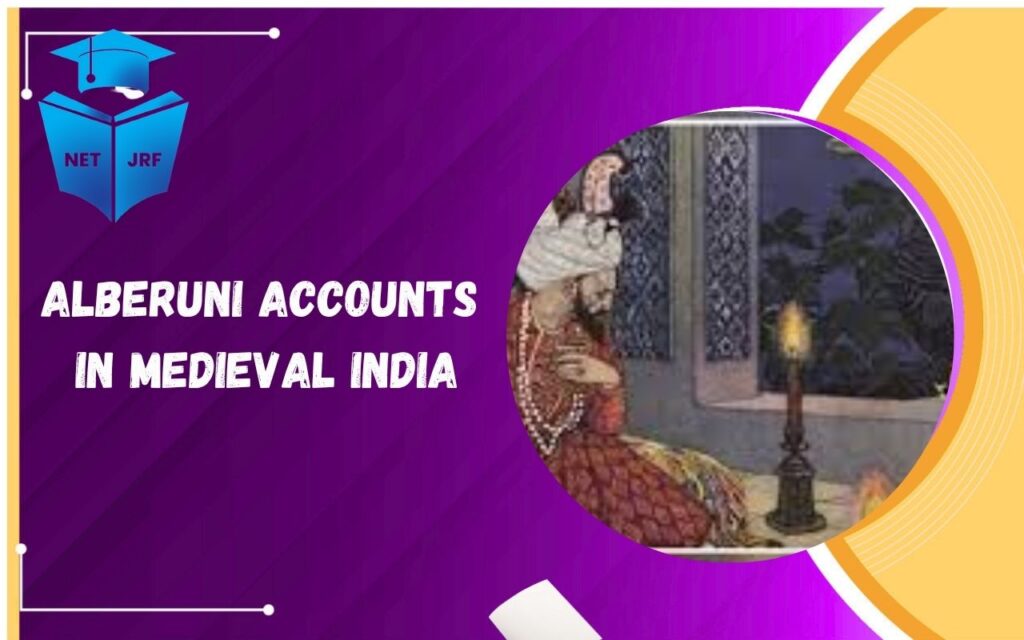
The scholarly dimension of Arab contracts appears clearly in the work of Al-Biruni. He travelled to India during the Ghaznavid period and studied its culture deeply.

His Purpose of Study

Alberuni aimed to understand Indian knowledge systems objectively. He learned Sanskrit and read religious texts. His method relied on observation and comparison.

Through his writings, Arab contracts gained a scholarly dimension that went beyond political domination.

App JRF Adda

Alberuni’s Book on India

His famous work Kitab-ul-Hind presents detailed descriptions of Indian society. It covers religion, philosophy, astronomy, geography, and social customs.

Key Themes in His Observations

  • Comparison of Islamic and Indian beliefs
  • Analysis of caste system
  • Study of scientific knowledge
  • Description of rituals and traditions

His research enriched Arab contracts by transforming cultural encounter into systematic knowledge.

Methodology Used by Alberuni

Alberuni followed a scientific approach. He avoided bias and emphasised direct learning.

His Research Methods

  • Learning local languages
  • Consulting scholars
  • Comparing texts
  • Recording observations

These practices made Arab contracts a source of cross-cultural understanding rather than simple conquest narratives.

Enroll UGC NET Offline Classes in Jaipur

Political vs Intellectual Interaction

Military conquest and scholarly curiosity represent two different dimensions of Arab contracts. Both shaped historical development but in different ways.

Arab contracts: Political vs Intellectual Exchange Political Interaction Intellectual Interaction
Main objective Territorial expansion Knowledge understanding
Key figures Rulers generals Scholars travellers
Primary method Warfare administration Study translation
Outcome Control of regions Cultural interpretation

This comparison shows how Arab contracts operated on multiple levels simultaneously.

Cultural Exchange During Period

Interaction produced mutual awareness between societies. Even conflict created channels for communication. This process strengthened Arab contracts through shared knowledge.

Areas of Cultural Contact

  • Mathematics and astronomy
  • Language learning
  • Religious discussion
  • Trade practices

These exchanges expanded Arab contracts beyond military history into intellectual history.

Administrative and Economic Effects

Political expansion introduced new administrative practices. Revenue collection systems and governance structures evolved through Arab contracts.

Economic Consequences

  • Movement of wealth across regions
  • Development of trade routes
  • Urban economic shifts

These changes reshaped regional economies connected to Arab contracts.

Features of Alberuni’s Observations

Topic Studied His Interpretation Historical Value
Religion Complex philosophical traditions Comparative theology
Science Advanced mathematical knowledge Scientific history
Society Structured social hierarchy Social analysis
Geography Detailed regional description Historical geography

His scholarship deepened understanding of Arab contracts by documenting Indian civilisation carefully.

Timeline of Major Events

Event Approximate Date Significance
Rise of Ghaznavid power Late 10th century Foundation of expansion
Mahmud’s Indian campaigns 1000–1027 CE Intensified interaction
Alberuni’s travels Early 11th century Scholarly documentation

Each stage expanded Arab contracts in political and intellectual forms.

Significance for UGC NET Studies

Students preparing for UGC NET must understand the complexity of Arab contracts. The topic connects military history, cultural exchange, and historical writing.

Key Exam Themes

  • Motives of Ghaznavid expansion
  • Alberuni’s research methods
  • Cultural interaction outcomes
  • Historical interpretation

Understanding Arab contracts helps students analyse medieval interaction patterns critically.

JRF Adda Book

Historical Interpretation by Scholars

Modern historians interpret Arab contracts as multidimensional contact zones. They emphasise both conflict and communication.

Some scholars highlight economic motives behind expansion. Others focus on knowledge exchange through translation and travel. These debates enrich our understanding of Arab contracts as complex historical processes.

Join UGC NET Coaching in Jaipur

Broader Impact on Indian History

The interaction between Central Asia and India reshaped regional politics and intellectual traditions. Long-term influence emerged in administration, scholarship, and cultural awareness.

Through these developments, Arab contracts contributed to global historical connectivity.

Conclusion

The history of medieval interaction between Central Asian powers and India reveals that Arab contracts combined military ambition with intellectual curiosity. Ghaznavid expansion created political links, while Alberuni transformed cultural encounter into scientific knowledge..

Read UGC NET Notes
1 Archaeological Sources for UGC NET Epigraphy – Study of Inscriptions Meaning of Historical Sources Archaeological
2 Meaning of Historical Sources Archaeological Sources for UGC NET Literary Sources in History Archaeological
3 Exploration in Archaeology Excavation Techniques in Archaeology Dating of Archaeological Sites Archaeological
4 Excavation Techniques in Archaeology Exploration in Archaeology Dating of Archaeological Sites Archaeological
5 Epigraphy – Study of Inscriptions Inscriptions in Reconstructing History Numismatics in History Archaeological
6 Inscriptions in Reconstructing History Epigraphy – Study of Inscriptions Archaeological Sources for UGC NET Archaeological
7 Numismatics in History Importance of Coins in History Epigraphy – Study of Inscriptions Archaeological
8 Importance of Coins in History Numismatics in History Archaeological Sources for UGC NET Archaeological
9 Dating of Archaeological Sites Excavation Techniques in Archaeology Dating Ancient Literary Sources Archaeological
10 Indigenous Literature Literary Sources in History Secular Literature as Historical Source Literary
11 Dating Ancient Literary Sources Literary Sources in History Dating of Archaeological Sites Literary
12 Literary Sources in History Indigenous Literature Foreign Accounts of India Literary
13 Foreign Accounts of India Greek Accounts on Ancient India Chinese Accounts on India Literary
14 Greek Accounts on Ancient India Foreign Accounts of India Chinese Accounts on India Literary
15 Secular Literature as Historical Source Literary Sources in History Indigenous Literature Literary
16 Role of Myths and Legends in Historical Reconstruction Literary Sources in History Secular Literature as Historical Source Literary
17 Chinese Accounts on India Foreign Accounts of India Greek Accounts on Ancient India Literary
18 Arabic Accounts on India Foreign Accounts of India Chinese Accounts on India Literary
19 Neolithic and Chalcolithic Phases Neolithic Revolution in India Chalcolithic Culture in India Neolithic
20 Hunting, Gathering & Food Production Neolithic Revolution in India Neolithic Settlements in India Neolithic
21 Neolithic Revolution in India Neolithic Settlements in India Tools and Technology in Neolithic Period Neolithic
22 Neolithic Settlements in India Distribution of Neolithic Cultures in India Neolithic Revolution in India Neolithic
23 Distribution of Neolithic Cultures in India Neolithic Settlements in India Tools and Technology in Neolithic Period Neolithic
24 Tools and Technology in Neolithic Period Neolithic Revolution in India Chalcolithic Culture in India Neolithic
25 Chalcolithic Culture in India Settlement Pattern & Economy in Chalcolithic Phase Trade & Exchange Networks in Chalcolithic Societies Neolithic
26 Settlement Pattern & Economy – Chalcolithic Phase Chalcolithic Culture in India Trade & Exchange Networks in Chalcolithic Societies Neolithic
27 Trade & Exchange Networks – Chalcolithic Societies Chalcolithic Culture in India IVC Internal & External Trade Neolithic
28 Indus Valley Civilization – UGC NET Major Sites of Indus Civilization Urban Planning in Harappan Civilization IVC
29 IVC Internal & External Trade Internal Trade – Harappan Civilization Craft Specialization in Harappan Civilization IVC
30 Political Organization – Harappan Civilization Social Structure – Indus Civilization Urban Planning in Harappan Civilization IVC
31 Major Sites of Indus Civilization Indus Valley Civilization – UGC NET Urban Planning in Harappan Civilization IVC
32 Urban Planning & Settlement – Harappan Civilization Architecture & Town Planning – Harappan Cities IVC as First Urbanization in India IVC
33 Architecture & Town Planning – Harappan Cities Urban Planning in Harappan Civilization Major Sites of Indus Civilization IVC
34 Craft Specialization & Industrial Activities – Harappan Agriculture & Food Economy – Harappans IVC Internal & External Trade IVC
35 Agriculture & Food Economy – Harappans Craft Specialization in Harappan Civilization Internal Trade – Harappan Civilization IVC
36 Internal Trade – Harappan Civilization IVC Internal & External Trade Craft Specialization in Harappan Civilization IVC
37 Religion & Beliefs – Indus Civilization Social Structure – Indus Civilization Indus Valley Civilization – UGC NET IVC
38 Social Structure – Indus Civilization Political Organization – Harappan Civilization Religion & Beliefs – Indus Civilization IVC
39 Decline of Indus Civilization Indus Valley Civilization – UGC NET IVC as First Urbanization in India IVC
40 IVC as First Urbanization in India Urban Planning in Harappan Civilization Second Urbanization in India IVC
41 Vedic & Later Vedic Periods – Aryan Varna System Early Vedic Society and Economy Later Vedic Society and Economy Vedic
42 Origin of Vedic Civilization Aryan Debate – Migration, Invasion & Indigenous Theories Early Vedic Society and Economy Vedic
43 Aryan Debate – Migration, Invasion & Indigenous Theories Origin of Vedic Civilization Early Vedic Society and Economy Vedic
44 Early Vedic Society and Economy Political Institutions – Early Vedic Period Social Structure – Early Vedic Period Vedic
45 Political Institutions – Early Vedic Period Early Vedic Society and Economy Monarchical States in Ancient India Vedic
46 Social Structure – Early Vedic Period Emergence of Varnas & Social Stratification Early Vedic Society and Economy Vedic
47 Later Vedic Society and Economy Emergence of Varnas & Social Stratification Impact of Iron Technology in India Vedic
48 Emergence of Varnas & Social Stratification Social Structure – Early Vedic Period Later Vedic Society and Economy Vedic
49 Emergence of Heterodox Sects in India Jainism, Buddhism & Ajivikas – Origins & Teachings Later Vedic Society and Economy Vedic
50 Impact of Iron Technology in India Later Vedic Society and Economy Agricultural Expansion & Economic Changes – Ancient India Vedic
51 Religious & Philosophical Vedic Ideas Emergence of Varnas & Social Stratification Emergence of Heterodox Sects in India Vedic
52 Megalithic Culture of South India Neolithic and Chalcolithic Phases Agricultural Expansion & Economic Changes General
53 State System in Ancient India Rise of Mahajanapadas Transition: Tribal Polities to Territorial States General
54 Transition: Tribal Polities to Territorial States Rise of Mahajanapadas Later Vedic Society and Economy General
55 Rise of Mahajanapadas Monarchical States in Ancient India Republican States (Gana-Sanghas) – Ancient India Magadha
56 Monarchical States in Ancient India Rise of Mahajanapadas Emergence of Magadha Magadha
57 Republican States (Gana-Sanghas) – Ancient India Rise of Mahajanapadas Monarchical States in Ancient India Magadha
58 Agricultural Expansion & Economic Changes – Ancient India Second Urbanization in India Impact of Iron Technology in India General
59 Second Urbanization in India IVC as First Urbanization in India Rise of Mahajanapadas General
60 Jainism, Buddhism & Ajivikas – Origins & Teachings Emergence of Heterodox Sects in India Ashoka’s Policy of Dhamma General
61 Emergence of Magadha Geographical Advantages of Magadha Early Rulers of Magadha Magadha
62 Geographical Advantages of Magadha Natural Resources & Economic Strength of Magadha Reasons for Success of Magadha Magadha
63 Natural Resources & Economic Strength of Magadha Geographical Advantages of Magadha Economic Policies of the Nandas Magadha
64 Early Rulers of Magadha Haryanka Dynasty – Rise of Magadha Emergence of Magadha Magadha
65 Haryanka Dynasty – Rise of Magadha Expansion Policy of Bimbisara Early Rulers of Magadha Magadha
66 Expansion Policy of Bimbisara Ajatashatru – Military Reforms Haryanka Dynasty – Rise of Magadha Magadha
67 Ajatashatru – Military Reforms Wars of Ajatashatru Expansion Policy of Bimbisara Magadha
68 Wars of Ajatashatru Ajatashatru – Military Reforms Udayin & Establishment of Pataliputra Magadha
69 Udayin & Establishment of Pataliputra Wars of Ajatashatru Shishunaga Dynasty Magadha
70 Shishunaga Dynasty Administrative Structure of the Shishunagas Nanda Dynasty Magadha
71 Administrative Structure of the Shishunagas Shishunaga Dynasty Central Administration Under Mauryas Magadha
72 Nanda Dynasty Mahapadma Nanda – Imperial Expansion Shishunaga Dynasty Magadha
73 Mahapadma Nanda – Imperial Expansion Military Strength of the Nandas Nanda Dynasty Magadha
74 Economic Policies of the Nandas Nanda Dynasty Taxation System – Mauryan State Magadha
75 Military Strength of the Nandas Mahapadma Nanda – Imperial Expansion Defeat of Nandas & Rise of Mauryan Empire Magadha
76 Reasons for Success of Magadha Geographical Advantages of Magadha Natural Resources & Economic Strength of Magadha Magadha
77 Mahajanapadas to Empire – Evolution & Rise of Magadha Rise of Mahajanapadas Emergence of Magadha Magadha
78 Mauryan Empire – Expansion Rise of Chandragupta Maurya Expansion of Mauryan Empire Maurya
79 Rise of Chandragupta Maurya Role of Chanakya in Rise of Mauryan Empire Defeat of Nandas & Rise of Mauryan Empire Maurya
80 Role of Chanakya in Rise of Mauryan Empire Rise of Chandragupta Maurya Defeat of Nandas & Rise of Mauryan Empire Maurya
81 Defeat of Nandas & Rise of Mauryan Empire Military Strength of the Nandas Rise of Chandragupta Maurya Maurya
82 Chandragupta Maurya – Seleucus Treaty & Diplomacy Expansion of Mauryan Empire Greek Accounts on Ancient India Maurya
83 Expansion of Mauryan Empire Chandragupta Maurya – Seleucus Treaty & Diplomacy Kalinga War Maurya
84 Administration of Chandragupta Maurya Central Administration Under Mauryas Mauryan Bureaucracy Maurya
85 Sources for Mauryan History Archaeological Sources for UGC NET Greek Accounts on Ancient India Maurya
86 Central Administration Under Mauryas Provincial Administration – Mauryan Empire Mauryan Bureaucracy Maurya
87 Provincial Administration – Mauryan Empire Local Administration – Mauryan Empire Central Administration Under Mauryas Maurya
88 Local Administration – Mauryan Empire Provincial Administration – Mauryan Empire Mauryan Bureaucracy Maurya
89 Mauryan Bureaucracy Central Administration Under Mauryas Espionage System – Mauryan Empire Maurya
90 Espionage System – Mauryan Empire Mauryan Bureaucracy Central Administration Under Mauryas Maurya
91 Ancient India – Trade and Commerce Trade and Commerce Under Mauryas Agrarian Economy – Mauryan Period Maurya
92 Agrarian Economy – Mauryan Period Taxation System – Mauryan State Trade and Commerce Under Mauryas Maurya
93 Trade and Commerce Under Mauryas Ancient India – Trade and Commerce Agrarian Economy – Mauryan Period Maurya
94 Taxation System – Mauryan State Agrarian Economy – Mauryan Period Economic Policies of the Nandas Maurya
95 Kalinga War Ashoka’s Policy of Dhamma Expansion of Mauryan Empire Maurya
96 Ashoka’s Policy of Dhamma Nature & Philosophy of Dhamma Kalinga War Maurya
97 Nature & Philosophy of Dhamma Ashoka’s Policy of Dhamma Jainism, Buddhism & Ajivikas Maurya

Arab contracts FAQs

Loader image

He sought wealth, political prestige, and control of trade routes. His campaigns also strengthened his authority in Central Asia.

Alberuni was a Persian scholar who studied Indian culture, religion, and science. His writings provide detailed historical evidence.

He learned Sanskrit, read texts, and interacted with scholars. He compared cultures using observation and analysis.

They explain medieval political expansion and cross-cultural knowledge exchange. Examiners often ask about Ghaznavid campaigns and Alberuni’s writings.

Yes. Movement of people, goods, and ideas followed military campaigns. This created intellectual interaction between regions.

It records detailed information about Indian religion, science, and society. Historians use it as a reliable primary source.

They produced travel accounts, cultural comparisons, and scholarly studies. These records shaped understanding of medieval societies.


Leave a Reply

Recent Posts
Aditi

Aditi Sharma, founder of JRFAdda, is a Computer Science educator with an MCA degree and JRF qualification (99.91 percentile, Dec 2019). Her experience includes roles as an SBI SO (DBA), work at Cognizant, and over 5 years of teaching online and offline. She has also served as a Government Computer Teacher in Rajasthan.