Paramara Dynasty: Check Origin Rulers Culture, and Administration in Malwa

Paramara dynasty origin rulers in this topic you learn how the dynasty emerged in Malwa key rulers like Bhoja their administration cultural achievements temples literature and reasons behind decline shaping medieval central India

vishal

paramara dynasty

Table of Contents

Paramara dynasty played a significant role in the medieval history of central India. From its origin to the rule of notable kings like Bhoja, the dynasty shaped the political, cultural, and administrative landscape of Malwa and surrounding regions. 

Study Planner

Paramara dynasty Origin 

The Paramara dynasty emerged in the 9th century CE in the Malwa region. Scholars suggest their lineage was linked to the Agnivanshi Rajputs, indicating a warrior origin. Early rulers consolidated power after the decline of the Pratiharas. Capitals like Dhara and Ujjain became centers of administration and culture.

Top UGC NET Coaching in Jaipur

Key Features of Their Origin

  • Time Period: 9th–14th centuries CE
  • Region: Malwa, parts of Madhya Pradesh and Rajasthan
  • Lineage: Agnivanshi Rajputs
  • Political Context: Post-Pratihara decline; competing Rajput clans

Paramara dynasty Prominent Rulers

The Paramara Dynasty was an important Rajput dynasty that ruled over the Malwa region and contributed significantly to political and cultural development.

1. Upendra

The first notable ruler who laid foundations for the dynasty. Consolidated Malwa against neighboring powers. Focused on establishing political authority rather than cultural patronage.

2. Siyaka

Expanded territory significantly. Laid the groundwork for later rulers’ cultural and literary contributions.

3. Munja (Vakpati)

Known for military campaigns and literary contributions. Patronized scholars, demonstrating early Paramara interest in culture and education.

4. Bhoja (1010–1055 CE)

The most famous Paramara ruler. Noted for cultural achievements:

  • Patronage of literature and Sanskrit scholars
  • Author of texts on architecture, poetry, and philosophy
  • Built temples and educational institutions
    Bhoja’s reign symbolizes the zenith of Paramara political and cultural power.

5. Jayasimha and successors

Maintained territorial integrity and continued cultural patronage, though later rulers faced invasions from the Delhi Sultanate.

Paramara Dynasty Administrative Structure 

The Paramaras followed a structured administration to manage their kingdom effectively:

  • Monarchical System: King at the apex, with ministers for revenue, defense, and culture
  • Provincial Administration: Governors managed districts under royal supervision
  • Revenue Collection: Land revenue was primary, with standardized taxation
  • Military Organization: Forts and local militias maintained security

This structure allowed the Paramaras to maintain stability in Malwa despite challenges.

Best UGC NET Offline Classes in Jaipur

Paramara Dynasty Cultural Achievements 

The Paramara Dynasty made remarkable contributions to culture, learning, and art, especially in the Malwa region.

Literature and Scholarship

  • Sanskrit literature flourished under Bhoja and Munja
  • Bhoja authored Samarangana Sutradhara, Rajamartanda, and other treatises
  • Scholars at Paramara courts produced poetry, philosophical texts, and scientific works
  • Cultural patronage contributed to continuity of UGC NET exam-focused knowledge

Architecture and Temples

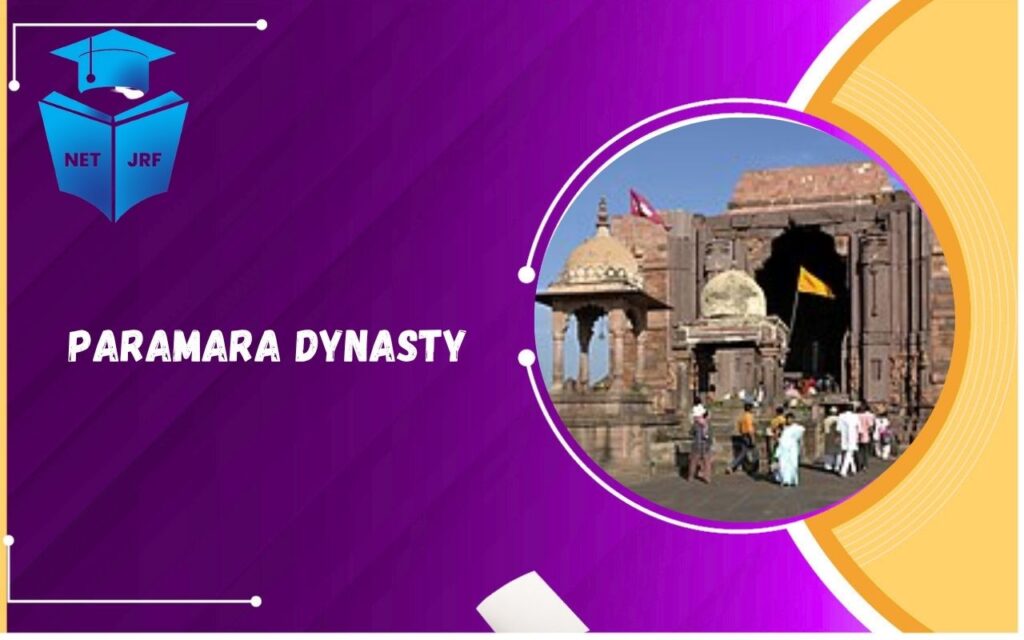
  • Construction of temples in Dhara and Ujjain with intricate carvings
  • Temples reflected Nagara architectural style
  • Religious patronage also included monasteries and mathas

Best UGC NET Foundation Course

App JRF Adda

Education and Knowledge Dissemination

  • Schools and centers for learning received royal grants
  • Paramara kings encouraged debates, poetry recitals, and philosophical discussions
  • Bhoja’s institutions became models for later medieval education

Art and Craftsmanship

  • Metalwork, sculpture, and manuscript illustration received royal attention
  • Art depicted religious themes, daily life, and royal symbolism

Paramara Dynasty Decline 

  • Invasions from the Delhi Sultanate in the 13th century weakened the dynasty
  • Successors lost territories gradually
  • By the 14th century, Paramara political power diminished, though cultural legacies persisted

Best UGC NET Foundation Batch Online

JRF Adda Book

Key Rulers and Contributions

The Paramara Dynasty was known for powerful rulers who contributed to political strength and cultural growth.

Ruler Period Contribution Notable Works / Achievements
Upendra 9th c. Consolidation Political foundation of Malwa
Siyaka 10th c. Expansion Military campaigns, territorial growth
Munja (Vakpati) 10–11th c. Cultural patronage Support to poets and scholars
Bhoja 1010–1055 CE Cultural zenith Samarangana Sutradhara, temples, educational institutions
Jayasimha 11–12th c. Continuity Maintained administration, cultural patronage

Paramara dynasty represents a fusion of political authority and cultural brilliance in medieval India. From the rise of Upendra to the zenith under Bhoja, their contribution to literature, temple architecture, arts, and education is enduring. 

Read UGC NET Notes
1 Archaeological Sources for UGC NET Epigraphy – Study of Inscriptions Meaning of Historical Sources Archaeological
2 Meaning of Historical Sources Archaeological Sources for UGC NET Literary Sources in History Archaeological
3 Exploration in Archaeology Excavation Techniques in Archaeology Dating of Archaeological Sites Archaeological
4 Excavation Techniques in Archaeology Exploration in Archaeology Dating of Archaeological Sites Archaeological
5 Epigraphy – Study of Inscriptions Inscriptions in Reconstructing History Numismatics in History Archaeological
6 Inscriptions in Reconstructing History Epigraphy – Study of Inscriptions Archaeological Sources for UGC NET Archaeological
7 Numismatics in History Importance of Coins in History Epigraphy – Study of Inscriptions Archaeological
8 Importance of Coins in History Numismatics in History Archaeological Sources for UGC NET Archaeological
9 Dating of Archaeological Sites Excavation Techniques in Archaeology Dating Ancient Literary Sources Archaeological
10 Indigenous Literature Literary Sources in History Secular Literature as Historical Source Literary
11 Dating Ancient Literary Sources Literary Sources in History Dating of Archaeological Sites Literary
12 Literary Sources in History Indigenous Literature Foreign Accounts of India Literary
13 Foreign Accounts of India Greek Accounts on Ancient India Chinese Accounts on India Literary
14 Greek Accounts on Ancient India Foreign Accounts of India Chinese Accounts on India Literary
15 Secular Literature as Historical Source Literary Sources in History Indigenous Literature Literary
16 Role of Myths and Legends in Historical Reconstruction Literary Sources in History Secular Literature as Historical Source Literary
17 Chinese Accounts on India Foreign Accounts of India Greek Accounts on Ancient India Literary
18 Arabic Accounts on India Foreign Accounts of India Chinese Accounts on India Literary
19 Neolithic and Chalcolithic Phases Neolithic Revolution in India Chalcolithic Culture in India Neolithic
20 Hunting, Gathering & Food Production Neolithic Revolution in India Neolithic Settlements in India Neolithic
21 Neolithic Revolution in India Neolithic Settlements in India Tools and Technology in Neolithic Period Neolithic
22 Neolithic Settlements in India Distribution of Neolithic Cultures in India Neolithic Revolution in India Neolithic
23 Distribution of Neolithic Cultures in India Neolithic Settlements in India Tools and Technology in Neolithic Period Neolithic
24 Tools and Technology in Neolithic Period Neolithic Revolution in India Chalcolithic Culture in India Neolithic
25 Chalcolithic Culture in India Settlement Pattern & Economy in Chalcolithic Phase Trade & Exchange Networks in Chalcolithic Societies Neolithic
26 Settlement Pattern & Economy – Chalcolithic Phase Chalcolithic Culture in India Trade & Exchange Networks in Chalcolithic Societies Neolithic
27 Trade & Exchange Networks – Chalcolithic Societies Chalcolithic Culture in India IVC Internal & External Trade Neolithic
28 Indus Valley Civilization – UGC NET Major Sites of Indus Civilization Urban Planning in Harappan Civilization IVC
29 IVC Internal & External Trade Internal Trade – Harappan Civilization Craft Specialization in Harappan Civilization IVC
30 Political Organization – Harappan Civilization Social Structure – Indus Civilization Urban Planning in Harappan Civilization IVC
31 Major Sites of Indus Civilization Indus Valley Civilization – UGC NET Urban Planning in Harappan Civilization IVC
32 Urban Planning & Settlement – Harappan Civilization Architecture & Town Planning – Harappan Cities IVC as First Urbanization in India IVC
33 Architecture & Town Planning – Harappan Cities Urban Planning in Harappan Civilization Major Sites of Indus Civilization IVC
34 Craft Specialization & Industrial Activities – Harappan Agriculture & Food Economy – Harappans IVC Internal & External Trade IVC
35 Agriculture & Food Economy – Harappans Craft Specialization in Harappan Civilization Internal Trade – Harappan Civilization IVC
36 Internal Trade – Harappan Civilization IVC Internal & External Trade Craft Specialization in Harappan Civilization IVC
37 Religion & Beliefs – Indus Civilization Social Structure – Indus Civilization Indus Valley Civilization – UGC NET IVC
38 Social Structure – Indus Civilization Political Organization – Harappan Civilization Religion & Beliefs – Indus Civilization IVC
39 Decline of Indus Civilization Indus Valley Civilization – UGC NET IVC as First Urbanization in India IVC
40 IVC as First Urbanization in India Urban Planning in Harappan Civilization Second Urbanization in India IVC
41 Vedic & Later Vedic Periods – Aryan Varna System Early Vedic Society and Economy Later Vedic Society and Economy Vedic
42 Origin of Vedic Civilization Aryan Debate – Migration, Invasion & Indigenous Theories Early Vedic Society and Economy Vedic
43 Aryan Debate – Migration, Invasion & Indigenous Theories Origin of Vedic Civilization Early Vedic Society and Economy Vedic
44 Early Vedic Society and Economy Political Institutions – Early Vedic Period Social Structure – Early Vedic Period Vedic
45 Political Institutions – Early Vedic Period Early Vedic Society and Economy Monarchical States in Ancient India Vedic
46 Social Structure – Early Vedic Period Emergence of Varnas & Social Stratification Early Vedic Society and Economy Vedic
47 Later Vedic Society and Economy Emergence of Varnas & Social Stratification Impact of Iron Technology in India Vedic
48 Emergence of Varnas & Social Stratification Social Structure – Early Vedic Period Later Vedic Society and Economy Vedic
49 Emergence of Heterodox Sects in India Jainism, Buddhism & Ajivikas – Origins & Teachings Later Vedic Society and Economy Vedic
50 Impact of Iron Technology in India Later Vedic Society and Economy Agricultural Expansion & Economic Changes – Ancient India Vedic
51 Religious & Philosophical Vedic Ideas Emergence of Varnas & Social Stratification Emergence of Heterodox Sects in India Vedic
52 Megalithic Culture of South India Neolithic and Chalcolithic Phases Agricultural Expansion & Economic Changes General
53 State System in Ancient India Rise of Mahajanapadas Transition: Tribal Polities to Territorial States General
54 Transition: Tribal Polities to Territorial States Rise of Mahajanapadas Later Vedic Society and Economy General
55 Rise of Mahajanapadas Monarchical States in Ancient India Republican States (Gana-Sanghas) – Ancient India Magadha
56 Monarchical States in Ancient India Rise of Mahajanapadas Emergence of Magadha Magadha
57 Republican States (Gana-Sanghas) – Ancient India Rise of Mahajanapadas Monarchical States in Ancient India Magadha
58 Agricultural Expansion & Economic Changes – Ancient India Second Urbanization in India Impact of Iron Technology in India General
59 Second Urbanization in India IVC as First Urbanization in India Rise of Mahajanapadas General
60 Jainism, Buddhism & Ajivikas – Origins & Teachings Emergence of Heterodox Sects in India Ashoka’s Policy of Dhamma General
61 Emergence of Magadha Geographical Advantages of Magadha Early Rulers of Magadha Magadha
62 Geographical Advantages of Magadha Natural Resources & Economic Strength of Magadha Reasons for Success of Magadha Magadha
63 Natural Resources & Economic Strength of Magadha Geographical Advantages of Magadha Economic Policies of the Nandas Magadha
64 Early Rulers of Magadha Haryanka Dynasty – Rise of Magadha Emergence of Magadha Magadha
65 Haryanka Dynasty – Rise of Magadha Expansion Policy of Bimbisara Early Rulers of Magadha Magadha
66 Expansion Policy of Bimbisara Ajatashatru – Military Reforms Haryanka Dynasty – Rise of Magadha Magadha
67 Ajatashatru – Military Reforms Wars of Ajatashatru Expansion Policy of Bimbisara Magadha
68 Wars of Ajatashatru Ajatashatru – Military Reforms Udayin & Establishment of Pataliputra Magadha
69 Udayin & Establishment of Pataliputra Wars of Ajatashatru Shishunaga Dynasty Magadha
70 Shishunaga Dynasty Administrative Structure of the Shishunagas Nanda Dynasty Magadha
71 Administrative Structure of the Shishunagas Shishunaga Dynasty Central Administration Under Mauryas Magadha
72 Nanda Dynasty Mahapadma Nanda – Imperial Expansion Shishunaga Dynasty Magadha
73 Mahapadma Nanda – Imperial Expansion Military Strength of the Nandas Nanda Dynasty Magadha
74 Economic Policies of the Nandas Nanda Dynasty Taxation System – Mauryan State Magadha
75 Military Strength of the Nandas Mahapadma Nanda – Imperial Expansion Defeat of Nandas & Rise of Mauryan Empire Magadha
76 Reasons for Success of Magadha Geographical Advantages of Magadha Natural Resources & Economic Strength of Magadha Magadha
77 Mahajanapadas to Empire – Evolution & Rise of Magadha Rise of Mahajanapadas Emergence of Magadha Magadha
78 Mauryan Empire – Expansion Rise of Chandragupta Maurya Expansion of Mauryan Empire Maurya
79 Rise of Chandragupta Maurya Role of Chanakya in Rise of Mauryan Empire Defeat of Nandas & Rise of Mauryan Empire Maurya
80 Role of Chanakya in Rise of Mauryan Empire Rise of Chandragupta Maurya Defeat of Nandas & Rise of Mauryan Empire Maurya
81 Defeat of Nandas & Rise of Mauryan Empire Military Strength of the Nandas Rise of Chandragupta Maurya Maurya
82 Chandragupta Maurya – Seleucus Treaty & Diplomacy Expansion of Mauryan Empire Greek Accounts on Ancient India Maurya
83 Expansion of Mauryan Empire Chandragupta Maurya – Seleucus Treaty & Diplomacy Kalinga War Maurya
84 Administration of Chandragupta Maurya Central Administration Under Mauryas Mauryan Bureaucracy Maurya
85 Sources for Mauryan History Archaeological Sources for UGC NET Greek Accounts on Ancient India Maurya
86 Central Administration Under Mauryas Provincial Administration – Mauryan Empire Mauryan Bureaucracy Maurya
87 Provincial Administration – Mauryan Empire Local Administration – Mauryan Empire Central Administration Under Mauryas Maurya
88 Local Administration – Mauryan Empire Provincial Administration – Mauryan Empire Mauryan Bureaucracy Maurya
89 Mauryan Bureaucracy Central Administration Under Mauryas Espionage System – Mauryan Empire Maurya
90 Espionage System – Mauryan Empire Mauryan Bureaucracy Central Administration Under Mauryas Maurya
91 Ancient India – Trade and Commerce Trade and Commerce Under Mauryas Agrarian Economy – Mauryan Period Maurya
92 Agrarian Economy – Mauryan Period Taxation System – Mauryan State Trade and Commerce Under Mauryas Maurya
93 Trade and Commerce Under Mauryas Ancient India – Trade and Commerce Agrarian Economy – Mauryan Period Maurya
94 Taxation System – Mauryan State Agrarian Economy – Mauryan Period Economic Policies of the Nandas Maurya
95 Kalinga War Ashoka’s Policy of Dhamma Expansion of Mauryan Empire Maurya
96 Ashoka’s Policy of Dhamma Nature & Philosophy of Dhamma Kalinga War Maurya
97 Nature & Philosophy of Dhamma Ashoka’s Policy of Dhamma Jainism, Buddhism & Ajivikas Maurya

Paramara Dynasty FAQs

Loader image

Paramara dynasty originated in Malwa region of Madhya Pradesh with capitals at Dhara, Ujjain.

Upendra is considered early founder who established political base in Malwa.

Bhoja was most famous ruler known for literature architecture education cultural achievements.

King Bhoja contributed to Sanskrit literature architecture education wrote works like Samarangana Sutradhara promoted scholars.

Paramara dynasty followed monarchical system with king ministers provinces districts revenue system military organization.

Cultural achievements include literature temple building art craftsmanship education patronage to scholars poets.


Leave a Reply

Recent Posts
Aditi

Aditi Sharma, founder of JRFAdda, is a Computer Science educator with an MCA degree and JRF qualification (99.91 percentile, Dec 2019). Her experience includes roles as an SBI SO (DBA), work at Cognizant, and over 5 years of teaching online and offline. She has also served as a Government Computer Teacher in Rajasthan.