

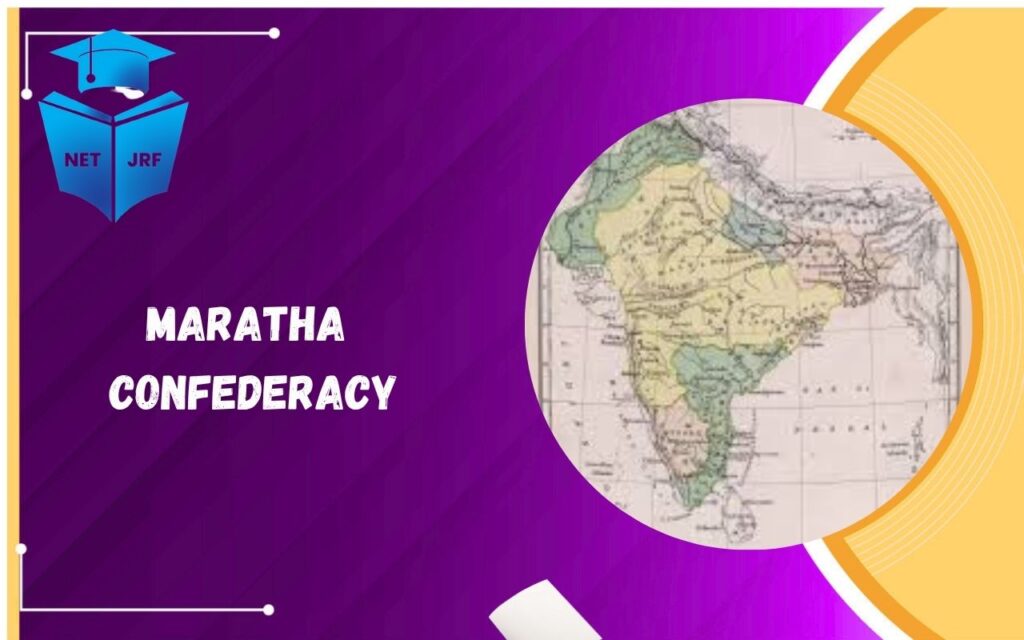
Maratha Confederacy represents the final political phase of Maratha power in 18th-century India. After the death of Shivaji and especially during the Peshwa period, Maratha authority expanded rapidly across the subcontinent. However, instead of remaining centralized, the empire evolved into a loose political structure known as the Maratha Confederacy.

Maratha Confederacy Background
After Shivaji’s death in 1680, the Maratha state faced Mughal pressure. However, under Shahu and Peshwa Baji Rao I, Maratha power expanded northward.
As territory increased, centralized control became difficult. Regional commanders gained autonomy. This transformation led to the formation of the Maratha Confederacy, a decentralized political system.
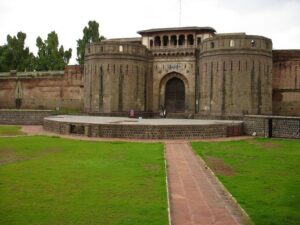
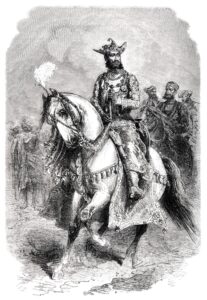

The Maratha Confederacy consisted of semi-autonomous chiefs who acknowledged the Peshwa as the head.
Major Houses
- Peshwa (Pune) – Central authority
- Scindia (Gwalior) – North India affairs
- Holkar (Indore) – Malwa region
- Gaekwad (Baroda) – Gujarat
- Bhonsle (Nagpur) – Central India
Each house maintained its own army and revenue system.
Enroll UGC NET Online Coaching
Maratha Administrative Features
The Maratha administration changed after Shivaji’s reign. Unlike his centralized system, the Confederacy gave regional chiefs like Scindias and Holkars semi-independent control. They collected taxes, maintained armies, and acknowledged the Peshwa, allowing rapid expansion but causing internal rivalries and uneven governance.
The Maratha Confederacy differed from Shivaji’s centralized model.
Key Characteristics
- Decentralized governance
- Regional autonomy
- Collection of Chauth and Sardeshmukhi
- Military-based expansion
This system allowed rapid territorial growth but weakened central unity.
Maratha Confederacy Structure
| House | Region | Role |
| Peshwa | Pune | Head of confederacy |
| Scindia | Gwalior | Northern politics |
| Holkar | Indore | Malwa control |
| Gaekwad | Baroda | Gujarat revenue |
| Bhonsle | Nagpur | Eastern expansion |
Strengths of Maratha Confederacy
The Maratha Confederacy was strong due to its flexible structure, capable leaders, and effective tribute system. Regional chiefs managed local administration, collected Chauth and Sardeshmukhi, and maintained armies. This allowed quick military mobilization, territorial expansion, and political influence across India.
-
Political Flexibility
-
-
- Local rulers governed efficiently in their regions.
-
-
Military Mobility
-
-
- Fast cavalry enabled quick campaigns.
-
-
Economic Gains
-
-
- Chauth collection expanded revenue sources.
-
-
Mughal Decline Advantage
-
- Weak Mughal power allowed Maratha expansion.
- For a time, the Maratha Confederacy became the strongest indigenous political force in India.

Maratha Confederacy Causes of Decline
The Maratha Confederacy declined due to internal rivalries among powerful chiefs, weakening central authority. Continuous wars drained resources and reduced military strength. The rise of the British East India Company and superior colonial strategies further ended Maratha dominance in India.
Despite initial success, multiple factors weakened the Maratha Confederacy.
Internal Rivalry
Maratha chiefs competed for dominance.
- Scindia vs Holkar conflicts
- Personal ambitions
- Lack of unified strategy
Internal division weakened collective strength.
Weak Central Authority
After Madhav Rao I, Peshwa leadership weakened.
- Reduced control over chiefs
- Administrative inefficiency
- Growing factional politics
Decentralization turned into fragmentation.
Third Battle of Panipat (1761)
Marathas faced Ahmad Shah Abdali.
Consequences:
- Heavy casualties
- Loss of experienced commanders
- Psychological setback
Although the Maratha Confederacy recovered later, long-term damage remained.
Enroll UGC NET Coaching in Jaipur
Major Causes of Decline
| Cause | Type | Impact |
| Internal Conflicts | Political | Weak unity |
| Weak Peshwas | Leadership | Poor coordination |
| Panipat Defeat | Military | Reduced morale |
| British Intervention | External | Final collapse |
- Anglo-Maratha Wars
-
-
- British expansion posed the greatest challenge.
-
-
First Anglo-Maratha War (1775–1782)
-
-
- Marathas resisted successfully.
-
-
Second Anglo-Maratha War (1803–1805)
-
-
- British defeated Scindia and Bhonsle.
-
-
Third Anglo-Maratha War (1817–1818)
-
- British crushed Peshwa Baji Rao II.
- These wars destroyed the Maratha Confederacy as a political force.
Military Weakness
Compared to the British:
- Marathas lacked modern artillery
- No unified command structure
- Cavalry dominance became outdated
- Poor infantry discipline
British military training proved superior.
Economic Weakness
Economic problems emerged due to:
- Overdependence on Chauth
- Irregular revenue collection
- High war expenses
- Regional fiscal autonomy
Financial instability weakened the Maratha Confederacy.
Diplomatic Failures
British used:
- Subsidiary alliances
- Divide and rule strategy
- Separate treaties with chiefs
Maratha leaders failed to maintain united foreign policy.
Comparison – Shivaji’s Empire vs Maratha Confederacy
| Feature | Shivaji’s Rule | Confederacy Period |
| Authority | Centralized | Decentralized |
| Military | Unified command | Separate armies |
| Revenue | Direct collection | Tribute-based |
| Stability | Strong | Fragmented |
Enroll UGC NET Offline Coaching in Jaipur
Maratha Confederacy Long-Term Impact
The Maratha Confederacy left a lasting impact on Indian history. It ended Mughal supremacy in many regions, promoted regional autonomy, and spread Maratha influence across northern and central India. Its rise and fall created a political vacuum that allowed the British East India Company to expand and eventually establish colonial rule.
The collapse of the Maratha Confederacy in 1818 marked:
- End of indigenous supremacy
- Establishment of British dominance
- Political reorganization of India
British annexed Peshwa territories and integrated Maratha regions into colonial administration.

Maratha Confederacy Historiographical View
Historians argue that the Maratha Confederacy expanded rapidly but lacked structural cohesion.
Some emphasize:
- Decentralization as core weakness
- Leadership crisis after Madhav Rao
- British diplomacy as decisive factor
Analytical Conclusion
The Maratha Confederacy emerged as a practical solution to govern vast territories. It allowed rapid expansion and local autonomy. However, decentralization weakened central authority. Internal rivalry, weak leadership, military stagnation, economic strain, and British intervention led to gradual decline.
In conclusion, the Maratha Confederacy represents both the peak of indigenous expansion and the beginning of British supremacy in India.
Maratha Confederacy FAQs

Why did decentralization occur?
Decentralization arose because rapid territorial expansion made it difficult for the Peshwa to directly control all regions. Powerful local chiefs gained autonomy to manage their areas effectively. This allowed the confederacy to function but weakened unified command.
What was the impact of Panipat?
The Third Battle of Panipat in 1761 caused heavy Maratha casualties and loss of key leaders. It weakened the morale and military strength of the confederacy. Despite the defeat, Marathas recovered in the following decades but faced long-term challenges.
How did British defeat the Marathas?
The British used superior military organization, disciplined troops, and strategic alliances to outmaneuver Maratha forces. They exploited internal rivalries among chiefs to weaken unity. Diplomatic and economic strategies further ensured Maratha defeat.
Which Anglo-Maratha War ended Maratha power?
The Third Anglo-Maratha War (1817–1818) marked the final collapse of Maratha authority. The British defeated remaining confederacy forces and annexed territories. This ended Maratha sovereignty and established British supremacy in India.