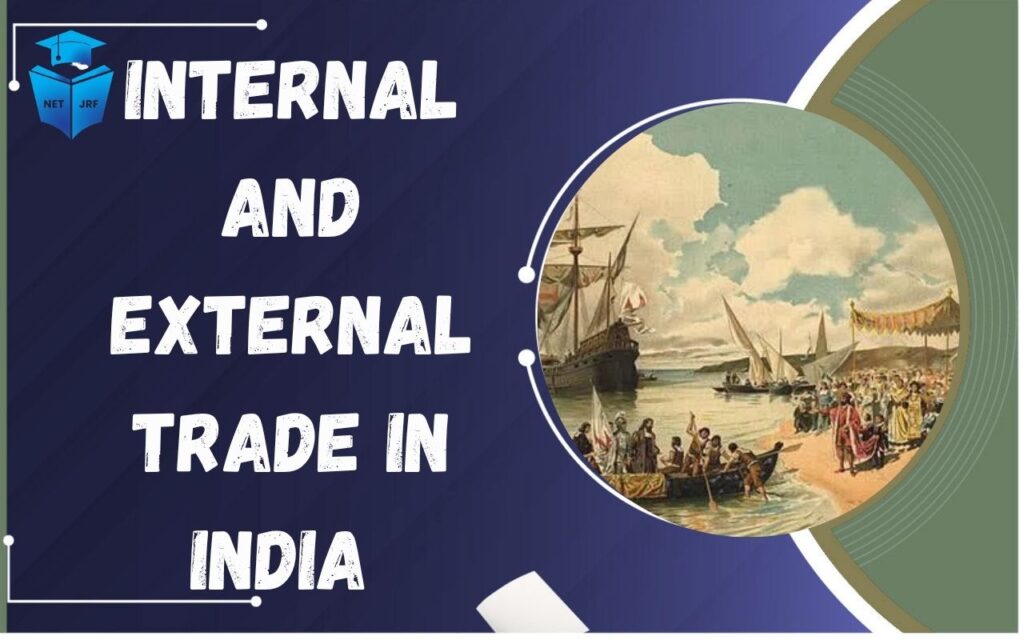
Internal and External Trade in India European Companies Routes and Economy

Internal and External Trade in India in this topic you learn how European companies trade routes commodities Indian merchants and port cities shaped early modern commerce economic expansion and changing trade systems

vishal

Internal and External Trade in India

Table of Contents

Internal and External Trade formed the backbone of economic life in medieval and early modern India. Markets inside the subcontinent connected villages, towns, and cities, while overseas trade linked India with Europe, West Asia, and Southeast Asia. The arrival of European companies in the 16th century changed trading patterns and gradually reshaped India’s economy.

Study Planner

Trade networks already existed before Europeans arrived. Indian merchants traded textiles, spices, metals, and precious stones across long distances. When Europeans entered this system, they joined existing networks but later tried to control them. Because of this interaction, Internal and External Trade expanded in scale and complexity during the early modern period.

Join UGC NET Online Course

Pre-Colonial India Meaning and Nature 

Trade refers to the exchange of goods and services between individuals, regions, or countries. In historical studies, it usually appears in two forms:

Internal Trade

Internal trade refers to the buying and selling of goods within a country. In India, this involved markets that connected rural producers with urban consumers.

Important features included:

  • Village markets called haats
  • Regional trade fairs
  • Merchant guilds
  • Transportation by bullock carts, rivers, and caravans

Indian textiles, grains, sugar, and handicrafts moved through these networks. These exchanges strengthened regional economies and encouraged specialization.

External Trade

External trade refers to commerce between different countries through sea routes or land routes. India maintained contact with Persia, Arabia, Southeast Asia, and Europe.

Merchants exported many valuable goods such as:

  • Cotton textiles
  • Spices
  • Indigo
  • Silk
  • Precious stones

Through this system, Internal and External Trade became closely connected. Goods produced in villages traveled through inland markets before reaching seaports for export.

Internal and External Trade Context of European Trade

When Europeans arrived in the late 15th century, they entered an already active commercial system. Portuguese, Dutch, English, and French traders wanted direct access to Indian goods, especially spices and textiles.

Their arrival influenced Internal and External Trade in several ways:

  1. Creation of new maritime routes
  2. Establishment of trading factories
  3. Increased demand for Indian textiles
  4. Expansion of port cities

European companies often relied on Indian merchants to supply goods from inland markets. Because of this, Internal and External Trade remained deeply interconnected.

Best UGC NET Mock Test Series

Major European Trading Companies in India

Several European powers participated in Asian commerce. Each company attempted to dominate profitable trade routes.

European Power Trading Company Year Established Major Centers in India
Portuguese Estado da India 1505 Goa, Cochin
Dutch Dutch East India Company (VOC) 1602 Pulicat, Nagapattinam
British East India Company 1600 Surat, Madras, Calcutta
French French East India Company 1664 Pondicherry, Chandernagore

These companies built forts and warehouses near ports. They also signed agreements with local rulers to secure trading rights. As a result, Internal and External Trade gradually became influenced by European commercial interests.

Internal and External Trade Structure in Early Modern India

The organization of trade in early modern India can be better understood by comparing the features of domestic commercial networks with overseas trading systems.

Aspect Internal Trade External Trade
Area Within India Between India and foreign regions
Transport Bullock carts, river boats Sea ships, caravans
Participants Local merchants, artisans International traders
Goods Grain, textiles, handicrafts Spices, silk, cotton textiles
Markets Local markets, fairs Ports such as Surat, Calicut

This structure shows how Internal and External Trade worked together. Goods moved from villages to ports before reaching global markets.

Major Trade Routes Used by Europeans

European traders used both sea and land routes to connect India with international markets.

Sea Routes

The discovery of the Cape of Good Hope route by Vasco da Gama in 1498 allowed direct maritime contact between Europe and India.

Important ports included:

  • Calicut
  • Goa
  • Surat
  • Madras
  • Bombay

Ships transported spices, textiles, and luxury goods to Europe. These routes increased the volume of Internal and External Trade significantly.

App JRF Adda

Inland Trade Routes

European companies depended heavily on Indian merchants to collect goods from interior regions.

Important inland routes linked:

  • Bengal textile centers with Calcutta
  • Gujarat markets with Surat
  • Deccan regions with coastal ports

These networks strengthened Internal and External Trade by connecting rural production with global demand.

Best UGC NET Offline Coaching in Jaipur

Major Commodities in European Trade

European companies traded many valuable goods from India.

Commodity Export Destination Importance
Cotton textiles Europe, Africa Most demanded export
Spices Europe High profit margins
Indigo Europe Used for dyeing cloth
Saltpetre Europe Used in gunpowder
Silk West Asia, Europe Luxury commodity

Because European demand for Indian textiles was extremely high, Internal and External Trade expanded rapidly in textile-producing regions like Bengal and Gujarat.

Role of Indian Merchants

Indian merchants played a key role in maintaining trade networks. European companies could not directly control production in villages, so they depended on local traders.

Important merchant groups included:

  • Gujarati traders
  • Marwari merchants
  • Chettiar financiers
  • Bengali traders

These groups organized transportation, credit systems, and supply chains. Their work ensured that Internal and External Trade functioned smoothly.

Economic Impact of European Trade

European participation in commerce had several economic effects on India.

  • Expansion of Port Cities

    • Cities such as Bombay, Madras, and Calcutta developed rapidly due to trade activity.
  • Growth of Textile Industry

    • European demand increased textile production in Bengal and the Coromandel Coast.
  • Monetary Changes

  • Large amounts of silver entered India through European trade, strengthening the money economy.

Because of these developments, Internal and External Trade became a major driver of economic growth during the 17th and 18th centuries.

Indian Merchants vs European Companies

Feature Indian Merchants European Companies
Structure Family-based trading networks Chartered corporations
Capital Private wealth State-supported funds
Trade Style Flexible networks Organized monopolies
Military Power Limited Armed ships and forts
Goal Profit through exchange Profit plus political control

This comparison shows that while Indian merchants focused on commerce, European companies gradually linked Internal and External Trade with political expansion.

Top UGC NET Offline Coaching in Jaipur

Decline of Traditional Trade Balance

During the early period, India enjoyed a strong export economy. European countries imported large quantities of Indian goods.

However, by the late 18th century several changes occurred:

  1. British political control increased.
  2. Industrial production in Europe grew.
  3. Indian handicrafts faced competition from machine-made goods.

These developments weakened traditional Internal and External Trade systems.

JRF Adda Book

Conclusion

European commercial expansion changed the structure of Indian markets during the early modern period. Trade networks linked villages, towns, ports, and international markets. While Indian merchants maintained traditional systems, European companies introduced new maritime routes, trading centers, and commercial strategies.

Read UGC NET Notes
1 Archaeological Sources for UGC NET Epigraphy – Study of Inscriptions Meaning of Historical Sources Archaeological
2 Meaning of Historical Sources Archaeological Sources for UGC NET Literary Sources in History Archaeological
3 Exploration in Archaeology Excavation Techniques in Archaeology Dating of Archaeological Sites Archaeological
4 Excavation Techniques in Archaeology Exploration in Archaeology Dating of Archaeological Sites Archaeological
5 Epigraphy – Study of Inscriptions Inscriptions in Reconstructing History Numismatics in History Archaeological
6 Inscriptions in Reconstructing History Epigraphy – Study of Inscriptions Archaeological Sources for UGC NET Archaeological
7 Numismatics in History Importance of Coins in History Epigraphy – Study of Inscriptions Archaeological
8 Importance of Coins in History Numismatics in History Archaeological Sources for UGC NET Archaeological
9 Dating of Archaeological Sites Excavation Techniques in Archaeology Dating Ancient Literary Sources Archaeological
10 Indigenous Literature Literary Sources in History Secular Literature as Historical Source Literary
11 Dating Ancient Literary Sources Literary Sources in History Dating of Archaeological Sites Literary
12 Literary Sources in History Indigenous Literature Foreign Accounts of India Literary
13 Foreign Accounts of India Greek Accounts on Ancient India Chinese Accounts on India Literary
14 Greek Accounts on Ancient India Foreign Accounts of India Chinese Accounts on India Literary
15 Secular Literature as Historical Source Literary Sources in History Indigenous Literature Literary
16 Role of Myths and Legends in Historical Reconstruction Literary Sources in History Secular Literature as Historical Source Literary
17 Chinese Accounts on India Foreign Accounts of India Greek Accounts on Ancient India Literary
18 Arabic Accounts on India Foreign Accounts of India Chinese Accounts on India Literary
19 Neolithic and Chalcolithic Phases Neolithic Revolution in India Chalcolithic Culture in India Neolithic
20 Hunting, Gathering & Food Production Neolithic Revolution in India Neolithic Settlements in India Neolithic
21 Neolithic Revolution in India Neolithic Settlements in India Tools and Technology in Neolithic Period Neolithic
22 Neolithic Settlements in India Distribution of Neolithic Cultures in India Neolithic Revolution in India Neolithic
23 Distribution of Neolithic Cultures in India Neolithic Settlements in India Tools and Technology in Neolithic Period Neolithic
24 Tools and Technology in Neolithic Period Neolithic Revolution in India Chalcolithic Culture in India Neolithic
25 Chalcolithic Culture in India Settlement Pattern & Economy in Chalcolithic Phase Trade & Exchange Networks in Chalcolithic Societies Neolithic
26 Settlement Pattern & Economy – Chalcolithic Phase Chalcolithic Culture in India Trade & Exchange Networks in Chalcolithic Societies Neolithic
27 Trade & Exchange Networks – Chalcolithic Societies Chalcolithic Culture in India IVC Internal & External Trade Neolithic
28 Indus Valley Civilization – UGC NET Major Sites of Indus Civilization Urban Planning in Harappan Civilization IVC
29 IVC Internal & External Trade Internal Trade – Harappan Civilization Craft Specialization in Harappan Civilization IVC
30 Political Organization – Harappan Civilization Social Structure – Indus Civilization Urban Planning in Harappan Civilization IVC
31 Major Sites of Indus Civilization Indus Valley Civilization – UGC NET Urban Planning in Harappan Civilization IVC
32 Urban Planning & Settlement – Harappan Civilization Architecture & Town Planning – Harappan Cities IVC as First Urbanization in India IVC
33 Architecture & Town Planning – Harappan Cities Urban Planning in Harappan Civilization Major Sites of Indus Civilization IVC
34 Craft Specialization & Industrial Activities – Harappan Agriculture & Food Economy – Harappans IVC Internal & External Trade IVC
35 Agriculture & Food Economy – Harappans Craft Specialization in Harappan Civilization Internal Trade – Harappan Civilization IVC
36 Internal Trade – Harappan Civilization IVC Internal & External Trade Craft Specialization in Harappan Civilization IVC
37 Religion & Beliefs – Indus Civilization Social Structure – Indus Civilization Indus Valley Civilization – UGC NET IVC
38 Social Structure – Indus Civilization Political Organization – Harappan Civilization Religion & Beliefs – Indus Civilization IVC
39 Decline of Indus Civilization Indus Valley Civilization – UGC NET IVC as First Urbanization in India IVC
40 IVC as First Urbanization in India Urban Planning in Harappan Civilization Second Urbanization in India IVC
41 Vedic & Later Vedic Periods – Aryan Varna System Early Vedic Society and Economy Later Vedic Society and Economy Vedic
42 Origin of Vedic Civilization Aryan Debate – Migration, Invasion & Indigenous Theories Early Vedic Society and Economy Vedic
43 Aryan Debate – Migration, Invasion & Indigenous Theories Origin of Vedic Civilization Early Vedic Society and Economy Vedic
44 Early Vedic Society and Economy Political Institutions – Early Vedic Period Social Structure – Early Vedic Period Vedic
45 Political Institutions – Early Vedic Period Early Vedic Society and Economy Monarchical States in Ancient India Vedic
46 Social Structure – Early Vedic Period Emergence of Varnas & Social Stratification Early Vedic Society and Economy Vedic
47 Later Vedic Society and Economy Emergence of Varnas & Social Stratification Impact of Iron Technology in India Vedic
48 Emergence of Varnas & Social Stratification Social Structure – Early Vedic Period Later Vedic Society and Economy Vedic
49 Emergence of Heterodox Sects in India Jainism, Buddhism & Ajivikas – Origins & Teachings Later Vedic Society and Economy Vedic
50 Impact of Iron Technology in India Later Vedic Society and Economy Agricultural Expansion & Economic Changes – Ancient India Vedic
51 Religious & Philosophical Vedic Ideas Emergence of Varnas & Social Stratification Emergence of Heterodox Sects in India Vedic
52 Megalithic Culture of South India Neolithic and Chalcolithic Phases Agricultural Expansion & Economic Changes General
53 State System in Ancient India Rise of Mahajanapadas Transition: Tribal Polities to Territorial States General
54 Transition: Tribal Polities to Territorial States Rise of Mahajanapadas Later Vedic Society and Economy General
55 Rise of Mahajanapadas Monarchical States in Ancient India Republican States (Gana-Sanghas) – Ancient India Magadha
56 Monarchical States in Ancient India Rise of Mahajanapadas Emergence of Magadha Magadha
57 Republican States (Gana-Sanghas) – Ancient India Rise of Mahajanapadas Monarchical States in Ancient India Magadha
58 Agricultural Expansion & Economic Changes – Ancient India Second Urbanization in India Impact of Iron Technology in India General
59 Second Urbanization in India IVC as First Urbanization in India Rise of Mahajanapadas General
60 Jainism, Buddhism & Ajivikas – Origins & Teachings Emergence of Heterodox Sects in India Ashoka’s Policy of Dhamma General
61 Emergence of Magadha Geographical Advantages of Magadha Early Rulers of Magadha Magadha
62 Geographical Advantages of Magadha Natural Resources & Economic Strength of Magadha Reasons for Success of Magadha Magadha
63 Natural Resources & Economic Strength of Magadha Geographical Advantages of Magadha Economic Policies of the Nandas Magadha
64 Early Rulers of Magadha Haryanka Dynasty – Rise of Magadha Emergence of Magadha Magadha
65 Haryanka Dynasty – Rise of Magadha Expansion Policy of Bimbisara Early Rulers of Magadha Magadha
66 Expansion Policy of Bimbisara Ajatashatru – Military Reforms Haryanka Dynasty – Rise of Magadha Magadha
67 Ajatashatru – Military Reforms Wars of Ajatashatru Expansion Policy of Bimbisara Magadha
68 Wars of Ajatashatru Ajatashatru – Military Reforms Udayin & Establishment of Pataliputra Magadha
69 Udayin & Establishment of Pataliputra Wars of Ajatashatru Shishunaga Dynasty Magadha
70 Shishunaga Dynasty Administrative Structure of the Shishunagas Nanda Dynasty Magadha
71 Administrative Structure of the Shishunagas Shishunaga Dynasty Central Administration Under Mauryas Magadha
72 Nanda Dynasty Mahapadma Nanda – Imperial Expansion Shishunaga Dynasty Magadha
73 Mahapadma Nanda – Imperial Expansion Military Strength of the Nandas Nanda Dynasty Magadha
74 Economic Policies of the Nandas Nanda Dynasty Taxation System – Mauryan State Magadha
75 Military Strength of the Nandas Mahapadma Nanda – Imperial Expansion Defeat of Nandas & Rise of Mauryan Empire Magadha
76 Reasons for Success of Magadha Geographical Advantages of Magadha Natural Resources & Economic Strength of Magadha Magadha
77 Mahajanapadas to Empire – Evolution & Rise of Magadha Rise of Mahajanapadas Emergence of Magadha Magadha
78 Mauryan Empire – Expansion Rise of Chandragupta Maurya Expansion of Mauryan Empire Maurya
79 Rise of Chandragupta Maurya Role of Chanakya in Rise of Mauryan Empire Defeat of Nandas & Rise of Mauryan Empire Maurya
80 Role of Chanakya in Rise of Mauryan Empire Rise of Chandragupta Maurya Defeat of Nandas & Rise of Mauryan Empire Maurya
81 Defeat of Nandas & Rise of Mauryan Empire Military Strength of the Nandas Rise of Chandragupta Maurya Maurya
82 Chandragupta Maurya – Seleucus Treaty & Diplomacy Expansion of Mauryan Empire Greek Accounts on Ancient India Maurya
83 Expansion of Mauryan Empire Chandragupta Maurya – Seleucus Treaty & Diplomacy Kalinga War Maurya
84 Administration of Chandragupta Maurya Central Administration Under Mauryas Mauryan Bureaucracy Maurya
85 Sources for Mauryan History Archaeological Sources for UGC NET Greek Accounts on Ancient India Maurya
86 Central Administration Under Mauryas Provincial Administration – Mauryan Empire Mauryan Bureaucracy Maurya
87 Provincial Administration – Mauryan Empire Local Administration – Mauryan Empire Central Administration Under Mauryas Maurya
88 Local Administration – Mauryan Empire Provincial Administration – Mauryan Empire Mauryan Bureaucracy Maurya
89 Mauryan Bureaucracy Central Administration Under Mauryas Espionage System – Mauryan Empire Maurya
90 Espionage System – Mauryan Empire Mauryan Bureaucracy Central Administration Under Mauryas Maurya
91 Ancient India – Trade and Commerce Trade and Commerce Under Mauryas Agrarian Economy – Mauryan Period Maurya
92 Agrarian Economy – Mauryan Period Taxation System – Mauryan State Trade and Commerce Under Mauryas Maurya
93 Trade and Commerce Under Mauryas Ancient India – Trade and Commerce Agrarian Economy – Mauryan Period Maurya
94 Taxation System – Mauryan State Agrarian Economy – Mauryan Period Economic Policies of the Nandas Maurya
95 Kalinga War Ashoka’s Policy of Dhamma Expansion of Mauryan Empire Maurya
96 Ashoka’s Policy of Dhamma Nature & Philosophy of Dhamma Kalinga War Maurya
97 Nature & Philosophy of Dhamma Ashoka’s Policy of Dhamma Jainism, Buddhism & Ajivikas Maurya

Internal and External Trade: European Trade in India FAQs

Loader image

Europeans came mainly to obtain spices, textiles, and luxury goods. These items had huge demand in European markets and produced high profits.

The Portuguese were the first Europeans to establish a trading presence in India after Vasco da Gama reached Calicut in 1498.

Cotton textiles, spices, indigo, silk, and saltpetre were among the most important exports during early modern trade.

They introduced new shipping routes, established trading factories, and increased demand for Indian products, especially textiles.

European companies depended on Indian merchants to collect goods from inland markets and supply them to coastal trading centers.


Leave a Reply

Recent Posts
Aditi

Aditi Sharma, founder of JRFAdda, is a Computer Science educator with an MCA degree and JRF qualification (99.91 percentile, Dec 2019). Her experience includes roles as an SBI SO (DBA), work at Cognizant, and over 5 years of teaching online and offline. She has also served as a Government Computer Teacher in Rajasthan.