
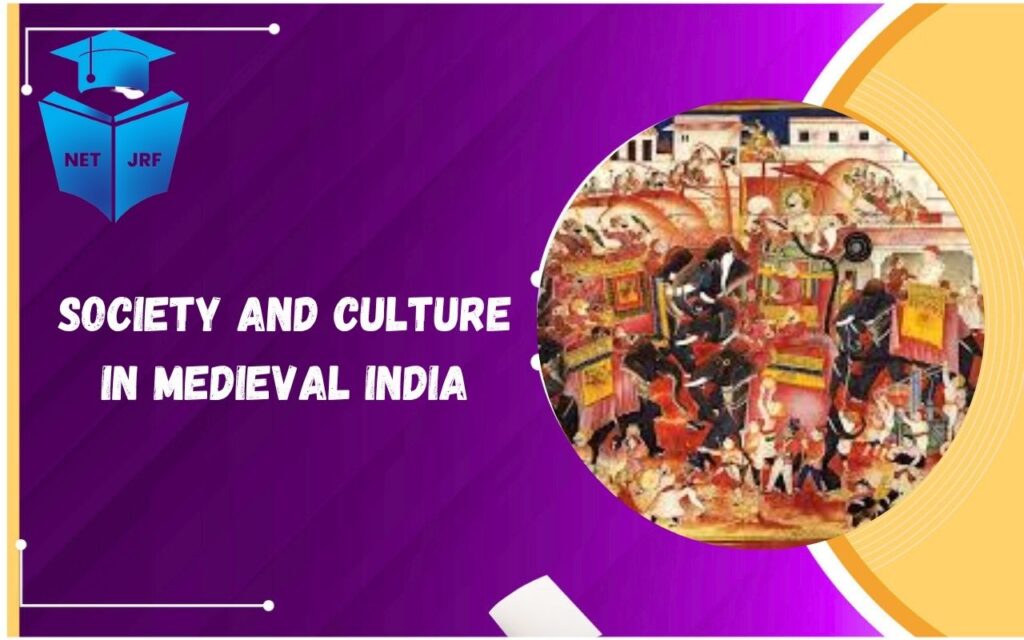
Society and Culture in medieval India reflected the complex interaction of religion, economy, politics, and everyday life. Between the 8th and 18th centuries, India experienced major changes in social hierarchy, cultural traditions, religious movements, and artistic developments. Kingdoms such as the Delhi Sultanate and the Mughal Empire influenced social relations and cultural patterns across the subcontinent.

Historical Background Medieval Indian Society
Medieval India usually refers to the period between the early 8th century and the 18th century. During this time, several regional kingdoms and empires ruled different parts of the subcontinent. These political changes influenced Society and Culture in many ways.
The arrival of Turkic rulers in North India, the establishment of the Delhi Sultanate in 1206, and later the Mughal Empire created new administrative structures. These developments encouraged cultural interaction between Indian traditions and Central Asian influences.
Agriculture remained the economic base of society. Rural communities formed the majority of the population. Towns grew slowly because of trade, crafts, and political centers. This mixture of rural stability and urban growth shaped the social structure of the time.
Enroll UGC NET Mock Test Series
Society and Culture Social Structure in Medieval India
The medieval social system developed from earlier traditions but also experienced new influences. Social organization revolved around caste divisions, occupation groups, religious communities, and local customs.
1. Caste System
The caste system continued to influence Society and Culture throughout medieval India. Hindu society organized itself into four main varnas:
- Brahmins (priests and scholars)
- Kshatriyas (warriors and rulers)
- Vaishyas (traders and merchants)
- Shudras (workers and service providers)
Below these categories existed many jatis or sub-castes. Each group followed specific occupations and social rules.
Even though Muslim rulers governed many regions, the caste structure remained strong in rural society. However, new occupations such as soldiers, administrators, and traders created limited mobility for some groups.
2. Position of Women
Women played important roles within families and communities, though their public participation varied across regions and religions.
Some major features included:
- Early marriage practices
- Purdah system in elite Muslim families
- Limited property rights for women in many communities
- Participation in household industries like weaving and food production
Despite restrictions, some women achieved influence in politics and literature.
Examples include:
- Razia Sultana
- Nur Jahan
Their leadership demonstrates that elite women sometimes shaped medieval political life.
Religious Diversity in Medieval India
Religion played a central role in shaping Society and Culture during the medieval period. Hinduism, Islam, Buddhism, Jainism, and Sikhism all influenced daily life and cultural traditions.
Bhakti Movement
The Bhakti movement encouraged personal devotion to God rather than strict rituals. Saints spread spiritual teachings through poetry and local languages.
Important Bhakti saints include:
- Kabir
- Mirabai
- Tulsidas
These saints promoted social equality and spiritual unity.
Sufi Movement
Sufism represented the mystical tradition of Islam. Sufi saints established khanqahs where followers gathered for spiritual guidance.
Key Sufi figures include:
- Khwaja Moinuddin Chishti
- Nizamuddin Auliya
The teachings of these saints encouraged harmony between communities and influenced Society and Culture in many regions.
Enroll UGC NET Online Test Series
Economic Life in Medieval India
Economic activities strongly influenced Society and Culture. Agriculture remained the backbone of the economy, but trade and craft production also grew.
Major Economic Activities
- Agriculture
- Handicrafts
- Textile production
- Long-distance trade
- Local market exchange
Large cities developed as trade centers during the Mughal period. Urban growth encouraged cultural exchange between different communities.
Economic Activities in Medieval India
| Economic Sector | Key Features | Impact on Society |
| Agriculture | Main livelihood for majority | Supported rural communities |
| Crafts | Metal work, pottery, textiles | Created artisan groups |
| Trade | Inland and overseas trade | Connected regions |
| Markets | Weekly bazaars and urban markets | Encouraged cultural interaction |
These economic developments influenced the structure of Society and Culture by connecting villages with cities.

Cultural Developments in Medieval India
Medieval India witnessed rich cultural achievements in art, architecture, music, and literature. Cultural exchange between Hindu and Islamic traditions created unique artistic styles.
Architecture
Many rulers constructed monuments that reflected their political power and cultural taste.
Famous structures include:
- Qutub Minar
- Humayun’s Tomb
- Taj Mahal
These monuments demonstrate the artistic achievements of medieval Indian Society and Culture.
Enroll UGC NET Offline Classes in Jaipur
Literature
Literature flourished in Sanskrit, Persian, and regional languages.
Persian became the official language of administration in many courts. At the same time, regional languages such as Hindi, Bengali, and Tamil produced devotional poetry and historical works.
Music and Performing Arts
Classical music traditions expanded during this period. Royal courts supported musicians and scholars.
A famous musician of the Mughal court was:
- Tansen
Music, poetry, and dance enriched Society and Culture by connecting royal patronage with popular traditions.
Society and Culture in Major Medieval Kingdoms
| Kingdom | Time Period | Cultural Contributions |
| Delhi Sultanate | 1206–1526 | Persian literature architecture |
| Vijayanagara Empire | 1336–1646 | Temple architecture regional culture |
| Mughal Empire | 1526–1707 | Art literature music painting |
| Regional Kingdoms | Various periods | Local traditions languages |
Each kingdom influenced Society and Culture through patronage of religion, education, and artistic expression.
Education and Intellectual Life
Education played an important role in shaping Society and Culture. Religious institutions often served as centers of learning.
Major Learning Centers
- Temples in South India
- Madrasas in Islamic cities
- Monasteries in Buddhist regions
Subjects included philosophy, astronomy, medicine, literature, and law.
Scholars preserved ancient knowledge while also producing new works in regional languages. Intellectual debates between religious thinkers helped shape the direction of Society and Culture during the medieval era.
Urban Life and Cultural Interaction
Urban centers became places where different communities interacted. Merchants, soldiers, scholars, and artisans lived in cities and shared cultural traditions.
Cities developed:
- Markets
- Religious institutions
- Educational centers
- Craft workshops
Urban life encouraged cultural diversity. Food habits, clothing styles, language usage, and artistic expression blended together. These interactions gradually transformed Society and Culture across regions.

Role of Festivals and Traditions
Festivals strengthened social bonds within communities. Religious celebrations also influenced cultural identity.
Important festivals included:
- Diwali
- Holi
- Eid
- Basant celebrations in royal courts
These festivals shaped Society and Culture by bringing people together through rituals, music, food, and storytelling.
The study of Society and Culture in medieval India reveals a dynamic period of social interaction, religious reform, economic development, and artistic creativity. Rural traditions, urban growth, and royal patronage together shaped the cultural landscape of the subcontinent.
Join UGC NET Coaching in Jaipur
Society and Culture in Medieval India FAQs

How did the Bhakti movement influence society?
Bhakti saints promoted devotion, equality, and spiritual connection with God. Their teachings reduced social barriers and influenced cultural traditions.
What role did Sufi saints play in medieval India?
Sufi saints spread ideas of love, tolerance, and spiritual unity. Their teachings encouraged harmony between different religious communities.
Which economic activities shaped medieval social life?
Agriculture formed the base of the economy. Trade, handicrafts, textiles, and urban markets supported economic growth and cultural interaction.
What were the major cultural achievements of medieval India?
Architecture, music, literature, painting, and regional languages flourished. Monuments like the Taj Mahal demonstrate artistic excellence.
How did cities influence cultural development?
Cities brought together merchants, artisans, scholars, and rulers. This interaction created cultural diversity and innovation.
How did Society and Culture change during the medieval period?
Social systems evolved through economic growth, religious reform movements, and cultural exchange between Indian and Islamic traditions.