
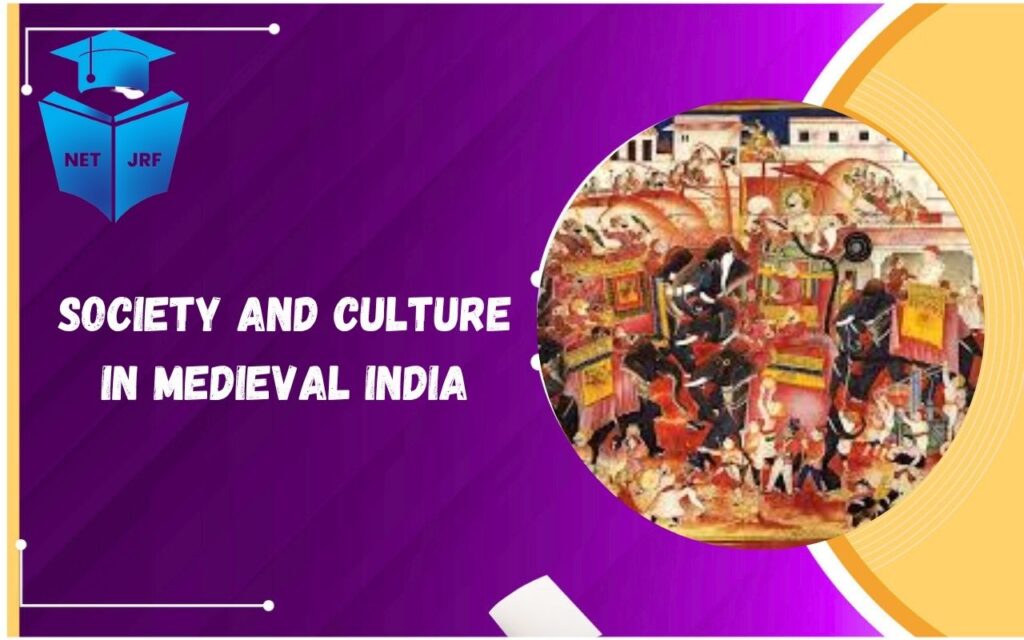

Society and Culture in Medieval India: Check Social Religious and Cultural Developments

Society and Culture in Medieval India in this topic you learn how social hierarchy religious movements economic growth art literature architecture festivals and urban life shaped cultural development through medieval kingdoms and regional traditions across India.

vishal

_Society and Culture in Medieval India

Table of Contents

Society and Culture in medieval India reflected the complex interaction of religion, economy, politics, and everyday life. Between the 8th and 18th centuries, India experienced major changes in social hierarchy, cultural traditions, religious movements, and artistic developments. Kingdoms such as the Delhi Sultanate and the Mughal Empire influenced social relations and cultural patterns across the subcontinent.

Study Planner

Historical Background Medieval Indian Society

Medieval India usually refers to the period between the early 8th century and the 18th century. During this time, several regional kingdoms and empires ruled different parts of the subcontinent. These political changes influenced Society and Culture in many ways.

The arrival of Turkic rulers in North India, the establishment of the Delhi Sultanate in 1206, and later the Mughal Empire created new administrative structures. These developments encouraged cultural interaction between Indian traditions and Central Asian influences.

Agriculture remained the economic base of society. Rural communities formed the majority of the population. Towns grew slowly because of trade, crafts, and political centers. This mixture of rural stability and urban growth shaped the social structure of the time.

Enroll UGC NET Mock Test Series

Society and Culture Social Structure in Medieval India

The medieval social system developed from earlier traditions but also experienced new influences. Social organization revolved around caste divisions, occupation groups, religious communities, and local customs.

1. Caste System                                           

The caste system continued to influence Society and Culture throughout medieval India. Hindu society organized itself into four main varnas:

  • Brahmins (priests and scholars)
  • Kshatriyas (warriors and rulers)
  • Vaishyas (traders and merchants)
  • Shudras (workers and service providers)

Below these categories existed many jatis or sub-castes. Each group followed specific occupations and social rules.

Even though Muslim rulers governed many regions, the caste structure remained strong in rural society. However, new occupations such as soldiers, administrators, and traders created limited mobility for some groups.

2. Position of Women

Women played important roles within families and communities, though their public participation varied across regions and religions.

Some major features included:

  • Early marriage practices
  • Purdah system in elite Muslim families
  • Limited property rights for women in many communities
  • Participation in household industries like weaving and food production

Despite restrictions, some women achieved influence in politics and literature.

Examples include:

  • Razia Sultana
  • Nur Jahan

Their leadership demonstrates that elite women sometimes shaped medieval political life.

Religious Diversity in Medieval India

Religion played a central role in shaping Society and Culture during the medieval period. Hinduism, Islam, Buddhism, Jainism, and Sikhism all influenced daily life and cultural traditions.

Bhakti Movement

The Bhakti movement encouraged personal devotion to God rather than strict rituals. Saints spread spiritual teachings through poetry and local languages.

Important Bhakti saints include:

  • Kabir
  • Mirabai
  • Tulsidas

These saints promoted social equality and spiritual unity.

Sufi Movement

Sufism represented the mystical tradition of Islam. Sufi saints established khanqahs where followers gathered for spiritual guidance.

Key Sufi figures include:

  • Khwaja Moinuddin Chishti
  • Nizamuddin Auliya

The teachings of these saints encouraged harmony between communities and influenced Society and Culture in many regions.

Enroll UGC NET Online Test Series

Economic Life in Medieval India

Economic activities strongly influenced Society and Culture. Agriculture remained the backbone of the economy, but trade and craft production also grew.

Major Economic Activities

  1. Agriculture
  2. Handicrafts
  3. Textile production
  4. Long-distance trade
  5. Local market exchange

Large cities developed as trade centers during the Mughal period. Urban growth encouraged cultural exchange between different communities.

Economic Activities in Medieval India

Economic Sector Key Features Impact on Society
Agriculture Main livelihood for majority Supported rural communities
Crafts Metal work, pottery, textiles Created artisan groups
Trade Inland and overseas trade Connected regions
Markets Weekly bazaars and urban markets Encouraged cultural interaction

These economic developments influenced the structure of Society and Culture by connecting villages with cities.

App JRF Adda

Cultural Developments in Medieval India

Medieval India witnessed rich cultural achievements in art, architecture, music, and literature. Cultural exchange between Hindu and Islamic traditions created unique artistic styles.

Architecture

Many rulers constructed monuments that reflected their political power and cultural taste.

Famous structures include:

  • Qutub Minar
  • Humayun’s Tomb
  • Taj Mahal

These monuments demonstrate the artistic achievements of medieval Indian Society and Culture.

Enroll UGC NET Offline Classes in Jaipur

Literature

Literature flourished in Sanskrit, Persian, and regional languages.

Persian became the official language of administration in many courts. At the same time, regional languages such as Hindi, Bengali, and Tamil produced devotional poetry and historical works.

Music and Performing Arts

Classical music traditions expanded during this period. Royal courts supported musicians and scholars.

A famous musician of the Mughal court was:

  • Tansen

Music, poetry, and dance enriched Society and Culture by connecting royal patronage with popular traditions.

Society and Culture in Major Medieval Kingdoms

Kingdom Time Period Cultural Contributions
Delhi Sultanate 1206–1526 Persian literature architecture
Vijayanagara Empire 1336–1646 Temple architecture regional culture
Mughal Empire 1526–1707 Art literature music painting
Regional Kingdoms Various periods Local traditions languages

Each kingdom influenced Society and Culture through patronage of religion, education, and artistic expression.

Education and Intellectual Life

Education played an important role in shaping Society and Culture. Religious institutions often served as centers of learning.

Major Learning Centers

  • Temples in South India
  • Madrasas in Islamic cities
  • Monasteries in Buddhist regions

Subjects included philosophy, astronomy, medicine, literature, and law.

Scholars preserved ancient knowledge while also producing new works in regional languages. Intellectual debates between religious thinkers helped shape the direction of Society and Culture during the medieval era.

Urban Life and Cultural Interaction

Urban centers became places where different communities interacted. Merchants, soldiers, scholars, and artisans lived in cities and shared cultural traditions.

Cities developed:

  • Markets
  • Religious institutions
  • Educational centers
  • Craft workshops

Urban life encouraged cultural diversity. Food habits, clothing styles, language usage, and artistic expression blended together. These interactions gradually transformed Society and Culture across regions.

JRF Adda Book

Role of Festivals and Traditions

Festivals strengthened social bonds within communities. Religious celebrations also influenced cultural identity.

Important festivals included:

  • Diwali
  • Holi
  • Eid
  • Basant celebrations in royal courts

These festivals shaped Society and Culture by bringing people together through rituals, music, food, and storytelling.

The study of Society and Culture in medieval India reveals a dynamic period of social interaction, religious reform, economic development, and artistic creativity. Rural traditions, urban growth, and royal patronage together shaped the cultural landscape of the subcontinent.

Join UGC NET Coaching in Jaipur

Read UGC NET Notes
1 Archaeological Sources for UGC NET Epigraphy – Study of Inscriptions Meaning of Historical Sources Archaeological
2 Meaning of Historical Sources Archaeological Sources for UGC NET Literary Sources in History Archaeological
3 Exploration in Archaeology Excavation Techniques in Archaeology Dating of Archaeological Sites Archaeological
4 Excavation Techniques in Archaeology Exploration in Archaeology Dating of Archaeological Sites Archaeological
5 Epigraphy – Study of Inscriptions Inscriptions in Reconstructing History Numismatics in History Archaeological
6 Inscriptions in Reconstructing History Epigraphy – Study of Inscriptions Archaeological Sources for UGC NET Archaeological
7 Numismatics in History Importance of Coins in History Epigraphy – Study of Inscriptions Archaeological
8 Importance of Coins in History Numismatics in History Archaeological Sources for UGC NET Archaeological
9 Dating of Archaeological Sites Excavation Techniques in Archaeology Dating Ancient Literary Sources Archaeological
10 Indigenous Literature Literary Sources in History Secular Literature as Historical Source Literary
11 Dating Ancient Literary Sources Literary Sources in History Dating of Archaeological Sites Literary
12 Literary Sources in History Indigenous Literature Foreign Accounts of India Literary
13 Foreign Accounts of India Greek Accounts on Ancient India Chinese Accounts on India Literary
14 Greek Accounts on Ancient India Foreign Accounts of India Chinese Accounts on India Literary
15 Secular Literature as Historical Source Literary Sources in History Indigenous Literature Literary
16 Role of Myths and Legends in Historical Reconstruction Literary Sources in History Secular Literature as Historical Source Literary
17 Chinese Accounts on India Foreign Accounts of India Greek Accounts on Ancient India Literary
18 Arabic Accounts on India Foreign Accounts of India Chinese Accounts on India Literary
19 Neolithic and Chalcolithic Phases Neolithic Revolution in India Chalcolithic Culture in India Neolithic
20 Hunting, Gathering & Food Production Neolithic Revolution in India Neolithic Settlements in India Neolithic
21 Neolithic Revolution in India Neolithic Settlements in India Tools and Technology in Neolithic Period Neolithic
22 Neolithic Settlements in India Distribution of Neolithic Cultures in India Neolithic Revolution in India Neolithic
23 Distribution of Neolithic Cultures in India Neolithic Settlements in India Tools and Technology in Neolithic Period Neolithic
24 Tools and Technology in Neolithic Period Neolithic Revolution in India Chalcolithic Culture in India Neolithic
25 Chalcolithic Culture in India Settlement Pattern & Economy in Chalcolithic Phase Trade & Exchange Networks in Chalcolithic Societies Neolithic
26 Settlement Pattern & Economy – Chalcolithic Phase Chalcolithic Culture in India Trade & Exchange Networks in Chalcolithic Societies Neolithic
27 Trade & Exchange Networks – Chalcolithic Societies Chalcolithic Culture in India IVC Internal & External Trade Neolithic
28 Indus Valley Civilization – UGC NET Major Sites of Indus Civilization Urban Planning in Harappan Civilization IVC
29 IVC Internal & External Trade Internal Trade – Harappan Civilization Craft Specialization in Harappan Civilization IVC
30 Political Organization – Harappan Civilization Social Structure – Indus Civilization Urban Planning in Harappan Civilization IVC
31 Major Sites of Indus Civilization Indus Valley Civilization – UGC NET Urban Planning in Harappan Civilization IVC
32 Urban Planning & Settlement – Harappan Civilization Architecture & Town Planning – Harappan Cities IVC as First Urbanization in India IVC
33 Architecture & Town Planning – Harappan Cities Urban Planning in Harappan Civilization Major Sites of Indus Civilization IVC
34 Craft Specialization & Industrial Activities – Harappan Agriculture & Food Economy – Harappans IVC Internal & External Trade IVC
35 Agriculture & Food Economy – Harappans Craft Specialization in Harappan Civilization Internal Trade – Harappan Civilization IVC
36 Internal Trade – Harappan Civilization IVC Internal & External Trade Craft Specialization in Harappan Civilization IVC
37 Religion & Beliefs – Indus Civilization Social Structure – Indus Civilization Indus Valley Civilization – UGC NET IVC
38 Social Structure – Indus Civilization Political Organization – Harappan Civilization Religion & Beliefs – Indus Civilization IVC
39 Decline of Indus Civilization Indus Valley Civilization – UGC NET IVC as First Urbanization in India IVC
40 IVC as First Urbanization in India Urban Planning in Harappan Civilization Second Urbanization in India IVC
41 Vedic & Later Vedic Periods – Aryan Varna System Early Vedic Society and Economy Later Vedic Society and Economy Vedic
42 Origin of Vedic Civilization Aryan Debate – Migration, Invasion & Indigenous Theories Early Vedic Society and Economy Vedic
43 Aryan Debate – Migration, Invasion & Indigenous Theories Origin of Vedic Civilization Early Vedic Society and Economy Vedic
44 Early Vedic Society and Economy Political Institutions – Early Vedic Period Social Structure – Early Vedic Period Vedic
45 Political Institutions – Early Vedic Period Early Vedic Society and Economy Monarchical States in Ancient India Vedic
46 Social Structure – Early Vedic Period Emergence of Varnas & Social Stratification Early Vedic Society and Economy Vedic
47 Later Vedic Society and Economy Emergence of Varnas & Social Stratification Impact of Iron Technology in India Vedic
48 Emergence of Varnas & Social Stratification Social Structure – Early Vedic Period Later Vedic Society and Economy Vedic
49 Emergence of Heterodox Sects in India Jainism, Buddhism & Ajivikas – Origins & Teachings Later Vedic Society and Economy Vedic
50 Impact of Iron Technology in India Later Vedic Society and Economy Agricultural Expansion & Economic Changes – Ancient India Vedic
51 Religious & Philosophical Vedic Ideas Emergence of Varnas & Social Stratification Emergence of Heterodox Sects in India Vedic
52 Megalithic Culture of South India Neolithic and Chalcolithic Phases Agricultural Expansion & Economic Changes General
53 State System in Ancient India Rise of Mahajanapadas Transition: Tribal Polities to Territorial States General
54 Transition: Tribal Polities to Territorial States Rise of Mahajanapadas Later Vedic Society and Economy General
55 Rise of Mahajanapadas Monarchical States in Ancient India Republican States (Gana-Sanghas) – Ancient India Magadha
56 Monarchical States in Ancient India Rise of Mahajanapadas Emergence of Magadha Magadha
57 Republican States (Gana-Sanghas) – Ancient India Rise of Mahajanapadas Monarchical States in Ancient India Magadha
58 Agricultural Expansion & Economic Changes – Ancient India Second Urbanization in India Impact of Iron Technology in India General
59 Second Urbanization in India IVC as First Urbanization in India Rise of Mahajanapadas General
60 Jainism, Buddhism & Ajivikas – Origins & Teachings Emergence of Heterodox Sects in India Ashoka’s Policy of Dhamma General
61 Emergence of Magadha Geographical Advantages of Magadha Early Rulers of Magadha Magadha
62 Geographical Advantages of Magadha Natural Resources & Economic Strength of Magadha Reasons for Success of Magadha Magadha
63 Natural Resources & Economic Strength of Magadha Geographical Advantages of Magadha Economic Policies of the Nandas Magadha
64 Early Rulers of Magadha Haryanka Dynasty – Rise of Magadha Emergence of Magadha Magadha
65 Haryanka Dynasty – Rise of Magadha Expansion Policy of Bimbisara Early Rulers of Magadha Magadha
66 Expansion Policy of Bimbisara Ajatashatru – Military Reforms Haryanka Dynasty – Rise of Magadha Magadha
67 Ajatashatru – Military Reforms Wars of Ajatashatru Expansion Policy of Bimbisara Magadha
68 Wars of Ajatashatru Ajatashatru – Military Reforms Udayin & Establishment of Pataliputra Magadha
69 Udayin & Establishment of Pataliputra Wars of Ajatashatru Shishunaga Dynasty Magadha
70 Shishunaga Dynasty Administrative Structure of the Shishunagas Nanda Dynasty Magadha
71 Administrative Structure of the Shishunagas Shishunaga Dynasty Central Administration Under Mauryas Magadha
72 Nanda Dynasty Mahapadma Nanda – Imperial Expansion Shishunaga Dynasty Magadha
73 Mahapadma Nanda – Imperial Expansion Military Strength of the Nandas Nanda Dynasty Magadha
74 Economic Policies of the Nandas Nanda Dynasty Taxation System – Mauryan State Magadha
75 Military Strength of the Nandas Mahapadma Nanda – Imperial Expansion Defeat of Nandas & Rise of Mauryan Empire Magadha
76 Reasons for Success of Magadha Geographical Advantages of Magadha Natural Resources & Economic Strength of Magadha Magadha
77 Mahajanapadas to Empire – Evolution & Rise of Magadha Rise of Mahajanapadas Emergence of Magadha Magadha
78 Mauryan Empire – Expansion Rise of Chandragupta Maurya Expansion of Mauryan Empire Maurya
79 Rise of Chandragupta Maurya Role of Chanakya in Rise of Mauryan Empire Defeat of Nandas & Rise of Mauryan Empire Maurya
80 Role of Chanakya in Rise of Mauryan Empire Rise of Chandragupta Maurya Defeat of Nandas & Rise of Mauryan Empire Maurya
81 Defeat of Nandas & Rise of Mauryan Empire Military Strength of the Nandas Rise of Chandragupta Maurya Maurya
82 Chandragupta Maurya – Seleucus Treaty & Diplomacy Expansion of Mauryan Empire Greek Accounts on Ancient India Maurya
83 Expansion of Mauryan Empire Chandragupta Maurya – Seleucus Treaty & Diplomacy Kalinga War Maurya
84 Administration of Chandragupta Maurya Central Administration Under Mauryas Mauryan Bureaucracy Maurya
85 Sources for Mauryan History Archaeological Sources for UGC NET Greek Accounts on Ancient India Maurya
86 Central Administration Under Mauryas Provincial Administration – Mauryan Empire Mauryan Bureaucracy Maurya
87 Provincial Administration – Mauryan Empire Local Administration – Mauryan Empire Central Administration Under Mauryas Maurya
88 Local Administration – Mauryan Empire Provincial Administration – Mauryan Empire Mauryan Bureaucracy Maurya
89 Mauryan Bureaucracy Central Administration Under Mauryas Espionage System – Mauryan Empire Maurya
90 Espionage System – Mauryan Empire Mauryan Bureaucracy Central Administration Under Mauryas Maurya
91 Ancient India – Trade and Commerce Trade and Commerce Under Mauryas Agrarian Economy – Mauryan Period Maurya
92 Agrarian Economy – Mauryan Period Taxation System – Mauryan State Trade and Commerce Under Mauryas Maurya
93 Trade and Commerce Under Mauryas Ancient India – Trade and Commerce Agrarian Economy – Mauryan Period Maurya
94 Taxation System – Mauryan State Agrarian Economy – Mauryan Period Economic Policies of the Nandas Maurya
95 Kalinga War Ashoka’s Policy of Dhamma Expansion of Mauryan Empire Maurya
96 Ashoka’s Policy of Dhamma Nature & Philosophy of Dhamma Kalinga War Maurya
97 Nature & Philosophy of Dhamma Ashoka’s Policy of Dhamma Jainism, Buddhism & Ajivikas Maurya

Society and Culture in Medieval India FAQs

Loader image

Bhakti saints promoted devotion, equality, and spiritual connection with God. Their teachings reduced social barriers and influenced cultural traditions.

Sufi saints spread ideas of love, tolerance, and spiritual unity. Their teachings encouraged harmony between different religious communities.

Agriculture formed the base of the economy. Trade, handicrafts, textiles, and urban markets supported economic growth and cultural interaction.

Architecture, music, literature, painting, and regional languages flourished. Monuments like the Taj Mahal demonstrate artistic excellence.

Cities brought together merchants, artisans, scholars, and rulers. This interaction created cultural diversity and innovation.

Social systems evolved through economic growth, religious reform movements, and cultural exchange between Indian and Islamic traditions.

Leave a Reply

Recent Posts
Aditi

Aditi Sharma, founder of JRFAdda, is a Computer Science educator with an MCA degree and JRF qualification (99.91 percentile, Dec 2019). Her experience includes roles as an SBI SO (DBA), work at Cognizant, and over 5 years of teaching online and offline. She has also served as a Government Computer Teacher in Rajasthan.