

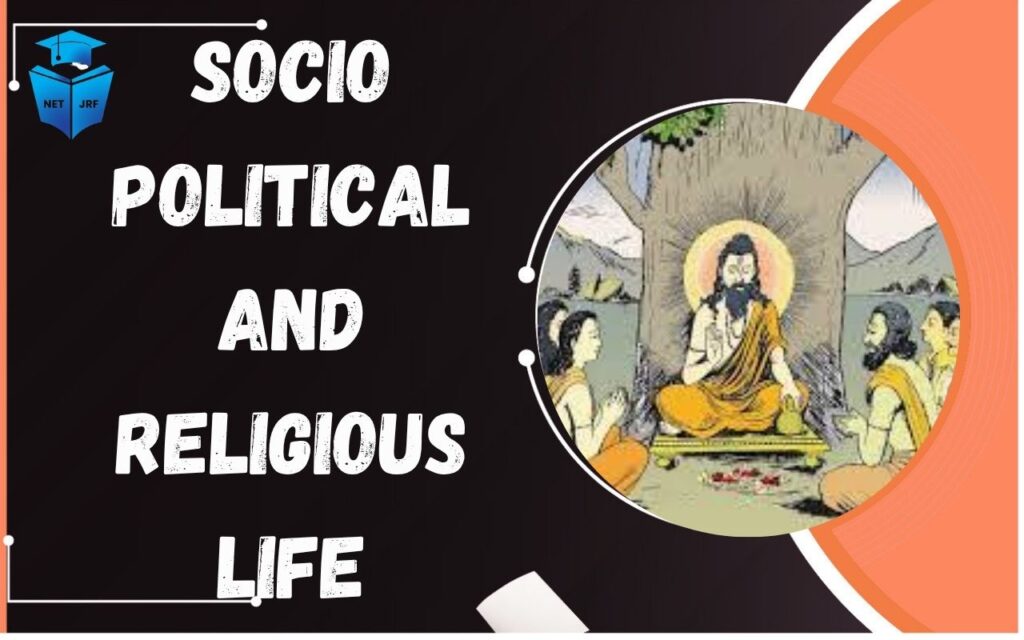
Saints of the Medieval Period reshaped the spiritual and social landscape of India between the 8th and 18th centuries. They led the Bhakti Movement, which focused on personal devotion rather than rigid rituals. This era marked a departure from Brahmanical orthodoxy and the complex Vedic ceremonies of the past. By choosing the path of love and faith, these reformers brought God closer to the common man.

The emergence of these spiritual leaders provided a voice for the marginalized sections of society. Many Saints of the Medieval Period belonged to the lower castes, successfully breaking the religious monopoly of the priestly class. They used local languages to spread their message, ensuring that spirituality reached every village and household. This movement did not just change religion; it acted as a massive social reform force that promoted equality and unity.
Socio-Political and Religious Life of India
The Saints of the Medieval Period significantly influenced the Socio-Political and Religious Life of India. Their contributions went beyond personal spirituality, affecting social structures, political thought, and religious practices.
Social Impact
- Caste Reforms: Saints challenged the rigid caste hierarchy. Leaders like Ramananda, Kabir, and Basavanna promoted the idea that devotion to God was open to all, regardless of caste or gender. This created avenues for social mobility and inclusion.
- Gender Equality: Women saints such as Mirabai and Akkamahadevi broke societal barriers, actively participating in devotional movements and composing spiritual literature. Their work empowered women in public and religious life.
- Community Integration: Through vernacular literature, devotional songs, and communal gatherings, saints fostered unity among diverse communities, bridging gaps between Hindus and Muslims, upper and lower castes, and rural and urban populations.
Political Influence
- Ethical Governance: The teachings of saints influenced rulers to adopt moral and just governance. For example, Akbar’s policy of Sulh-e-Kul (universal tolerance) reflected Sufi principles of tolerance and interfaith harmony.
- Resistance to Hierarchical Authority: By promoting equality, saints indirectly questioned Brahminical dominance and feudal structures, encouraging decentralized social power where spiritual authority was accessible to common people.
- Mobilization of People: Movements led by saints like the Varkari tradition inspired large-scale participation in pilgrimages, festivals, and social reform, strengthening civic engagement and grassroots political awareness.
Religious Transformation
- Bhakti Movement: Saints promoted personal devotion over ritualistic practices. Saguna and Nirguna Bhakti traditions encouraged direct connection with God, making spirituality accessible and egalitarian.
- Sufism and Syncretism: Sufi saints like Khwaja Moinuddin Chishti introduced compassion, service, and mysticism into Islamic practice in India. They combined Indian traditions with Islamic teachings, fostering religious harmony.
- Formation of New Traditions: Sikhism emerged as a blend of Bhakti and Sufi ideals under Guru Nanak, emphasizing equality, honest labor, and devotion, further shaping religious life in North India.

Cultural Contributions
- Literature: Saints composed poetry, hymns, and texts in local languages (Tamil, Telugu, Hindi, Marathi, Punjabi), promoting literacy and education among common people.
- Music and Art: Devotional music and performance arts flourished, integrating spirituality with cultural expression. Traditions like Kirtans and Abhangas are enduring examples.
- Philosophical Thought: Movements emphasized internal ethics, devotion, and compassion, influencing Indian philosophical discourse on morality and spirituality.
Best UGC NET Offline Coaching in Jaipur
Social vs Religious Influence
| Aspect | Social Influence | Religious Influence |
| Equality | Challenged caste, empowered women | Promoted access to devotion for all |
| Community | Integrated diverse groups | Encouraged interfaith understanding |
| Authority | Questioned hierarchy | Reformed ritualistic practices |
| Culture | Inspired literacy, art, music | Spread Bhakti, Sufi, and Sikh teachings |
Legacy
The saints’ work transformed Socio-Political and Religious Life by establishing principles of equality, tolerance, and personal devotion. Their teachings influenced rulers, common people, and religious institutions, creating a lasting impact on Indian society that continued into modern times.
Top UGC NET Offline Coaching in Jaipur

Their Impact on Socio-Political and Religious Life: Medieval Period FAQs

2. Who were the major saints of the Medieval Period in India?
Major saints include Ramananda, Kabir, Guru Nanak, Mirabai, Jnaneswara, Tukaram, and Chaitanya Mahaprabhu, each contributing to spiritual and social reforms.
3. What role did Bhakti saints play in social reforms?
They challenged caste hierarchies, empowered women, encouraged community integration, and created access to spiritual practices for all people.
4. How did saints influence Indian literature and culture?
Saints composed poems, hymns, and devotional texts in local languages, promoted music traditions like Abhangas and Kirtans, and inspired literacy across communities.
5. What was the political impact of saints on medieval India?
Their teachings encouraged ethical governance, challenged hierarchical authority, and mobilized people for pilgrimages, festivals, and social awareness.