Rajput Society: Check Origins, Culture, and Architecture

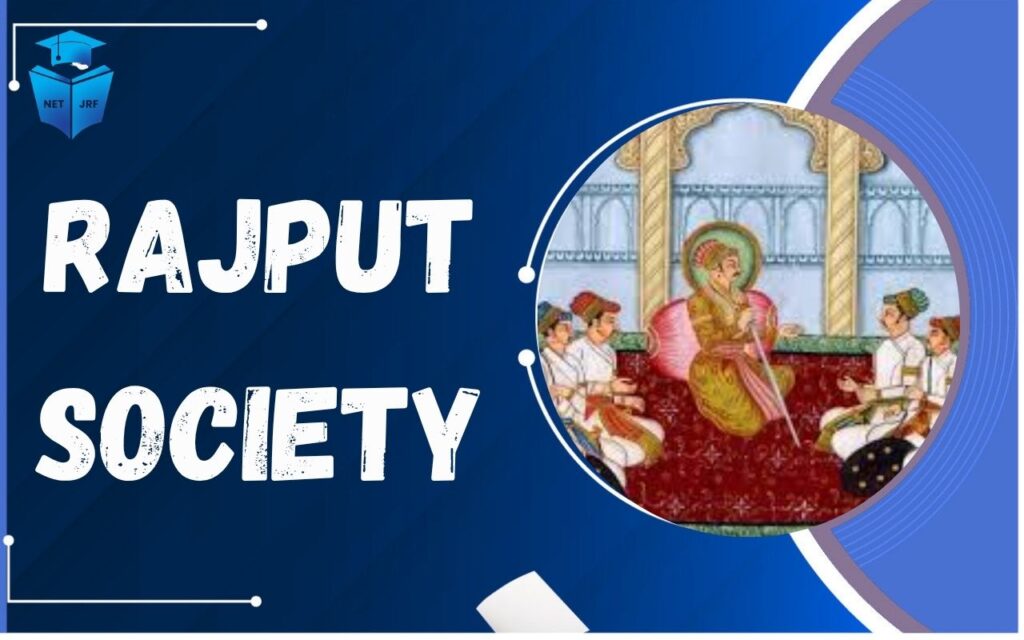
Rajput Society in this topic you learn how Rajput clans shaped medieval India through warrior ethics feudal hierarchy women status education systems architectural achievements regional rule and the cultural legacy of Rajputana between 647 CE and 1200 CE

vishal

Rajput Society

Table of Contents

Rajput Society represents the core of Indian bravery and martial traditions. These people served as the strength, power, and courage of ancient India in human form. They followed a strict code where being a fearless warrior was their primary ‘dharma’ or religious duty. While they fought with a fierce spirit, their true greatness came from their generosity and kind hearts. The Rajput era lasted for over five hundred years, specifically from 647 A.D. to 1200 A.D.. This period saw a major revival of Hinduism and the establishment of a land known as Rajputana. Understanding this group helps us see how medieval India functioned.

Study Planner

The word ‘Rajput’ comes from the Sanskrit language and means ‘son of a king’. These individuals valued courage, loyalty, and royalty above all else. They ruled various princely states in regions like Rajasthan and Saurashtra until the 20th century. Their history remains a vital part of the Indian identity today. 

Join UGC NET Online Coaching

Rajput Society Ancestry and Lineage 

The origins of the Rajputs connect back to various clans and lineages. Historians often trace their descent to Central Asian tribes like the Huns, Shakas, Kushans, and Parthians. These groups originally entered India as invaders but eventually became kings and integrated into the local culture. 

  • They often married women of high rank or converted to the Hindu faith. This integration created a unique warrior class that dominated northern and western India.
  • Rajputs divided themselves into significant sub-divisions called ‘vansh’ or ‘vamsha’. This classification is one step below the broader ‘jati’ or caste division. There are three major lineages that define their heritage. 
  • The first is the Suryavanshi, who claim descent from the sun god, Surya. The second is the Chandravanshi or Somavanshi, who claim descent from the moon god, Chandra. The third is the Agnivanshi, who believe they originated from the fire god, Agni.
  • Famous Agnivanshi clans include the Parmar, Chalukya (also known as Solanki), Parihar, and Chauhan. These clans maintained strict patrilineal descent, meaning they tracked their family history through the male line. 
  • Intermarriage between specific clans helped keep the group distinct and powerful. In western Rajasthan, these rules were very strict, while eastern groups were often more inclusive and fluid.

 Rajput Society Hierarchy and Feudalism

The structure of Rajput Society relied heavily on a feudal system. This means that a few powerful people controlled most of the land and wealth. 

  • The upper class included ministers, bureaucrats, and feudal chiefs.
  •  These elites lived lives of incredible luxury and grandeur. They used their positions to gather massive fortunes and displayed their wealth by keeping many servants and maintaining large harems. 
  • This group held the most influence over the political and social direction of the kingdom.
  • However, a wide gap existed between the rich and the poor. While the upper class enjoyed luxury, the common people faced many difficulties.
  •  Peasants lived under the heavy burden of land revenue and high taxes. Feudal lords often collected these taxes with brutality. In many cases, the lords forced the poor to perform ‘forced labor’ without pay. This social discrepancy created a society where wealth and power stayed at the very top.
  • The culture celebrated conquests and military wins above all else. War was not just a political tool; it was a way of life. 
  • The Rajputs viewed themselves as the defenders of Hindu dharma or faith. This religious identity motivated them to build strong defenses against outside threats. Even though they were warriors, they practiced religious tolerance. 
  • Some Rajputs were Hindu, while others followed Muslim or Sikh traditions.

 Rajput Society Role and Situation of Women

The treatment of women in this era presents a complex picture. On one hand, Rajputs deeply valued women’s honor and treated them with great respect. On the other hand, women lived in a restricted and often “crippled” society. 

  • Their rights were severely limited compared to men. For example, society restricted low-caste women from studying the Vedas. Women in higher-income families had better access to schooling, but they still faced societal pressures.
  • One of the most difficult aspects of their lives was the expectation of sacrifice. Women were often expected to sacrifice their lives beside their husbands’ bodies in a practice called Sati. 
  • Despite these heavy restrictions, some freedoms existed. Interestingly, there was no ‘purdah’ system (the practice of veiling) in place during the early Rajput rule. 
  • Additionally, some royal houses practiced ‘Swayamvar,’ where a woman could choose her own husband from a group of suitors.
  • The status of a woman often depended on her family’s wealth and caste. High-ranking women might influence court politics behind the scenes, but they still had to follow strict social codes. 
  • Their primary role was to uphold the family’s honor. If a kingdom faced defeat, women sometimes chose ‘Jauhar’ (mass self-immolation) to avoid capture, showing their commitment to their clan’s dignity.

Best UGC NET Mock Test Series

 Rajput Society Education 

Education during the Rajput rule was not available to everyone. Only Brahmans and a few families from the upper class had the right to attend school. Most students focused on studying religion and philosophy. 

  • These topics were the most popular for discussion and debate in royal courts. While this led to deep spiritual and philosophical growth, it had a negative effect on other fields of study.
  • Because society became very restrictive and traditional, the growth of scientific knowledge slowed down. Scholars spent most of their time on conventional philosophy rather than experimenting or discovering new things. 
  • Science did not have the right scope or chance to develop during this time. 
  • This lack of progress in technology and science eventually made the kingdoms vulnerable to outside forces who possessed more advanced weaponry.
  • The restrictive nature of the social system meant that new ideas rarely entered the community. People preferred to stick to ancient traditions and rituals. 
  • While this preserved their culture, it prevented the society from modernizing. 
  • The focus remained on military training and religious studies, which left little room for the analytical thinking required for scientific breakthroughs.

App JRF Adda

Rajput Era Architectural Marvels 

Rajputs were incredible builders who spent their riches on massive structures. They constructed forts, palaces, and temples to show off their courage and generosity. During this period, temple construction reached its absolute peak. 

  • Their buildings were not just for living or worship; they were symbols of their power and fighting spirit. Many of these structures still stand today as world-class heritage sites.
  • Their engineering skills extended beyond just buildings. They were famous for creating high-quality irrigation canals, dams, and reservoirs. 
  • These projects showed that they cared about water management and supporting their agricultural economy. The accuracy of their architectural work remains impressive even to modern engineers. They built the foundations for several cities that people now recognize as Heritage Cities.

Some famous examples of their architecture include:

  • The Victory Tower at Chittor Fort: A massive structure celebrating military success.
  • The Lake Palace at Udaipur: A beautiful palace surrounded by water.
  • Hawa Mahal: Known as the Palace of Winds in Jaipur.
  • Astronomical Observatory: Built by Sawai Jai Singh in the 18th century, showing a rare interest in science later in their history.

Best UGC NET Coaching in Jaipur

Key Features of Rajput Society

Feature Description
Origin Claimed descent from Sun, Moon, and Fire
Social Structure Feudal system with a wealthy upper class and poor peasants
Warrior Code Fought as a ‘dharma’ with bravery and loyalty
Religion Primarily Hindu, but also included Muslim and Sikh members
Education Focused on religion and philosophy; restricted to upper classes

Comparison of Rajput Lineages (Vansh)

Lineage (Vansh) Source of Descent Famous Clans
Suryavanshi The Sun God (Surya) Various royal clans
Chandravanshi The Moon God (Chandra) Somavanshi groups
Agnivanshi The Fire God (Agni) Parmar, Chauhan, Solanki, Parihar

Geography of Rajputana

The land ruled by the Rajputs was called Rajputana, which literally means “Rajput Land”. It was a massive region in South Asia that covered about 132,559 square miles. This area mostly includes the modern state of Rajasthan in India. The Aravalli Range divided the land into two distinct sections. The area to the northwest was different from the southeast, which was higher and more fertile.

  • Rajputana acted as a compact block between the northern plains and the major plateau of peninsular India. It consisted of 23 states, one chiefdom, and one estate. 
  • The largest and most powerful states were Jodhpur, Jaisalmer, Bikaner, Jaipur, and Udaipur. Most of the princes ruling these states were Rajputs who had arrived in the region around the 7th century.
  • After India gained independence in 1947, the process of state consolidation began. This meant merging the various princely states into one unit. 
  • As a result, the modern state of Rajasthan was formed. Some parts of the original Rajputana now belong to Madhya Pradesh and Gujarat. 
  • This transition marked the end of the princely era and the beginning of modern democratic governance in the region.

JRF Adda Book

Conclusion

The history of Rajput Society is a story of extreme bravery and architectural genius. These warriors defended their faith and land for centuries, leaving a mark on India that still exists today. While their social system had flaws, such as the heavy taxes on peasants and restrictions on women, their contributions to culture and engineering are undeniable. 

Top UGC NET Offline Coaching in Jaipur

Read UGC NET Notes
1 Archaeological Sources for UGC NET Epigraphy – Study of Inscriptions Meaning of Historical Sources Archaeological
2 Meaning of Historical Sources Archaeological Sources for UGC NET Literary Sources in History Archaeological
3 Exploration in Archaeology Excavation Techniques in Archaeology Dating of Archaeological Sites Archaeological
4 Excavation Techniques in Archaeology Exploration in Archaeology Dating of Archaeological Sites Archaeological
5 Epigraphy – Study of Inscriptions Inscriptions in Reconstructing History Numismatics in History Archaeological
6 Inscriptions in Reconstructing History Epigraphy – Study of Inscriptions Archaeological Sources for UGC NET Archaeological
7 Numismatics in History Importance of Coins in History Epigraphy – Study of Inscriptions Archaeological
8 Importance of Coins in History Numismatics in History Archaeological Sources for UGC NET Archaeological
9 Dating of Archaeological Sites Excavation Techniques in Archaeology Dating Ancient Literary Sources Archaeological
10 Indigenous Literature Literary Sources in History Secular Literature as Historical Source Literary
11 Dating Ancient Literary Sources Literary Sources in History Dating of Archaeological Sites Literary
12 Literary Sources in History Indigenous Literature Foreign Accounts of India Literary
13 Foreign Accounts of India Greek Accounts on Ancient India Chinese Accounts on India Literary
14 Greek Accounts on Ancient India Foreign Accounts of India Chinese Accounts on India Literary
15 Secular Literature as Historical Source Literary Sources in History Indigenous Literature Literary
16 Role of Myths and Legends in Historical Reconstruction Literary Sources in History Secular Literature as Historical Source Literary
17 Chinese Accounts on India Foreign Accounts of India Greek Accounts on Ancient India Literary
18 Arabic Accounts on India Foreign Accounts of India Chinese Accounts on India Literary
19 Neolithic and Chalcolithic Phases Neolithic Revolution in India Chalcolithic Culture in India Neolithic
20 Hunting, Gathering & Food Production Neolithic Revolution in India Neolithic Settlements in India Neolithic
21 Neolithic Revolution in India Neolithic Settlements in India Tools and Technology in Neolithic Period Neolithic
22 Neolithic Settlements in India Distribution of Neolithic Cultures in India Neolithic Revolution in India Neolithic
23 Distribution of Neolithic Cultures in India Neolithic Settlements in India Tools and Technology in Neolithic Period Neolithic
24 Tools and Technology in Neolithic Period Neolithic Revolution in India Chalcolithic Culture in India Neolithic
25 Chalcolithic Culture in India Settlement Pattern & Economy in Chalcolithic Phase Trade & Exchange Networks in Chalcolithic Societies Neolithic
26 Settlement Pattern & Economy – Chalcolithic Phase Chalcolithic Culture in India Trade & Exchange Networks in Chalcolithic Societies Neolithic
27 Trade & Exchange Networks – Chalcolithic Societies Chalcolithic Culture in India IVC Internal & External Trade Neolithic
28 Indus Valley Civilization – UGC NET Major Sites of Indus Civilization Urban Planning in Harappan Civilization IVC
29 IVC Internal & External Trade Internal Trade – Harappan Civilization Craft Specialization in Harappan Civilization IVC
30 Political Organization – Harappan Civilization Social Structure – Indus Civilization Urban Planning in Harappan Civilization IVC
31 Major Sites of Indus Civilization Indus Valley Civilization – UGC NET Urban Planning in Harappan Civilization IVC
32 Urban Planning & Settlement – Harappan Civilization Architecture & Town Planning – Harappan Cities IVC as First Urbanization in India IVC
33 Architecture & Town Planning – Harappan Cities Urban Planning in Harappan Civilization Major Sites of Indus Civilization IVC
34 Craft Specialization & Industrial Activities – Harappan Agriculture & Food Economy – Harappans IVC Internal & External Trade IVC
35 Agriculture & Food Economy – Harappans Craft Specialization in Harappan Civilization Internal Trade – Harappan Civilization IVC
36 Internal Trade – Harappan Civilization IVC Internal & External Trade Craft Specialization in Harappan Civilization IVC
37 Religion & Beliefs – Indus Civilization Social Structure – Indus Civilization Indus Valley Civilization – UGC NET IVC
38 Social Structure – Indus Civilization Political Organization – Harappan Civilization Religion & Beliefs – Indus Civilization IVC
39 Decline of Indus Civilization Indus Valley Civilization – UGC NET IVC as First Urbanization in India IVC
40 IVC as First Urbanization in India Urban Planning in Harappan Civilization Second Urbanization in India IVC
41 Vedic & Later Vedic Periods – Aryan Varna System Early Vedic Society and Economy Later Vedic Society and Economy Vedic
42 Origin of Vedic Civilization Aryan Debate – Migration, Invasion & Indigenous Theories Early Vedic Society and Economy Vedic
43 Aryan Debate – Migration, Invasion & Indigenous Theories Origin of Vedic Civilization Early Vedic Society and Economy Vedic
44 Early Vedic Society and Economy Political Institutions – Early Vedic Period Social Structure – Early Vedic Period Vedic
45 Political Institutions – Early Vedic Period Early Vedic Society and Economy Monarchical States in Ancient India Vedic
46 Social Structure – Early Vedic Period Emergence of Varnas & Social Stratification Early Vedic Society and Economy Vedic
47 Later Vedic Society and Economy Emergence of Varnas & Social Stratification Impact of Iron Technology in India Vedic
48 Emergence of Varnas & Social Stratification Social Structure – Early Vedic Period Later Vedic Society and Economy Vedic
49 Emergence of Heterodox Sects in India Jainism, Buddhism & Ajivikas – Origins & Teachings Later Vedic Society and Economy Vedic
50 Impact of Iron Technology in India Later Vedic Society and Economy Agricultural Expansion & Economic Changes – Ancient India Vedic
51 Religious & Philosophical Vedic Ideas Emergence of Varnas & Social Stratification Emergence of Heterodox Sects in India Vedic
52 Megalithic Culture of South India Neolithic and Chalcolithic Phases Agricultural Expansion & Economic Changes General
53 State System in Ancient India Rise of Mahajanapadas Transition: Tribal Polities to Territorial States General
54 Transition: Tribal Polities to Territorial States Rise of Mahajanapadas Later Vedic Society and Economy General
55 Rise of Mahajanapadas Monarchical States in Ancient India Republican States (Gana-Sanghas) – Ancient India Magadha
56 Monarchical States in Ancient India Rise of Mahajanapadas Emergence of Magadha Magadha
57 Republican States (Gana-Sanghas) – Ancient India Rise of Mahajanapadas Monarchical States in Ancient India Magadha
58 Agricultural Expansion & Economic Changes – Ancient India Second Urbanization in India Impact of Iron Technology in India General
59 Second Urbanization in India IVC as First Urbanization in India Rise of Mahajanapadas General
60 Jainism, Buddhism & Ajivikas – Origins & Teachings Emergence of Heterodox Sects in India Ashoka’s Policy of Dhamma General
61 Emergence of Magadha Geographical Advantages of Magadha Early Rulers of Magadha Magadha
62 Geographical Advantages of Magadha Natural Resources & Economic Strength of Magadha Reasons for Success of Magadha Magadha
63 Natural Resources & Economic Strength of Magadha Geographical Advantages of Magadha Economic Policies of the Nandas Magadha
64 Early Rulers of Magadha Haryanka Dynasty – Rise of Magadha Emergence of Magadha Magadha
65 Haryanka Dynasty – Rise of Magadha Expansion Policy of Bimbisara Early Rulers of Magadha Magadha
66 Expansion Policy of Bimbisara Ajatashatru – Military Reforms Haryanka Dynasty – Rise of Magadha Magadha
67 Ajatashatru – Military Reforms Wars of Ajatashatru Expansion Policy of Bimbisara Magadha
68 Wars of Ajatashatru Ajatashatru – Military Reforms Udayin & Establishment of Pataliputra Magadha
69 Udayin & Establishment of Pataliputra Wars of Ajatashatru Shishunaga Dynasty Magadha
70 Shishunaga Dynasty Administrative Structure of the Shishunagas Nanda Dynasty Magadha
71 Administrative Structure of the Shishunagas Shishunaga Dynasty Central Administration Under Mauryas Magadha
72 Nanda Dynasty Mahapadma Nanda – Imperial Expansion Shishunaga Dynasty Magadha
73 Mahapadma Nanda – Imperial Expansion Military Strength of the Nandas Nanda Dynasty Magadha
74 Economic Policies of the Nandas Nanda Dynasty Taxation System – Mauryan State Magadha
75 Military Strength of the Nandas Mahapadma Nanda – Imperial Expansion Defeat of Nandas & Rise of Mauryan Empire Magadha
76 Reasons for Success of Magadha Geographical Advantages of Magadha Natural Resources & Economic Strength of Magadha Magadha
77 Mahajanapadas to Empire – Evolution & Rise of Magadha Rise of Mahajanapadas Emergence of Magadha Magadha
78 Mauryan Empire – Expansion Rise of Chandragupta Maurya Expansion of Mauryan Empire Maurya
79 Rise of Chandragupta Maurya Role of Chanakya in Rise of Mauryan Empire Defeat of Nandas & Rise of Mauryan Empire Maurya
80 Role of Chanakya in Rise of Mauryan Empire Rise of Chandragupta Maurya Defeat of Nandas & Rise of Mauryan Empire Maurya
81 Defeat of Nandas & Rise of Mauryan Empire Military Strength of the Nandas Rise of Chandragupta Maurya Maurya
82 Chandragupta Maurya – Seleucus Treaty & Diplomacy Expansion of Mauryan Empire Greek Accounts on Ancient India Maurya
83 Expansion of Mauryan Empire Chandragupta Maurya – Seleucus Treaty & Diplomacy Kalinga War Maurya
84 Administration of Chandragupta Maurya Central Administration Under Mauryas Mauryan Bureaucracy Maurya
85 Sources for Mauryan History Archaeological Sources for UGC NET Greek Accounts on Ancient India Maurya
86 Central Administration Under Mauryas Provincial Administration – Mauryan Empire Mauryan Bureaucracy Maurya
87 Provincial Administration – Mauryan Empire Local Administration – Mauryan Empire Central Administration Under Mauryas Maurya
88 Local Administration – Mauryan Empire Provincial Administration – Mauryan Empire Mauryan Bureaucracy Maurya
89 Mauryan Bureaucracy Central Administration Under Mauryas Espionage System – Mauryan Empire Maurya
90 Espionage System – Mauryan Empire Mauryan Bureaucracy Central Administration Under Mauryas Maurya
91 Ancient India – Trade and Commerce Trade and Commerce Under Mauryas Agrarian Economy – Mauryan Period Maurya
92 Agrarian Economy – Mauryan Period Taxation System – Mauryan State Trade and Commerce Under Mauryas Maurya
93 Trade and Commerce Under Mauryas Ancient India – Trade and Commerce Agrarian Economy – Mauryan Period Maurya
94 Taxation System – Mauryan State Agrarian Economy – Mauryan Period Economic Policies of the Nandas Maurya
95 Kalinga War Ashoka’s Policy of Dhamma Expansion of Mauryan Empire Maurya
96 Ashoka’s Policy of Dhamma Nature & Philosophy of Dhamma Kalinga War Maurya
97 Nature & Philosophy of Dhamma Ashoka’s Policy of Dhamma Jainism, Buddhism & Ajivikas Maurya

Rajput Society: Origins, Culture, and Architecture FAQs

Loader image

Rajputs divided themselves into three major lineages called vansh: Suryavanshi (Sun lineage), Chandravanshi (Moon lineage), Agnivanshi (Fire lineage). These lineages formed the basis of clan identity.

Rajput Society followed a feudal system where kings, chiefs, nobles controlled land. Peasants worked on land, paid taxes, sometimes performed forced labour under feudal lords.

Rajputs built massive forts, temples, palaces that symbolized military strength, royal prestige. Famous examples include Chittor Fort, Hawa Mahal, Lake Palace, several heritage cities in Rajasthan.

Women held honor within royal families yet faced strict social rules. Practices such as Swayamvar allowed choice of husband in some cases while traditions like Jauhar reflected extreme protection of dignity during war.


Leave a Reply

Recent Posts
Aditi

Aditi Sharma, founder of JRFAdda, is a Computer Science educator with an MCA degree and JRF qualification (99.91 percentile, Dec 2019). Her experience includes roles as an SBI SO (DBA), work at Cognizant, and over 5 years of teaching online and offline. She has also served as a Government Computer Teacher in Rajasthan.