

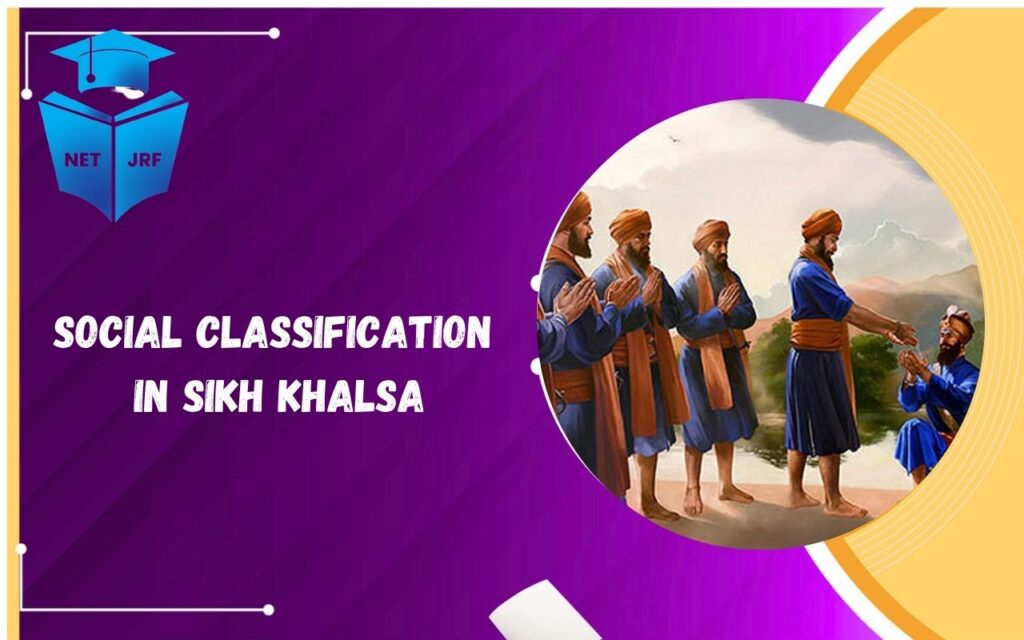
Social Classification underwent a radical transformation in 1699 under the leadership of the tenth Guru. Before this era, Indian society often faced deep divisions based on birth and profession. Guru Gobind Singh sought to create a new order that defied these old rules. He founded the Khalsa to protect the innocent and uphold justice. This move changed the way people viewed themselves and their community. Today, students of history study this change to understand medieval social movements. This article explores how the Guru redefined social boundaries to create a unified identity.
Enroll UGC NET Coaching in Jaipur

Social Classification Impact
During the medieval period, the Mughal Empire ruled over a diverse population. The empire often used a strict system of taxes and social tiers. For example, the Cholas mentioned over 400 terms for different taxes in their inscriptions. This shows that the state carefully monitored the status of its citizens. In the Sikh community, a system of “Masands” existed to collect tributes and lead local groups.
- However, this system eventually became corrupt. The Masands acted like middle-level lords, which created an unwanted layer of hierarchy.
- Guru Gobind Singh realized that this old Social Classification weakened the community. He saw the need for a direct link between the Guru and the followers. By abolishing the Masand system, he removed the middlemen.
- This action empowered the common people. It allowed them to feel a sense of ownership over their faith.
Guru Gobind Singh Rejection of Caste Hierarchy
The most revolutionary change occurred during the Vaisakhi festival in 1699. Guru Gobind Singh summoned a massive gathering at Shri Anandpur Sahib. He stood before the crowd and asked for a volunteer to sacrifice their head. This request challenged the traditional Social Classification of the time. In many societies, warriors were only from specific castes. By asking for a volunteer from any background, the Guru opened the path of heroism to everyone.
Five brave men eventually stepped forward. These men, known as the “Panj Pyare,” came from different regions and different castes.
- Daya Ram was a Khatri from Lahore.
- Dharam Das was a Jat from Hastinapur.
- Himmat Rai was a water-carrier from Jagannath.
- Mohkam Chand was a washerman from Dwarka.
- Sahib Chand was a barber from Bidar.
By initiating these five men together, the Guru destroyed the old Social Classification barriers. They all drank from the same iron basin during the Amrit Sanskar ceremony. This act proved that in the eyes of the Guru, all Sikhs were equal. This ceremony gave birth to a new community where the only rank was loyalty to the faith.
Changing Social Classification Through the Panj Pyare
The creation of the Panj Pyare serves as a perfect example of social engineering. The Guru did not just talk about equality; he practiced it. After baptizing the five volunteers, he asked them to baptize him in return.
- This act made the leader and the followers equal. He changed his name from Guru Gobind Rai to Guru Gobind Singh. This new name, meaning “Lion,” became the surname for all male members of the community. Women received the name “Kaur,” meaning “Princess.”
- This new Social Classification gave every member a royal identity. It removed the need to use caste-based surnames that often indicated social status.
- The Panj Pyare became the “first Khalsa,” representing a new wave of “Saint-Soldiers.” These warriors were task-oriented.
- They protected the innocent against religious oppression. This shift was a watershed moment in the history of the Indian subcontinent. It provided a clear political and theological vision for a community that had previously faced heavy persecution.
Enroll UGC NET Offline Coaching in Jaipur
The Five Ks
The Guru established five specific symbols for the initiated members. These symbols are known as the Five Ks. They serve as a uniform for the Khalsa warriors. This uniform helped to standardize the appearance of Sikhs regardless of their past.
- Kesh (Uncut Hair): This represents a commitment to holiness and the natural will of God.
- Kangha (Wooden Comb): This symbolizes cleanliness and a disciplined life.
- Kara (Iron Bracelet): This reminds the wearer of their unbreakable bond with the Guru.
- Kirpan (Sword): This is a tool for self-defense and the protection of the weak.
- Kachera (Short Breeches): This represents agility and self-control.
These symbols created a unique Social Classification that was easily visible. Whether a person was a farmer or a carpenter, they looked the same once they joined the Khalsa. This visual unity made the community very strong. It discouraged individuals from hiding their identity during times of trouble. Even today, these symbols define the core identity of an initiated Sikh. They remind the world that the wearer belongs to a community of equals.

Historical Timeline and Features
The following tables summarize the historical progression and the specific features of this movement.
Enroll UGC NET Online Coaching
Chronological Evolution of Sikh Identity
| Year | Key Event | Resulting Social Change |
| 1606 | Execution of Guru Arjan Dev | Sikhs begin to look toward self-defense |
| 1675 | Martyrdom of Guru Tegh Bahadur | Tenth Guru prepares for a defensive war |
| 1699 | Foundation of the Khalsa | Birth of a classless warrior society |
| 1892 | Founding of Khalsa College | Focus shifts toward modern education |
Comparison of Social Classification Models
| Feature | Pre-1699 Model | Khalsa Model |
| Leadership Structure | Masand System (Indirect) | Direct link to Guru (Centralized) |
| Social Tiers | Caste-based divisions | Total equality (All are Singh/Kaur) |
| Military Role | Limited to specific groups | Every member is a potential soldier |
| Identity Markers | Localized and diverse | Standardized (The Five Ks) |
| Religious Freedom | Often suppressed | Fights for universal freedom |
This comparison shows how Social Classification shifted from a complex, divided system to a simple, unified one. The Khalsa model prioritized merit and devotion over birthright.
The Rahit
Joining the Khalsa was not just about wearing symbols. It also required following a strict code of conduct called the “Rahit”. This code ensured that the high standards of the community remained intact. The Guru wanted his warriors to be pure in mind and deed. This Social Classification was based on behavior rather than status.
Prohibited Acts in the Rahit
- No Tobacco: Members must not use tobacco or other intoxicants.
- No Adultery: Faithful relations with one’s spouse are mandatory.
- No Kutha Meat: Consumption of ritualistically slaughtered meat is forbidden.
- No Hair Alteration: Any form of cutting or altering body hair is a violation.
By following these rules, the members maintained a state of “Khalisa” or purity. The code also demanded that members be truthful and treat everyone with respect. They had to contemplate on God every day to keep their spiritual connection strong. This balanced approach created a community of “Saint-Soldiers” who could fight a war without losing their moral compass.

Khalsa and Sahajdhari Sikhs Divide
Not all Sikhs joined the military order in 1699. This created a new form of Social Classification within the broader Sikh faith. The community split into two primary groups. One group consisted of the initiated members who took the Amrit baptism. They became known as the Khalsa Sikhs. These individuals strictly followed the Five Ks and the Rahit code.
The second group included those who remained faithful to the teachings of the Gurus but did not join the military order. These individuals are often called Sahajdhari Sikhs. Others were known as Nanak-panthis. While they shared the same core beliefs, they did not wear the outer symbols or undergo the full initiation. This plurality allowed the Sikh faith to include a wide range of people. However, the Khalsa Sikhs remained the most visible and disciplined wing of the community. Modern scholars still debate how this Social Classification influences the identity of Sikhs today.
Conclusion
In conclusion, the history of the Sikh community shows that Social Classification can be a powerful tool for liberation. Guru Gobind Singh took a fragmented society and forged it into a single, unbreakable sword. By focusing on purity, equality, and bravery, he gave the common people a reason to stand tall. The Khalsa tradition remains a beacon of hope for those who value human rights and justice. We can see the influence of this movement in every aspect of modern Sikh life.
Social Classification in Context of the Sikh Khalsa FAQs

Q2: Who initiated the Khalsa tradition?
The Khalsa tradition was initiated by Guru Gobind Singh in 1699 during the festival of Vaisakhi. He established the Khalsa to transform the Sikh community into a disciplined group of believers who were spiritually devoted and ready to defend justice.
Q3: What does the term "Khalisa" mean?
The word Khalisa is believed to come from Arabic or Persian origins. According to the historian W. H. McLeod, it means “pure,” “free,” or “belonging directly to the sovereign.” In Sikhism, the term refers to a community that has a direct relationship with the Guru without intermediaries and follows a life of purity and discipline.
Q4: Why did the Guru choose five volunteers from different castes?
Guru Gobind Singh chose five volunteers from different castes to demonstrate the principle of social equality. These five men, later known as the Panj Pyare (Five Beloved Ones), came from different regions and social backgrounds.
By selecting them, the Guru proved that courage, faith, and devotion are not limited to any caste or social group. This act challenged the traditional caste hierarchy of Indian society and emphasized the Sikh belief in equality.
Q5: Is the turban mandatory for all initiated Sikhs?
According to the Sikh Rehat Maryada, initiated Sikh men are expected to wear a turban (Dastar) as a symbol of honor, discipline, and identity.
For Sikh women, wearing a turban is optional and considered a matter of personal choice. However, many Sikh women also choose to wear the turban as a symbol of equality and spiritual commitment.