

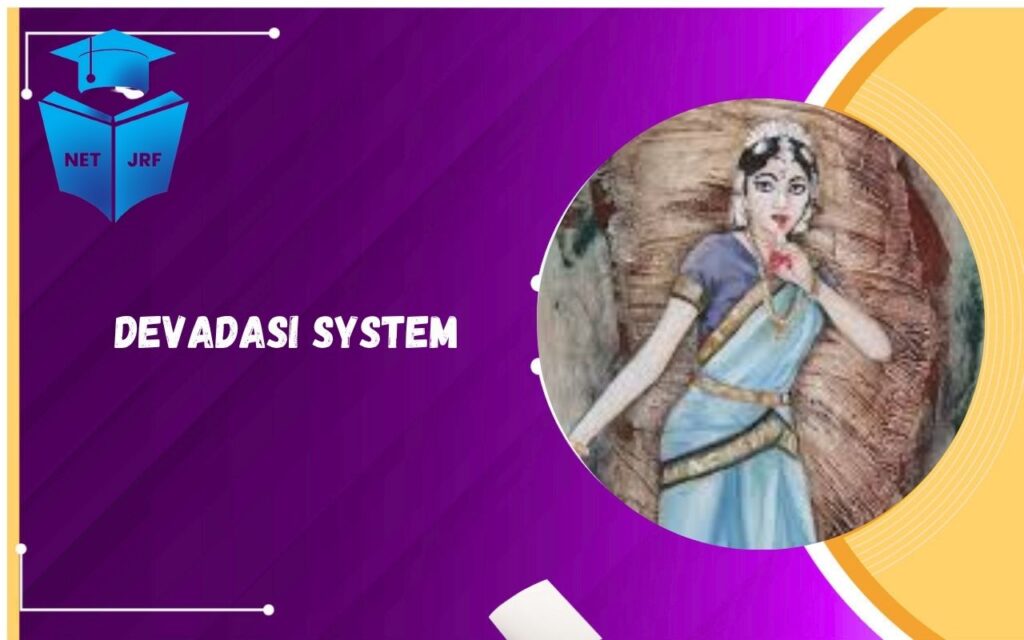
The Devadasi System represents a complex religious and social tradition within the history of Indian society. Originally, the term “Devadasi” translates to “servant of God.” Young girls dedicated themselves to temples to perform sacred duties. These duties included cleaning the temple, lighting lamps, and performing classical dances like Bharatanatyam. Over centuries, this practice shifted from a respected artistic tradition into a system of exploitation. To see how social stratification influenced this practice. The tradition deeply connects to the religious fabric of South India. However, the colonial era and later social reforms changed the public perception of these women.

Devadasi System Historical Evolution
History shows that the Devadasi System gained prominence during the Chola and Pandya dynasties. Kings provided massive land grants to temples, which supported a large community of artists. These women held a high social status because they were “Nitya Sumangali” (ever-auspicious). Since they married the deity, they never faced the stigma of widowhood.
- During the medieval period, the temple was the center of the community. Devadasis acted as the custodians of the fine arts.
- They preserved complex dance forms and musical traditions that otherwise might have vanished.
- Their presence during temple festivals was mandatory for the rituals to be considered complete.
- However, the decline of royal patronage started the downfall of this community. When kingdoms fell to foreign invasions, temples lost their financial security.
- This economic shift forced many women into precarious positions.
- The once-honoured artists began to face social marginalization as they lost their ancestral land rights and temple support.
Enroll UGC NET Mock Test Series
Devadasi System Religious Significance
The religious roots of the Devadasi System lie in the Agamic traditions of temple worship. Devotees believed that the deity required human-like services, including entertainment and personal care. The girls dedicated to the temple performed “Shodashopachara” or the sixteen rituals of worship. Their dance was not merely a performance; it was a form of “Bhakti” or devotion.
- In the early stages, society viewed these women as scholars. Many were literate in Sanskrit and regional languages.
- They composed poetry and participated in theological debates. This intellectual freedom was rare for women in conventional patriarchal households of that era.
- The religious framework provided them with a unique legal identity.
- They inherited property through the maternal line, creating a matrilocal family structure. This contrasted sharply with the dominant patrilocal norms of Indian society.
- This independence initially shielded them from the common hardships faced by other women.
Devadasi System Hierarchy and Caste Dimensions
The Devadasi System eventually became deeply entangled with the Indian caste structure. While early Devadasis often came from various backgrounds, the later period saw a concentration within specific communities. In South India, the Isai Vellalar community became closely associated with temple music and dance.
- As the feudal system strengthened, the exploitation of women from lower castes increased. Dominant caste landlords often used the guise of temple dedication to exploit marginalized women.
- This shifted the tradition away from its spiritual origins. It became a tool for maintaining local power dynamics and social hegemony.
- Sociologists often use the term Sanskritization to describe how some of these traditions were later reformed.
- High-caste reformers tried to purify the dance forms while distancing themselves from the women who originally performed them.
- This led to a further marginalization of the original practitioners, who lost both their livelihood and their cultural heritage.
Enroll UGC NET Foundation Course
Devadasi System Sacred to Profane
The British colonial encounter significantly altered the perception of the Devadasi System. Victorian morality found the concept of temple dancers scandalous. Colonial administrators and missionaries viewed the practice through the lens of Western purity standards. They failed to understand the complex socio-religious nuances of the Indian temple tradition.
- The Anti-Nautch movement gained momentum in the late 19th century. Reformers argued that the system was simply a cover for immoral activities. While some women within the community sought reform, others fought to preserve their traditional rights.
- They argued that the system provided them with economic independence that they would lose in a traditional marriage.
- This era marked the beginning of the stigmatization of the community. The state began to view these women as fallen rather than as artists.
- This transition led to the eventual criminalization of the dedication process. The loss of dignity was more damaging to the community than the loss of income.
Comparison of Regional Practices
The Devadasi System appeared in various forms across different parts of India. While the term is most common in the South, similar traditions existed in the East and West. These variations highlight how local cultures adapted the concept of divine service.
Comparing Stages of the Devadasi System
| Feature | Early Period (6th-13th Century) | Colonial Period (18th-19th Century) | Modern Era (20th-21st Century) |
| Social Status | Highly respected artists and scholars. | Declined status; viewed with suspicion. | Legally banned; socially marginalized. |
| Economic Base | Temple land grants and royal patronage. | Loss of land; dependency on local lords. | Government rehabilitation programs. |
| Role | Ritualistic dance and temple maintenance. | Entertainment for local elite. | Struggle for identity and rights. |
| Inheritance | Matrilineal (property passed to daughters). | Disputed and increasingly lost. | Standard Indian civil laws apply. |

Legal Acts Against the Devadasi System
| Act Name | Year | Key Objective |
| Bombay Devadasi Protection Act | 1934 | To prevent the dedication of women in Bombay. |
| Madras Devadasi Act | 1947 | Abolished the practice in the Madras Presidency. |
| Karnataka Devadasi (Prohibition of Dedication) Act | 1982 | Stricter penalties for those performing dedications. |
| Andhra Pradesh Devadasi Act | 1988 | Comprehensive ban on the Jogini and Mathamma systems. |
Devadasi System Legal Prohibitions and Modern Laws
The Indian legal system took a firm stand against the Devadasi System after independence. The 1947 Madras Devadasi (Prevention of Dedication) Act was a landmark piece of legislation. It gave women the right to marry and stripped the dedication ritual of its legal validity. This act resulted from the tireless work of reformers like Dr. Muthulakshmi Reddy.
- Despite these laws, the practice did not vanish overnight. It merely went underground or changed names. In states like Karnataka and Andhra Pradesh, practitioners called it the “Jogini” or “Mathamma” system. The government had to pass more specific state laws in the 1980s to address these rural variations.
- The Indian Constitution also provides protections under Article 23.
- This article prohibits human trafficking and forced labour. Modern courts view the Devadasi System as a violation of fundamental human rights.
- The focus has now shifted from mere prohibition to active rehabilitation and education for the children of affected women.
Enroll UGC NET Offline Classes in Jaipur
Women’s Rights Impacts
The Devadasi System offers a unique case study in the history of women’s agency. On one hand, it provided women with property rights and literacy in a time when few women had them. On the other hand, it eventually became a system of institutionalized exploitation. This duality makes the topic central to feminist discourse in India.
- The reform movements often ignored the voices of the women themselves.
- While the reformers wanted to save them, many women felt they were being robbed of their identity.
- They lost their roles as the primary practitioners of arts like Sadir, which later became Bharatanatyam.
- The gentrification of their dance forms meant that upper-class women took over the stage while the original dancers were left in poverty.
Step Evolution of Social Reforms
The path to ending the Devadasi System involved several crucial steps:
- Initial Awareness: Social reformers highlighted the plight of dedicated women in the late 1800s.
- Petitions and Lobbying: Leaders like Dr. Muthulakshmi Reddy petitioned the British government for legal change.
- The Anti-Nautch Movement: A national campaign aimed to stop temple dancing and dedications.
- Legislative Action: Provincial governments passed the first sets of prohibitory laws in the 1930s and 40s.
- Constitutional Protection: Post-1947, the Constitution banned forced labour and exploitation.
- State-Level Stringency: States like Karnataka introduced heavier fines and jail time in the 1980s.
- Rehabilitation Phase: Modern efforts focus on providing vocational training to former Devadasis.
Key Takeaways for Students
- The Devadasi System was originally a spiritual and artistic tradition.
- Royal patronage was the backbone of the community’s economic independence.
- Colonial morality and the loss of funding led to the system’s decline.
- Dr. Muthulakshmi Reddy played a pivotal role in the legislative ban.
- Modern laws like the 1982 Karnataka Act strictly punish dedication rituals.
- The transition of Sadir dance into Bharatanatyam is a key part of this history.
- Caste and gender intersect deeply within this tradition’s history.
- Rehabilitation remains a major challenge for the Indian government today.
Join UGC NET Coaching in Jaipur

Conclusion
The history of the Devadasi System teaches us about the shifting nature of tradition and power. What began as a sacred dedication to art and divinity transformed into a tool for social and economic oppression. The legal battles of the 20th century successfully criminalized the practice, but the work of social integration continues.
We must respect the artistic legacy of the community while condemning the exploitation they faced. By studying the Devadasi System, we gain a deeper understanding of how gender, caste, and religion interact in Indian history.
Devadasi System FAQs

Who was the main reformer against this system?
Dr. Muthulakshmi Reddy was the primary leader who fought for the abolition of the practice in South India during the mid-20th century.
Is temple dedication legal in India today?
No, the practice is strictly illegal under various state acts and the Indian Constitution, which prohibits exploitation and forced labour.
What is the meaning of Nitya Sumangali?
It means ever-auspicious. Because Devadasis were married to a deity who never dies, they were never considered widows and were seen as a sign of good luck.
Which classical dance form originated from this community?
Bharatanatyam, originally known as Sadir Attam, was preserved and performed by these temple dancers for centuries.
What are some other names for this practice?
In different regions, it is known as the Jogini, Mathamma, Mahari, or Basavi system.
Why did the system decline?
The decline happened due to the loss of royal funding, the impact of colonial Victorian morality, and the rise of social reform movements.
How did the caste system affect these women?
Over time, women from marginalized and lower castes were disproportionately pushed into the system as a form of social and economic exploitation.
What is the role of Article 23 of the Indian Constitution?
Article 23 prohibits the trafficking of human beings and "begar" (forced labour), providing a legal basis to stop temple dedications.
What is being done for the survivors today?
The government provides monthly pensions, housing schemes, and educational scholarships for the children of former Devadasis to ensure their social integration.