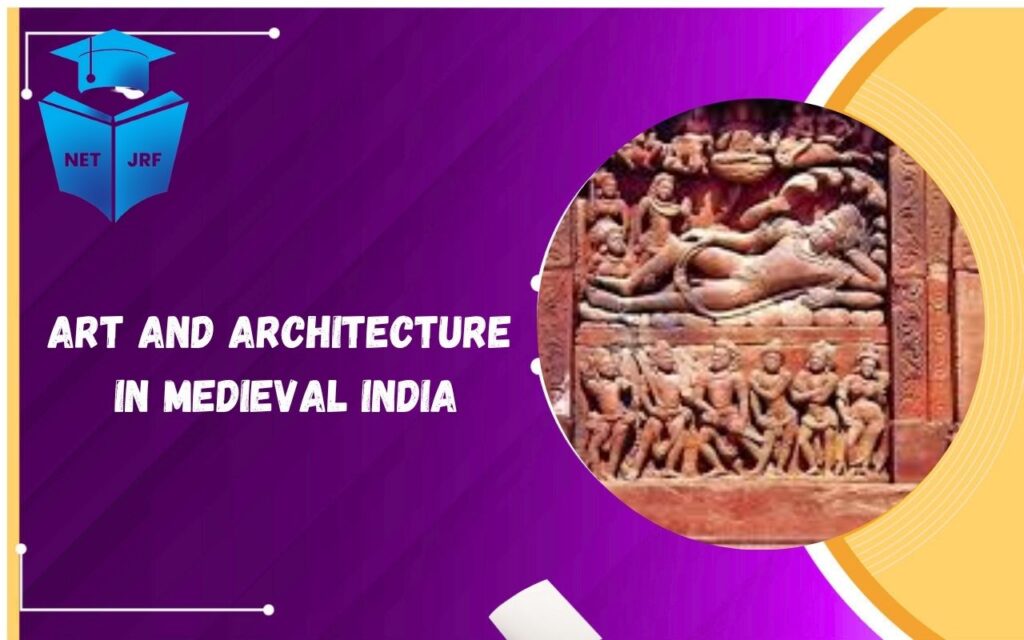
Art and Architecture in Medieval India: Check Indo Islamic Styles and Sufi Artistic Traditions

Art and Architecture in Medieval India in this topic you learn how Indo Islamic styles developed through Sufi influence Persian artistic ideas mural traditions domes arches calligraphy regional painting techniques and cultural fusion during the medieval period

vishal

Art and Architecture in Medieval India

Table of Contents

Art and Architecture of the medieval period shows a mix of Islamic and local cultures. This era remains one of the most vibrant chapters in Indian history. Builders and artists created structures that still amaze people today. From high minarets to delicate wall paintings, every piece tells a story of faith and skill. This guide explores the deep roots of these artistic traditions. Medieval India saw a massive change when Islam entered the region around the 12th century. This shift brought new styles from Persia and Baghdad. However, local Indian artists blended these ideas with their own traditions.Medieval structures serve as more than just buildings. They act as spiritual symbols and records of history. Many of these artistic works appeared between the 12th and 16th centuries C.E.. During this time, Sufi orders or “tariqas” played a huge role in shaping the aesthetic landscape. They used art to express spiritual truths and connect with the common people. Let us dive into the major styles and techniques that define this golden age.

Study Planner

Art and Architecture in Middle Ages

The Art and Architecture of this time focused heavily on the relationship between masters and disciples. Historians often link the development of these styles to Sufi saints and their followers, known as murids. These artists did not just build walls; they painted spiritual journeys on them. They used intricate patterns to show the Ultimate Reality or truth.

  • In the medieval era, tariqa meant a spiritual path or order. Each order had its own way of designing buildings and painting murals. Some preferred simple lines, while others loved minute details. 
  • This diversity makes the study of medieval India very exciting. Scholars look at these structures to understand the social and religious life of the past.
  • Major cities like Delhi, Ajmer, and Lucknow became hubs for these artists. Rulers often gave money and land to support these creative projects.
  •  For example, Emperor Akbar and his son Jahangir actively promoted these styles.
  •  Their support allowed artists to experiment with new methods from abroad. This cross-cultural exchange defined the era’s grand monuments.

Enroll UGC NET Mock Test Series

Chishtiya Tariqa

The Chishtiya order represents a very specific style in the history of medieval India. During the reign of Akbar, a group called the Ewans revived this tradition under the patronage of Sambhaji. While many orders focused on Lucknow, the Chishtiya style spread through Maharashtra, Gujarat, and Rajasthan. This order prioritized ideas over visual complexity.

  • Artists in the Chishtiya tradition created detailed but precise compositions. They relied on strong lines to form patterns. However, they usually avoided intricate shading or three-dimensional effects. Their forms appeared flat because they cared more about the thought-provoking nature of the work. They wanted the viewer to think about spiritual concepts rather than just admire beauty.
  • A great example of their work exists at the shrine of the Chishti Pir in Ajmer. This mosque features 17 main compositions along its walls.
  • These paintings show daily life and festival cycles. 
  • The murids who painted these were highly trained. They even used a special technique called pichnoo to fix old, fading murals. This shows how much they valued preserving their heritage.

Suhrawardiyya Order

The Suhrawardiyya order brought a different flavor to Indian Art and Architecture. Abu al-Najib Suhrawardi founded this school, focusing on the gap between masters and students. 

  • This tariqa gained massive popularity during the Mughal period. Prince Salim, who later became Emperor Jahangir, followed this order closely.
  • Unlike the Chishtiya style, Suhrawardiyya murids love minute and detailed work. 
  • They introduced styles from Baghdad, Damascus, and Persia. 
  • These artists were masters of making paintings look three-dimensional. They developed new ways to combine different regional styles. 
  • A single masterpiece, often called a shama’il” execution, could take a whole year to finish.
  • These artists often used a technique called tracing over. They would copy previous works repeatedly to create the illusion of something entirely new. 
  • This method ensured that the core spiritual themes remained consistent across generations. Today, only a few villages in Gujarat and Rajasthan still keep these traditions alive. 
  • Their work remains a testament to the high level of skill in medieval India.

Enroll UGC NET Foundation Course

Khwaja Nizamuddin Auliya Delhi’s Architectural 

The tomb of Khwaja Nizamuddin Auliya stands as a masterpiece of Art and Architecture. Located in Delhi, this site shows the best of the Suhrawardiya murid style. Artists painted both the interior and exterior walls with incredible care. They used various styles known as eid, sadr, and maqam to decorate the structure.

  • Khwaja Nizamuddin Auliya was a famous 13th-century scholar and saint. His tomb became a center for the preservation of knowledge. 
  • The artists who worked here focused on minute details
  • . They wanted every inch of the building to reflect the spiritual status of the saint. 
  • In Sufism, a “maqam” is a level of spiritual attainment, and this building represents that perfectly.
  • The Khwaja Ewans of Bijapur also helped popularize this style across India. 
  • They hired local artists to blend Sufi themes with Indian artistic habits. This collaboration led to a very distinct style that lasted for generations.
  •  Visitors to the tomb today can still see the intricate work that reflects the devotion of the medieval murids.

App JRF Adda

The Maqams: Kashmir’s Unique Artistic Style

Kashmir developed a very special painting style known as the Maqams. This was not a formal school with strict rules, but rather a collection of themes that remained the same over centuries. Even when styles changed, the core messages stayed the same. This tradition remains active in Kashmir even today.

  • The Maqams style has deep links to local mysticism. Murids in this region followed a different path than the Suhrawardiyya. 
  • They often linked their art to the worship of Maharaja Bali and Chakrari. To create these images, they used natural materials like grass, flowers, and trees. This gave their work a very organic and earthy feel.
  • Despite using simple materials, these artists were famous for their intricate and minute work. During the Mughal Empire, some artists received special training to master this style. 
  • The term “maqam” in this context also refers to songs or poems that students sing for spiritual upliftment. Thus, the art and the music worked together to create a holy atmosphere.

Medieval Murid Artists Painting Techniques 

Murid painters developed several techniques for Art and Architecture. They did not just paint for beauty; they painted as a form of meditation. Teachers taught their students how to achieve specific visual effects through long discussions. This academic approach to art helped maintain high standards over hundreds of years.

  • One major technique was emulation. This required painters to copy works from books or older artists exactly.
  •  Another common method was tracing over. The artist would trace the original painting and then paint over it many times. 
  • This gave the final work a deep, layered look that seemed fresh and new.
  • They also used clear painting  In this style, the artist simplified outlines and removed unnecessary colors. 
  • This made the subject matter very easy to see and understand. Whether using the pichnoo method to revive old walls or creating new  shama’il” works, these artists showed incredible technical knowledge.

Enroll UGC NET Offline Classes in Jaipur

Art and Architecture Styles

Feature Chishtiya Style Suhrawardiyya Style Maqams (Kashmir)
Primary Focus Ideas and concepts Minute details and precision Natural themes and mysticism
Visual Style Linear and flat Three-dimensional and intricate Use of grass, flowers, and trees
Key Regions Maharashtra, Gujarat, Rajasthan Delhi, Gujarat, Rajasthan Kashmir
Famous Example Shrine of Chishti Pir (Ajmer) Tomb of Nizamuddin Auliya Local Kashmiri murals

Art and Architecture Comparative Analysis

Medieval Indian history provides a rich timeline for the growth of culture. The table below highlights how different factors influenced the development of various structures.

Period Major Influence Key Development in Art and Architecture
12th Century Introduction of Islam Start of Indo-Islamic fusion in buildings
13th Century Khwaja Nizamuddin Auliya Rise of intricate murid wall paintings in Delhi
15th-16th Century Mughal Patronage Introduction of Persian, Baghdad, and Damascus styles
Modern Era Preservation Revival of old techniques like pichnoo and tracing

Key Features of Medieval Structures

To truly understand the Art and Architecture of this era, we must look at the specific elements that builders used.

  • Domes and Arches: Builders used these to create large, open spaces inside mosques and tombs.
  • Intricate Calligraphy: Artists carved verses from holy texts into the stone walls.
  • Floral Patterns: Many buildings feature carvings of lilies, roses, and vines.
  • Use of Local Stone: Architects used red sandstone and white marble to create contrast.

JRF Adda Book

Conclusion

The study of the medieval period shows that Art and Architecture served as a bridge between the physical and spiritual worlds. Builders and painters did not just seek to create beautiful things. They wanted to express their devotion and preserve their knowledge for future generations. From the simple, thought-provoking lines of the Chishtiya to the minute, Persian-inspired details of the Suhrawardiyya, this era remains a peak of human creativity.

This study proves that Art and Architecture connects the past to the present. By learning about these techniques and styles, we gain a deeper respect for the craftsmen of the 12th to 16th centuries. Their work continues to inspire artists and students today. As we move forward, preserving these sites remains vital so that the “Ultimate Reality” they represent is never lost.

Join UGC NET Coaching in Jaipur

Read UGC NET Notes
1 Archaeological Sources for UGC NET Epigraphy – Study of Inscriptions Meaning of Historical Sources Archaeological
2 Meaning of Historical Sources Archaeological Sources for UGC NET Literary Sources in History Archaeological
3 Exploration in Archaeology Excavation Techniques in Archaeology Dating of Archaeological Sites Archaeological
4 Excavation Techniques in Archaeology Exploration in Archaeology Dating of Archaeological Sites Archaeological
5 Epigraphy – Study of Inscriptions Inscriptions in Reconstructing History Numismatics in History Archaeological
6 Inscriptions in Reconstructing History Epigraphy – Study of Inscriptions Archaeological Sources for UGC NET Archaeological
7 Numismatics in History Importance of Coins in History Epigraphy – Study of Inscriptions Archaeological
8 Importance of Coins in History Numismatics in History Archaeological Sources for UGC NET Archaeological
9 Dating of Archaeological Sites Excavation Techniques in Archaeology Dating Ancient Literary Sources Archaeological
10 Indigenous Literature Literary Sources in History Secular Literature as Historical Source Literary
11 Dating Ancient Literary Sources Literary Sources in History Dating of Archaeological Sites Literary
12 Literary Sources in History Indigenous Literature Foreign Accounts of India Literary
13 Foreign Accounts of India Greek Accounts on Ancient India Chinese Accounts on India Literary
14 Greek Accounts on Ancient India Foreign Accounts of India Chinese Accounts on India Literary
15 Secular Literature as Historical Source Literary Sources in History Indigenous Literature Literary
16 Role of Myths and Legends in Historical Reconstruction Literary Sources in History Secular Literature as Historical Source Literary
17 Chinese Accounts on India Foreign Accounts of India Greek Accounts on Ancient India Literary
18 Arabic Accounts on India Foreign Accounts of India Chinese Accounts on India Literary
19 Neolithic and Chalcolithic Phases Neolithic Revolution in India Chalcolithic Culture in India Neolithic
20 Hunting, Gathering & Food Production Neolithic Revolution in India Neolithic Settlements in India Neolithic
21 Neolithic Revolution in India Neolithic Settlements in India Tools and Technology in Neolithic Period Neolithic
22 Neolithic Settlements in India Distribution of Neolithic Cultures in India Neolithic Revolution in India Neolithic
23 Distribution of Neolithic Cultures in India Neolithic Settlements in India Tools and Technology in Neolithic Period Neolithic
24 Tools and Technology in Neolithic Period Neolithic Revolution in India Chalcolithic Culture in India Neolithic
25 Chalcolithic Culture in India Settlement Pattern & Economy in Chalcolithic Phase Trade & Exchange Networks in Chalcolithic Societies Neolithic
26 Settlement Pattern & Economy – Chalcolithic Phase Chalcolithic Culture in India Trade & Exchange Networks in Chalcolithic Societies Neolithic
27 Trade & Exchange Networks – Chalcolithic Societies Chalcolithic Culture in India IVC Internal & External Trade Neolithic
28 Indus Valley Civilization – UGC NET Major Sites of Indus Civilization Urban Planning in Harappan Civilization IVC
29 IVC Internal & External Trade Internal Trade – Harappan Civilization Craft Specialization in Harappan Civilization IVC
30 Political Organization – Harappan Civilization Social Structure – Indus Civilization Urban Planning in Harappan Civilization IVC
31 Major Sites of Indus Civilization Indus Valley Civilization – UGC NET Urban Planning in Harappan Civilization IVC
32 Urban Planning & Settlement – Harappan Civilization Architecture & Town Planning – Harappan Cities IVC as First Urbanization in India IVC
33 Architecture & Town Planning – Harappan Cities Urban Planning in Harappan Civilization Major Sites of Indus Civilization IVC
34 Craft Specialization & Industrial Activities – Harappan Agriculture & Food Economy – Harappans IVC Internal & External Trade IVC
35 Agriculture & Food Economy – Harappans Craft Specialization in Harappan Civilization Internal Trade – Harappan Civilization IVC
36 Internal Trade – Harappan Civilization IVC Internal & External Trade Craft Specialization in Harappan Civilization IVC
37 Religion & Beliefs – Indus Civilization Social Structure – Indus Civilization Indus Valley Civilization – UGC NET IVC
38 Social Structure – Indus Civilization Political Organization – Harappan Civilization Religion & Beliefs – Indus Civilization IVC
39 Decline of Indus Civilization Indus Valley Civilization – UGC NET IVC as First Urbanization in India IVC
40 IVC as First Urbanization in India Urban Planning in Harappan Civilization Second Urbanization in India IVC
41 Vedic & Later Vedic Periods – Aryan Varna System Early Vedic Society and Economy Later Vedic Society and Economy Vedic
42 Origin of Vedic Civilization Aryan Debate – Migration, Invasion & Indigenous Theories Early Vedic Society and Economy Vedic
43 Aryan Debate – Migration, Invasion & Indigenous Theories Origin of Vedic Civilization Early Vedic Society and Economy Vedic
44 Early Vedic Society and Economy Political Institutions – Early Vedic Period Social Structure – Early Vedic Period Vedic
45 Political Institutions – Early Vedic Period Early Vedic Society and Economy Monarchical States in Ancient India Vedic
46 Social Structure – Early Vedic Period Emergence of Varnas & Social Stratification Early Vedic Society and Economy Vedic
47 Later Vedic Society and Economy Emergence of Varnas & Social Stratification Impact of Iron Technology in India Vedic
48 Emergence of Varnas & Social Stratification Social Structure – Early Vedic Period Later Vedic Society and Economy Vedic
49 Emergence of Heterodox Sects in India Jainism, Buddhism & Ajivikas – Origins & Teachings Later Vedic Society and Economy Vedic
50 Impact of Iron Technology in India Later Vedic Society and Economy Agricultural Expansion & Economic Changes – Ancient India Vedic
51 Religious & Philosophical Vedic Ideas Emergence of Varnas & Social Stratification Emergence of Heterodox Sects in India Vedic
52 Megalithic Culture of South India Neolithic and Chalcolithic Phases Agricultural Expansion & Economic Changes General
53 State System in Ancient India Rise of Mahajanapadas Transition: Tribal Polities to Territorial States General
54 Transition: Tribal Polities to Territorial States Rise of Mahajanapadas Later Vedic Society and Economy General
55 Rise of Mahajanapadas Monarchical States in Ancient India Republican States (Gana-Sanghas) – Ancient India Magadha
56 Monarchical States in Ancient India Rise of Mahajanapadas Emergence of Magadha Magadha
57 Republican States (Gana-Sanghas) – Ancient India Rise of Mahajanapadas Monarchical States in Ancient India Magadha
58 Agricultural Expansion & Economic Changes – Ancient India Second Urbanization in India Impact of Iron Technology in India General
59 Second Urbanization in India IVC as First Urbanization in India Rise of Mahajanapadas General
60 Jainism, Buddhism & Ajivikas – Origins & Teachings Emergence of Heterodox Sects in India Ashoka’s Policy of Dhamma General
61 Emergence of Magadha Geographical Advantages of Magadha Early Rulers of Magadha Magadha
62 Geographical Advantages of Magadha Natural Resources & Economic Strength of Magadha Reasons for Success of Magadha Magadha
63 Natural Resources & Economic Strength of Magadha Geographical Advantages of Magadha Economic Policies of the Nandas Magadha
64 Early Rulers of Magadha Haryanka Dynasty – Rise of Magadha Emergence of Magadha Magadha
65 Haryanka Dynasty – Rise of Magadha Expansion Policy of Bimbisara Early Rulers of Magadha Magadha
66 Expansion Policy of Bimbisara Ajatashatru – Military Reforms Haryanka Dynasty – Rise of Magadha Magadha
67 Ajatashatru – Military Reforms Wars of Ajatashatru Expansion Policy of Bimbisara Magadha
68 Wars of Ajatashatru Ajatashatru – Military Reforms Udayin & Establishment of Pataliputra Magadha
69 Udayin & Establishment of Pataliputra Wars of Ajatashatru Shishunaga Dynasty Magadha
70 Shishunaga Dynasty Administrative Structure of the Shishunagas Nanda Dynasty Magadha
71 Administrative Structure of the Shishunagas Shishunaga Dynasty Central Administration Under Mauryas Magadha
72 Nanda Dynasty Mahapadma Nanda – Imperial Expansion Shishunaga Dynasty Magadha
73 Mahapadma Nanda – Imperial Expansion Military Strength of the Nandas Nanda Dynasty Magadha
74 Economic Policies of the Nandas Nanda Dynasty Taxation System – Mauryan State Magadha
75 Military Strength of the Nandas Mahapadma Nanda – Imperial Expansion Defeat of Nandas & Rise of Mauryan Empire Magadha
76 Reasons for Success of Magadha Geographical Advantages of Magadha Natural Resources & Economic Strength of Magadha Magadha
77 Mahajanapadas to Empire – Evolution & Rise of Magadha Rise of Mahajanapadas Emergence of Magadha Magadha
78 Mauryan Empire – Expansion Rise of Chandragupta Maurya Expansion of Mauryan Empire Maurya
79 Rise of Chandragupta Maurya Role of Chanakya in Rise of Mauryan Empire Defeat of Nandas & Rise of Mauryan Empire Maurya
80 Role of Chanakya in Rise of Mauryan Empire Rise of Chandragupta Maurya Defeat of Nandas & Rise of Mauryan Empire Maurya
81 Defeat of Nandas & Rise of Mauryan Empire Military Strength of the Nandas Rise of Chandragupta Maurya Maurya
82 Chandragupta Maurya – Seleucus Treaty & Diplomacy Expansion of Mauryan Empire Greek Accounts on Ancient India Maurya
83 Expansion of Mauryan Empire Chandragupta Maurya – Seleucus Treaty & Diplomacy Kalinga War Maurya
84 Administration of Chandragupta Maurya Central Administration Under Mauryas Mauryan Bureaucracy Maurya
85 Sources for Mauryan History Archaeological Sources for UGC NET Greek Accounts on Ancient India Maurya
86 Central Administration Under Mauryas Provincial Administration – Mauryan Empire Mauryan Bureaucracy Maurya
87 Provincial Administration – Mauryan Empire Local Administration – Mauryan Empire Central Administration Under Mauryas Maurya
88 Local Administration – Mauryan Empire Provincial Administration – Mauryan Empire Mauryan Bureaucracy Maurya
89 Mauryan Bureaucracy Central Administration Under Mauryas Espionage System – Mauryan Empire Maurya
90 Espionage System – Mauryan Empire Mauryan Bureaucracy Central Administration Under Mauryas Maurya
91 Ancient India – Trade and Commerce Trade and Commerce Under Mauryas Agrarian Economy – Mauryan Period Maurya
92 Agrarian Economy – Mauryan Period Taxation System – Mauryan State Trade and Commerce Under Mauryas Maurya
93 Trade and Commerce Under Mauryas Ancient India – Trade and Commerce Agrarian Economy – Mauryan Period Maurya
94 Taxation System – Mauryan State Agrarian Economy – Mauryan Period Economic Policies of the Nandas Maurya
95 Kalinga War Ashoka’s Policy of Dhamma Expansion of Mauryan Empire Maurya
96 Ashoka’s Policy of Dhamma Nature & Philosophy of Dhamma Kalinga War Maurya
97 Nature & Philosophy of Dhamma Ashoka’s Policy of Dhamma Jainism, Buddhism & Ajivikas Maurya

Art and Architecture in Medieval India FAQs

Loader image

The shrine of the Chishti Pir in Ajmer contains 17 main compositions that are very famous.

 It is a technique used by Chishtiya murids to fix and revive old, fading parts of murals.

 Abu al-Najib Suhrawardi founded this order between 1145 and 1234.

The introduction of Islam brought new styles like domes and arches, which blended with local Indian stone carving.
Leave a Reply

Recent Posts
Aditi

Aditi Sharma, founder of JRFAdda, is a Computer Science educator with an MCA degree and JRF qualification (99.91 percentile, Dec 2019). Her experience includes roles as an SBI SO (DBA), work at Cognizant, and over 5 years of teaching online and offline. She has also served as a Government Computer Teacher in Rajasthan.