
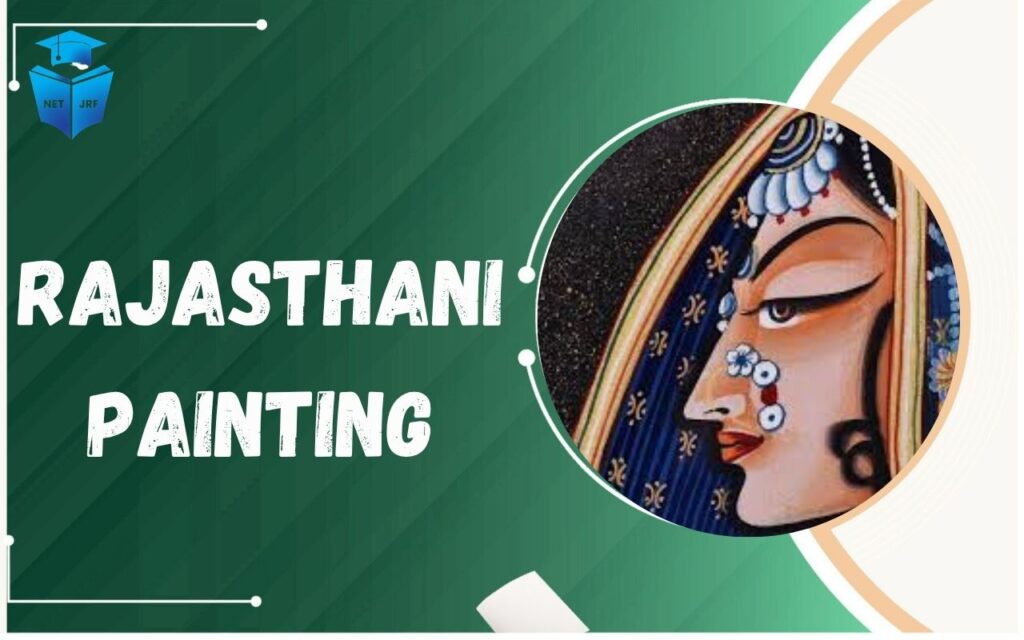

Rajasthani Painting Major Schools Features Themes and Rajput Court Traditions

Rajasthani Painting in this topic you learn how Rajput miniature schools developed across Mewar Bundi Kota Jaipur Bikaner and Kishangarh with Krishna devotion Ragamala themes royal court scenes hunting imagery and regional artistic traditions

vishal

Rajasthani Painting

Table of Contents

Rajasthani Painting represents the heartbeat of Indian heritage as it flourished in the princely kingdoms of Rajasthan. These artworks grew within the thikanas of Mewar, Bundi, Kota, Jaipur, Bikaner, and Kishangarh. They also appeared in Jodhpur, Malwa, and Sirohi between the sixteenth and nineteenth centuries. This tradition remains unique because it captures indigenous styles that existed before Mughal rule.

Study Planner

 Rajasthani Painting Historical Context 

The origins of this art form date back to the early sixteenth century. It lived within the walls of independent princely states and their smaller landholdings called thikanas. These kingdoms protected local artists who kept ancient traditions alive. This indigenous style survived for centuries, eventually blending with other influences.

Top UGC NET Online Course

  • Scholars often link the rise of these paintings to the Bhakti movement
  • This religious shift emphasized a personal bond with God through figures like Krishna and Ram. As Vaishnavism spread across northern India, art became a tool for devotion. Artists began painting stories from holy texts to inspire the common people.
  • The timeline of these schools stretches into the early nineteenth century. During this long period, different regions developed their own visual languages. While some remained isolated, others interacted with the Mughal court. This interaction created a beautiful mix of local and foreign artistic styles.

Rajasthani Painting Key Features 

Artists followed a very specific process to create their works. They did not use standard canvas but preferred waslis. Waslis are thin sheets of handmade paper that people glue together in layers.

  •  This provides a sturdy and smooth surface for detailed brushwork.
  • The colors came directly from nature to ensure longevity and brilliance. Painters extracted pigments from minerals, plants, and even precious metals. 
  • They used gold and silver to make the paintings look royal and sacred. This use of expensive materials reflected the wealth of the patron kings.
  • The tools were as delicate as the art itself. Brushes were made from the hair of camels or squirrels. This allowed for the fine, calligraphic lines seen in schools like Kota. The creation of a single piece usually involved a whole team of experts.
  • Master Artist: He composed the initial concept and drawing.
  • Pupils: These students followed the master’s lead by applying colors.
  • Specialists: Experts handled specific details like portraits, animals, or landscapes.
  • Burnishers: People who polished the painting to give it a smooth finish.

Rajasthani Painting Themes 

Religion played a massive role in shaping the subjects of these paintings. Krishna is the most popular figure, often seen as the creator of the world. Radha represents the human soul seeking union with the divine. 

  • The Gita Govinda series beautifully illustrates Radha’s devotion to her beloved Krishna.
  • Romantic tales also captured the imagination of the Rajput artists. 
  • They painted famous legends like Dhola-Maru and Sohni-Mahiwal. Other themes included Mrigavati, Chaurapanchasika, and Laurchanda. 
  • These stories often highlighted themes of love, separation, and bravery.
  • Courtly life provided a different kind of inspiration for the painters. They documented the grand darbar scenes where kings met their subjects. 
  • Hunting expeditions were another favorite subject, showing the king’s power and skill. These paintings serve as historical records of royal traditions and fashion.

Best UGC NET Mock Test Series

Mewar and Malwa

The Mewar school is one of the oldest and most significant centers. It emerged strongly in 1605 when an artist named Nisardin painted a Ragamala set at Chawand. Mewar artists had a strong preference for bright colors like red and yellow. 

  • Their palette made the scenes feel vibrant and full of energy.
  • By the eighteenth century, Mewar paintings moved toward secular themes. 
  • They began focusing on courtly ambience and festivals. You can find detailed paintings of zenana activities, sports, and flamboyant hunting scenes. 
  • The iconic painting of Jagannath from 1719 remains a highlight of this school.
  • The Malwa school also holds a place among the earliest traditions. 
  • It reached its peak success between 1600 and 1700 CE. Interestingly, scholars have not found a precise city of origin for this school. 
  • However, centers like Mandu and Nusratgarh produced many famous works.
  • Malwa paintings often focused on literary and religious texts. Common themes included the Ramayana, Bhagavata Purana, and Amaru Shataka.
  •  They also produced Baramasa paintings, which show the moods of the seasons. Despite its beauty, we still lack information about the specific patron kings of Malwa.

App JRF Adda

Bundi and Kota 

The Bundi school gained fame in the seventeenth century for its color sense. Artists here loved formal designs and rich visual textures. The school reached its height under rulers like Rao Chattar Sal and Rao Bhao Singh. They encouraged artists to capture the beauty of the natural world.

  • Flora and fauna are the star attractions of Bundi paintings. You will see lush trees, detailed birds, and various animals in every scene. One of their most famous themes is the Baramasa, based on the writing of Keshav Das. The first major phase of this school started with the Bundi Ragamala.
  • Kota paintings are very similar to Bundi because they share the same roots. In fact, it is often hard to tell them apart since Kota painters borrowed many ideas. However, Kota art has a unique calligraphic execution and spontaneous feel. They used marked shading, especially around the eyes, known as the double-lid eye.
  • The Kota artists were experts at portraying animals in motion. They specialized in scenes of animal combat and intense hunting. These works feel more raw and energetic compared to the poetic style of Bundi. The focus on power and nature makes Kota art stand out in any collection.

Top UGC NET Coaching in Jaipur

Bikaner and Jaipur  Mughal Influence

Bikaner developed a very distinct niche due to its long association with the Mughals. This school produced highly refined portraits called Ustas or Ustads. These portraits did more than show a face; they included details about the person’s ancestry. 

  • Famous painters like Ruknuddin and Ibrahim worked in this sophisticated style.
  • Artists in Bikaner worked in organized studios called Mandis. In these Mandis, groups of painters worked together under a master artist. 
  • This system allowed for consistent quality and the training of new pupils. The Bikaner style blends Rajput soul with Mughal technical perfection.
  • The Jaipur school became popular during the reign of Sawai Jai Singh. Like Bikaner, Jaipur art shows a mix of Mughal and indigenous styles.
  •  The king even established a special place called the Suratkhana. This was a dedicated space for artists to create and store their beautiful paintings.
  • Sahibram was a famous artist in Jaipur who excelled at portrait paintings.
  •  The school also covered traditional themes like Radha-Krishna and Gita Govinda. They were known for large-scale works and a sense of royal grandeur. Jaipur art reflects the power and cultural richness of the Kachwaha rulers.

Kishangarh and Jodhpur Royal Portraits

Kishangarh paintings are perhaps the most stylized of all regional schools. They are famous for their exquisite sophistication and unique facial features. Rulers like Raj Singh promoted Krishna Lila themes as the core of their court art. 

  • This school gave us some of the most romantic images in Indian history.
  • Nihal Chand was the most famous painter from Kishangarh. He created a specific look for Radha and Krishna that became the school’s hallmark. 
  • The artists also used panoramic landscapes with greens and pinks. 
  • These backgrounds added a dreamlike quality to the sophisticated figures in the foreground.
  • The Jodhpur school focused heavily on documenting court life. Artists here created beautiful paintings of royal ceremonies and heroic tales. One famous example is the painting of Veer Durgadas Rathore. It tells the story of how he recaptured Marwar from the Mughal Emperor Aurangzeb.
  • Under King Man Singh, the school produced works like Nath Charita and the Shiva Purana. They also painted classic stories like Dhola-Maru and the Panchatantra. Jodhpur art often includes inscriptions that scholars are still trying to understand today. The style is bold, colorful, and deeply rooted in local history.

Rajasthani Painting Schools

School Name Key Feature Famous Theme Famous Artist
Mewar Bright Reds and Yellows Ragamala (1605) Nisardin
Bundi Focus on Flora and Fauna Baramasa Rao Chattar Sal (Patron)
Kota Double-lid Eye Shading Animal Combat Local Masters
Bikaner Mughal Influence Ancestral Portraits Ruknuddin
Kishangarh Exquisite Sophistication Krishna Lila Nihal Chand
Jaipur Suratkhana Studios Radha-Krishna Sahibram
Jodhpur Documentary Style Heroic Tales Local Masters

Comparison of Regional Styles

Feature Malwa School Mewar School Kota School
Peak Period 1600 – 1700 CE 17th – 18th Century 18th Century
Color Choice Traditional Palettes Bold Reds/Yellows Marked Shading
Main Subject Religious Texts Court & Hunting Animals & Combat
Origin Point Mandu/Nusratgarh Chawand Derived from Bundi

Ragamala Tradition

The word Ragamala literally means a garland of ragas. These paintings represent different musical melodies in a visual form. In this tradition, ragas are the male heads of the family. Each raga has six female consorts known as raginis.

  • This system of families allowed artists to organize their work in a specific order. Each painting captured the mood or emotion of a particular melody. 
  • For example, a raga for the rainy season might show clouds and dancing peacocks. This connection between music and art is a unique feature of Indian culture.
  • Ragamala sets were popular across almost all schools of Rajasthan. 
  • The earliest dated set comes from the Mewar school in 1605. 
  • These sets helped spread artistic styles from one kingdom to another. They remain one of the most studied subjects by art historians today.

Best UGC NET Offline Coaching in Jaipur

The study of these artistic traditions reveals the glorious history of the Rajput kingdoms. Each region contributed something unique to the vast landscape of Indian art history. From the natural beauty of Bundi to the sophisticated portraits of Bikaner, the variety is truly amazing. These paintings do not just show pictures; they tell stories of faith, love, and royal pride. Rajasthani Painting remains a vital part of India’s cultural identity today. As we look at the fine lines and bright colors, we see the hard work of generations of artists. This artistic legacy continues to inspire modern designers and students around the world. 

JRF Adda Book

Read UGC NET Notes
1 Archaeological Sources for UGC NET Epigraphy – Study of Inscriptions Meaning of Historical Sources Archaeological
2 Meaning of Historical Sources Archaeological Sources for UGC NET Literary Sources in History Archaeological
3 Exploration in Archaeology Excavation Techniques in Archaeology Dating of Archaeological Sites Archaeological
4 Excavation Techniques in Archaeology Exploration in Archaeology Dating of Archaeological Sites Archaeological
5 Epigraphy – Study of Inscriptions Inscriptions in Reconstructing History Numismatics in History Archaeological
6 Inscriptions in Reconstructing History Epigraphy – Study of Inscriptions Archaeological Sources for UGC NET Archaeological
7 Numismatics in History Importance of Coins in History Epigraphy – Study of Inscriptions Archaeological
8 Importance of Coins in History Numismatics in History Archaeological Sources for UGC NET Archaeological
9 Dating of Archaeological Sites Excavation Techniques in Archaeology Dating Ancient Literary Sources Archaeological
10 Indigenous Literature Literary Sources in History Secular Literature as Historical Source Literary
11 Dating Ancient Literary Sources Literary Sources in History Dating of Archaeological Sites Literary
12 Literary Sources in History Indigenous Literature Foreign Accounts of India Literary
13 Foreign Accounts of India Greek Accounts on Ancient India Chinese Accounts on India Literary
14 Greek Accounts on Ancient India Foreign Accounts of India Chinese Accounts on India Literary
15 Secular Literature as Historical Source Literary Sources in History Indigenous Literature Literary
16 Role of Myths and Legends in Historical Reconstruction Literary Sources in History Secular Literature as Historical Source Literary
17 Chinese Accounts on India Foreign Accounts of India Greek Accounts on Ancient India Literary
18 Arabic Accounts on India Foreign Accounts of India Chinese Accounts on India Literary
19 Neolithic and Chalcolithic Phases Neolithic Revolution in India Chalcolithic Culture in India Neolithic
20 Hunting, Gathering & Food Production Neolithic Revolution in India Neolithic Settlements in India Neolithic
21 Neolithic Revolution in India Neolithic Settlements in India Tools and Technology in Neolithic Period Neolithic
22 Neolithic Settlements in India Distribution of Neolithic Cultures in India Neolithic Revolution in India Neolithic
23 Distribution of Neolithic Cultures in India Neolithic Settlements in India Tools and Technology in Neolithic Period Neolithic
24 Tools and Technology in Neolithic Period Neolithic Revolution in India Chalcolithic Culture in India Neolithic
25 Chalcolithic Culture in India Settlement Pattern & Economy in Chalcolithic Phase Trade & Exchange Networks in Chalcolithic Societies Neolithic
26 Settlement Pattern & Economy – Chalcolithic Phase Chalcolithic Culture in India Trade & Exchange Networks in Chalcolithic Societies Neolithic
27 Trade & Exchange Networks – Chalcolithic Societies Chalcolithic Culture in India IVC Internal & External Trade Neolithic
28 Indus Valley Civilization – UGC NET Major Sites of Indus Civilization Urban Planning in Harappan Civilization IVC
29 IVC Internal & External Trade Internal Trade – Harappan Civilization Craft Specialization in Harappan Civilization IVC
30 Political Organization – Harappan Civilization Social Structure – Indus Civilization Urban Planning in Harappan Civilization IVC
31 Major Sites of Indus Civilization Indus Valley Civilization – UGC NET Urban Planning in Harappan Civilization IVC
32 Urban Planning & Settlement – Harappan Civilization Architecture & Town Planning – Harappan Cities IVC as First Urbanization in India IVC
33 Architecture & Town Planning – Harappan Cities Urban Planning in Harappan Civilization Major Sites of Indus Civilization IVC
34 Craft Specialization & Industrial Activities – Harappan Agriculture & Food Economy – Harappans IVC Internal & External Trade IVC
35 Agriculture & Food Economy – Harappans Craft Specialization in Harappan Civilization Internal Trade – Harappan Civilization IVC
36 Internal Trade – Harappan Civilization IVC Internal & External Trade Craft Specialization in Harappan Civilization IVC
37 Religion & Beliefs – Indus Civilization Social Structure – Indus Civilization Indus Valley Civilization – UGC NET IVC
38 Social Structure – Indus Civilization Political Organization – Harappan Civilization Religion & Beliefs – Indus Civilization IVC
39 Decline of Indus Civilization Indus Valley Civilization – UGC NET IVC as First Urbanization in India IVC
40 IVC as First Urbanization in India Urban Planning in Harappan Civilization Second Urbanization in India IVC
41 Vedic & Later Vedic Periods – Aryan Varna System Early Vedic Society and Economy Later Vedic Society and Economy Vedic
42 Origin of Vedic Civilization Aryan Debate – Migration, Invasion & Indigenous Theories Early Vedic Society and Economy Vedic
43 Aryan Debate – Migration, Invasion & Indigenous Theories Origin of Vedic Civilization Early Vedic Society and Economy Vedic
44 Early Vedic Society and Economy Political Institutions – Early Vedic Period Social Structure – Early Vedic Period Vedic
45 Political Institutions – Early Vedic Period Early Vedic Society and Economy Monarchical States in Ancient India Vedic
46 Social Structure – Early Vedic Period Emergence of Varnas & Social Stratification Early Vedic Society and Economy Vedic
47 Later Vedic Society and Economy Emergence of Varnas & Social Stratification Impact of Iron Technology in India Vedic
48 Emergence of Varnas & Social Stratification Social Structure – Early Vedic Period Later Vedic Society and Economy Vedic
49 Emergence of Heterodox Sects in India Jainism, Buddhism & Ajivikas – Origins & Teachings Later Vedic Society and Economy Vedic
50 Impact of Iron Technology in India Later Vedic Society and Economy Agricultural Expansion & Economic Changes – Ancient India Vedic
51 Religious & Philosophical Vedic Ideas Emergence of Varnas & Social Stratification Emergence of Heterodox Sects in India Vedic
52 Megalithic Culture of South India Neolithic and Chalcolithic Phases Agricultural Expansion & Economic Changes General
53 State System in Ancient India Rise of Mahajanapadas Transition: Tribal Polities to Territorial States General
54 Transition: Tribal Polities to Territorial States Rise of Mahajanapadas Later Vedic Society and Economy General
55 Rise of Mahajanapadas Monarchical States in Ancient India Republican States (Gana-Sanghas) – Ancient India Magadha
56 Monarchical States in Ancient India Rise of Mahajanapadas Emergence of Magadha Magadha
57 Republican States (Gana-Sanghas) – Ancient India Rise of Mahajanapadas Monarchical States in Ancient India Magadha
58 Agricultural Expansion & Economic Changes – Ancient India Second Urbanization in India Impact of Iron Technology in India General
59 Second Urbanization in India IVC as First Urbanization in India Rise of Mahajanapadas General
60 Jainism, Buddhism & Ajivikas – Origins & Teachings Emergence of Heterodox Sects in India Ashoka’s Policy of Dhamma General
61 Emergence of Magadha Geographical Advantages of Magadha Early Rulers of Magadha Magadha
62 Geographical Advantages of Magadha Natural Resources & Economic Strength of Magadha Reasons for Success of Magadha Magadha
63 Natural Resources & Economic Strength of Magadha Geographical Advantages of Magadha Economic Policies of the Nandas Magadha
64 Early Rulers of Magadha Haryanka Dynasty – Rise of Magadha Emergence of Magadha Magadha
65 Haryanka Dynasty – Rise of Magadha Expansion Policy of Bimbisara Early Rulers of Magadha Magadha
66 Expansion Policy of Bimbisara Ajatashatru – Military Reforms Haryanka Dynasty – Rise of Magadha Magadha
67 Ajatashatru – Military Reforms Wars of Ajatashatru Expansion Policy of Bimbisara Magadha
68 Wars of Ajatashatru Ajatashatru – Military Reforms Udayin & Establishment of Pataliputra Magadha
69 Udayin & Establishment of Pataliputra Wars of Ajatashatru Shishunaga Dynasty Magadha
70 Shishunaga Dynasty Administrative Structure of the Shishunagas Nanda Dynasty Magadha
71 Administrative Structure of the Shishunagas Shishunaga Dynasty Central Administration Under Mauryas Magadha
72 Nanda Dynasty Mahapadma Nanda – Imperial Expansion Shishunaga Dynasty Magadha
73 Mahapadma Nanda – Imperial Expansion Military Strength of the Nandas Nanda Dynasty Magadha
74 Economic Policies of the Nandas Nanda Dynasty Taxation System – Mauryan State Magadha
75 Military Strength of the Nandas Mahapadma Nanda – Imperial Expansion Defeat of Nandas & Rise of Mauryan Empire Magadha
76 Reasons for Success of Magadha Geographical Advantages of Magadha Natural Resources & Economic Strength of Magadha Magadha
77 Mahajanapadas to Empire – Evolution & Rise of Magadha Rise of Mahajanapadas Emergence of Magadha Magadha
78 Mauryan Empire – Expansion Rise of Chandragupta Maurya Expansion of Mauryan Empire Maurya
79 Rise of Chandragupta Maurya Role of Chanakya in Rise of Mauryan Empire Defeat of Nandas & Rise of Mauryan Empire Maurya
80 Role of Chanakya in Rise of Mauryan Empire Rise of Chandragupta Maurya Defeat of Nandas & Rise of Mauryan Empire Maurya
81 Defeat of Nandas & Rise of Mauryan Empire Military Strength of the Nandas Rise of Chandragupta Maurya Maurya
82 Chandragupta Maurya – Seleucus Treaty & Diplomacy Expansion of Mauryan Empire Greek Accounts on Ancient India Maurya
83 Expansion of Mauryan Empire Chandragupta Maurya – Seleucus Treaty & Diplomacy Kalinga War Maurya
84 Administration of Chandragupta Maurya Central Administration Under Mauryas Mauryan Bureaucracy Maurya
85 Sources for Mauryan History Archaeological Sources for UGC NET Greek Accounts on Ancient India Maurya
86 Central Administration Under Mauryas Provincial Administration – Mauryan Empire Mauryan Bureaucracy Maurya
87 Provincial Administration – Mauryan Empire Local Administration – Mauryan Empire Central Administration Under Mauryas Maurya
88 Local Administration – Mauryan Empire Provincial Administration – Mauryan Empire Mauryan Bureaucracy Maurya
89 Mauryan Bureaucracy Central Administration Under Mauryas Espionage System – Mauryan Empire Maurya
90 Espionage System – Mauryan Empire Mauryan Bureaucracy Central Administration Under Mauryas Maurya
91 Ancient India – Trade and Commerce Trade and Commerce Under Mauryas Agrarian Economy – Mauryan Period Maurya
92 Agrarian Economy – Mauryan Period Taxation System – Mauryan State Trade and Commerce Under Mauryas Maurya
93 Trade and Commerce Under Mauryas Ancient India – Trade and Commerce Agrarian Economy – Mauryan Period Maurya
94 Taxation System – Mauryan State Agrarian Economy – Mauryan Period Economic Policies of the Nandas Maurya
95 Kalinga War Ashoka’s Policy of Dhamma Expansion of Mauryan Empire Maurya
96 Ashoka’s Policy of Dhamma Nature & Philosophy of Dhamma Kalinga War Maurya
97 Nature & Philosophy of Dhamma Ashoka’s Policy of Dhamma Jainism, Buddhism & Ajivikas Maurya

Rajasthani Painting FAQs

Loader image

The Bundi school is renowned for its beautiful representation of trees, birds, and animals.

 Nihal Chand was the most famous artist of the Kishangarh school, known for his sophisticated style.

Ragamala paintings are a visual representation of Indian musical melodies organized into families.

The Bikaner and Jaipur schools show significant Mughal influence due to their historical ties.

 The Suratkhana was a special department in Jaipur where artists worked and stored their paintings.

Mewar is one of the earliest schools and is famous for its vibrant use of reds and yellows.

Leave a Reply

Recent Posts
Aditi

Aditi Sharma, founder of JRFAdda, is a Computer Science educator with an MCA degree and JRF qualification (99.91 percentile, Dec 2019). Her experience includes roles as an SBI SO (DBA), work at Cognizant, and over 5 years of teaching online and offline. She has also served as a Government Computer Teacher in Rajasthan.