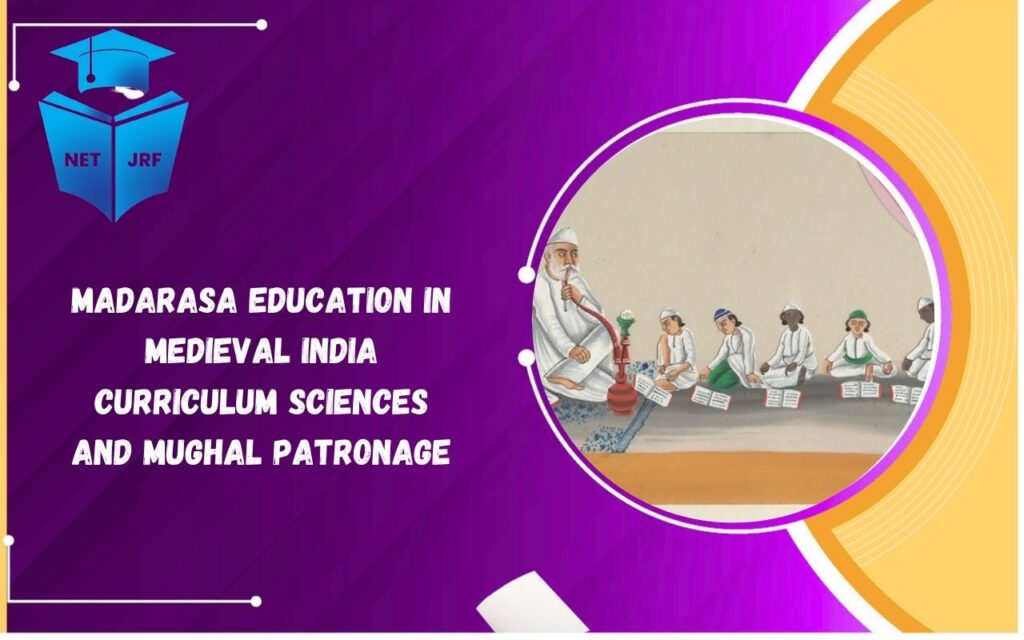
Madarasa Education. served as the primary system of higher learning in India from the 10th century until the mid-18th century. This period marked a significant shift as Islamic traditions began to influence the existing educational landscape. Rulers and scholars worked together to establish institutions that focused on both religious and worldly success.
The development of Madarasa Education. system occurred alongside the rise of Mohammedanism in the Indian subcontinent. When Muslim rulers established permanent empires, they introduced new customs and teaching strategies.
They moved away from the ancient Vedic and Buddhist systems to adopt the Islamic pattern of instruction. This transition brought about fresh social realities and changed how people perceived the value of knowledge. Consequently, many individuals began to realize the significance of formal schooling for achieving material prosperity.

Madarasa Education Strategic Growth
The evolution of higher learning institutions reflected the changing political and social needs of medieval India. Madarasa Education became the standard for anyone seeking a career in the royal court or the religious hierarchy. Unlike primary schools known as Maktabs, which focused on basic literacy, Madrasas offered advanced training in a variety of disciplines. Rulers like Mahmud Ghaznavi and later the Delhi Sultans established these colleges to spread Islamic principles and laws.
- The Madarasa Education System promoted material prosperity alongside religious devotion for all learners. Rulers recognized that a strong administration required educated professionals to manage state affairs.
- Therefore, they invested heavily in building grand structures that served as centers of excellence. These institutions were often attached to mosques, tombs, or Sufi hospices, making them accessible to the community.
- This placement ensured that learning remained an integral part of daily social and spiritual life.
- The institutions functioned as the backbone of the Islamic administrative machine in India. Every Madarasa Education.
- institution focused on religious principles while preparing students for civil service roles. The establishment of the Delhi Sultanate further cemented the need for a systematic approach to teaching.
- This led to the creation of famous colleges like the Muizzi and Nasiri Madrasas, which gained international reputations for their high academic standards.
Madarasa Education Structure and Institutional Types
Higher learning flourished within Madarasa Education settings through a diverse range of institutional models. Scholars categorised these institutions into six distinct types based on their management and funding. Some were directly maintained by the rulers and nobles, while others were launched by individual scholars with state support. This variety allowed the education system to reach different layers of society, from the urban elite to the rural population.
The types of institutions included:
- Centres maintained by rulers and high-ranking nobles.
- Schools launched by individual scholars with donations or state aid.
- Institutions associated with local mosques.
- Schools attached to the tombs of famous figures.
- Private teaching centres started by individual experts.
- Learning hubs attached to Sufi hospices.
These different models ensured that the spread of knowledge was not dependent on a single source of funding. While the rulers provided significant patronage, the community also contributed through public donations. This decentralized approach meant that the Madarasa Education. The system remained free from total state control. Rulers neither claimed authority over the administration nor interfered with the daily teaching processes, allowing academic freedom to flourish.
Madarasa Education Rational and Traditional Sciences
The curriculum of Madarasa Education. included logic, philosophy, and several other advanced sciences to provide a balanced worldview. Scholars divided the subjects into two clear categories: Manqulat (traditional sciences) and Maqulat (rational sciences). This division ensured that students remained grounded in their faith while developing the critical thinking skills necessary for modern life. This curriculum design helped medieval India produce some of the finest minds in medicine and mathematics.
Manqulat: The Traditional Sciences
Traditional sciences focused on the preservation and propagation of Islamic culture and law. These subjects dominated the early medieval period under rulers like Iltutmish.
- Islamic Law (Jurisprudence): Students learned the legal frameworks governing society.
- History: Learners studied the past to understand the development of civilizations.
- Literature: This included the study of prose and poetry to refine linguistic skills.
- The Quran: Punctuation, vocalization, and recitation of the holy text were essential.
Maqulat: The Rational Sciences
Rational sciences encouraged research, logic, and scientific inquiry. These subjects gained more importance during the later medieval stages, especially under the Mughals.
- Logic and Philosophy: These subjects taught students how to use reasoning and debate.
- Mathematics and Geometry: Rulers like Akbar added these to improve administrative skills.
- Medicine: Students trained to become professional doctors and healers.
- Astronomy and Geography: Humayun introduced these to reduce bias in the system.

Mughal Rulers on Learning Impacts
The Mughal era represented a peak in the development of intellectual institutions across the country. Rulers offered grants for Madarasa Education. and established colleges in major cities like Delhi and Fatehpur Sikri.
- Emperor Akbar performed commendable work in the field of education by encouraging reforms in teaching methods.
- He introduced a more systematic approach to writing and scripts, which helped students learn more efficiently.
- Akbar’s vision was inclusive and aimed at causing a reduction in religious bias. He added secular subjects like accountancy and public administration to the curriculum.
- He also translated Sanskrit texts into Persian to bridge the gap between different cultural traditions.
- While some orthodox sections of society resisted these scientific and secular changes, Akbar’s reforms paved the way for a more knowledge-based society.
- Other Mughal emperors like Humayun also contributed significantly to the academic landscape.
- Humayun introduced the study of geography and astronomy in the Madrasas of Delhi. This scientific focus helped individuals cope with the challenges of a growing empire.
- The Mughals were great patrons of learning, and under their rule, the people who were well-educated were respected and revered throughout the country.
- Their support ensured the Madarasa Education System remained vibrant and progressive.
Madarasa Education Teaching Methods and Academic Discipline
Expert teachers dedicated themselves to Madarasa Education and the moral development of their students. The relationship between the teacher and the student was based on courtesy, kindness, and decorum. Since the number of students in each class was limited, teachers could pay individualized attention to every learner. This small class size allowed students to solve their academic problems and generate excellent outcomes.
The instructional methods were diverse and practical:
- Recitation and Memorization: Common in primary stages and for religious texts.
- Discussion and Debate: Used in higher learning to refine logical reasoning.
- Research and Experiment: Encouraged in rational sciences like medicine and math.
- Practical Testing: Students were often tested on their ability to handle real-life situations.
Discipline remained a core part of Madarasa Education for both teachers and students. Learners had to follow the rules and policies of the institution strictly. If a student did not abide by these rules, they faced punishments. This disciplined environment ensured that the students remained focused on their job duties and academic goals. The teachers, who were wholeheartedly dedicated, aimed to produce scholars who could contribute meaningfully to society.
Madarasa Education Vocational and Technical Training
Vocational skills complemented Madarasa Education by providing individuals with the means to earn a living. During the medieval period, the significance of vocational training was recognized to a major extent. Individuals began to acquire education based on their specific skills, abilities, and interests. This practical approach allowed the working class to sustain their living conditions while contributing to the nation’s trade.
Students could choose from a wide variety of occupations and crafts:
- Textiles: Silk weaving, dyeing, and garment production.
- Handicrafts: Pottery making, carpentry, and artworks.
- Metalwork: Working with precious stones, gold, and silver ornaments.
- Jewelry: Designing and manufacturing high-quality jewelry.
Best UGC NET Offline Classes in Jaipur
The Mughal emperors took a keen interest in these artworks and handicrafts. The famous Mughal paintings and fine fabrics were the direct outcomes of this vocational and technical education. Individuals had to possess adequate knowledge of tools and machines to generate high productivity. Interestingly, the commencement of vocational training often began with a religious ceremony, showing that work was respected as a sacred activity.
Madarasa Education Social Dynamics
The social environment of medieval India also shaped the way knowledge was shared. Urdu language evolved through the Madarasa Education. environment as a bridge between different cultures.
It originated from the long-term contact between Persian and Hindi, blending Turkic and Indian linguistic traditions.
- This new language used Persian characters but included many words of Arabic and Persian origin. Urdu eventually became a primary medium for literature and poetry in the subcontinent.
- However, the education of women faced significant barriers due to the prevalence of the purdah system. Women were generally discouraged from going out in front of outsiders without covering their faces. Consequently, education among women was not given wide recognition in public spaces.
- Most women from royal and wealthy households received their education within the safety of their homes.
- Despite these restrictions, some progress was made toward female literacy. In some Maktabs and Madrasas, girls were encouraged to obtain an education. T
- here was a growing realization that all individuals, regardless of background, should have access to knowledge. While the system was not yet fully inclusive, these small steps helped generate awareness about the significance of education for the entire community.
Top UGC NET Coaching in Jaipur

Curriculum Table for Madarasa Education.
| Category | Typical Subjects | Core Goal |
| Traditional (Manqulat) | Jurisprudence, History, Literature | Preserving religious laws and social norms |
| Rational (Maqulat) | Logic, Math, Medicine, Astronomy | Developing reasoning and scientific skill |
Stepwise Learning Process in Medieval India
- Initiation Ceremony: Learning often began with a religious or formal ceremony.
- Basic Literacy: Students first mastered the alphabet, then words, then sentences.
- Religious Foundation: Children memorized key religious texts for moral guidance.
- Subject Specialization: Advanced students chose between traditional or rational sciences.
- Practical Training: Learners engaged in military training, artworks, or handicrafts.
- Professional Practice: Graduates became doctors, lawyers, or administrative officers.
Conclusion
Madarasa Education. played a transformative role in the history of the Indian subcontinent by introducing a structured and systematic approach to higher learning. The system effectively combined theological studies with rational sciences and vocational skills to create a well-rounded curriculum. Rulers provided the necessary patronage, while dedicated teachers ensured a high standard of academic discipline and individualized attention. This collaborative effort produced a generation of scholars, judges, and artists who enriched the country’s culture.
Madarasa Education FAQs