
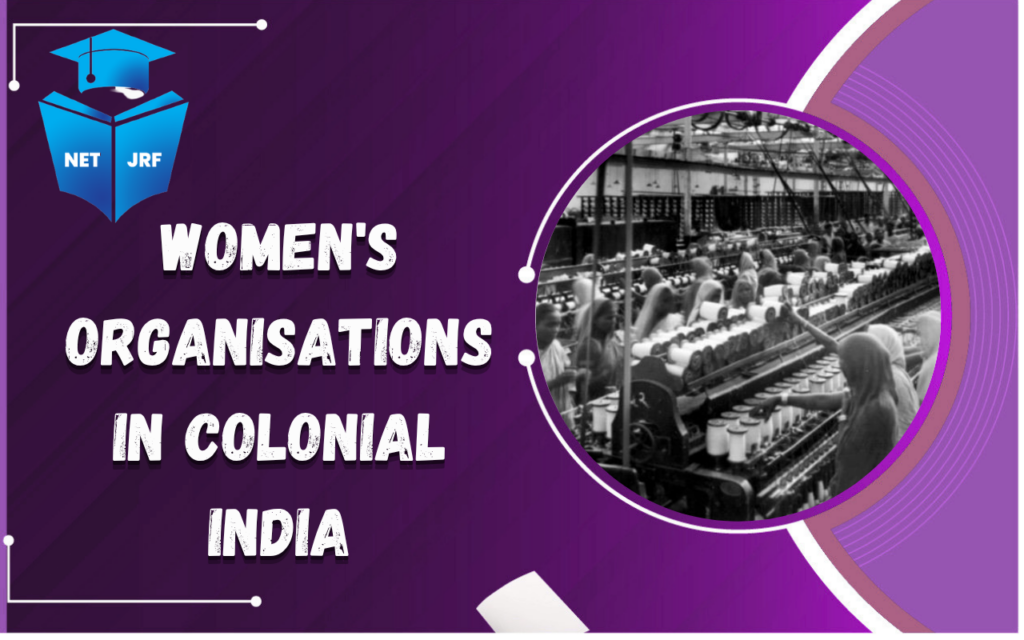
Women’s Question in Colonial India emerged as a central social debate during the nineteenth and early twentieth centuries. It referred to discussions about women’s rights, education, social status, and their role in society under colonial rule. British officials, Indian reformers, and nationalist leaders all addressed this issue in different ways.
The debate around Women’s Question in Colonial India focused on problems such as child marriage, widow remarriage, female education, property rights, and participation in public life. Reformers argued that improving the condition of women was essential for social progress. Nationalist leaders also believed that women’s status reflected the moral strength of Indian society.

Historical Background
Before the colonial period, the status of women in many parts of India was shaped by social customs and patriarchal traditions. Practices such as child marriage, purdah, limited property rights, and lack of education restricted women’s opportunities.
During the nineteenth century, colonial rule brought new debates about social reform. Western ideas of equality and liberalism influenced Indian intellectuals. As a result, discussions on Women’s Question in Colonial India began to appear in newspapers, reform movements, and public debates.
Indian reformers believed that improving women’s status was necessary for building a modern nation. These debates gradually transformed social attitudes and led to legal reforms.
Women’s Question in Colonial India in Nationalist Discourse
Nationalist leaders developed their own interpretation of Women’s Question in Colonial India. They believed that women symbolized the moral and spiritual strength of the nation.
Many nationalist thinkers divided society into two spheres:
- Home (Ghar) – considered spiritual, cultural, and feminine
- World (Bahir) – associated with politics, economics, and masculine roles
Women were expected to protect cultural traditions within the home while men engaged with the outside world. This idea helped nationalists preserve cultural identity while adopting modern political ideas.
At the same time, education for women was encouraged so they could become ideal mothers and responsible citizens. However, their public role remained limited within nationalist ideology.
Major Social Reform Movements
Several reform movements addressed Women’s Question in Colonial India by challenging harmful social practices.
Key Reform Issues
- Abolition of Sati
- Widow remarriage
- Female education
- Prevention of child marriage
- Women’s legal rights
Indian reformers believed that education and legal reforms would improve the social condition of women.
Major Social Reform Laws Related to Women
In modern Indian history, the condition of women became a major concern for social reformers and the colonial administration. During the 19th and early 20th centuries, several important laws were introduced to remove harmful social practices and improve the social status of women.
| Reform Law | Year | Impact |
| Abolition of Sati | 1829 | Outlawed the practice of sati |
| Widow Remarriage Act | 1856 | Allowed widows to remarry legally |
| Age of Consent Act | 1891 | Raised the age of marriage |
| Child Marriage Restraint Act | 1929 | Attempted to reduce child marriage |
These reforms formed an important part of the debate around Women’s Question in Colonial India.
Role of Education in Women’s Empowerment
Education became one of the most important aspects of Women’s Question in Colonial India. Reformers believed that education would help women become active members of society.
Schools for girls gradually emerged in the nineteenth century. Missionaries and Indian reformers supported female education.
Key goals of women’s education included:
- Literacy and basic knowledge
- Moral education
- Household management skills
- Awareness about social rights
However, nationalist leaders often supported limited education for women that preserved traditional values.
Enroll UGC NET Mock Test Series

Emergence of the New Woman
The debate on Women’s Question in Colonial India led to the idea of the New Woman.
Characteristics of the New Woman included:
- Educated and literate
- Aware of national issues
- Supportive of family values
- Capable of participating in public activities when required
This concept attempted to balance modern education with traditional cultural identity.
Colonial vs Nationalist Views on Women
This comparison explains how Women’s Question in Colonial India became a complex debate between colonial policies and nationalist ideas.
| Aspect | Colonial Perspective | Nationalist Perspective |
| Women’s Role | Social reform needed | Cultural guardians |
| Education | Western education for progress | Limited education within tradition |
| Public Participation | Encouraged gradually | Restricted to certain roles |
| Cultural Identity | Influenced by Western values | Protection of Indian traditions |
Women’s Participation in National Movement
Women eventually moved beyond symbolic roles and actively participated in nationalist politics.
Major forms of participation included:
- Political protests
- Boycott movements
- Civil disobedience campaigns
- Social welfare work
- Support for revolutionary groups
Women joined protests, organized meetings, and supported nationalist leaders.
Prominent leaders also encouraged women’s participation in the freedom struggle.
Cultural Representation of Women
Women played an important role in literature, poetry, and journalism during the nationalist movement.
Many writers expressed nationalist ideas through literature and cultural works.
Examples include:
- Poetry supporting freedom struggle
- Novels depicting social reform
- Articles discussing women’s rights
Literature helped spread awareness about Women’s Question in Colonial India among educated society.
Enroll UGC NET Offline Coaching in Jaipur
Contradictions in Nationalist Gender Ideology
Despite support for women’s participation, nationalist ideology contained contradictions.
Key contradictions included:
- Promotion of education but restriction of freedom
- Encouragement of political participation but emphasis on domestic roles
- Idealization of motherhood while limiting independence
These tensions shaped debates around gender roles in colonial India.

Social Impact of Women’s Question
The debate on Women’s Question in Colonial India produced several long-term social changes.
Major impacts included:
- Expansion of women’s education
- Greater public awareness about gender equality
- Women’s participation in nationalist politics
- Emergence of women’s organizations
These developments gradually improved women’s status in Indian society.
Enroll UGC NET Offline Classes in Jaipur
Conclusion
The debate surrounding Women’s Question in Colonial India played a major role in shaping modern Indian society. Reform movements challenged social practices, expanded educational opportunities, and encouraged women to participate in public life. Nationalist discourse also redefined gender roles by presenting women as symbols of cultural identity while gradually allowing their political participation
Frequently Asked Questions

2 Why did the women’s issue become important during colonial rule?
Colonial modernization and reform movements created awareness about social inequality. Reformers and intellectuals argued that improving women's condition was essential for building a modern society.
3 How did nationalism influence women's roles?
Nationalist leaders viewed women as protectors of cultural traditions while encouraging limited participation in public activities during the freedom struggle.
4 What were the major social issues faced by women?
Women faced challenges such as child marriage, lack of education, limited property rights, and social restrictions on mobility.
5 How did women participate in the freedom struggle?
Women joined protests, civil disobedience campaigns, boycotts, and social welfare activities. Many leaders inspired women to participate actively in nationalist politics.
6 What role did education play in women's empowerment?
Education helped women gain literacy, social awareness, and the ability to participate in reform movements and political activities.
7 What is meant by the concept of the New Woman?
The New Woman represented an educated Indian woman who combined modern awareness with traditional cultural values.