

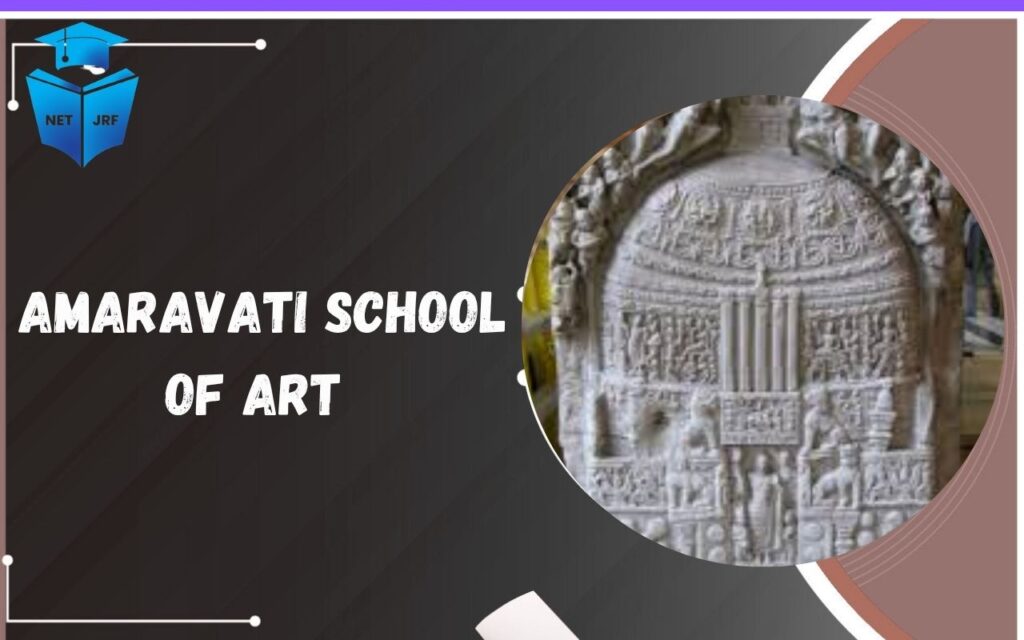
Amaravati school of art is one of the most important artistic traditions of ancient India, especially known for its detailed sculptures and beautiful narrative panels. It developed in the southern part of India and became famous for decorating Buddhist monuments like stupas.
Enroll UGC NET Online Coaching
When we study Amaravati school of art, we notice a strong focus on storytelling through art. Artists did not just create images but also carved entire scenes from the life of Buddha.

Amaravati School of Art Introduction
The Amaravati school of art developed in the region of Andhra Pradesh, mainly around the Krishna River valley. The main center was Amaravati, which became a major Buddhist site.
This art style flourished during the Satavahana period and later under the Ikshvaku rulers. Due to trade and religious activity, the Amaravati school of art grew into a rich artistic tradition.
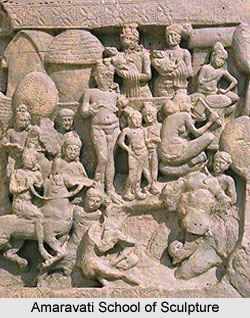
Amaravati school of art Historical Background
Growth during Satavahana Period
The Amaravati school of art reached its peak between the 2nd century BCE and 3rd century CE.
- Satavahana rulers supported Buddhism
- Trade routes brought wealth and ideas
- Monasteries became centers of art
This period is considered the golden phase of the Amaravati school of art.
Influence of Religion
Religion played a central role in shaping the Amaravati school of art.
- Buddhism was the main theme
- Artists focused on teaching through images
- Religious stories were shown in detail
This religious connection made the Amaravati school of art deeply meaningful.
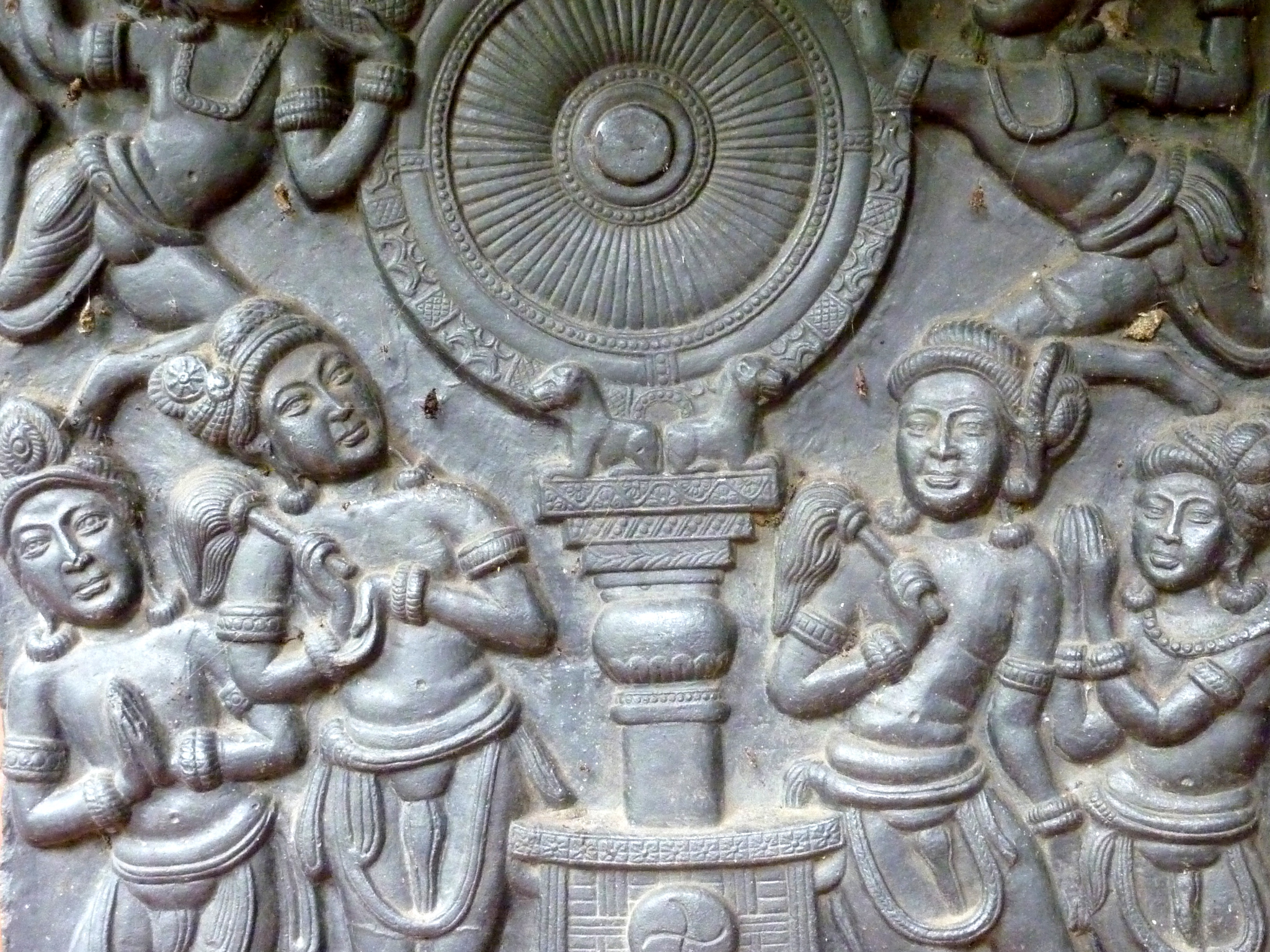
Amaravati Art Features
The Amaravati school of art has several unique features that make it different from other art styles.
Use of Limestone
- Artists used white limestone
- The stone allowed fine carving
- It gave a bright and smooth finish
This material is a major identity of the Amaravati school of art.
Narrative Style
- Scenes from Buddha’s life shown in panels
- Continuous storytelling technique
- Multiple figures in one scene
This storytelling approach is one of the most important features of the Amaravati school of art.
. Dynamic Figures
- Figures appear in motion
- Flexible body posture
- Lively expressions
These features give a sense of life to the Amaravati school of art.
Detailed Decoration
- Rich carving on stupas
- Floral and geometric designs
- Intricate patterns
This decorative style shows the artistic excellence of the Amaravati school of art.
Amaravati school of art Overview
The Amaravati School of Art developed in the region of present-day Andhra Pradesh, mainly around the famous Amaravati Stupa, between the 2nd century BCE and 3rd century CE. It flourished under the patronage of the Satavahana rulers and later local dynasties.
| Feature | Description |
| Amaravati school of art | South Indian Buddhist art style |
| Period | 2nd century BCE to 3rd century CE |
| Region | Andhra Pradesh |
| Material | White limestone |
| Theme | Buddhism |
| Style | Narrative and decorative |
Amaravati Art Themes
The Amaravati school of art mainly focused on Buddhist themes.
Themes in Amaravati Art
The Amaravati school of art primarily revolved around Buddhist themes, serving both a religious and educational purpose. It visually communicated the life, teachings, and moral lessons of the Buddha to devotees and the wider community.
Life of Buddha
- Scenes from the Buddha’s life were central to Amaravati art.
- Key events depicted include:
- Birth of Buddha – often shown with symbolic elements like the bodhi tree or footprints.
- Enlightenment (Bodhi) – illustrating the moment of spiritual awakening.
- Nirvana – representing Buddha’s liberation from the cycle of birth and death.
- These depictions helped followers understand and connect with Buddha’s life journey.
Jataka Tales
- Jataka stories depict the previous lives of Buddha.
- These narratives conveyed moral lessons, virtues, and ethical values.
- Panels and sculptures often showed action-filled scenes, making the stories accessible to the public.
Symbolic Representation of Buddha
- Early Amaravati art preferred symbols rather than human forms:
- Empty throne – symbolizing Buddha’s presence.
- Bodhi tree – representing enlightenment.
- Footprints – indicating Buddha’s path and teachings.
- Later, the school introduced human images of Buddha, showing the evolution of artistic representation.
These themes show how the Amaravati school of art helped spread Buddhist teachings.

Representation of Buddha
The Amaravati school of art initially emphasized symbolism over human figures to convey the presence and teachings of the Buddha. These symbols were visual metaphors that helped devotees connect with Buddhist philosophy.
Common Symbolic Forms
- Empty Throne
-
- Represents the Buddha’s presence without depicting him physically.
- Symbolizes authority, enlightenment, and the spiritual seat of the teacher.
- Bodhi Tree
-
- Marks the place of Buddha’s enlightenment.
- Serves as a reminder of wisdom, spiritual awakening, and meditation.
- Footprints (Buddhapada)
- Symbolize the path of the Buddha and his teachings.
- Often adorned with sacred symbols like the wheel (dharmachakra) or lotus.
Later, human images of Buddha also appeared. This shows the evolution of the Amaravati school of art over time.
Enroll UGC NET Coaching in Jaipur
Important Monuments of Amaravati School of Art
The Amaravati school of art is best known for its monumental contributions to Buddhist architecture and sculpture. Two sites stand out as centers of artistic excellence:
Amaravati Stupa
- Significance: One of the largest and most elaborate Buddhist stupas in ancient India.
- Artistic Features:
- Surrounded by intricately carved panels depicting scenes from the life of Buddha and Jataka tales.
- Reliefs show processions, worshippers, and symbolic motifs, reflecting the richness of Amaravati art.
- Cultural Role: Served as a major center of Buddhist learning, worship, and artistic creation.
- Legacy: Influenced later Buddhist art in South India and Southeast Asia.
Nagarjunakonda
- Significance: A key Buddhist site with extensive artistic activity.
- Artistic Features:
- Numerous sculptures and carved panels illustrating Buddhist themes.
- Artistic style similar to Amaravati, with emphasis on dynamic figures and narrative storytelling.
- Cultural Role: Functioned as a religious and cultural hub, supporting monasteries and educational activities.
- Legacy: Showcases the reach and influence of Amaravati style beyond Andhra Pradesh.
Role of Trade and Economy in Amaravati Art
Trade and economic prosperity played a crucial role in the growth of the Amaravati school of art:
- Coastal Trade Routes: Amaravati was located near major coastal trade routes, which brought wealth into the region.
- Merchant Patronage: Wealthy merchants and traders donated generously to Buddhist monasteries and stupas, funding sculptural and architectural projects.
- Cultural Exchange: Interaction with traders and foreign visitors introduced new ideas, styles, and artistic motifs, enriching the local art.
Conclusion: Economic prosperity directly supported artistic production, enabling the Amaravati school of art to flourish as a center of Buddhist culture.
Artistic Techniques of Amaravati School
The Amaravati school of art is notable for its technical sophistication and refined style:
- Deep Carving: Sculptures featured intricate relief work with high attention to detail.
- Polishing: Smooth surfaces and fine finishing gave a refined and elegant appearance.
- Layered Composition: Panels often used multiple layers of figures and narrative sequences, creating dynamic storytelling.
Impact: These techniques made Amaravati art highly realistic, expressive, and visually rich, reflecting both artistic skill and devotion.
Gandhara and Mathura Art Comparison
The Amaravati school of art is often compared with other schools.
Key Differences
- Amaravati uses limestone while Gandhara uses grey stone and Mathura uses red sandstone
- Amaravati focuses on narrative style while Gandhara focuses on realism and Mathura on spirituality
- Amaravati figures are dynamic while others are more static
This comparison helps understand the uniqueness of the Amaravati school of art.
Enroll UGC NET Offline Coaching in Jaipur
Amaravati Art Decline
The Amaravati school of art declined after the 3rd century CE.
Reasons
- Decline of Buddhism in the region
- Political changes
- Reduced patronage
Despite decline, the Amaravati school of art influenced later art traditions.

Conclusion
The Amaravati school of art stands as a remarkable example of artistic creativity in ancient India. It combined storytelling, religion, and technical skill to create beautiful sculptures. Its focus on narrative panels makes it unique among Indian art traditions.
Amaravati school of Art FAQs

When did the Amaravati School of Art flourish?
It flourished between the 2nd century BCE and 3rd century CE, mainly under Satavahana and Ikshvaku patronage.
Where was the Amaravati School of Art centered?
It developed around Amaravati and the Krishna River valley in present-day Andhra Pradesh.
What materials did Amaravati artists use?
White limestone was the primary material, allowing fine carving, smooth finish, and detailed expression.
What themes were depicted in Amaravati art?
Life of Buddha, Jataka tales, symbolic motifs like Bodhi tree, empty throne, and footprints, with a focus on storytelling.